

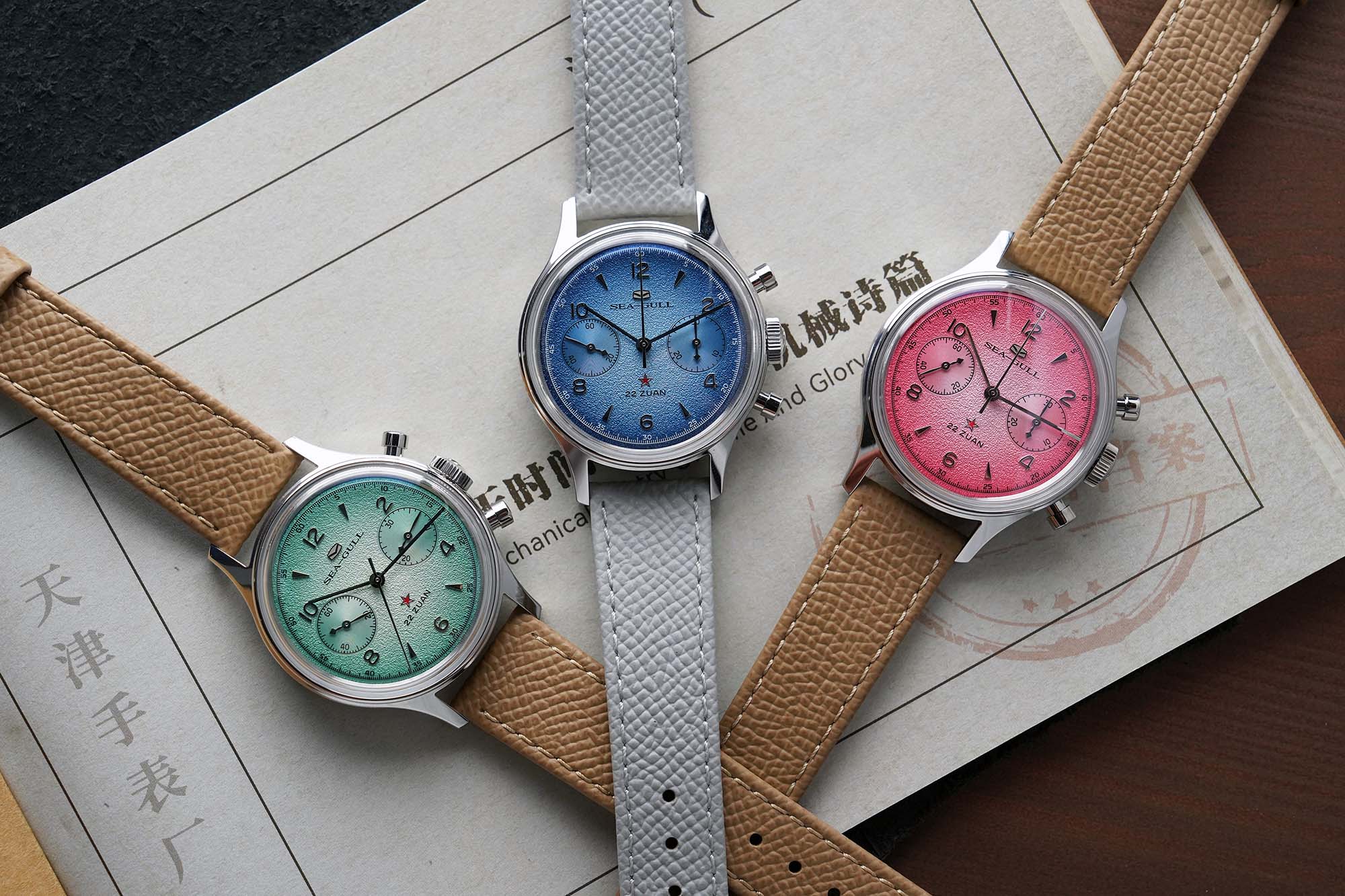
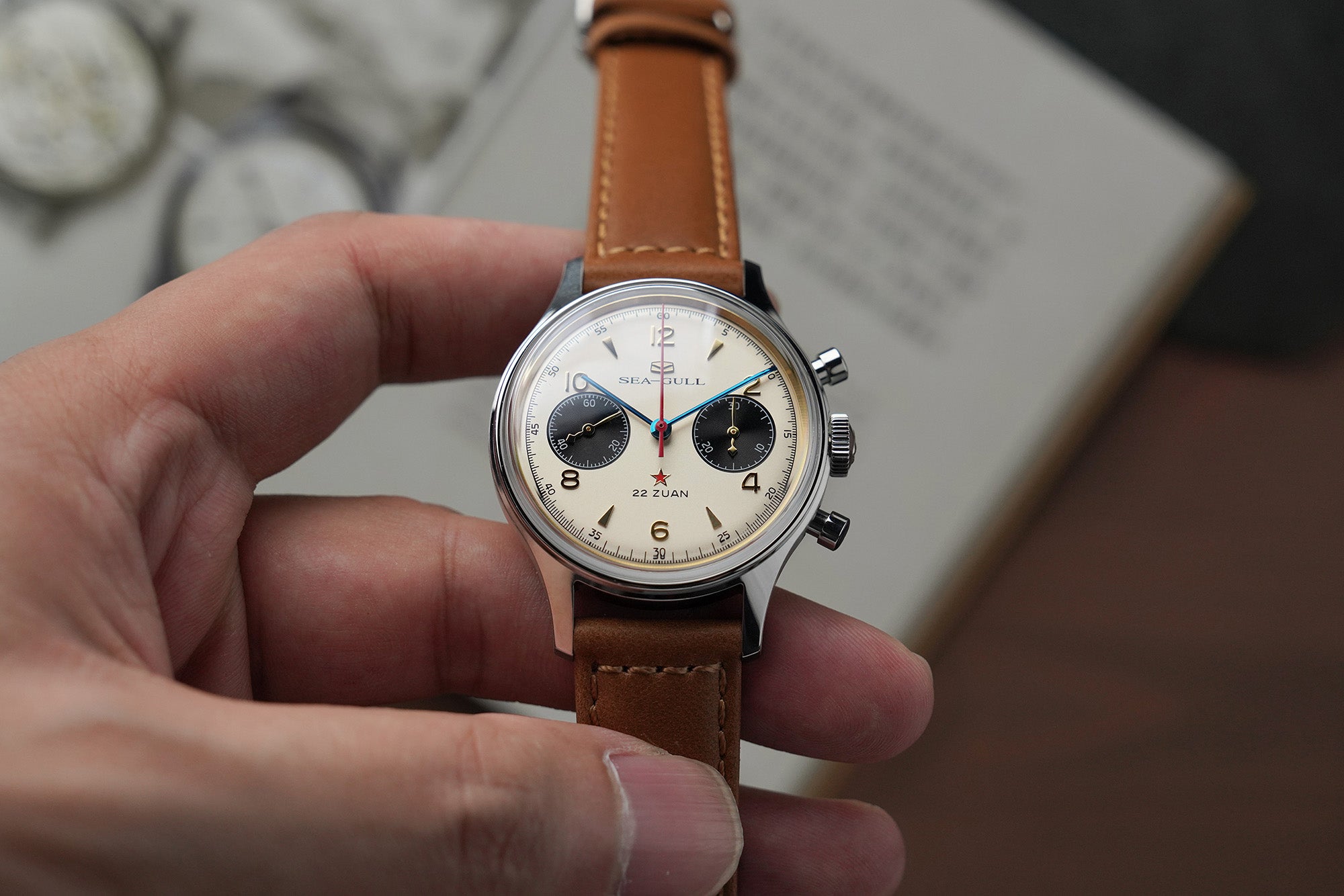
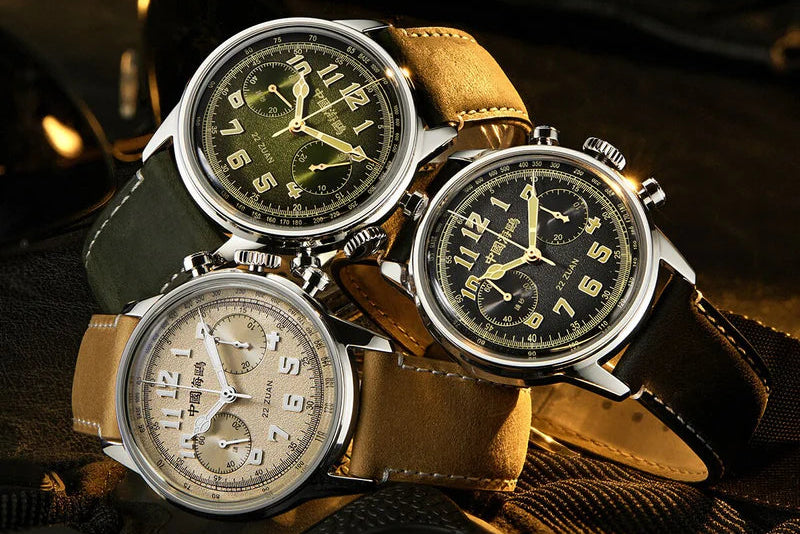

Seagull 1963 Daily Use Guide: Winding, Timing, and Storage
A Seagull 1963 rewards a simple daily rhythm: wind it gently, set it carefully, use the chronograph with purpose, and place it securely at the end of the day. This hands-on routine is part of the pleasure of owning a mechanical chronograph, combining tactile interaction with dependable everyday habits.
Tianjin Seagull Watch Co., Ltd., founded in 1955, has a long background in Chinese mechanical watchmaking. Explore the available Seagull 1963 chronograph models to confirm the operating details for your chosen configuration.
How to wind a Seagull 1963 safely each day
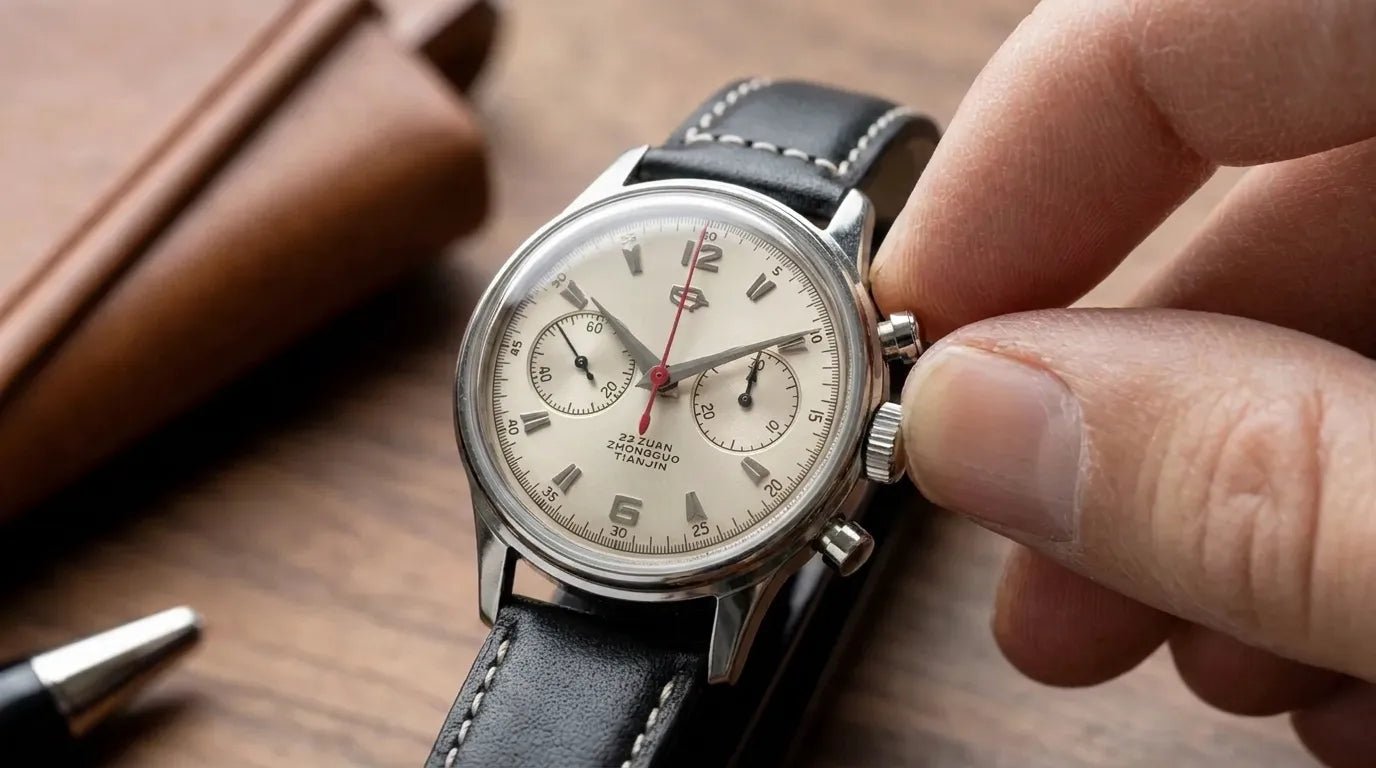
A hand-wound watch stores energy in its mainspring, the coiled spring that powers the movement. Wind your Seagull 1963 once daily, ideally at the same point in your morning routine.
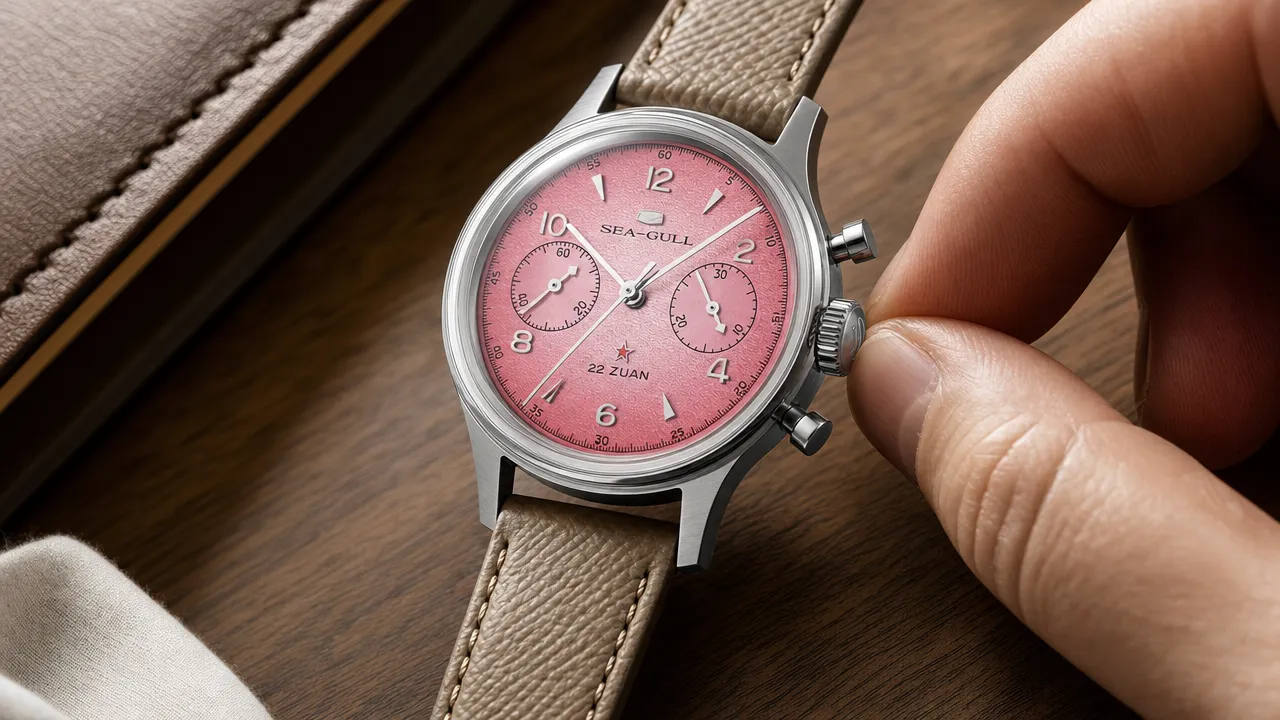
Remove the watch from your wrist first. Hold the case securely, then turn the crown with light, steady finger pressure. Continue until you feel clear, firm resistance and stop there. There is no benefit in forcing the crown further or counting a universal number of turns.
A controlled daily wind keeps the ritual straightforward:
- Take the watch off your wrist.
- Check that your fingers and the crown are clean and dry.
- Turn the crown smoothly and deliberately.
- Stop at clear resistance.
- Confirm the crown is fully back in its normal resting position before wearing.
Gentle handling matters more than speed. The crown is your direct connection to the winding system, and a calm approach supports an enjoyable daily ownership routine.
How to set and monitor a Seagull 1963
Set the time with the watch off your wrist and supported in your hand. Pull the crown only as far as required for your model's time-setting position, move the hands carefully, and return the crown fully to its resting position before putting the watch on.
Mechanical timekeeping has its own character. A Seagull 1963 is a precision-made mechanical instrument, not a battery-powered device, so it should not be judged by quartz-watch expectations. Small day-to-day variation can be influenced by the watch's power state, resting position, temperature, magnetic exposure, and impacts.
Check the time against a trusted reference over several days rather than reacting to a single observation. A consistent pattern gives a more useful picture of the watch's individual behavior.
| Daily action | Best practice |
|---|---|
| Winding | Wind once daily before wear and stop at firm resistance |
| Time setting | Use measured crown movements and return the crown fully |
| Rate checking | Compare with a trusted reference over several days |
| Product-specific settings | Follow the instructions for your selected configuration |
For product-specific operating guidance or maintenance support, contact authorized after-sales service and retain your valid proof of purchase.
How to use the Seagull 1963 chronograph with care
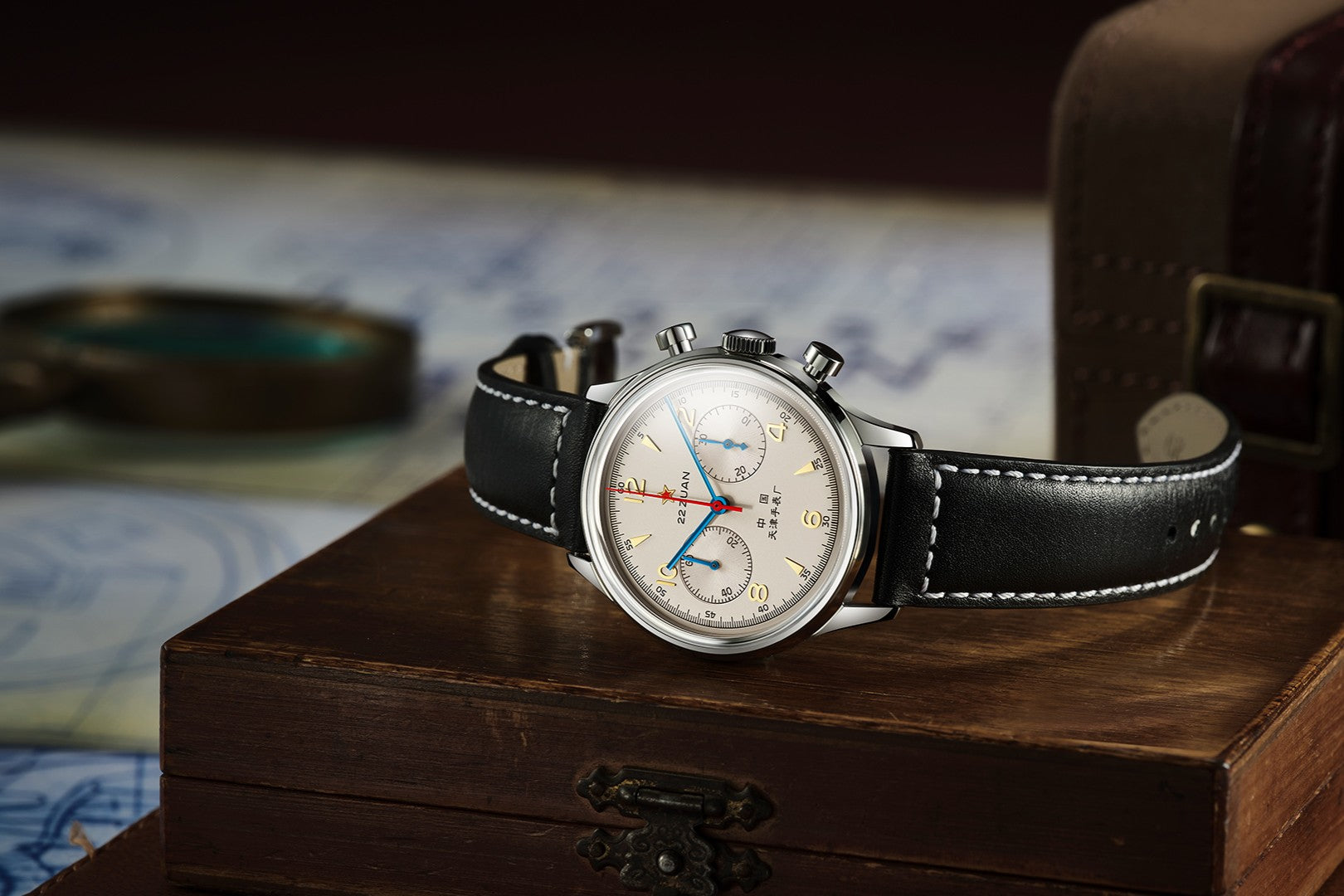
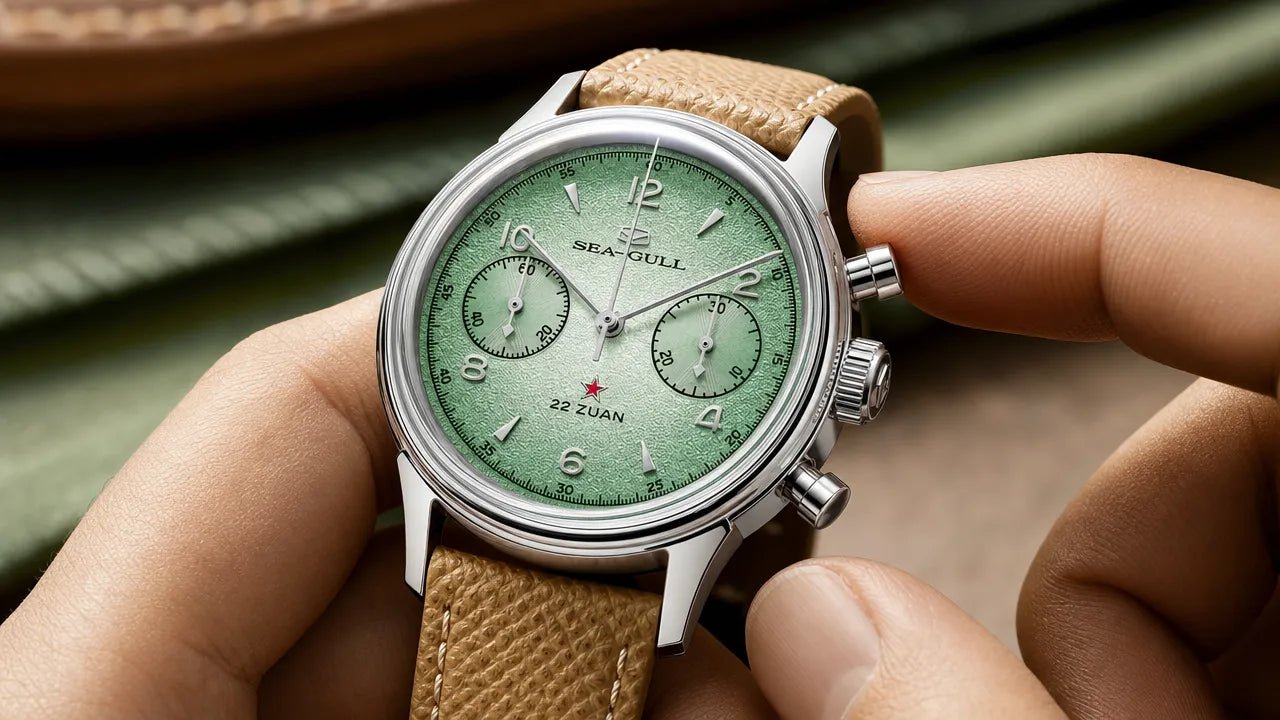
The chronograph is the mechanical stopwatch function found on Seagull 1963 chronograph models. Its basic rhythm is simple: start timing, stop timing, read the elapsed indication, then reset in the sequence specified for your model.
Use the designated controls with firm but measured pressure. Avoid jabbing at the pushers or making repeated rapid presses. Once you have read the elapsed time, return the chronograph to its resting state when practical.
Exact pusher functions, display layouts, and reset instructions can vary by configuration. Check the relevant product page for your watch before using any function beyond the basic start, stop, read, and reset sequence. The Seagull 1963 collection is the right place to review configuration-specific details.
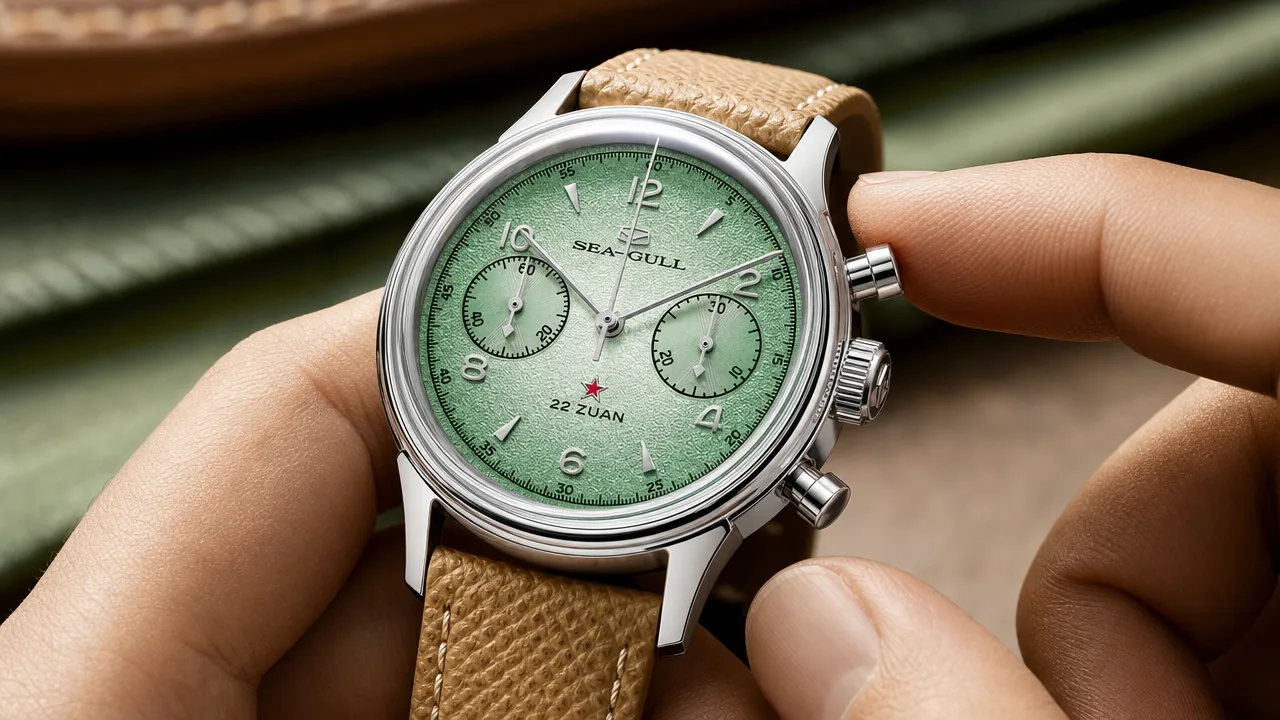
How to protect a Seagull 1963 during daily wear
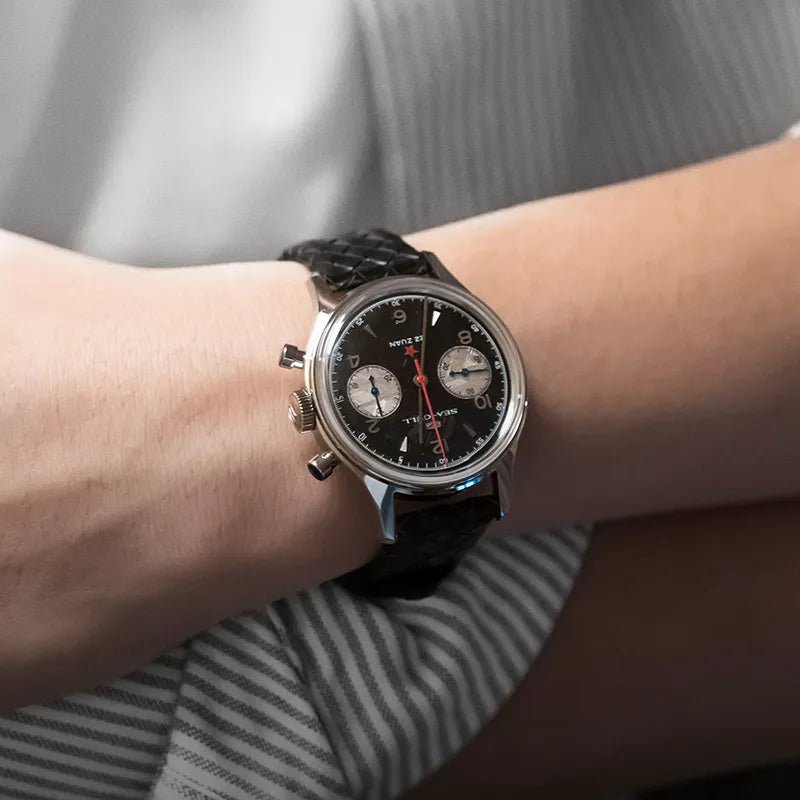
A Seagull 1963 suits a considered everyday routine. Desk work, commuting, meals, and social occasions all call for only ordinary care, but a few habits help keep the watch comfortable and protected.
Keep it away from strong magnetic sources where practical, including magnetic closures, speakers, and induction equipment. Remove it before activities involving repeated impacts, intense vibration, or a meaningful chance of striking the case against hard surfaces.
Avoid leaving the watch in extreme heat or cold, such as direct sun on a dashboard or beside a heater for extended periods. Keep leather straps away from moisture. For water-related care, follow only the directions shown on the relevant product page for your selected model.

How to store a Seagull 1963 between wears
Overnight storage does not need to be elaborate. Place your Seagull 1963 on a clean, dry, stable surface where it will not roll, touch hard objects, or sit near magnets. A soft tray, watch stand with a non-abrasive surface, or pouch works well.
For several days away from the wrist, use a soft pouch, lined tray, or separate watch-box compartment. Longer breaks call for the same principles: a clean, dry, protected place away from direct sunlight and temperature extremes. Keep the watch apart from keys, loose coins, and other objects that can mark the case or crystal.
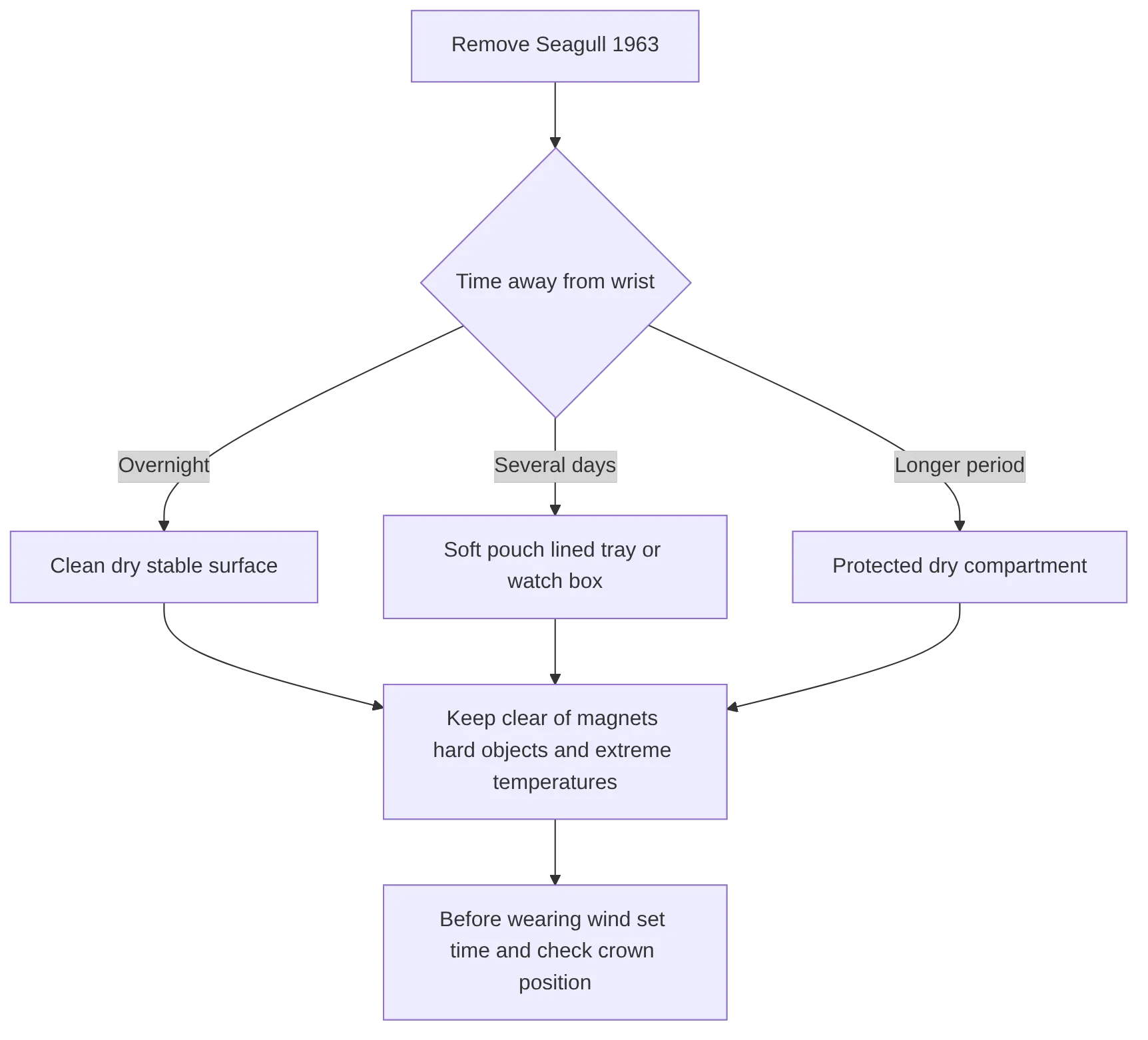
Before wearing again, inspect the exterior, wind gently, set the time if needed, and make sure the crown has returned to its normal position. Keep the warranty card, packaging, and valid proof of purchase in a separate dry place for applicable after-sales support.
Seagull 1963 daily use questions
Should I wind my Seagull 1963 every day?
Yes. A once-daily winding routine before wear is a practical habit for a hand-wound mechanical watch.
Should I remove my Seagull 1963 before winding?
Yes. Winding off the wrist allows straighter, more controlled crown handling.
How do I know when to stop winding a Seagull 1963?
Stop when you feel clear, firm resistance. Do not force the crown further.
Can I use the chronograph every day?
Use the chronograph whenever you need to time an interval, then return it to its resting state when practical. Follow your model's specified operating sequence.
Where should I keep a Seagull 1963 overnight?
Choose a clean, dry, stable, non-abrasive spot away from magnets, loose metal objects, and hard edges.