








Manual-Winding Watch Routine: When and How to Wind
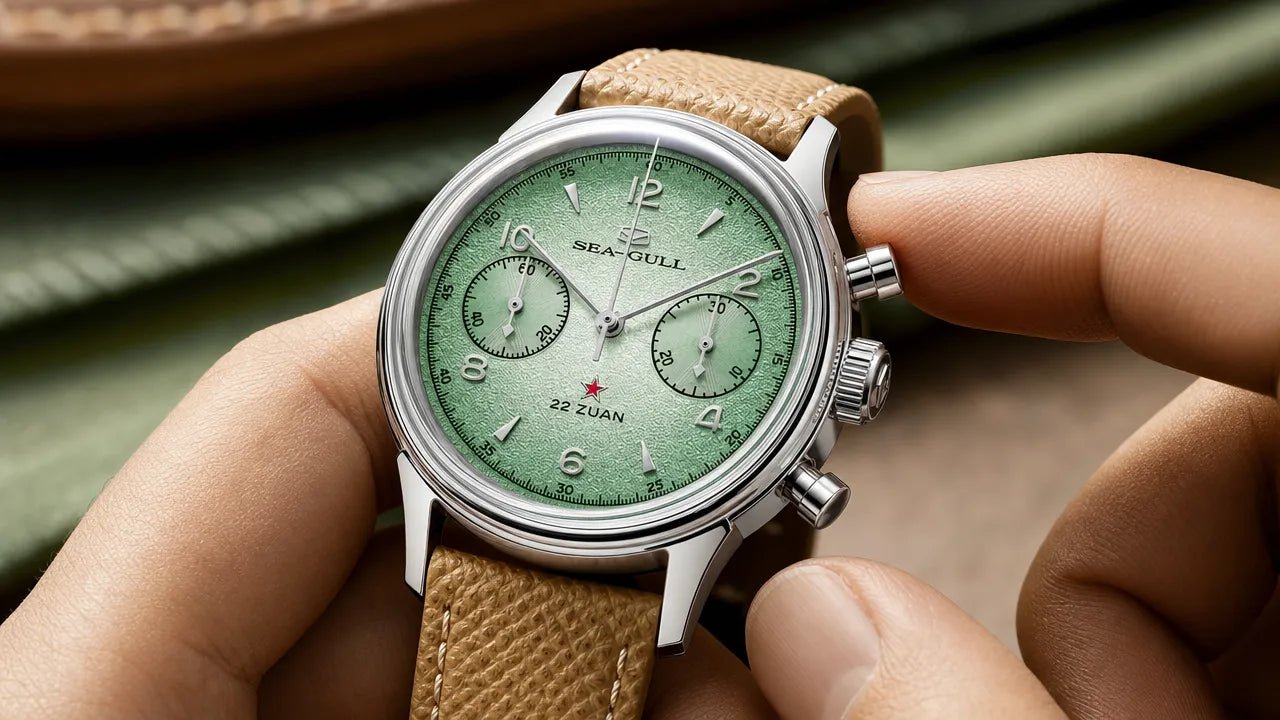
A manual winding watch runs best on a calm daily rhythm: wind it once at a consistent time, use the crown gently, and stop as soon as natural resistance appears. This simple ritual keeps the mainspring supplied with energy without turning care into guesswork.
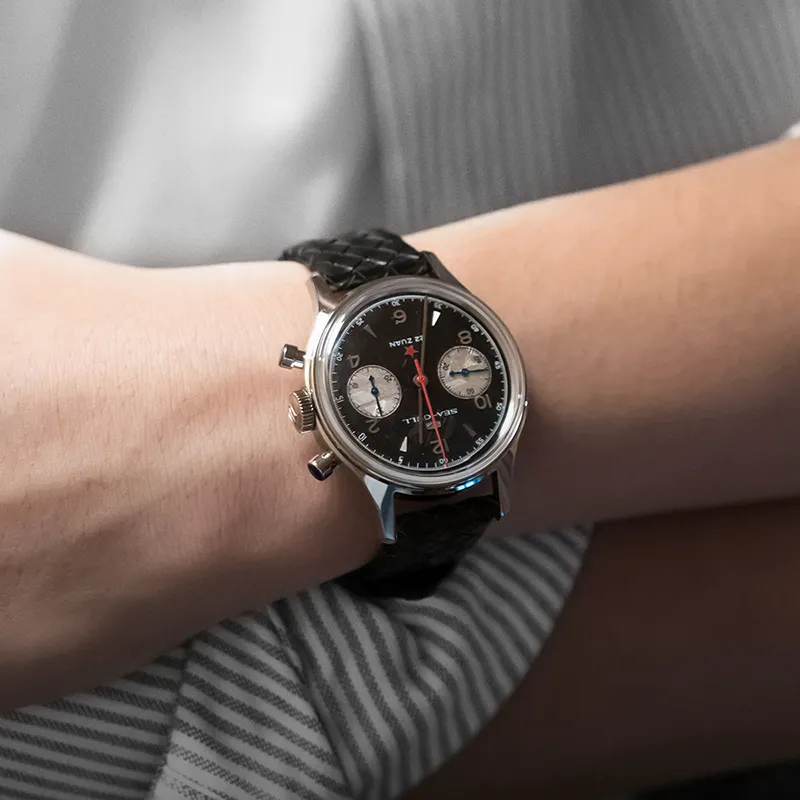
How a manual winding watch stores energy for the day
A manual winding watch stores power in its mainspring when you turn the crown. That stored energy gradually drives the movement, making the winding routine part of hands-on mechanical ownership.
Unlike an automatic watch, a hand-wound movement does not rely on wrist motion to maintain its power. A daily winding habit is therefore practical for a watch in regular wear. Winding before putting it on in the morning is an easy choice, but the exact time matters less than consistency.
The instructions supplied with your individual watch take priority. They determine the winding direction, expected running time, crown positions, and any special operating steps.
Sea-Gull's mechanical-watch heritage, rooted in Tianjin since 1955, gives this small daily action a satisfying sense of connection to traditional movement craft.
When to wind a manual winding watch and what to do after it stops
Wind a manual winding watch once each day at a familiar time when it is worn regularly. A consistent routine helps keep the watch ready for normal daily use without relying on a fixed number of crown turns.
When a watch has stopped, wind it gently before setting the time. Date, calendar, and GMT functions may require a specific setting order, so consult the model documentation before adjusting additional displays.
| Situation | Practical routine |
|---|---|
| Wearing the watch regularly | Wind once daily at a consistent time |
| The watch has stopped | Wind gently, then set the time as instructed |
| You feel increasing resistance | Stop immediately and do not force the crown |
| A date or GMT display needs adjustment | Follow the model-specific instructions |
Avoid treating every mechanical watch alike. Power reserve, crown direction, and the feel of the winding mechanism differ by movement.
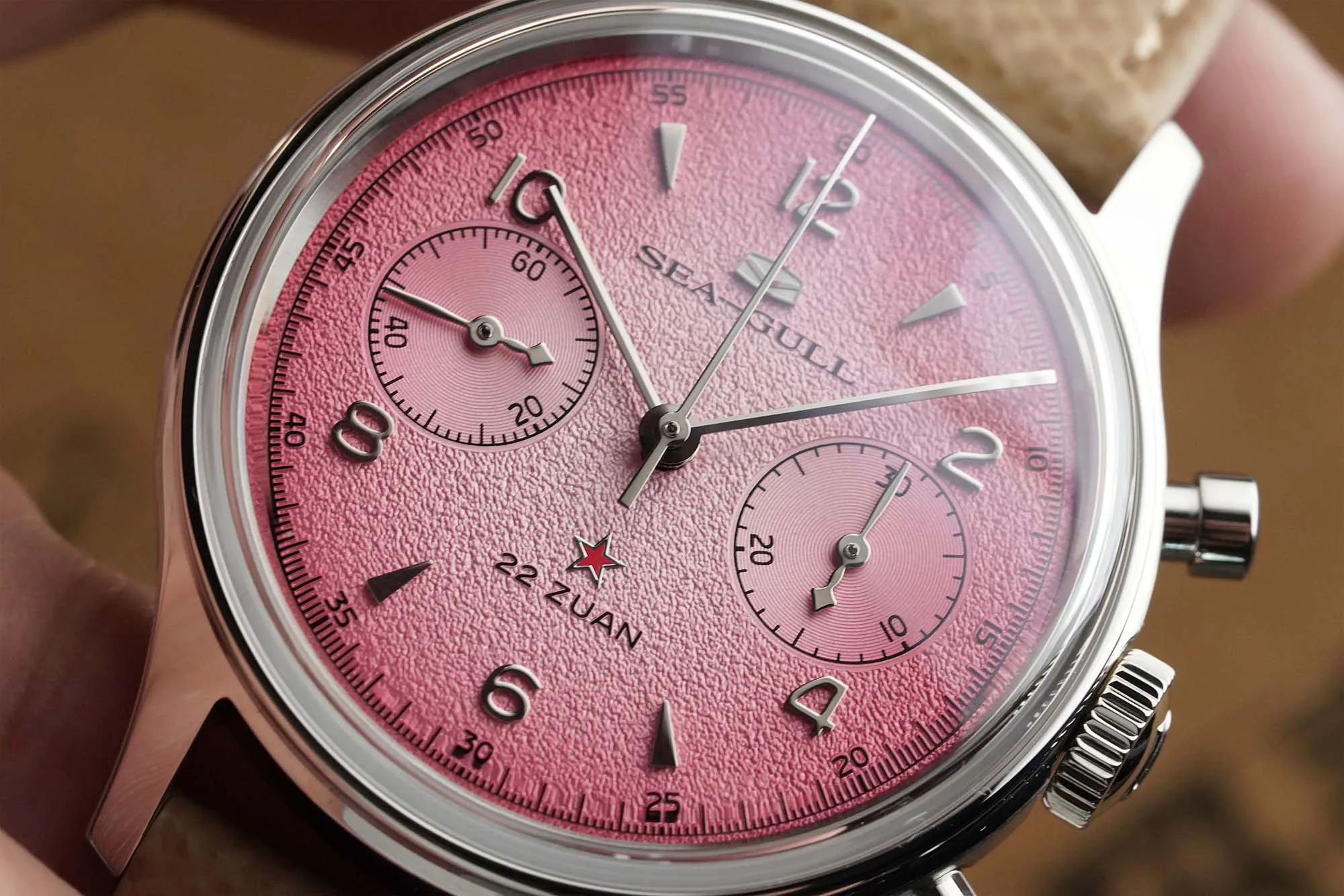
How to wind a manual winding watch safely
For readers searching for how to wind a Sea-Gull mechanical watch, the safest answer is deliberate, model-aware crown handling.
-
Take the watch off your wrist where practical. This gives you better control and reduces sideways pressure on the crown and stem.
-
Make sure the watch and your hands are dry. Do not operate a wet crown.
-
Confirm the crown position. A standard manual-winding watch is generally wound with the crown in its normal position, not the time-setting position. A screw-down crown should be released gently according to the watch instructions.
-
Turn in the documented direction. Clockwise winding is common, but it is not universal. Use the directions supplied for your model.
-
Stop at natural resistance. Do not add force in an attempt to gain more power. Gentle operation is the right operation.
-
Secure the crown when applicable. For a screw-down design, return the crown to its secured position carefully without overtightening.
A manual winding watch rewards consistency, not force. No universal turn count applies across movements.
How a manual winding watch differs from GMT and automatic ownership
A GMT display adds a second time zone; it does not determine whether a watch is manual-winding or automatic. A GMT watch commonly uses an extra 24-hour hand and scale to track home time, travel time, or another reference zone.
An automatic GMT relies on wrist movement to help wind its mainspring, while a manual winding watch depends on regular crown winding. For date-equipped or GMT-equipped watches, crown positions and adjustment sequences can vary substantially.
Explore Sea-Gull GMT watches for second-time-zone options, and read the GMT watch guide for a closer look at managing time differences. The automatic dual-time model is a useful example of a different mechanical ownership routine.
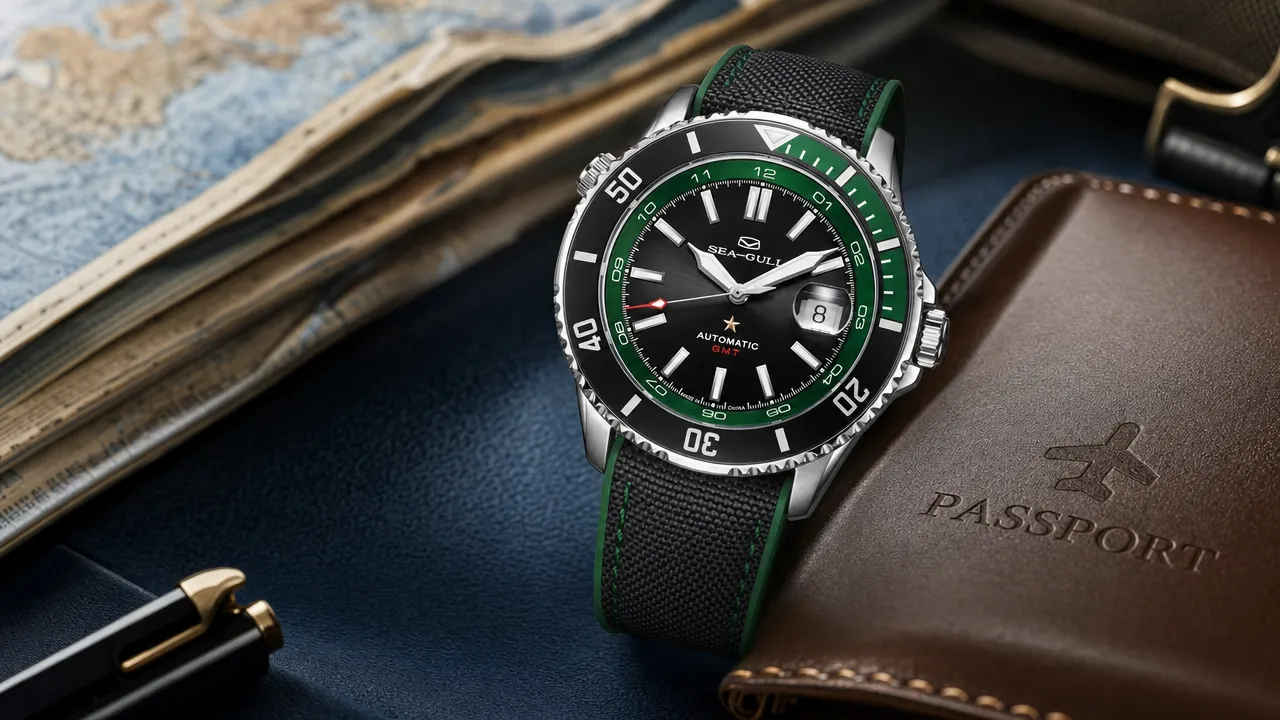
How manual winding watch care supports long-term ownership
Thoughtful watch care protects the movement between winding sessions. Keep your mechanical watch away from strong magnetic exposure, sharp impacts, extreme temperature changes, and unnecessary moisture. Keep leather straps away from moisture as well.
Store the watch in a clean, dry, stable place where the crown will not be pressed or knocked. These habits are simple, but they support reliable everyday ownership.
A watch service interval should never be treated as one universal calendar rule. Plan servicing around the watch documentation, wear patterns, observed condition, and guidance from an authorized service center. Seek professional attention when the watch requires inspection, maintenance, or repair rather than attempting an unauthorized fix.
Manual winding watch after-sales support and service planning
Retain your proof of purchase, warranty card where supplied, and purchase records. Valid proof of purchase may be needed for applicable genuine-product after-sales support, including maintenance guidance and warranty-related assistance.
For Repair Services and After-Sales Support, use an appropriate authorized channel. Applicable warranty coverage concerns qualifying malfunctions under normal-use conditions and follows the relevant terms and exclusions. Avoid unauthorized repair, which can complicate future service needs.
The Sea-Gull after-sales service and warranty guide offers a useful reference point for ownership support.
A manual winding watch asks for only a few careful moments each day: dry hands, a controlled grip, gentle turns, and the discipline to stop at resistance. That rhythm is the essence of mechanical watch care.