



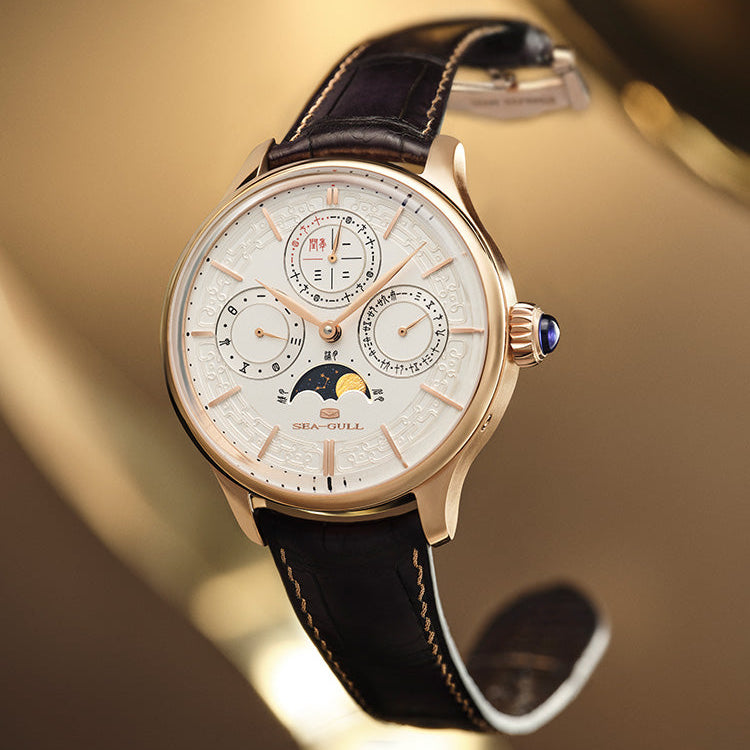


Managing Time Differences With GMT Watches
The Growing Importance of Time Zone Differences
Global schedules rarely stay inside one local clock. A call placed from New York may depend on office hours in London, while production updates follow Hong Kong or Tianjin time. In that environment, understanding difference time zones is not just a travel question. It is a practical part of planning meetings, shipments, and daily communication.
A GMT watch addresses this problem mechanically. Instead of checking a phone every time you need to know what's the time difference between two cities, a 24-hour hand and scale keep a second zone visible on the wrist. For readers who regularly move between North America, Europe, and Asia, that makes the difference in time zones easier to read and easier to manage.
Time Zones, UTC, GMT, and DST
Earth rotates 360 degrees in roughly 24 hours, which is why timekeeping is organized around hour offsets. In simple terms, one hour corresponds to about 15 degrees of longitude. Real borders do not follow perfect geographic lines, so actual time zones are irregular and sometimes include half-hour or quarter-hour offsets.
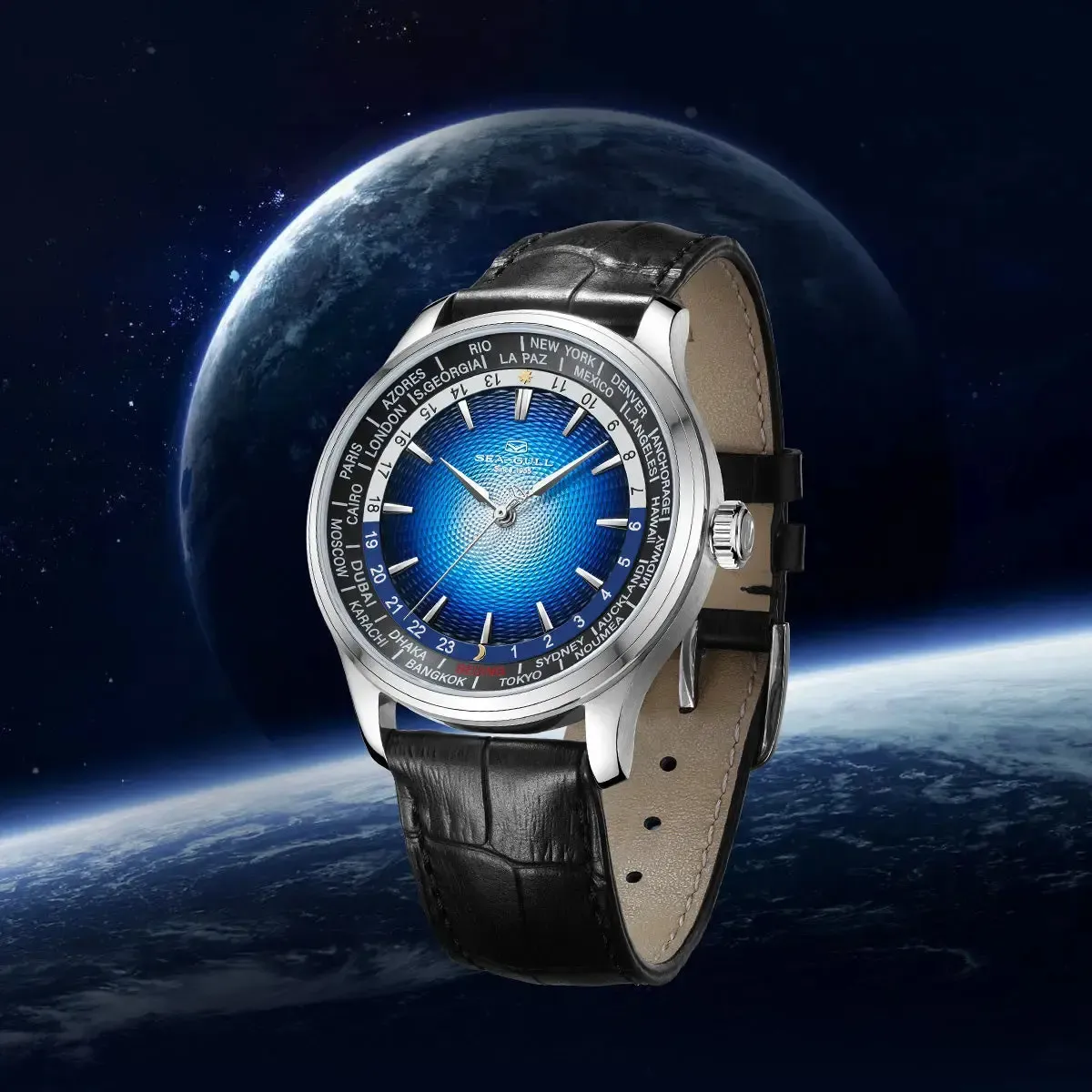
A local time zone is the legal time used where you are physically located. It is typically written as UTC plus or minus an offset. Examples include:
| City | Standard Time Zone | UTC Offset |
|---|---|---|
| Los Angeles | Pacific Standard Time | UTC-8 |
| New York | Eastern Standard Time | UTC-5 |
| London | Greenwich Mean Time | UTC+0 |
| Paris | Central European Time | UTC+1 |
| Hong Kong | Hong Kong Time | UTC+8 |
| Beijing | China Standard Time | UTC+8 |
For practical watch use, GMT and UTC serve a similar reference function. UTC is the modern international time standard. GMT remains the traditional term widely used on watches and in everyday language.
DST time zone changes add complexity. During daylight saving time, the legal local clock moves forward by one hour. That means a time difference chart is never completely fixed all year.
For example:
- New York and London differ by 5 hours in standard time.
- During overlapping DST periods, that difference becomes 4 hours.
- London and Hong Kong differ by 8 hours in standard time, but 7 hours when London is on summer time.
This is why people search for what is local time zone, time zones dst, or what is time difference between two cities. The answer depends on both UTC offset and seasonal clock changes.
How a GMT Watch Turns a Time Difference Chart Into Hardware
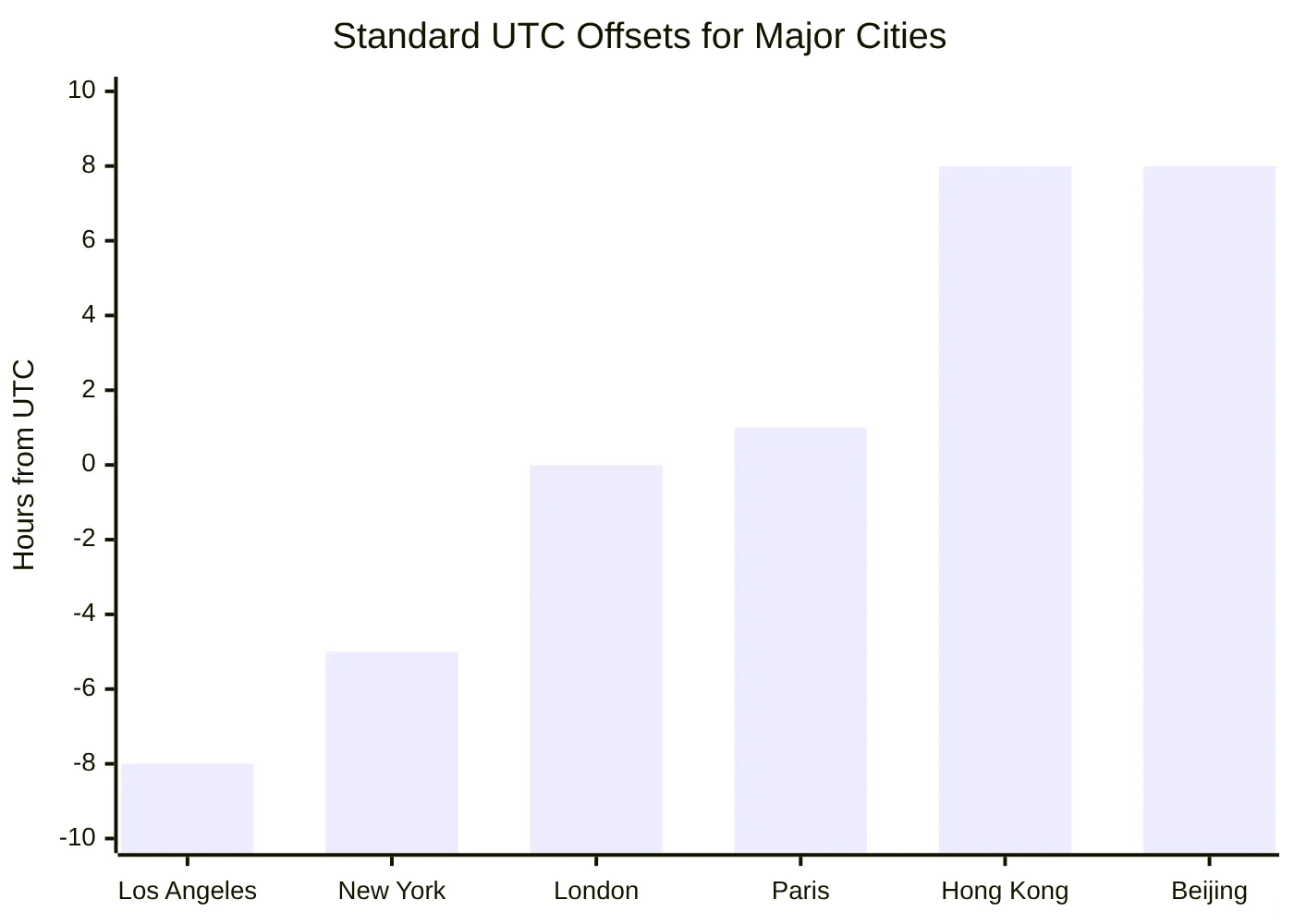
A GMT watch shows at least two time zones at once. The standard hands display local time, while an additional 24-hour hand points to a separate scale for a second zone. This solves a basic issue with ordinary dual displays: the 24-hour track makes AM and PM immediately clear.
That is why a GMT watch works so well for readers looking for a time zone table they can actually wear.
Two common movement layouts appear in modern GMT watches:
- Traveler GMT: the local hour hand jumps independently in one-hour steps, useful when you change zones often.
- Caller GMT: the GMT hand adjusts independently, useful when you stay in one place but monitor another.
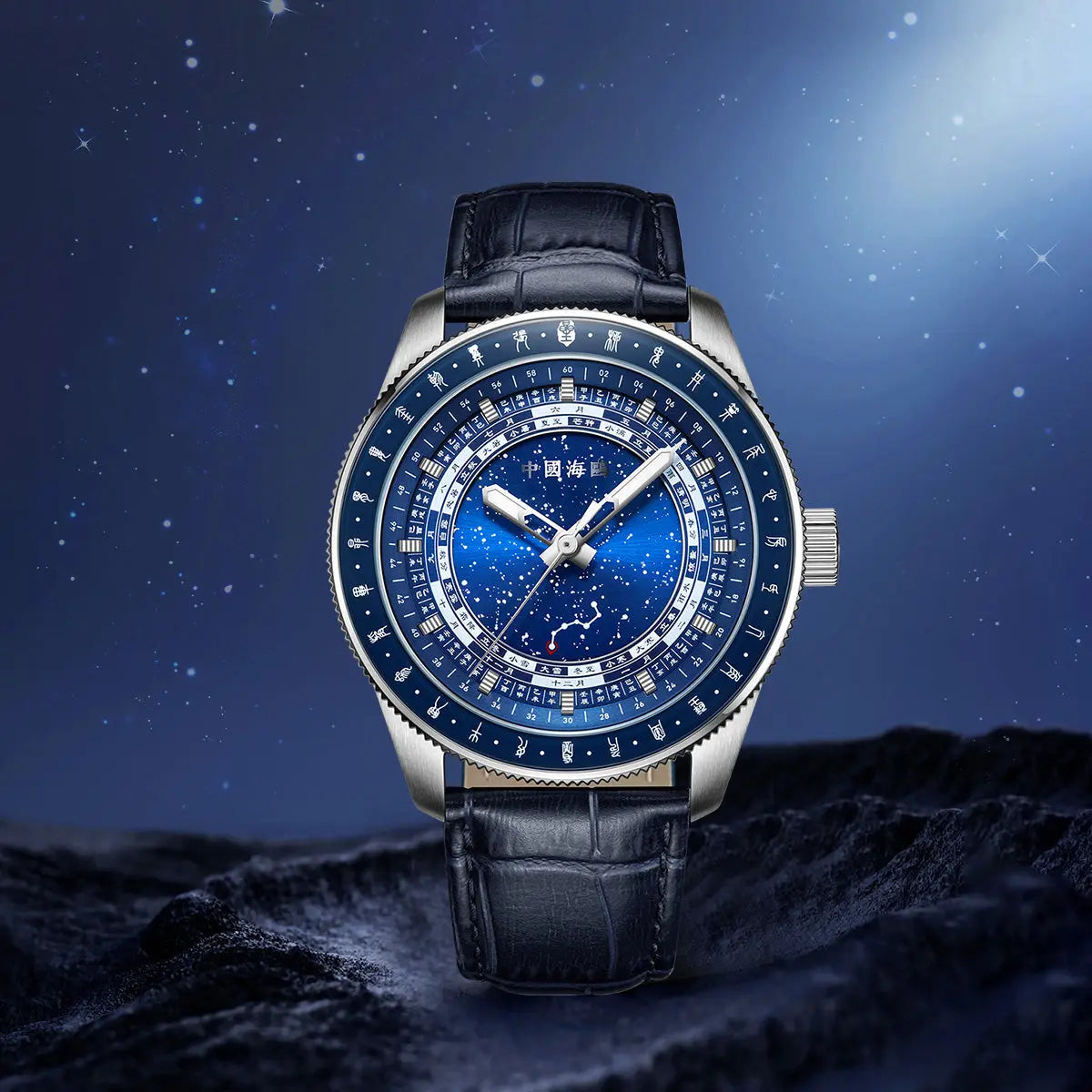
Within the brand's range, the GMT collection provides the clearest examples of this format. Models such as GMT Watch | World Time | Sub Second Dial | 41mm, GMT | World Time | Dual Time Zone | Calendar | 41mm, GMT World Time Earth Map Sub Second Dial Men's Mechanical Watch 6202, and GMT | Dual Time Zone | Calendar | 40mm connect the abstract idea of different time zones to a specific mechanical solution.

Several of these watches use automatic calibers such as ST2130 or ST2148, running at 28,800 vph with about 40 hours of power reserve. For normal ownership, the stated broad mechanical rate range of ±40 seconds per day is in line with standard expectations, while many regulated examples perform closer to 3 to 5 seconds per day.
Real-World Ways to Manage Different Time Zones With GMT Watches
A GMT watch is most useful when the same city pairs repeat in your schedule. Instead of repeatedly asking show me time zones or what's the time difference, you assign each display to a practical reference.
1. North America to Europe
If you are based in New York and need to track London:
- Local hands: New York
- GMT hand: London or UTC
If local time reads 9:00 and the GMT scale reads 14:00, London is 5 hours ahead. During overlapping DST periods, that gap narrows to 4 hours.
2. Europe to Hong Kong or Beijing
If you are in London and follow office activity in Hong Kong:
- Local hands: London
- GMT hand: Hong Kong
At 10:00 in London standard time, the GMT hand reads 18:00 in Hong Kong. When London shifts to summer time, the difference becomes 7 hours instead of 8.
3. Multi-region schedules
A rotating bezel or world-time display can add a third reference. That becomes useful for triangular schedules linking North America, Europe, and Asia.
| Base City | Second Zone | Standard Difference |
|---|---|---|
| New York | London | 5 hours |
| New York | Hong Kong | 13 hours |
| London | Paris | 1 hour |
| London | Hong Kong | 8 hours |
| Los Angeles | New York | 3 hours |
| Los Angeles | Hong Kong | 16 hours |

Sea-Gull GMT Models, Ownership Considerations, and Related Mechanical Options
For readers comparing what are all the time zones they need to track versus how much information should appear on a dial, the brand offers several routes.
A straightforward GMT layout suits daily reference. A world-time dial suits users who want a compact visual index closer to all of the time zones at once. The GMT collection is the logical starting point.
If your interest extends beyond GMT into broader mechanical watchmaking, the Sea-Gull 1963 collection offers a different complication focus through chronograph mechanical watches. It does not solve the difference time zones problem, but it is relevant for readers also researching the Seagull 1963 watch or best mechanical chronograph watches. Additional background can be found in the 1963 blog archive.
Ownership details matter as much as movement type. For after-sales support, warranty coverage, and return or exchange conditions, the brand's FAQ is the primary reference. For shipping timelines, carrier handling, and customs responsibilities for North America and Europe, consult the Transportation Policy.
A few practical points stand out:
- Warranty duration is listed on individual product pages and is commonly 1 to 2 years.
- Coverage generally focuses on manufacturing defects in the movement.
- Unworn watches are typically eligible for return within 14 days, subject to stated conditions.
- Complex repair work may require service coordination through the Tianjin center.
- International processing can take up to 5 business days, with delivery often in 7 to 12 business days after dispatch.
- Duties and taxes are generally the buyer's responsibility unless otherwise stated.
For a buyer balancing authenticity, maintenance, and overseas delivery, those policy details are as important as the dial layout itself.
Choosing the Right GMT Setup for Daily Use
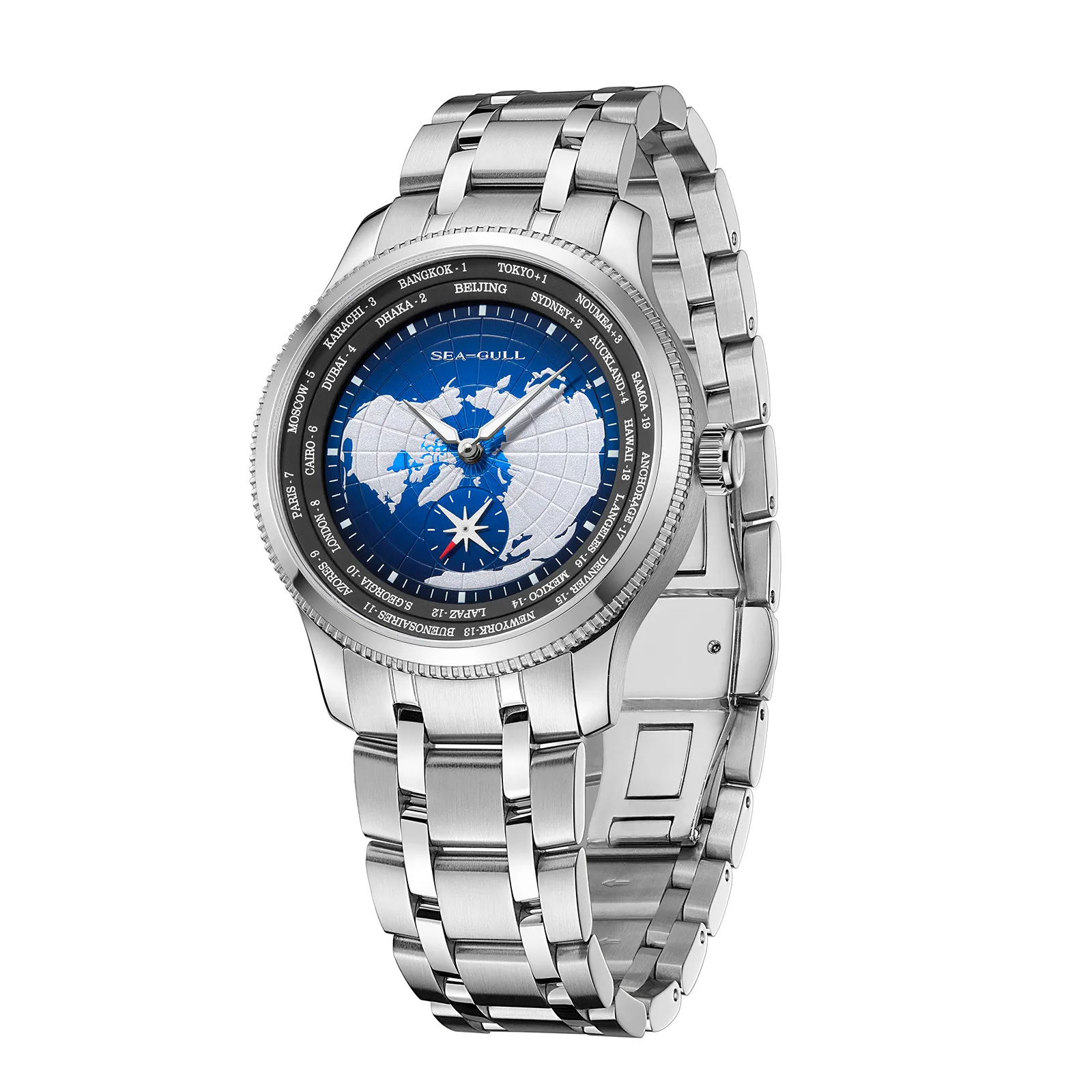
The most effective GMT watch is the one configured around your recurring schedule. If your week revolves around one home city and one remote team, a simple two-zone display is usually enough. If your work regularly spans the US, Europe, and UTC+8 regions, a world-time or bezel-equipped model gives more flexibility.
In practical terms, a GMT watch functions like a permanent time difference chart that does not need unlocking, charging, or refreshing. That is the real advantage. It reduces friction in daily coordination and makes the difference in time zones visible in a format that suits mechanical watch enthusiasts.
For readers ready to explore specific configurations, the GMT collection offers the most direct path. Those comparing complications across categories may also find the Sea-Gull 1963 collection useful as a reference point for mechanical chronograph watches rather than multi-zone displays.


Laisser un commentaire
Ce site est protégé par hCaptcha, et la Politique de confidentialité et les Conditions de service de hCaptcha s’appliquent.