


Leather Watch Strap Care for Commuting and Office Wear
A leather strap can look at home in a meeting room and still face a demanding day: a damp walk to the train, a crowded commute, hand-washing splashes, desk-edge contact, and perspiration during the trip home. For a Sea-Gull mechanical watch, a few consistent habits can protect both the strap's appearance and its secure fit.
The key principle is simple: a water-resistant case is not the same thing as a water-resistant leather strap. Keep leather dry, clean it according to its finish, let it air out after wear, and replace it before structural wear affects retention.
Sea-Gull mechanical watch leather strap rules for daily wear
A leather strap is a natural wear component. Rain, humidity, sweat, skin oils, sunlight, cosmetics, heat, and repeated bending can gradually change its color, flexibility, and shape.
For daily wear, follow these boundaries:
- Remove the watch before showering, swimming, or deliberate water exposure.
- Take it off before hand washing when practical, especially if water is likely to reach the strap.
- Let hand cream, sunscreen, fragrance, and sanitizer dry completely before putting the watch back on.
- Do not leave the watch on a hot dashboard, radiator, or sunny windowsill.
- Avoid forcing a damp strap beneath a tight cuff, where moisture and friction can remain trapped.
Sea-Gull-published care guidance advises avoiding water, moisture, cosmetics, and direct sunlight on leather bands. Separately, the Sea-Gull water-resistance and magnetism FAQ explains that water resistance is not the same as complete protection from moisture. Humidity, heat, detergents, and temperature changes can all increase the risk of fogging inside a watch case.

Water-resistant case, dry leather strap: Check the marking and manual for your individual watch case, but treat leather as a dry-wear component regardless of the case rating.
Leather strap care for popular Sea-Gull models
Many Sea-Gull dress and heritage watches ship with leather straps suited to office and commuting wear. Understanding your specific model helps you choose appropriate daily care:
-
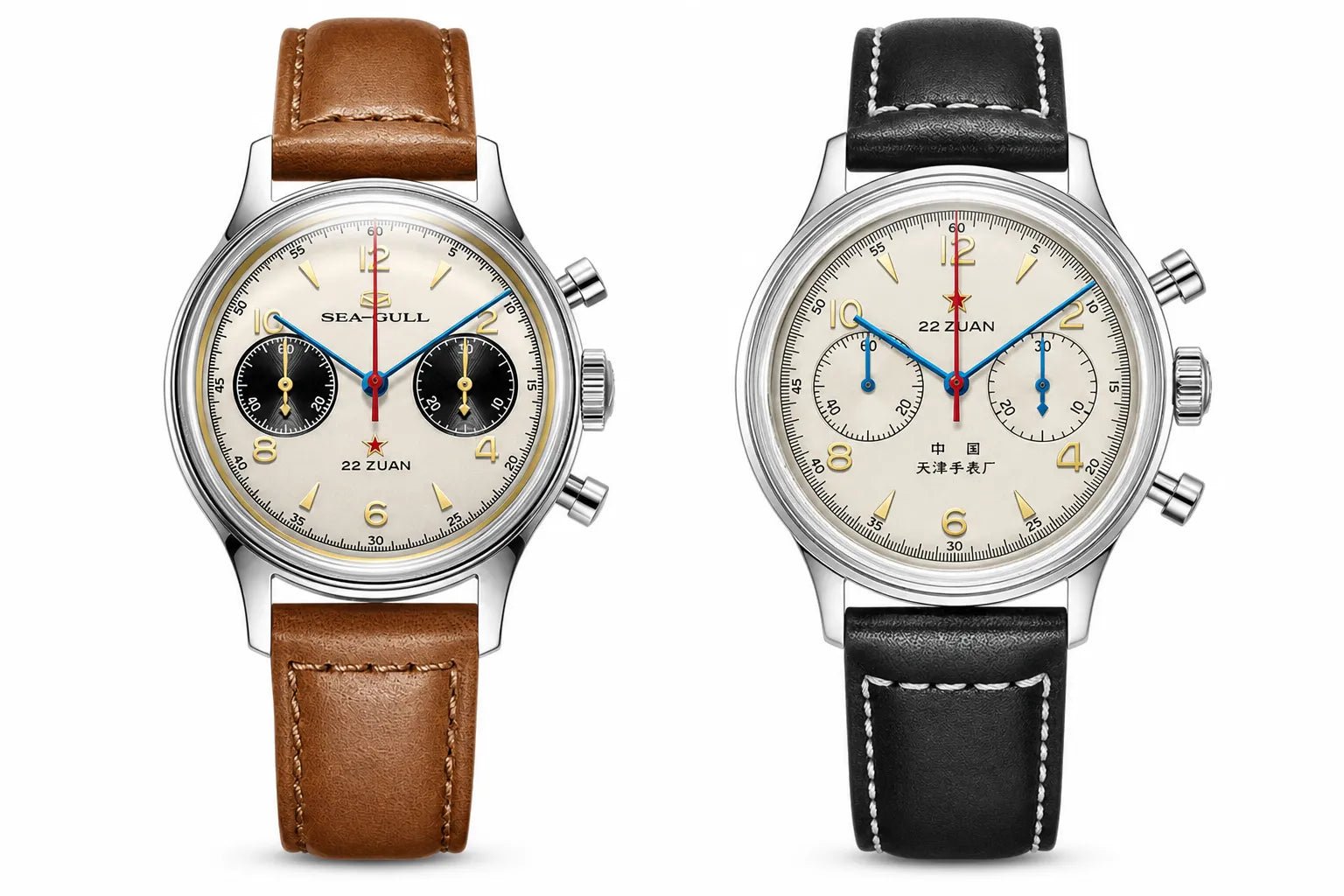
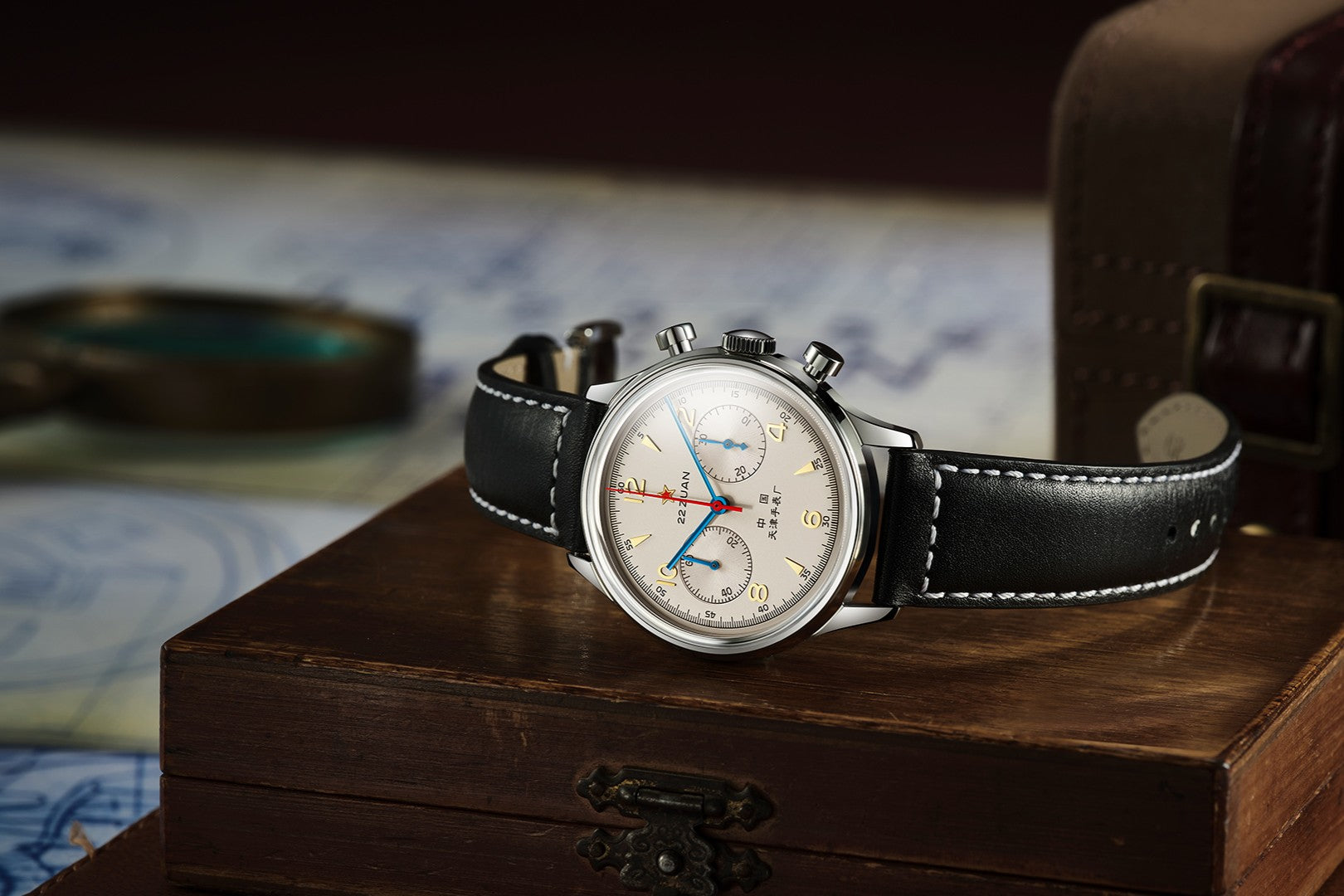
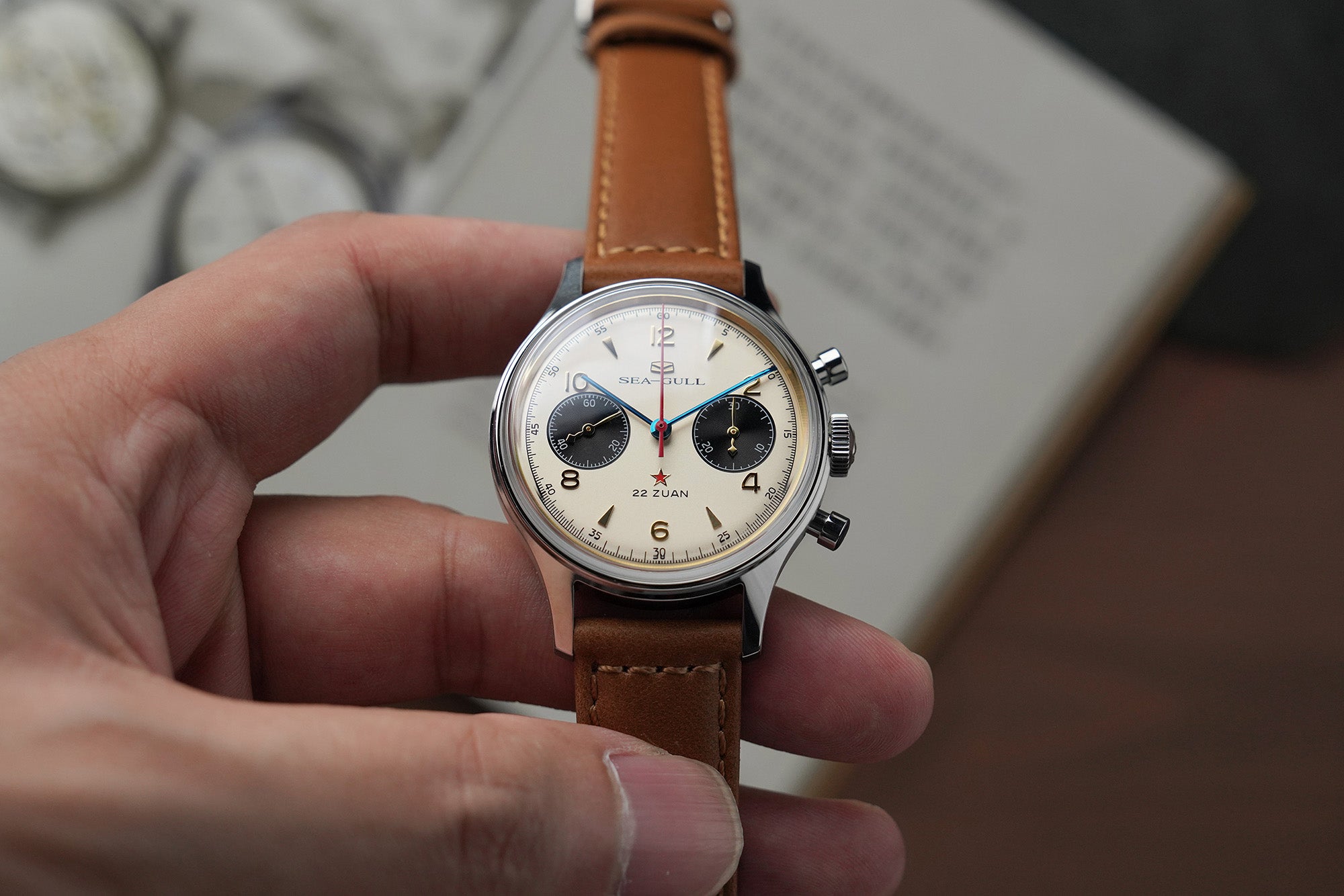
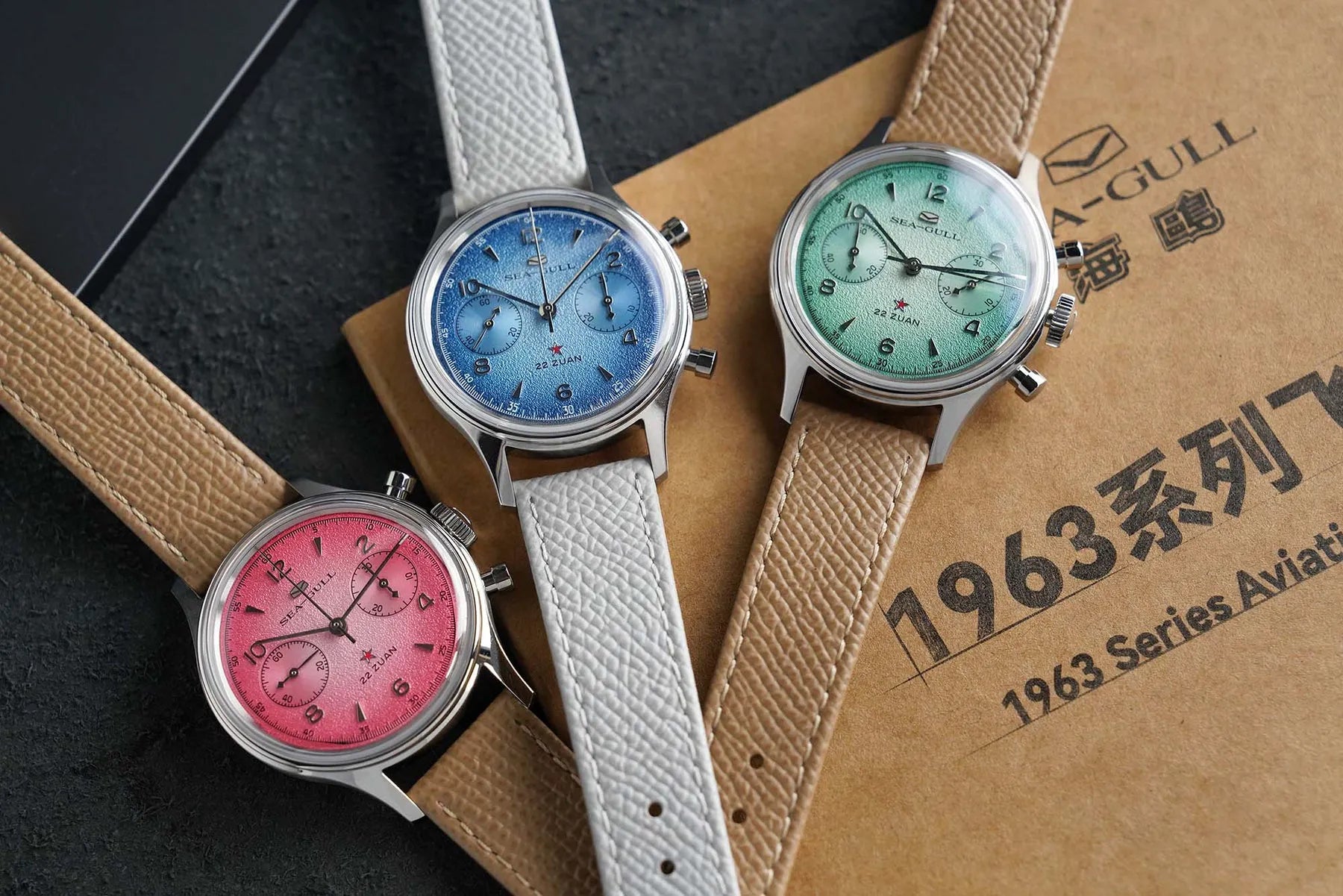
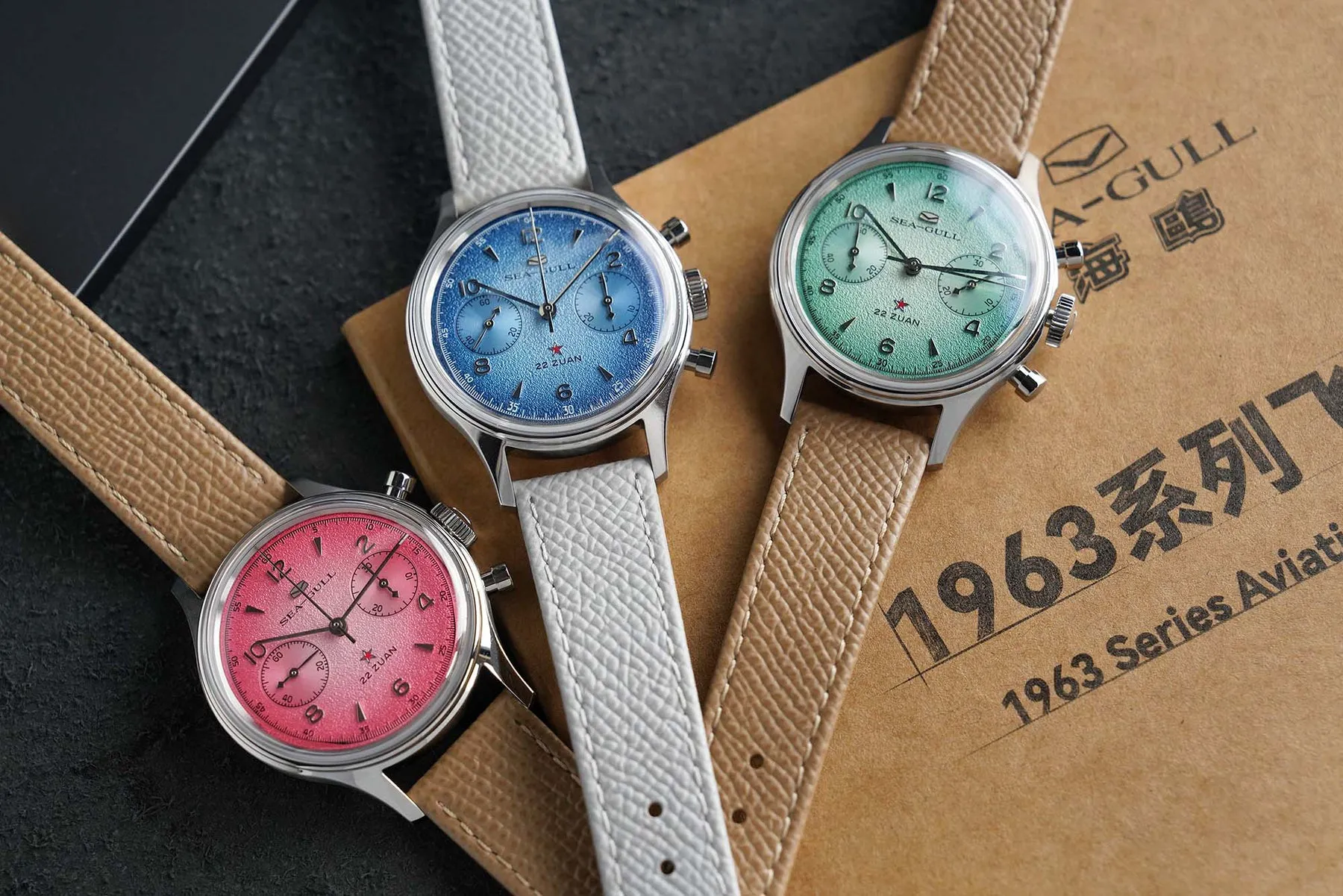
Sea-Gull 1963 Reissue 40mm: This aviation chronograph (approximately 74g with leather/NATO strap, 20mm lug width) comes with leather or NATO options. The warm cream dial and vintage aesthetic pair naturally with brown or tan leather. The 3-bar water resistance rating confirms this is a splash-resistant everyday watch, not a swimming watch—treat the leather strap accordingly.
-
Sea-Gull Five Stars 1955A 38mm: At approximately 57g with a 20mm leather strap, this compact heritage piece (38mm × 12.5mm, 5 bar) suits business-casual and formal office wear. The cream or red dial variants both ship with leather. Its lighter weight and moderate thickness make it comfortable for all-day desk work, but the leather still requires dry-wear habits.
-
Sea-Gull Extraordinary Snowflake 1133A 40mm: This dress watch (approximately 74g, 20mm strap width, 40mm × 9mm, 5 bar) features a polished case and black alligator-pattern leather strap. The thin 9mm profile makes it one of the easiest Sea-Gull watches to wear under a dress-shirt cuff—but alligator-pattern leather still needs gentle, moisture-conscious care.
-
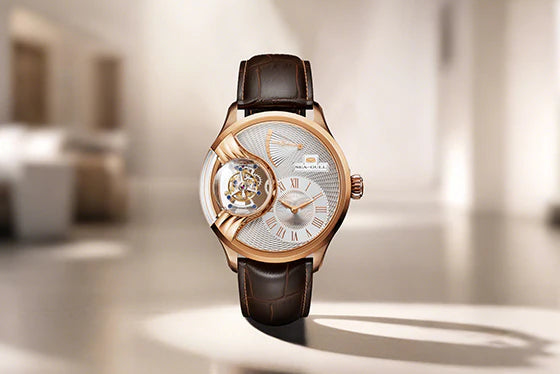
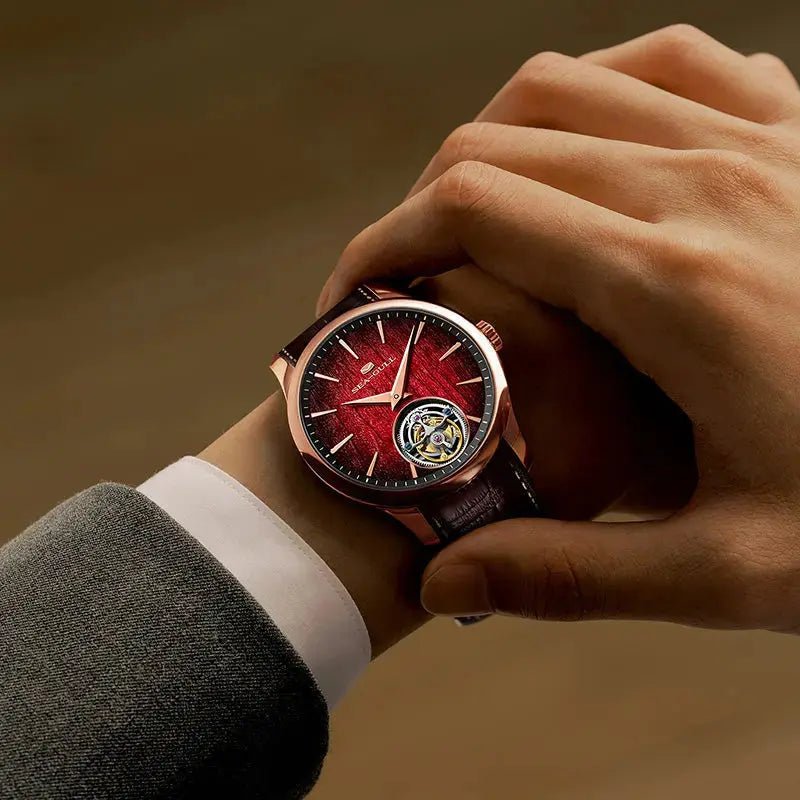
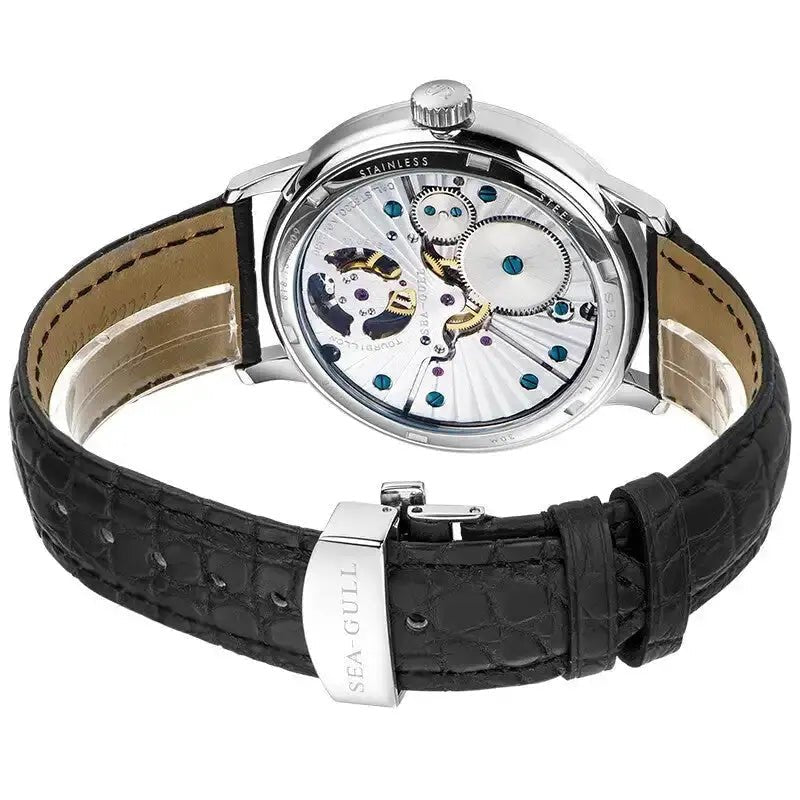
Heritage Tourbillon 8809: This manual-winding tourbillon (approximately 88g, 21mm strap, 42mm × 11mm, 3 bar) is a formal dress watch with a lower water-resistance rating. The 3-bar specification and tourbillon complication make this strictly a dry-wear, careful-handling watch.
When selecting or replacing a leather strap for your Sea-Gull watch, confirm the lug width from your model specifications. Most Sea-Gull leather-strap models use 18mm, 20mm, 21mm, or 22mm widths.
| Daily situation | Best response for the strap | Avoid |
|---|---|---|
| Light rain on the walk to work | Cover the wrist if possible, then blot the strap and air-dry it | Assuming the case rating protects the leather |
| Hand-washing splash | Gently blot moisture as soon as possible | Rinsing the strap again |
| Hot walk or cycling commute | Wipe after wear and let the strap ventilate | Storing it in a closed drawer while damp |
| Desk work | Reduce contact with abrasive desk edges and hard surfaces | Repeatedly dragging the buckle or strap edge across the desk |
| Lotion or sanitizer | Wait until products are dry before wearing the watch | Applying products directly onto leather |
Sea-Gull mechanical watch commuting and office routine
Commuting can expose a watch to crowded platforms, bag straps, rain, rapid indoor-outdoor temperature changes, and accidental impacts. Office wear adds less obvious sources of wear, including keyboard contact, desk-edge abrasion, tight shirt cuffs, and frequent hand washing.
A practical routine helps reduce those risks without making watch ownership feel complicated.
Before leaving home
- Check the buckle, keepers, stitching, holes, and strap ends near the spring bars.
- Do not wear a strap that feels loose, severely stiff, cracked, or thin near the attachment points.
- Keep the crown fully secured according to your model instructions.
During the commute
- Keep the watch clear of hard rails, door edges, and crowded contact points where possible.
- Adjust a backpack or shoulder bag so its strap does not repeatedly rub against the watch.
- If you walk or cycle enough to sweat heavily, consider giving the leather strap a rest after the activity.
At the office
- Remove the watch before hand washing when convenient.
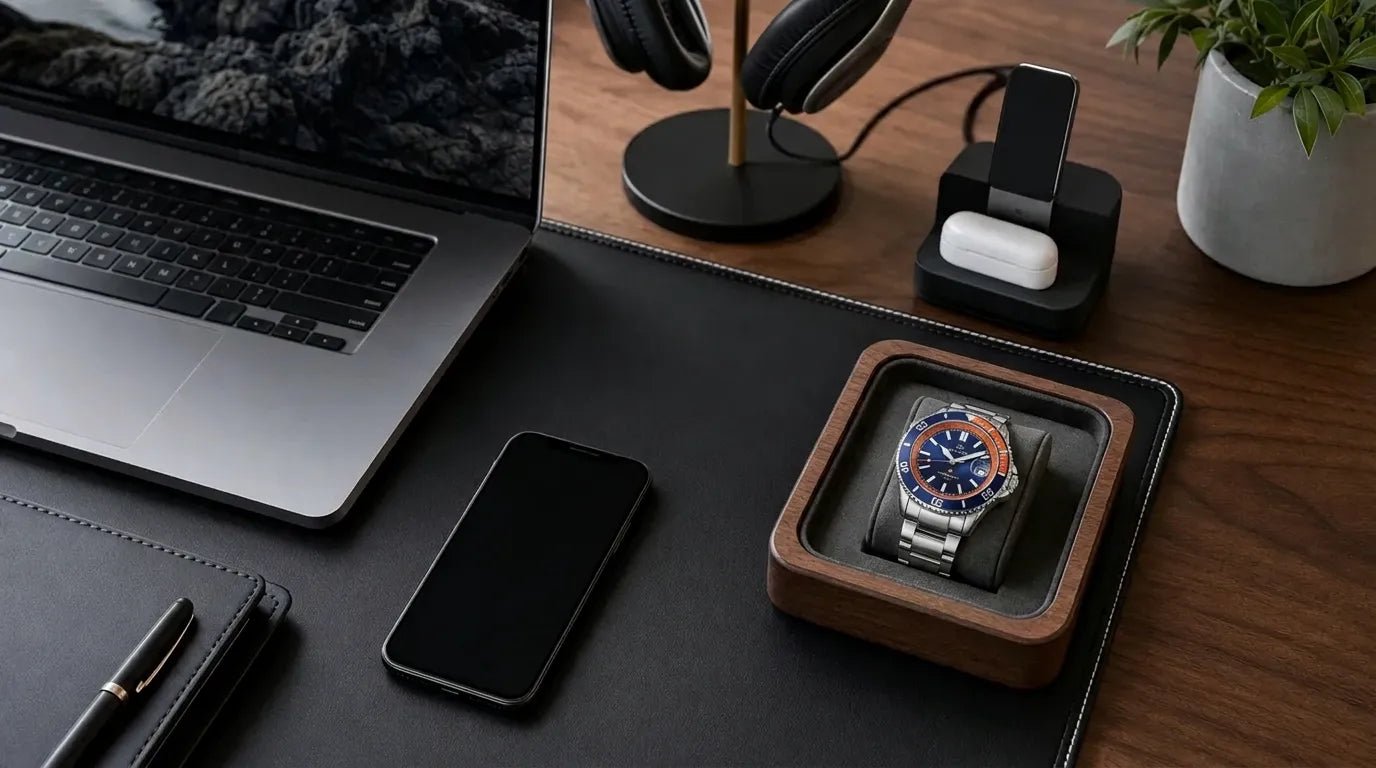
- Use a softer desk surface or mouse mat if the buckle or strap edge repeatedly contacts the desk.
- Do not trap a wet strap beneath a close-fitting sleeve.
- Allow creams, sanitizer, and fragrance to dry before putting the watch back on.
After work
- Wipe the strap with a soft, dry cloth to remove dust, surface moisture, and skin oils.
- If it is damp or sweaty, leave it in a cool, ventilated place at room temperature.
- Store it away from direct light and heat. Longines leather strap care guidance recommends natural room-temperature drying rather than using strong heat or sunlight.
Sea-Gull mechanical watch cleaning by strap material
Not every strap should be cleaned the same way. Smooth leather can tolerate a low-moisture approach, while suede and nubuck need dry-care tools instead. If the original strap maker provides care instructions, follow those first.
| Strap material | Safe baseline care | Avoid |
|---|---|---|
| Smooth leather or calfskin | Soft dry cloth first. For visible soil, use minimal moisture on a cloth and a very small amount of gentle soap if needed | Soaking, vigorous scrubbing, heat drying |
| Suede | Use a soft suede brush or suede eraser for dry dirt | Wet cleaning, smooth-leather conditioner |
| Nubuck | Treat similarly to suede and use gentle dry brushing | Saturation, soap-heavy cleaning, generic conditioners |
| Shell cordovan | Follow the strap maker's guidance and use minimal intervention | Assuming calfskin products are automatically suitable |
| Embossed leather | Wipe gently without aggressive brushing | Abrasive tools that may alter the texture |
| Alligator-pattern leather | Wipe gently following the embossed texture | Over-wetting or harsh scrubbing that may damage the pattern |
| Synthetic or leather-like material | Follow the product-specific care instructions | Applying leather conditioner by default |
Specialist guidance from HODINKEE on cleaning watch straps distinguishes smooth leather from suede and nubuck. It supports minimal water and gentle soap for smooth leather only, while recommending a brush or eraser approach for suede-like finishes.
For smooth leather, use this conservative method:
- Remove loose dust with a clean, soft dry cloth.
- If light soil remains, lightly dampen a cloth. It should not drip or soak the leather.
- Use a very small amount of gentle soap only if necessary.
- Wipe away any residue with a separate lightly damp cloth.
- Pat the strap dry, then leave it at room temperature until fully dry.
- Apply a tiny amount of compatible conditioner only if the strap maker permits it and only after complete drying.
Do not use a radiator, hair dryer, heater, or direct sun to speed up drying. Heat can dry leather unevenly and may contribute to stiffness or distortion.
Sea-Gull mechanical watch maintenance and watch accuracy essentials
Leather care supports comfortable and secure wear, but it is separate from mechanical watch maintenance. The strap can be cleaned at home with care. The movement, seals, crown, pushers, and internal components require model-specific handling and professional assessment when something changes.
For anyone learning how to care for a mechanical watch, these everyday practices matter most:
- Follow your specific model manual for winding direction, power reserve, date setting, and chronograph operation.
- Wind gently when needed and never force the crown.
- Keep the crown secure before daily wear.
- Do not operate the crown or pushers underwater.
- Avoid hard impacts, drops, prolonged vibration, and strong magnetic fields.
- Keep the watch away from magnets, magnet-equipped accessories, and devices that may create magnetic exposure.
The Sea-Gull official FAQ notes that magnetism can cause a mechanical watch to run fast or inaccurately. If a noticeable rate change persists, professional demagnetization or inspection may be appropriate.
Watch accuracy should be evaluated as a pattern, not from one isolated reading. Mechanical watches are assessed by day-to-day variation, and their rate can be influenced by temperature, winding state, wear duration, and movement. Seiko's mechanical watch guidance explains why a mechanical watch can vary under changing conditions.
Movement-specific care for manual and automatic Sea-Gull watches
Different Sea-Gull movements require different daily habits:
Manual-winding chronographs (like the ST1901 in the 1963 Reissue and 1963B):
- Wind daily at approximately the same time for consistent performance
- The ST1901 operates at 21,600 vph (vibrations per hour) with 22 jewels
- Never force the crown past natural resistance
- Use chronograph pushers gently—the column-wheel mechanism requires careful operation
Automatic movements (ST2130, ST17, ST18 series):
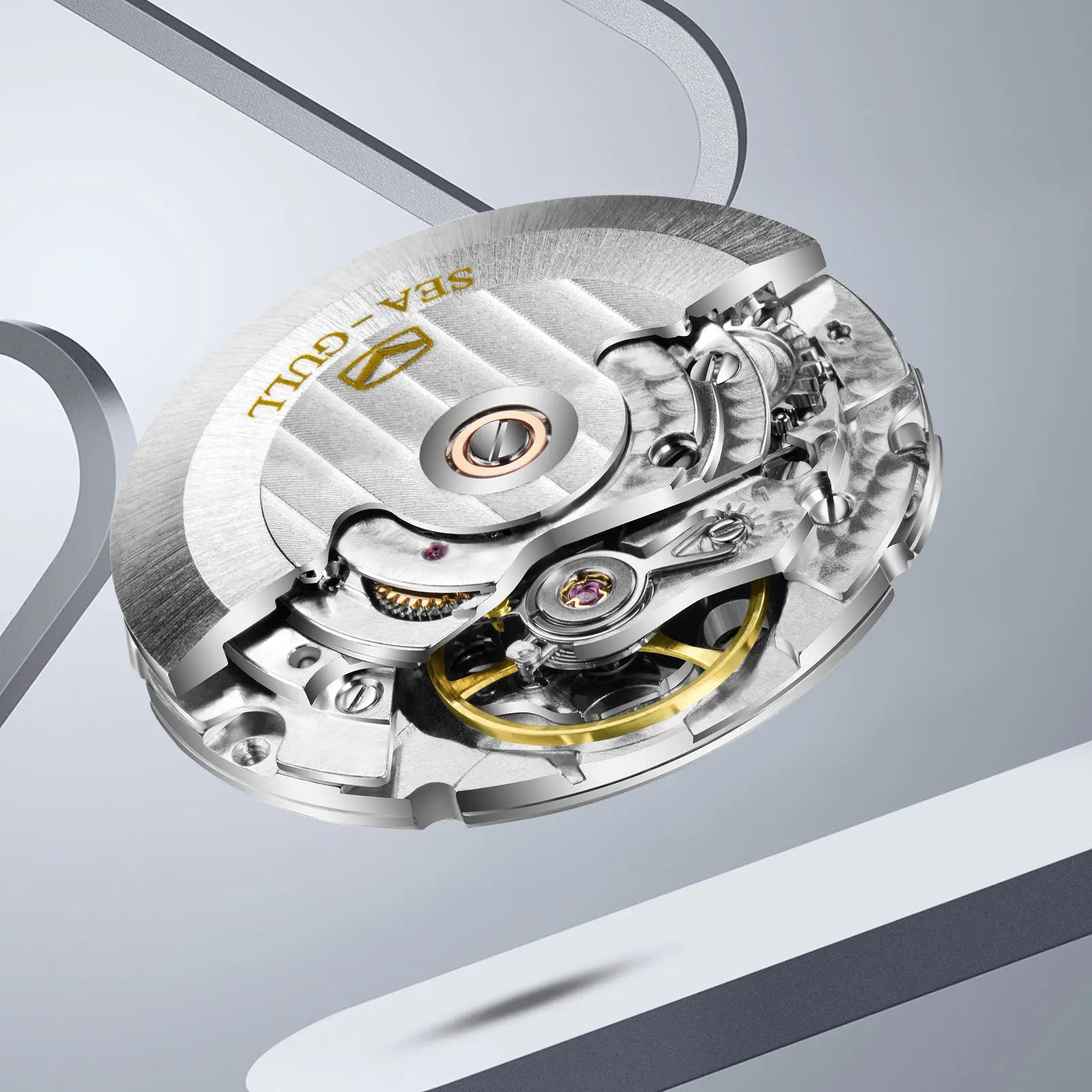
- Most Sea-Gull automatic watches use the ST2130 (28,800 vph, approximately 42 hours power reserve)
- Wear the watch regularly or use a watch winder if storing for extended periods
- The ST17 (in the Polaris 6180) and ST18 (in the Snowflake 1133A) are thinner movements suited to dress watches
- Automatic winding occurs through normal wrist movement—vigorous shaking is unnecessary
Tourbillon movements (ST8610, ST8230, ST8004):
- Handle with extra care due to the delicate tourbillon cage
- The ultra-thin ST8610 (in the Year of the Horse 8850) is only 4.3mm thick
- Avoid impacts and strong magnetic fields especially carefully with tourbillon watches
- Professional servicing is essential for these high-complication movements
| What you notice | Sensible next step |
|---|---|
| Small, consistent daily gain or loss | Compare it with a reliable reference over several days and check your model documentation |
| Sudden, substantial, or persistent timing change | Consider magnetic exposure or a mechanical issue and arrange professional assessment |
| Condensation beneath the crystal | Avoid further water exposure and seek service promptly |
| Crown, pusher, crystal, or case damage after impact | Stop DIY intervention and have the watch inspected |
| Difficult winding or setting | Do not force the crown. Seek a watch professional |
| Loose spring-bar area or insecure strap connection | Stop wearing the watch until the attachment is checked or the strap is replaced |
Watch servicing is the right next step for water ingress, fogging, crown or pusher issues, impact damage, sudden persistent accuracy changes, or a problem with the strap attachment. Do not open the case or disassemble a watch at home.
Sea-Gull mechanical watch strap replacement and care schedule
There is no universal replacement schedule for leather. Climate, perspiration, fit, leather finish, storage, and daily habits all affect its lifespan. Instead of replacing a strap on a calendar, inspect its condition regularly.
Replace the strap when you see or feel:
- Cracks that reach beyond the surface finish.
- Loose, broken, or fraying stitching.
- Elongated buckle holes.
- Weakness, thinning, or splitting near the spring-bar ends.
- Distorted sections that no longer sit securely.
- Loose keepers or a buckle that no longer holds reliably.
- Persistent odor combined with visible wear or breakdown.
A weakened strap is more than a cosmetic concern. If retention is uncertain, stop wearing it until it is replaced or inspected.
| Frequency | Leather strap care | Watch care check |
|---|---|---|
| Daily | Wipe dust, sweat, and surface moisture with a soft dry cloth | Confirm crown is secure and check for visible damage |
| Weekly | Inspect holes, edges, stitching, keepers, buckle, and spring-bar ends | Look for impacts, loose parts, or unusual operation |
| Monthly | Clean smooth leather only if needed and assess flexibility | Compare timekeeping against a reliable reference over several days |
| Seasonal | Adapt to hot, humid, rainy, or high-sweat conditions | Review whether your activity suits the watch and strap combination |
| When symptoms appear | Replace a worn or insecure strap | Seek professional help for fogging, damage, or major persistent rate changes |
When it is time for a new strap, browse Sea-Gull replacement and alternate straps. If you prefer a conventional fastening style, see the Leather Strap Original Pin Buckle. For a different closure style, review the Leather Strap Push Button Hidden Clasp. Check the listed lug width and product details before ordering, since compatibility should be confirmed for the individual watch.
Strap width reference for popular Sea-Gull leather-strap models
| Model | Lug Width | Case Diameter | Typical Strap Style |
|---|---|---|---|
| 1963 Reissue 40mm | ~20mm | 40mm | Leather or NATO |
| 1963B Meteorite 37.3mm | ~18mm | 37.3mm | Leather or Milanese |
| Five Stars 1955A 38mm | ~20mm | 38mm | Leather |
| Wuxing 1955 39mm | ~20mm | 39mm | Leather |
| Polaris 6180 40mm | ~20mm | 40mm | Steel bracelet + extra leather |
| Snowflake 1133A 40mm | ~20mm | 40mm | Alligator-pattern leather |
| Heritage 8809 Tourbillon | ~21mm | 42mm | Leather |
| Year of the Horse 8850 | ~21mm | 42mm | Leather |
| Heritage Calendar Tourbillon ST8004ZS | ~22mm | 43mm | Leather |
| Open Heart 622/624 | ~20mm | 42mm | Leather |
| Master M160S/M162S/M163S | ~20mm | 39mm | Steel bracelet |
A Sea-Gull watch care guide should make ownership easier, not more restrictive. Keep the leather dry, clean it gently for its specific finish, let it air out after commuting, and treat structural damage as a reason to replace the strap. Pair those habits with careful winding, magnetic awareness, and timely professional support, and your watch can remain ready for both the office and the journey there.