


From the First Tee to the Clubhouse: Choosing a Watch for Cool-Weather Golf
Cooler mornings and crisp fairways in late autumn and winter present unique considerations for a wristwatch compared to a warm summer afternoon. From frosty first tees to layered merino sleeves and post-round gatherings, choosing a watch for golf in cooler weather involves three distinct decisions: how to manage a mechanical movement during active play, what fits comfortably beneath cold-weather cuffs, and what transitions smoothly into the clubhouse setting.
Mechanical realities on the first tee
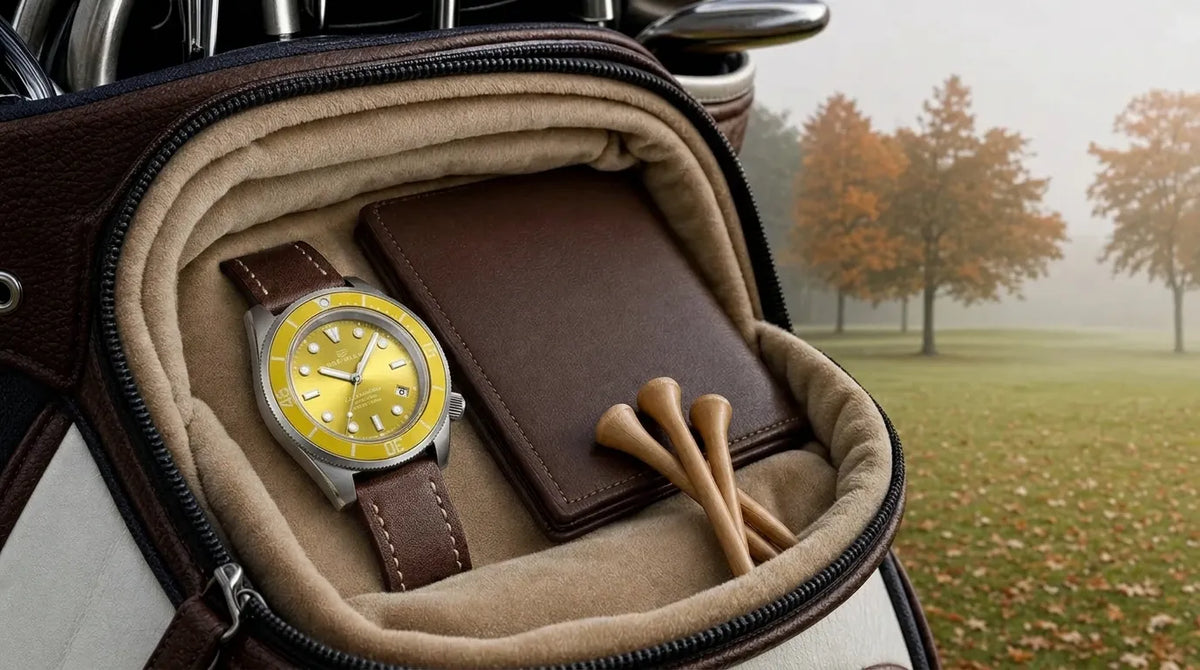
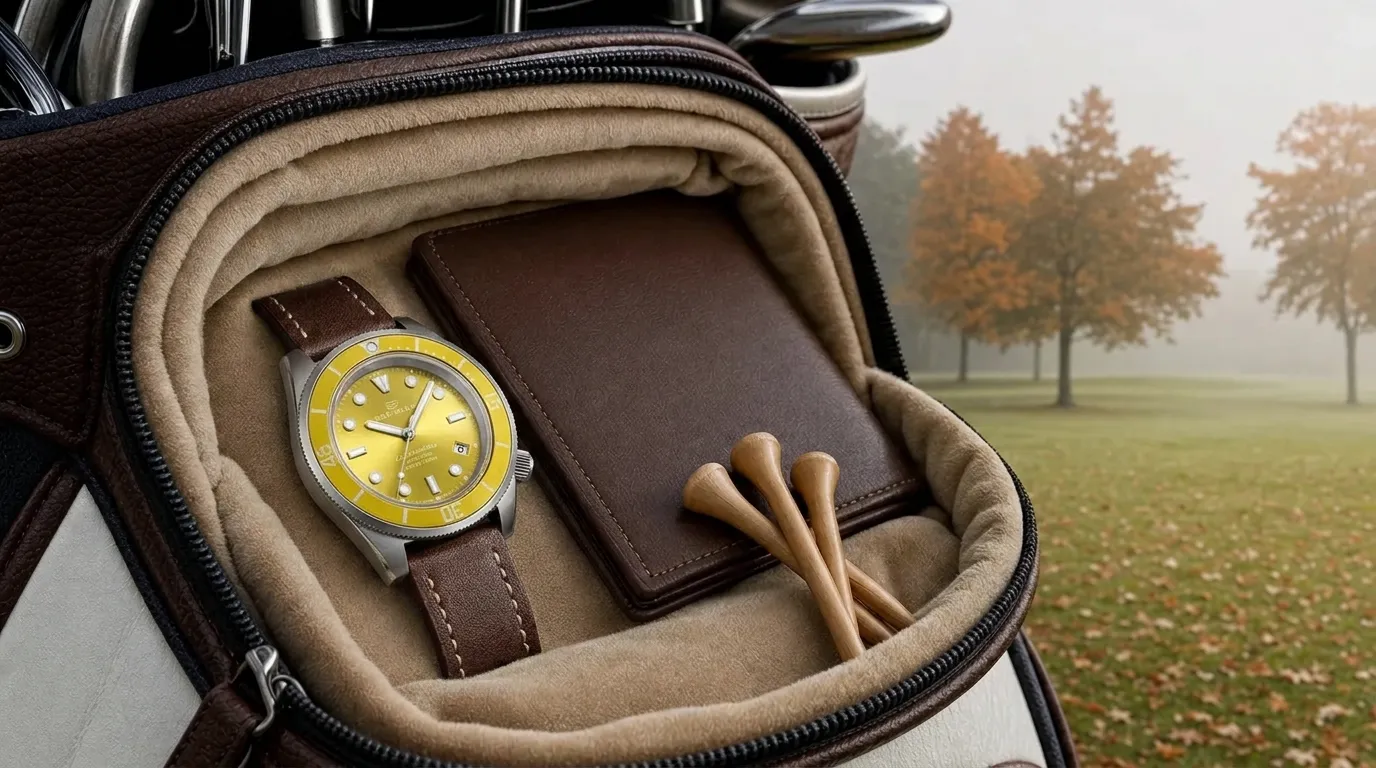
The first decision arises before a tee touches the turf: should a mechanical watch stay on the wrist during a full swing, or find a secure spot in a golf bag's lined valuables pocket?
Recreational and competitive golfers routinely generate driver clubhead speeds between 90 and 123 mph, but the mechanical hazard to a wristwatch stems from collision duration and vibration transmission. Ball-to-clubface impact lasts roughly 0.4 to 0.6 milliseconds, generating instantaneous clubhead deceleration approaching 2,000g. Although the shaft, elastomeric grip, and forearm tissue dampen much of that force, sharp, high-frequency vibrations still reach the lead wrist—especially on firm autumn turf strikes or heavy divots. A loosely fitted bracelet can also create secondary case slap against the radius bone at follow-through.
How a timepiece responds depends on its architecture:
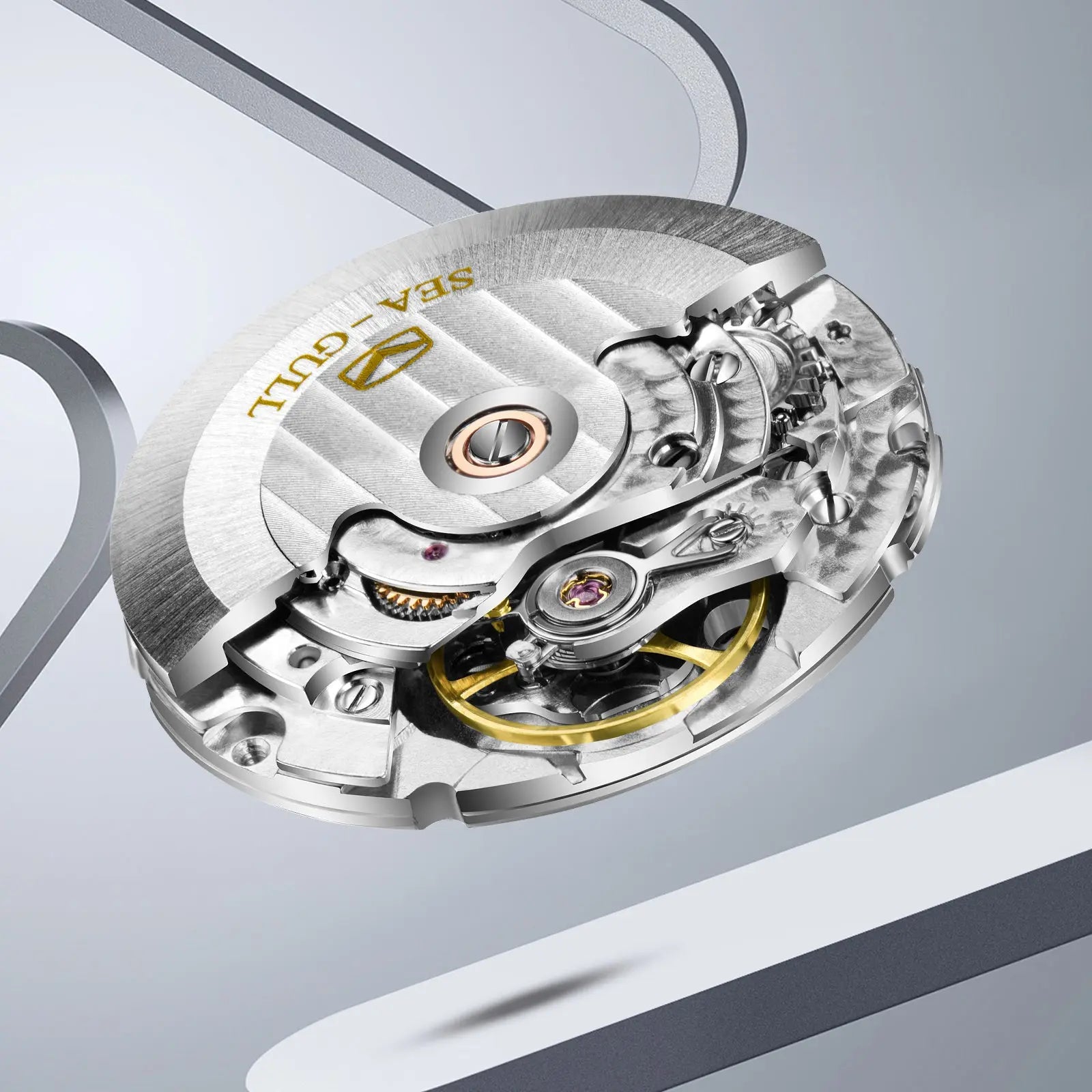
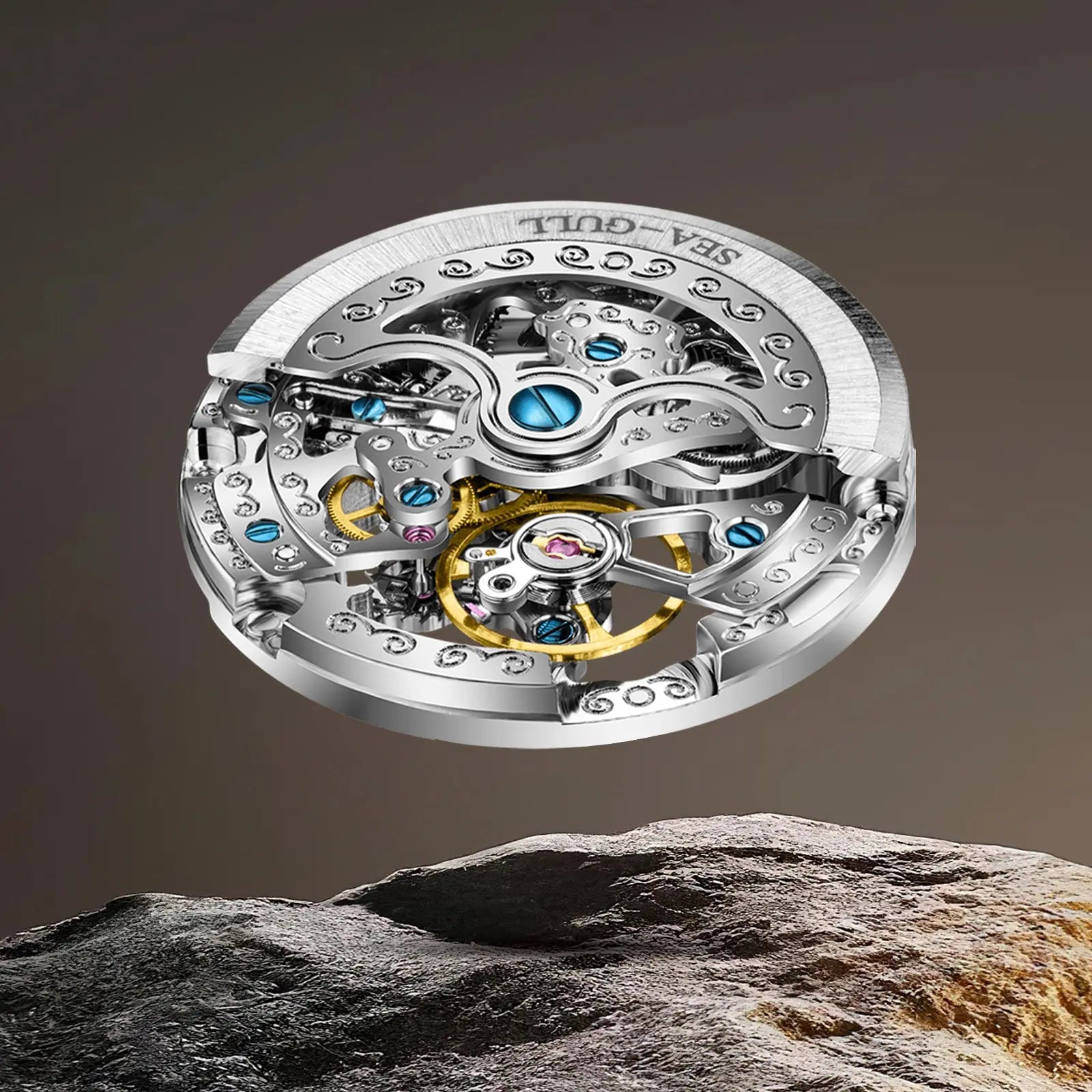
- Automatic movements: An automatic caliber relies on an oscillating rotor mounted on a central bearing or axle. Under sudden angular acceleration, the rotor generates inertial torque that can stress the axle or cause the weight to graze internal bridges. More critically, the balance wheel oscillates on microscopic pivots thinner than a human hair; repetitive lateral whips can disrupt hairspring concentricity or induce erratic amplitude.
- Manual-wind movements: Removing the oscillating rotor eliminates the largest free-moving inertial mass inside the case, preventing rotor-axle shear. However, the balance staff, pallet fork, and escapement remain equally sensitive to sharp impact vibrations.
- Quartz movements: Regulated by an electronic crystal oscillator rather than a mechanical balance assembly, a quartz caliber avoids balance-staff and rotor vulnerabilities altogether.
Neither quartz nor mechanical timekeeping is inherently superior, nor is automatic winding universally better than manual winding; each serves a distinct purpose. For full-power play, wearing a light quartz watch—or stowing a mechanical timepiece in a padded bag pocket—remains the wisest course. If a mechanical watch is stowed in your bag, keep it well separated from magnetic rangefinder mounts, putter covers, and towel clips, which can magnetize a metallic hairspring.
Material comfort in a watch for cool weather golf
Walking brisk, dewy fairways, putting on the practice green, or playing a relaxed nine calls for a watch that accounts for material physics and thermal behavior. The moment one steps onto a chilly tee box, a watch case's thermal conductivity and density become immediately apparent against the skin.
Titanium alloy, with a mass density of roughly 4.43 to 4.51 g/cm³, is approximately 45% lighter than 316L stainless steel (7.90 to 8.00 g/cm³) for an equivalent volume. Equally important for autumn play, titanium alloys conduct heat at less than half the rate of stainless steel, reducing the initial cold shock of metal on a frosty morning and minimizing wrist fatigue under long sleeves.
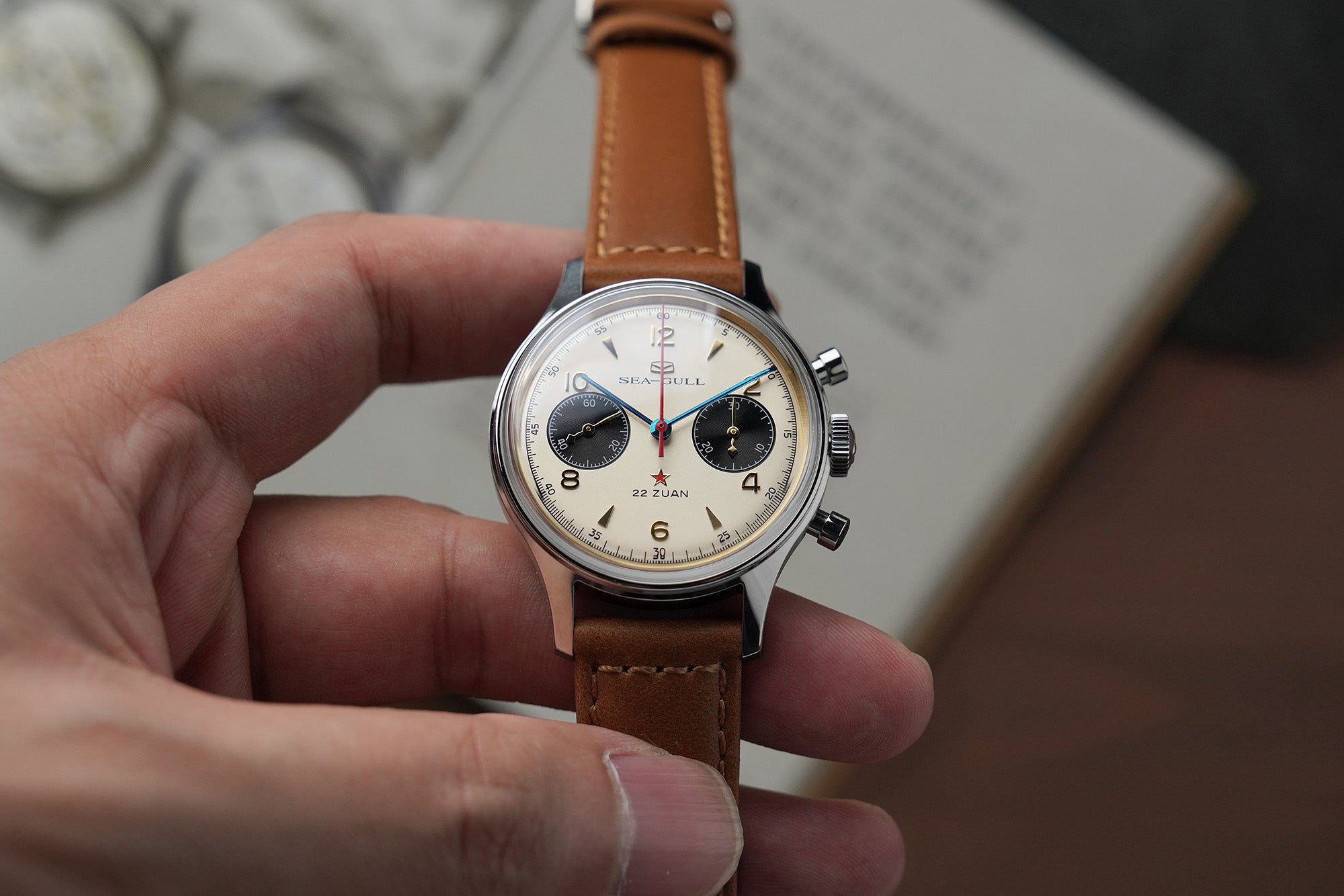
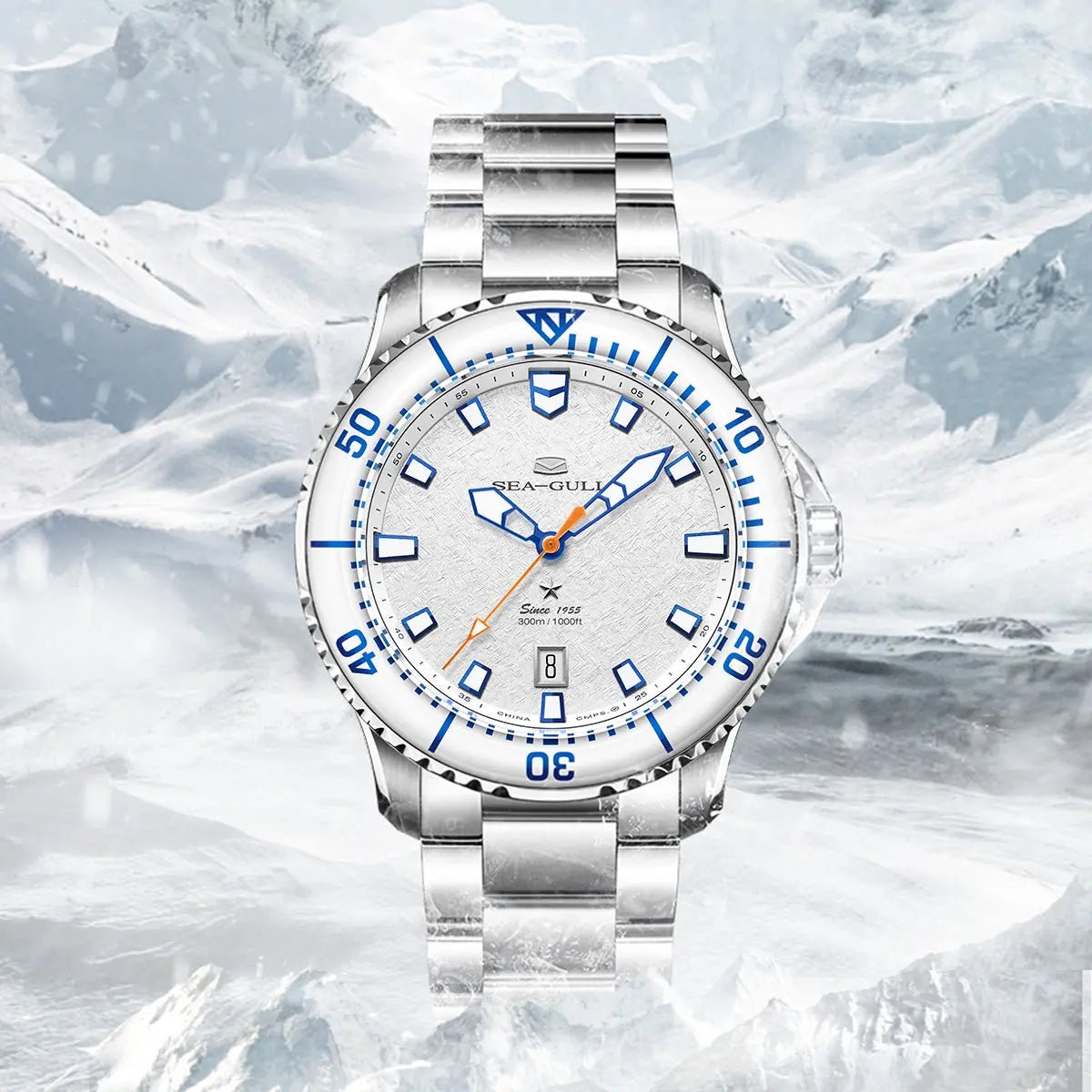
For players prioritizing low mass and confidence in damp conditions while walking the course, the Ocean Series Colorful Titanium Alloy 41mm offers a balanced 41 mm size. Its titanium case provides a warmer feel, and an extra strap is included for adaptable wear. The 200M water resistance provides a generous laboratory-tested static pressure margin against autumn rain and wet turf, though any water-resistance rating should be treated as a tested condition rather than a permanent guarantee. Because rapid temperature shifts from cold fairways to heated interiors can stress seals and invite condensation, never pull or operate a watch crown while the case is cold or damp.
Sleeve clearance and under-cuff geometry
Cool-weather golf introduces a dense layering system—typically a thermal base layer, a fine-gauge sweater, and a windproof or rain shell with elasticized cuffs. As the wrists hinge at address and the top of the backswing, a tall case or aggressive bezel can snag on ribbed fabric, bunching sleeves along the forearm and pressing the crown into the back of the hand.
| Model | Case Material | Verified Diameter | Verified Profile & Weight | Rated Water Resistance | Primary Cool-Weather Advantage |
|---|---|---|---|---|---|
| Ocean Series (1300–1304) | Titanium Alloy | 41 mm | Lightweight titanium alloy; includes extra strap | 200M (lab-rated) | Low thermal shock on cold mornings and high sealing margin for damp rounds |
| Natural Series Polaris (6180) | 316L Stainless Steel | Approx. 40 mm | Approx. 10 mm thin; 126 g net weight | 5 bar / 50M (lab-rated) | Ultra-slim clearance under tight merino and rain-shell cuffs |
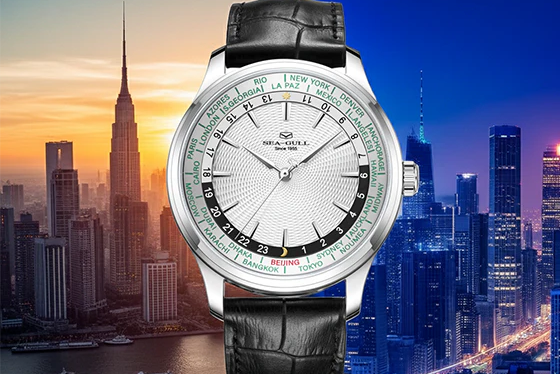
| GMT World Time (1084) | Mechanical GMT Case | 41 mm | Sub-second dial with 24-hour world time | Standard everyday rating | Multi-zone itinerary tracking for destination golf trips and clubhouse wear |
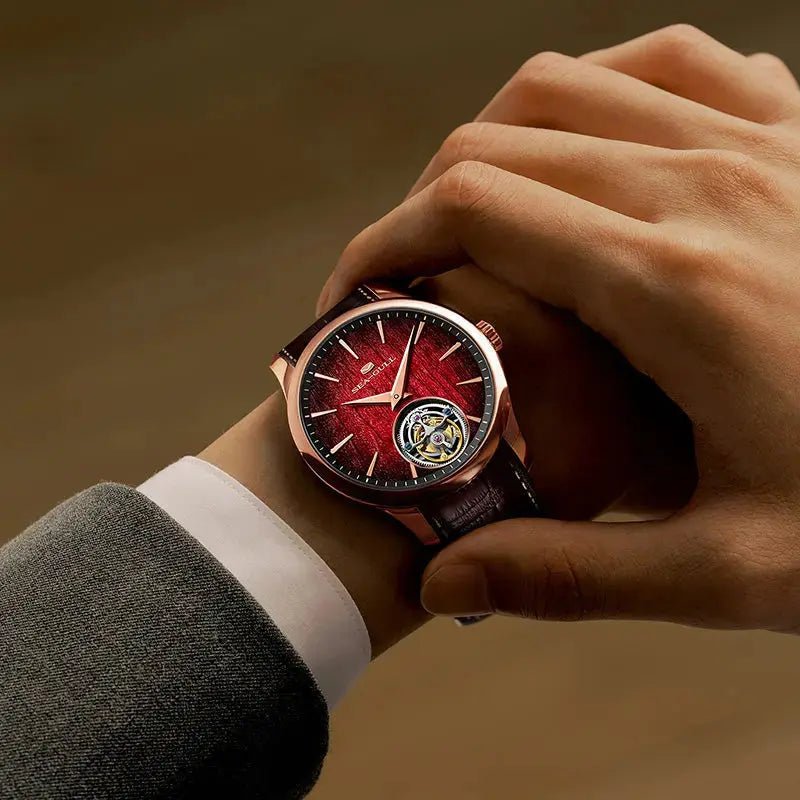
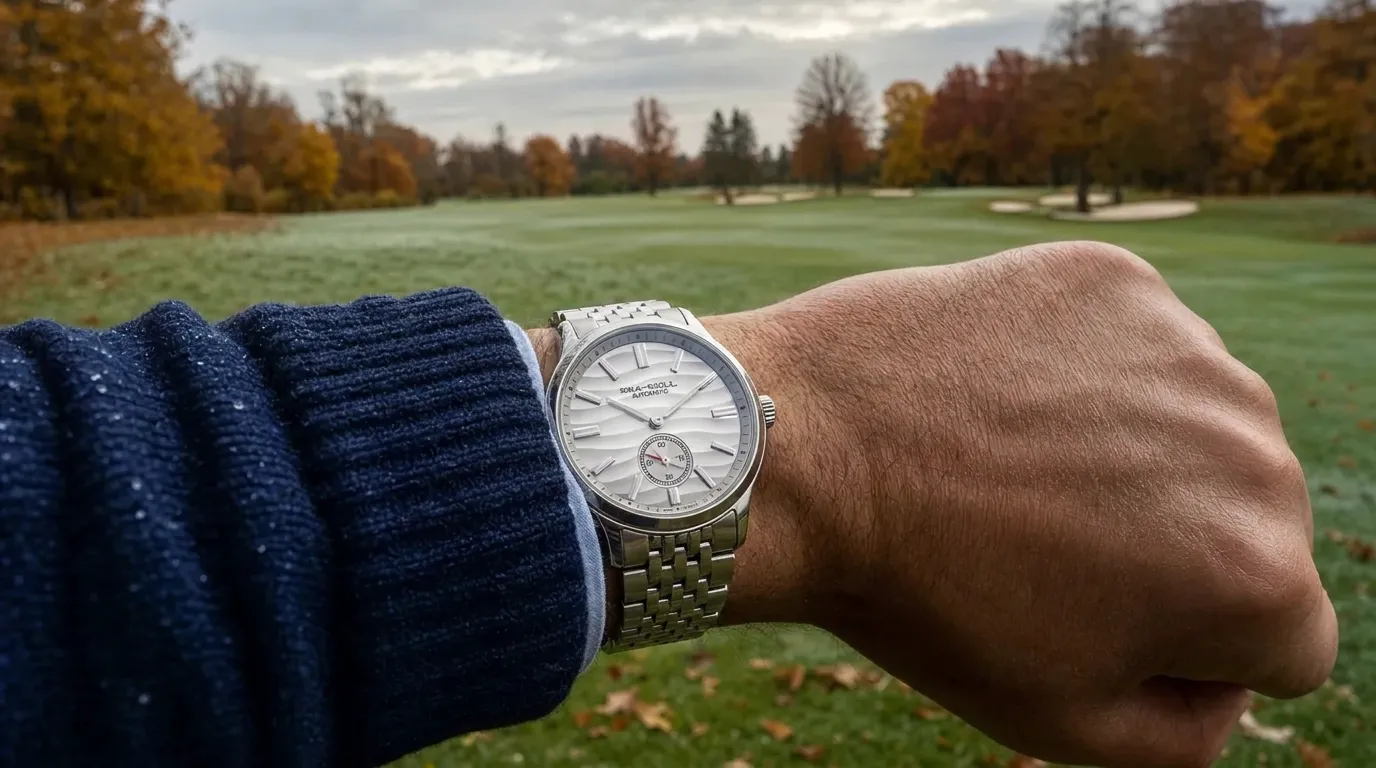
Clearing layered cuffs effortlessly requires a compact diameter and a restrained vertical profile. The Natural Series Polaris Sub Dial 6180 addresses this directly, measuring approximately 40 mm in diameter and just 10 mm in thickness. It is built around the ultra-thin ST17 automatic movement, which operates at 21,600 vph with 17 jewels and an approximate 40-hour power reserve. Topped with synthetic sapphire crystal and fitted to a 316L stainless steel bracelet with a push-button hidden clasp (weighing 126 g in total), its 10 mm silhouette glides smoothly beneath sweater cuffs without catching. Its 5 bar water resistance handles light rain or post-round handwashing.
From the 18th green to the clubhouse and travel itineraries
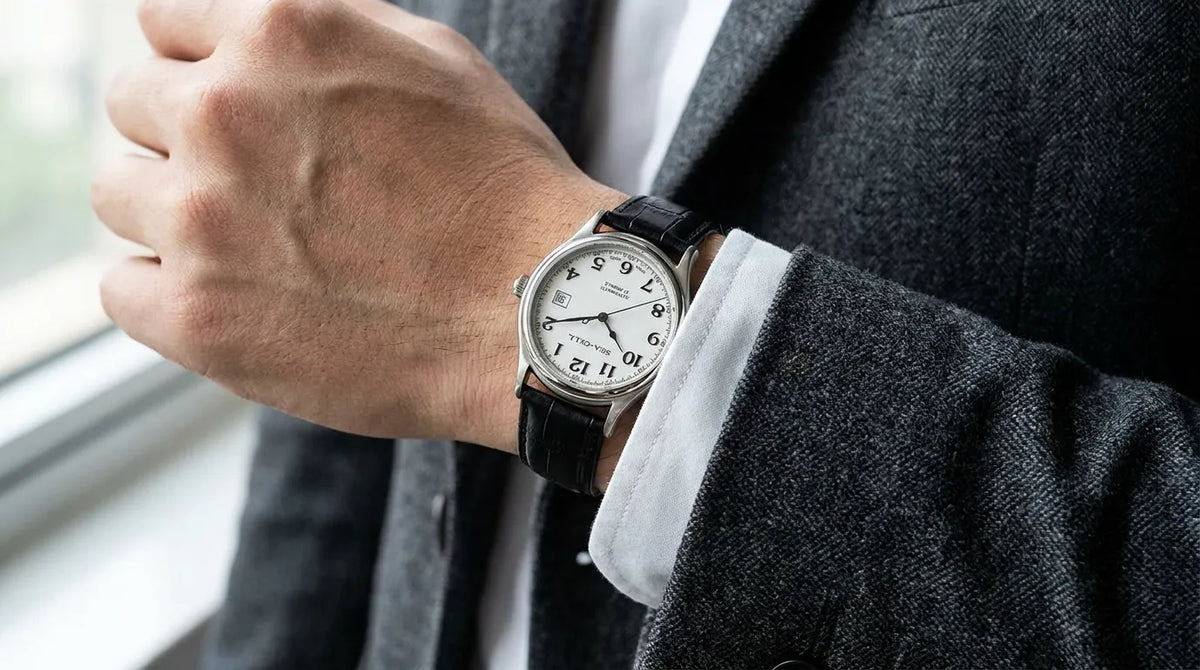
Once the clubs are cleaned and stowed, the third decision comes into focus: how the watch wears at the clubhouse or during a multi-day golf trip. A bulky plastic sports tracker feels out of place beside a tweed jacket or cashmere crewneck, but the small-seconds layout and luminous display of the Model 6180 transition smoothly into evening dining.
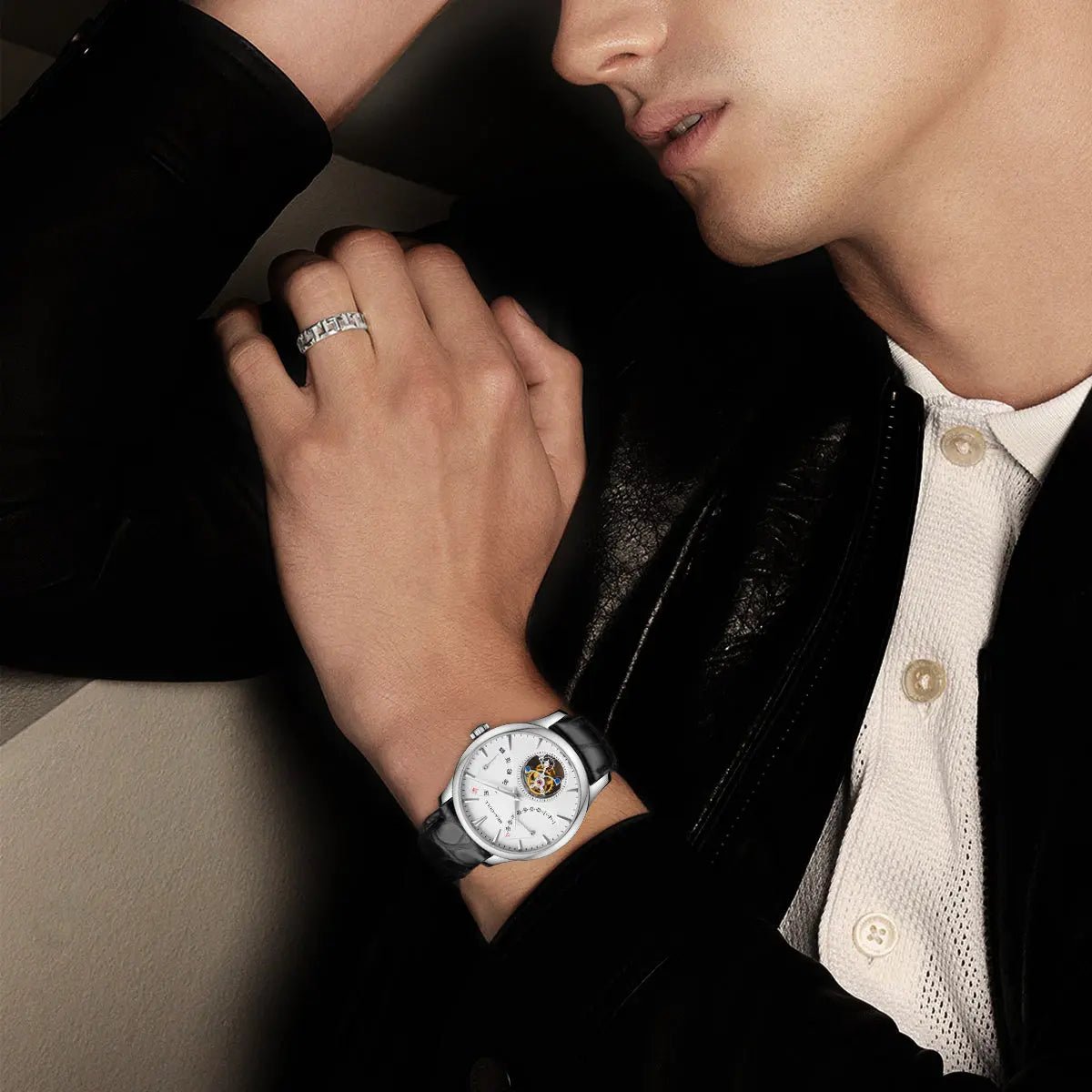
For golfers traveling to find firmer fairways in late autumn, a dual-time display is valuable in airport lounges and the clubhouse. When managing time differences with GMT watches, the GMT Watch World Time 1084 offers a 41 mm mechanical watch with a sub-second dial and world-time layout. It allows a traveling player to coordinate local tee times, return flights, and home schedules at a glance.

Ultimately, navigating cool-weather golf with a discerning eye means respecting both a watch's mechanical limits and seasonal ergonomics—protecting delicate escapements during full-speed driver swings, choosing lightweight titanium or slim 10 mm steel profiles under layered sleeves, and wearing a refined piece suitable for the clubhouse long after the final putt drops.

اترك تعليقًا
This site is protected by hCaptcha and the hCaptcha Privacy Policy and Terms of Service apply.