

Chronograph Timing Log Template: Track Short Intervals with Confidence
A chronograph watch turns short intervals into clear, repeatable records when each timing session uses the same start trigger, stop trigger, and review routine. Whether you are pacing a walk, monitoring a cooking stage, or comparing focused-work sessions, a simple log gives every elapsed minute a useful context.
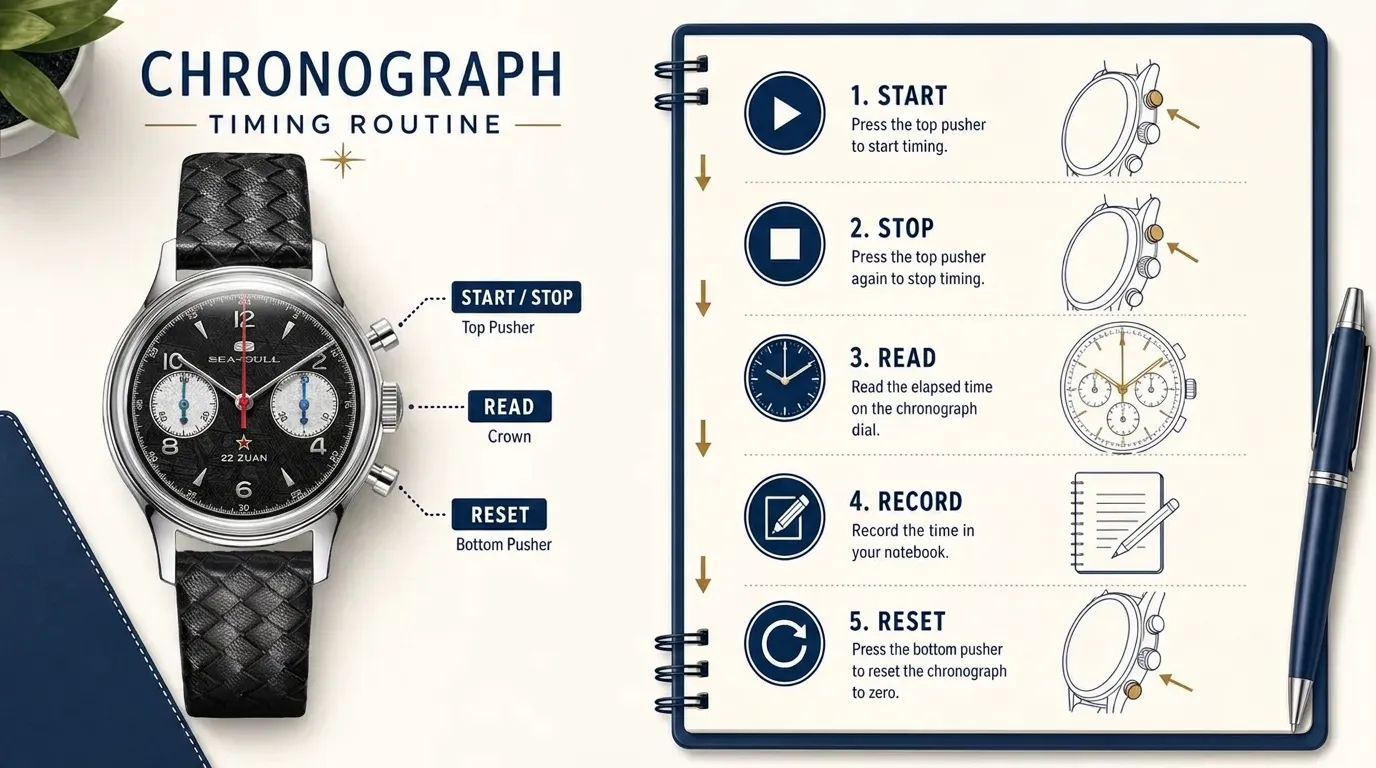
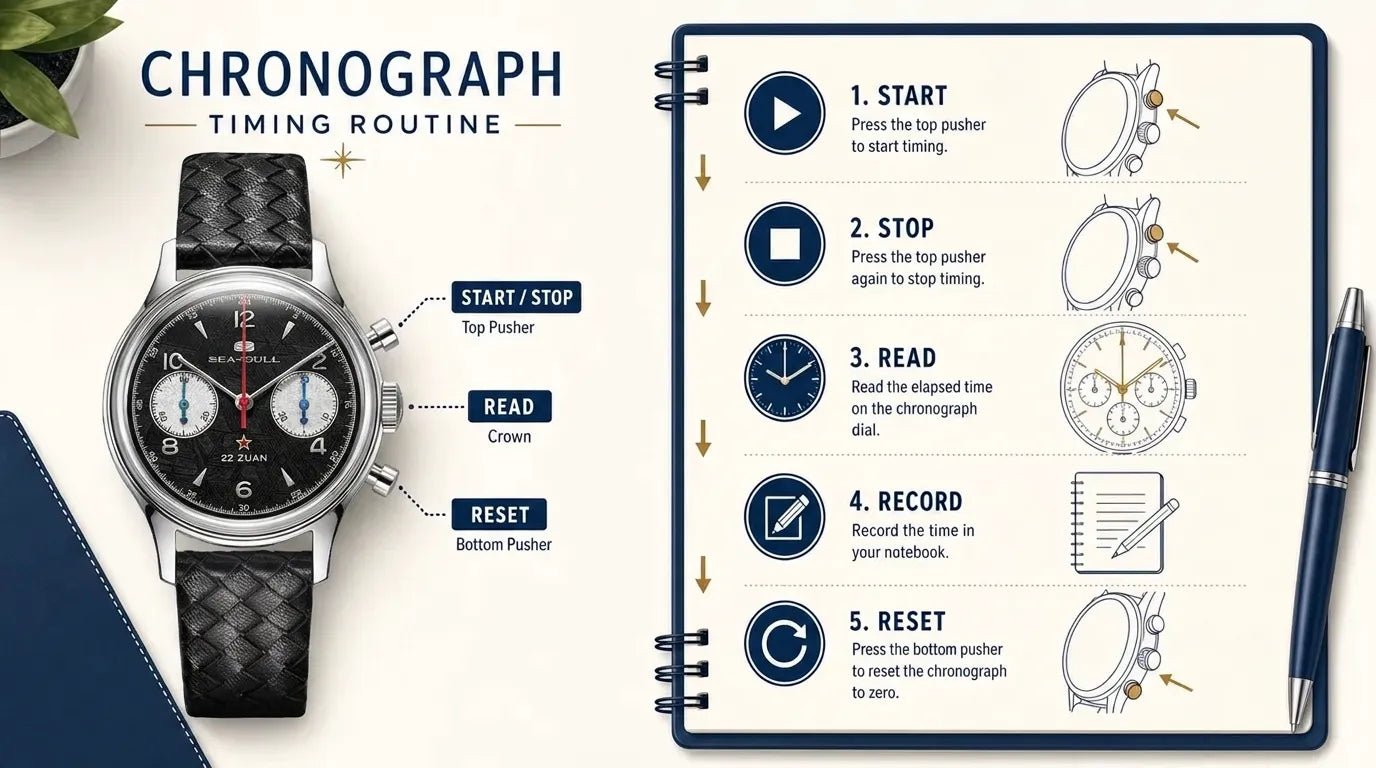
How a chronograph watch timing routine creates consistent short-interval records
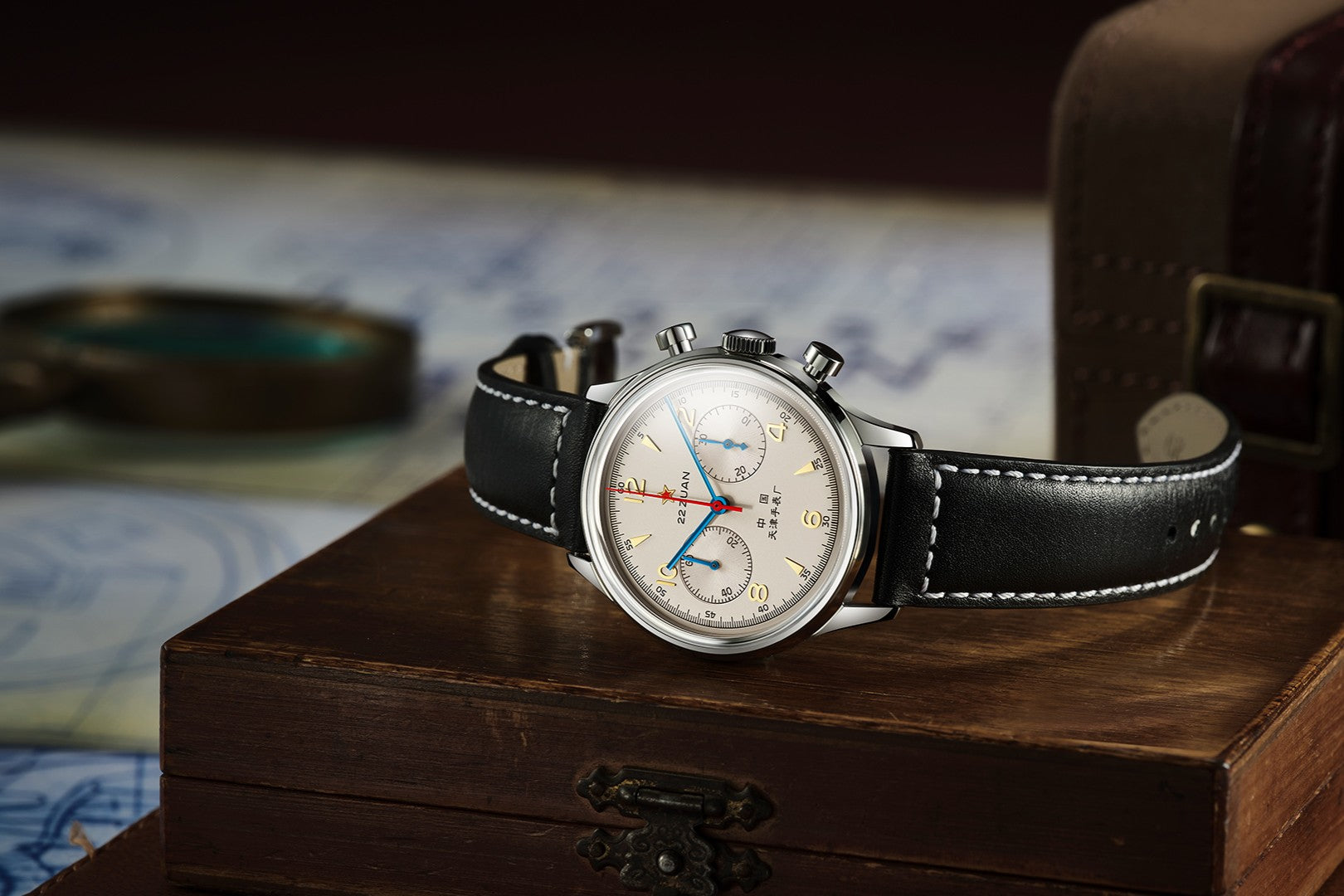
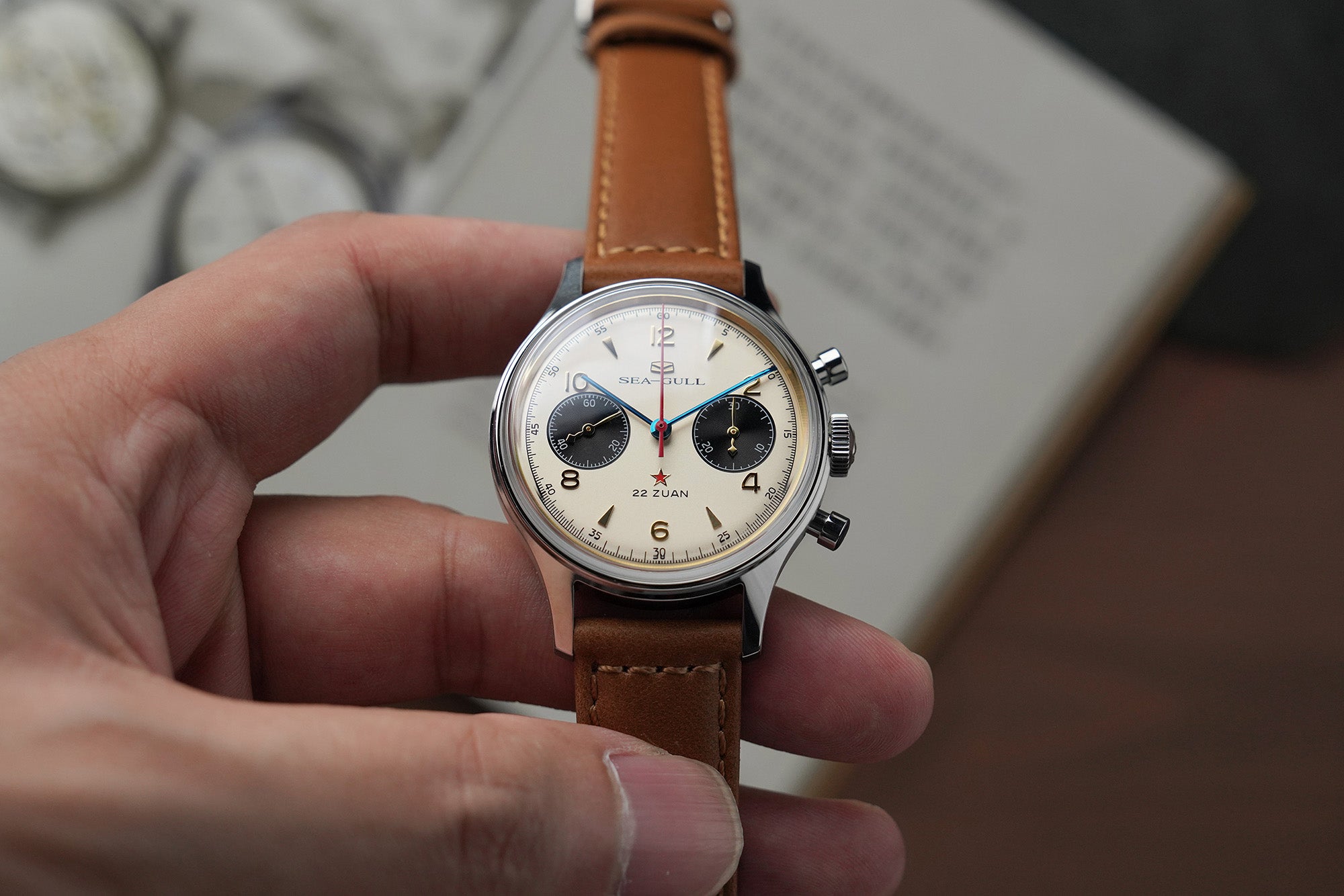
A chronograph adds an independently controlled elapsed-time function to regular time display. Its timing hand can be started, stopped, and reset while the watch continues to show the current time. The Fondation de la Haute Horlogerie guide to chronographs describes this as the defining function of the complication.
Consistency begins before pressing a pusher. Define one visible event that starts the interval and one that ends it. "Water reaches a gentle simmer" is more useful than "start cooking." "First step on the marked route" is clearer than "begin walking."
Use the same sequence for every attempt:
- Confirm the elapsed-time hands are at zero.
- Press start at the defined trigger.
- Press stop at the defined endpoint.
- Read the central elapsed-seconds hand, then any elapsed-minute register.
- Write the result before resetting.
- Reset only after recording the stopped result.
A conventional chronograph should normally be stopped before reset. Flyback designs use a different operating sequence, so follow the instructions supplied with that watch.
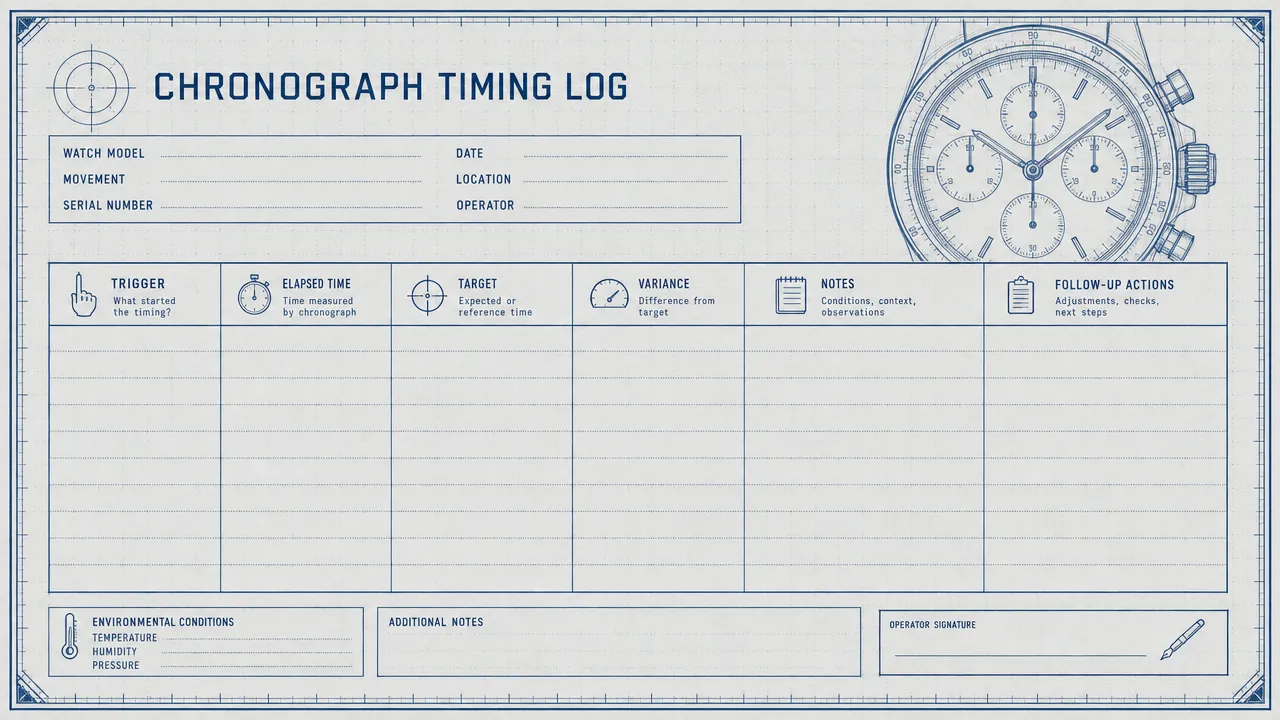
Chronograph watch timing log template for paper or spreadsheets
The best timing log captures both the number and the conditions around it. Copy this table into a notebook or spreadsheet, using one row for each attempt.
| Attempt | Start trigger | Stop trigger | Actual time | Target time | Variance | Conditions and notes | Follow-up action |
|---|---|---|---|---|---|---|---|
| 1 | |||||||
| 2 | |||||||
| 3 | |||||||
| 4 | |||||||
| 5 |
Add these details above the table:
| Field | What to record |
|---|---|
| Date | The day of the timing session |
| Activity | Broad activity, such as cooking, exercise, or focused work |
| Stage or task | The exact action being timed |
| Location or conditions | Relevant details, such as route, heat setting, or level of distraction |
Calculate variance by subtracting target seconds from actual seconds. A zero result meets the target. A positive result ran longer than planned, while a negative result finished sooner.
For example, an 8:03 cooking stage against an 8:00 target has a variance of +3 seconds. The number is helpful, but the note explains the result: heat setting, lid position, or ingredient quantity may matter more than a single attempt.
How to read a chronograph watch before logging the result
The long central hand on many chronographs measures elapsed seconds when the timing function is active. Small registers may show elapsed minutes or hours, depending on the design. Do not assume that every central hand is a continuously running seconds hand.
Read the result while the chronograph is stopped. This preserves a stable visual reference and reduces the chance of transcribing the wrong figure. Then write the result immediately.
Smooth, direct pusher pressure supports a controlled routine. Operate the crown and pushers in dry conditions unless the specific watch documentation states otherwise. A timing log is designed for personal comparison and everyday repeatability, not laboratory-grade measurement.
Useful short-interval applications include:
- Exercise intervals and recovery periods.
- Coffee brewing, simmering, and baking stages.
- Meeting agenda segments.
- Focused writing or sketching blocks.
- Workshop tasks, such as sanding or test-fitting.
- Travel transitions, including walking routes and connection buffers.
A tachymeter may be present on some designs, but it is not needed for ordinary elapsed-time logging. The log needs only a clear start, a clear stop, and a legible elapsed-time reading.
Why a mechanical chronograph watch rewards regular use
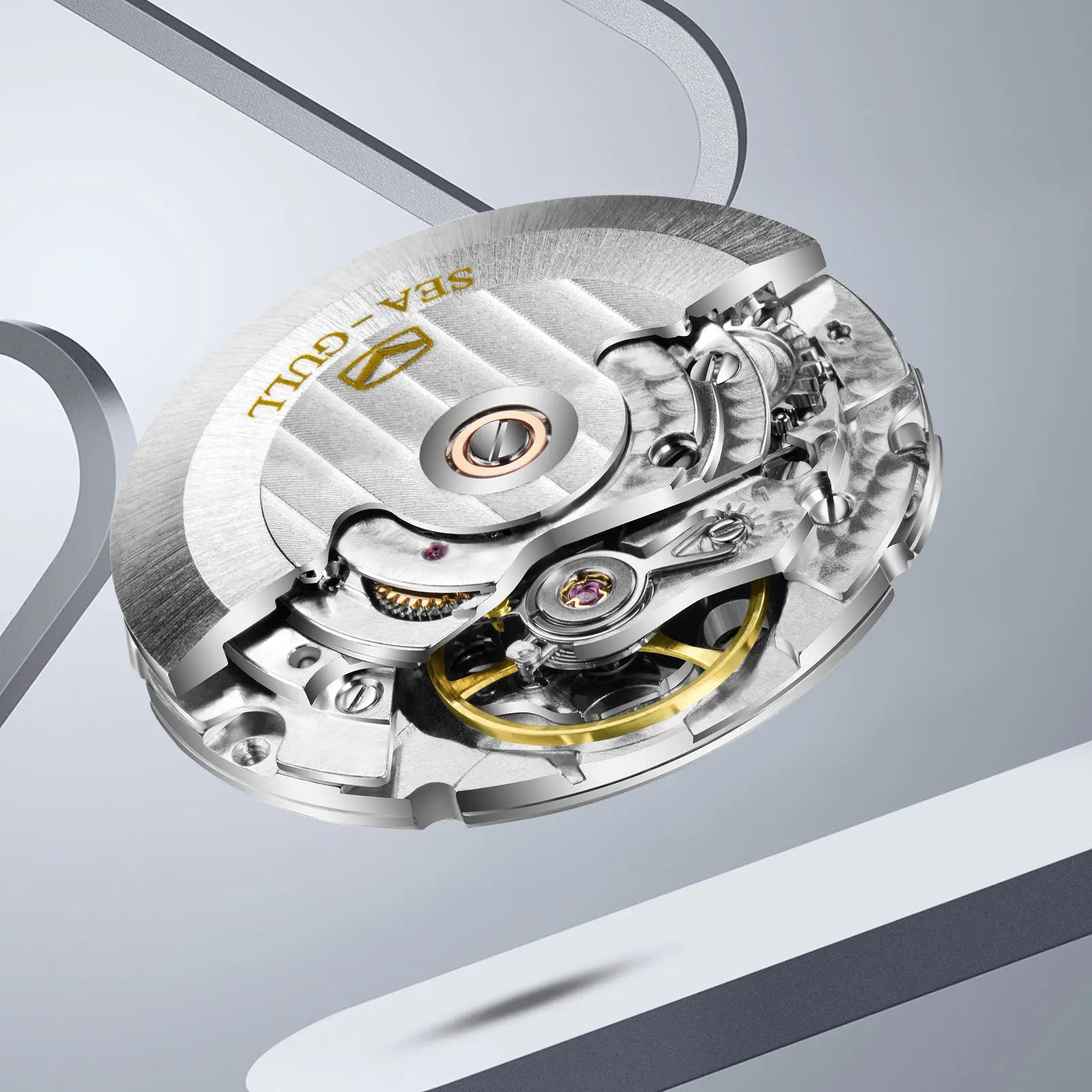
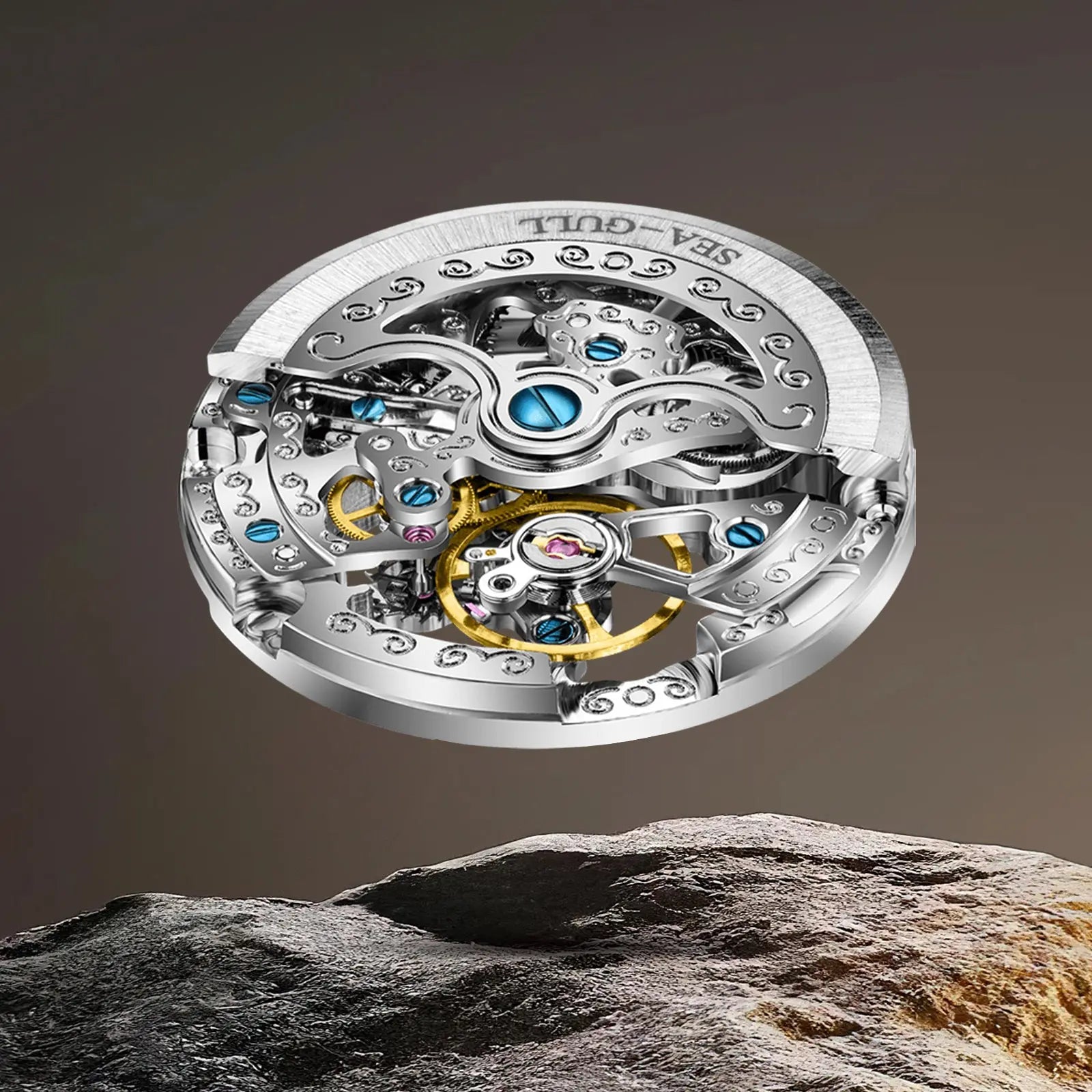
A mechanical chronograph watch makes time measurement visible through its pushers, hands, registers, gears, and levers. The act of starting, stopping, and resetting transforms a short task into a deliberate mechanical interaction.
For collectors, the appeal extends beyond the recorded number. A mechanical chronograph can be assessed through dial legibility, pusher interaction, case proportions, winding method, and the layout of the movement. Column-wheel and cam-operated systems are two established approaches to chronograph control, each with its own engineering character.
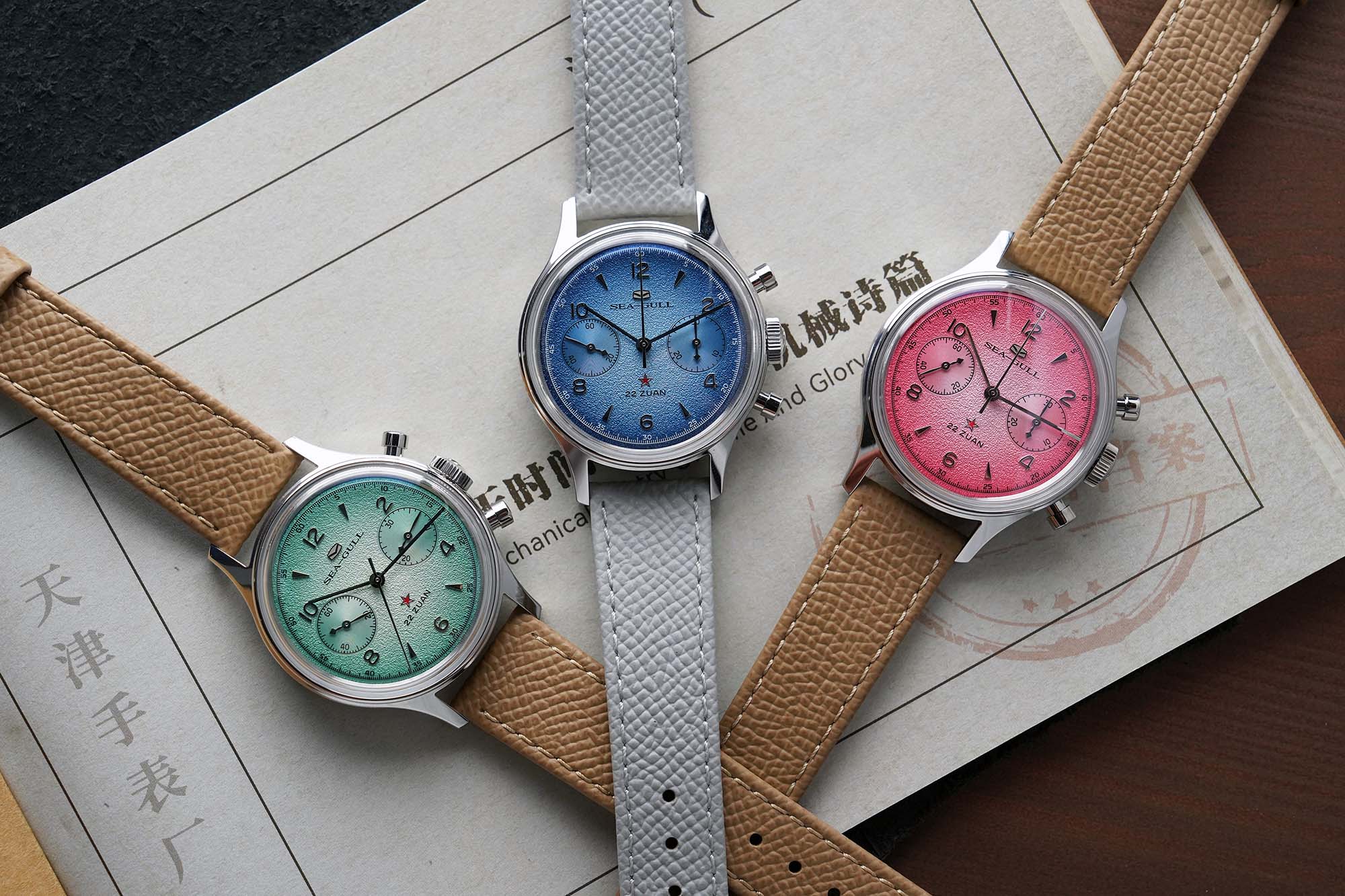
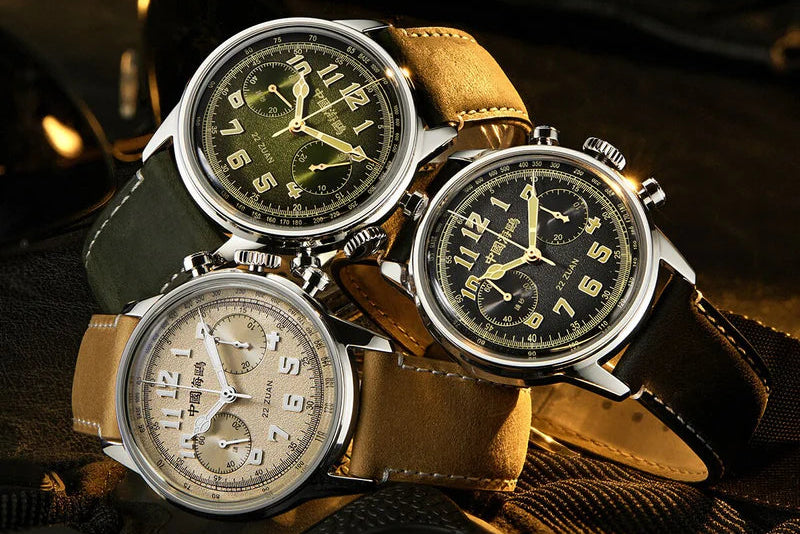
Classic chronograph watches often favor balanced register layouts, purposeful minute tracks, and a distinct central timing hand. A classic mechanical chronograph is therefore not just an object to admire. It is a complication that earns a place in daily routines.
A chronograph watch for collectors should be evaluated around the role it will actually play. Check whether the dial can be read quickly, whether the case sits comfortably on the wrist, and whether the controls encourage confident use. Explore the mechanical chronograph collector's guide for a deeper look at movement architecture and ownership considerations.
Chinese chronograph watch context and a practical purchase checklist
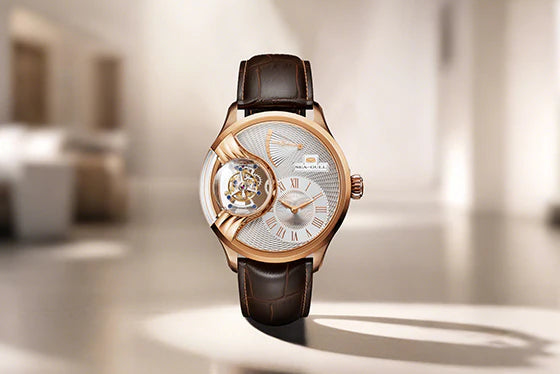
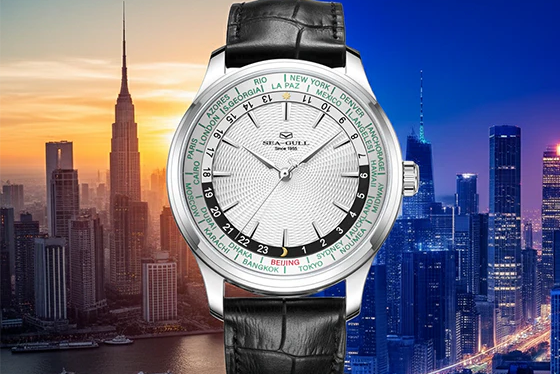
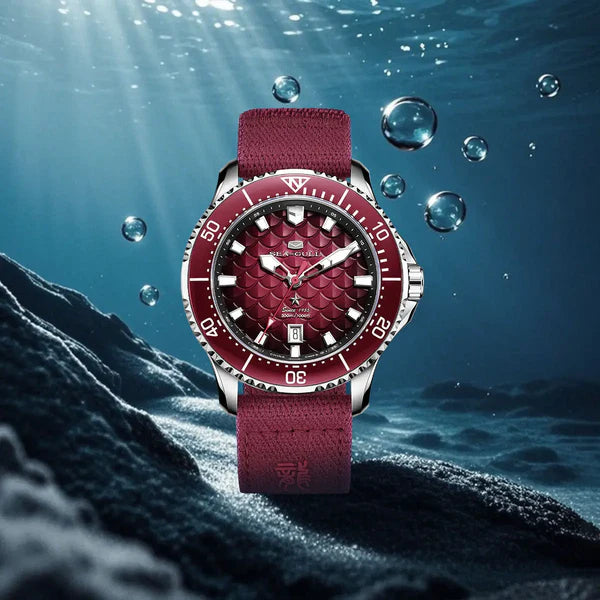
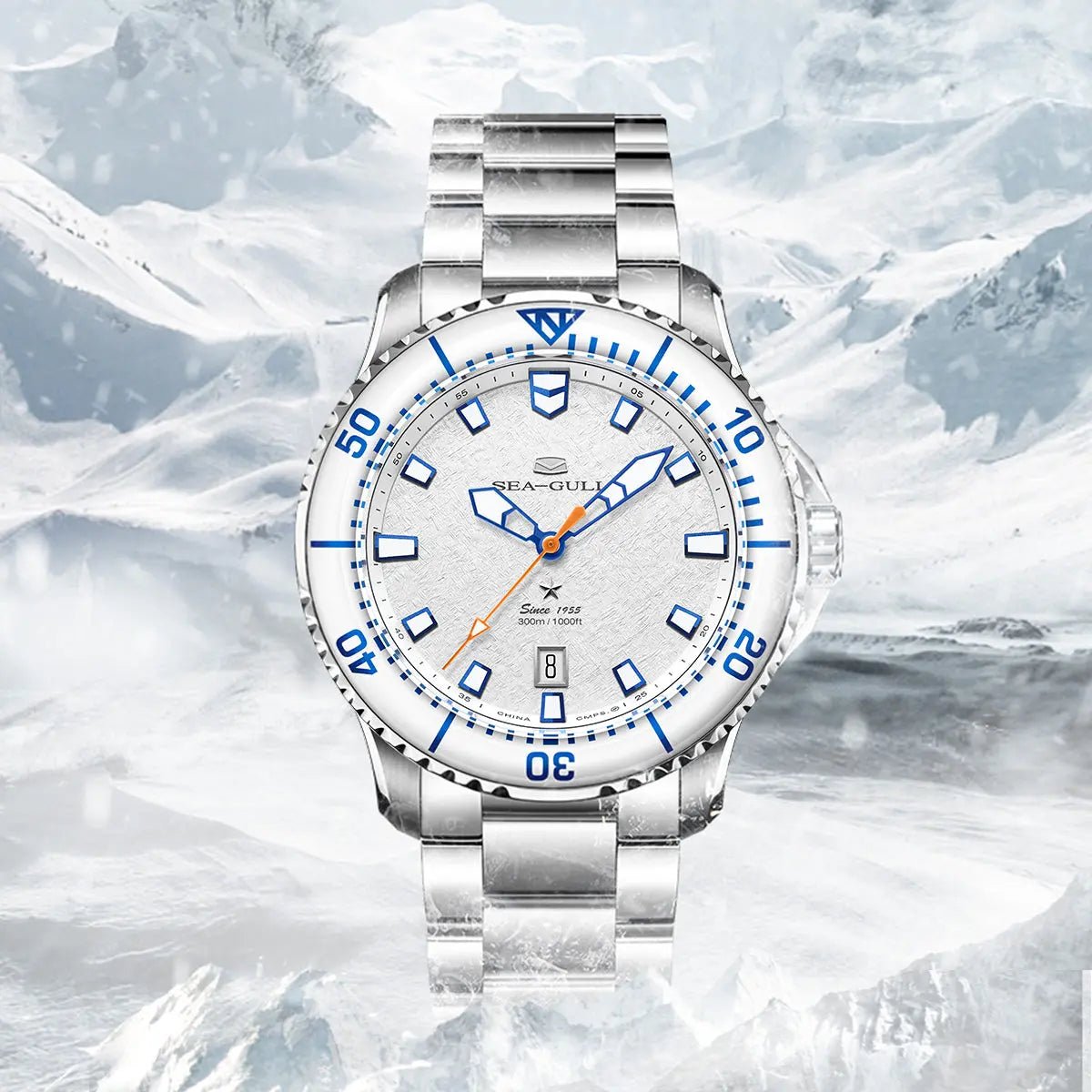
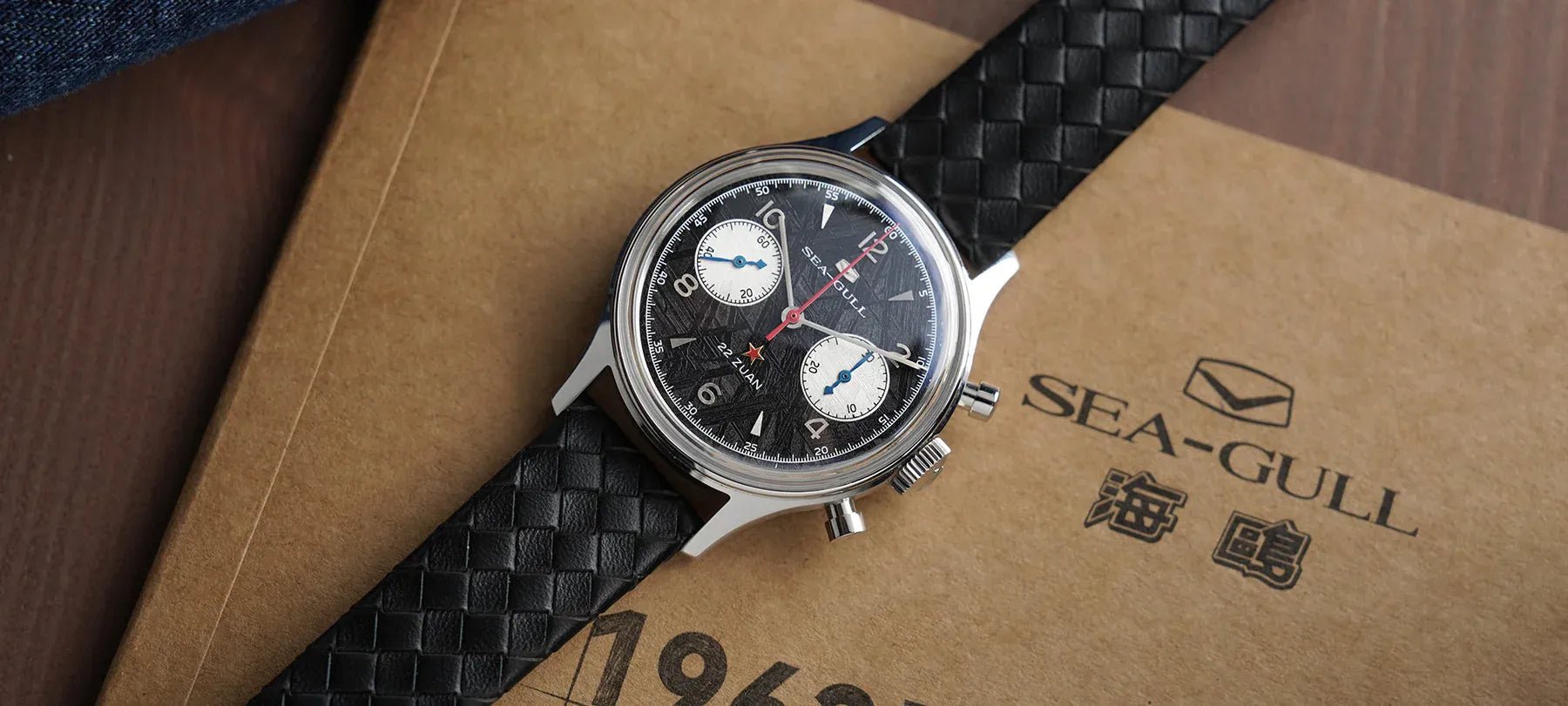
Chinese mechanical watchmaking adds another perspective to chronograph ownership. Founded in Tianjin in 1955, Sea-Gull has developed mechanical watches and chronograph mechanical watches as part of its long-running manufacturing background. Its Chinese mechanical watchmaking heritage provides useful context for enthusiasts drawn to mechanical timing traditions.
A Sea-Gull mechanical chronograph offers a tactile way to record everyday intervals through a movement-driven timing system. For a Seagull chronograph watch, focus on the dial layout, intended timing use, case dimensions, and documented operating guidance. A Seagull chronograph movement should likewise be considered through the confirmed details of the particular watch rather than assumptions based on appearance.
Before ordering a mechanical chronograph, keep the final checklist simple:
- Confirm how elapsed seconds and minutes are displayed.
- Choose a dial that remains easy to read in ordinary light.
- Match case dimensions and pusher placement to your wrist and habits.
- Purchase through an authorized distributor and retain proof of purchase.
- Review current duty-inclusive pricing, VAT treatment, free-shipping terms, and after-sales details for your destination.
- Keep purchase and service records with the watch.
A chronograph watch becomes more compelling with use. Record five comparable intervals, note what changed, and bring one adjustment into the next session. The result is a more confident timing habit and a more personal connection with the mechanical tool on your wrist.

اترك تعليقًا
This site is protected by hCaptcha and the hCaptcha Privacy Policy and Terms of Service apply.