


Stainless Steel Bracelet Cleaning for Regular Wear
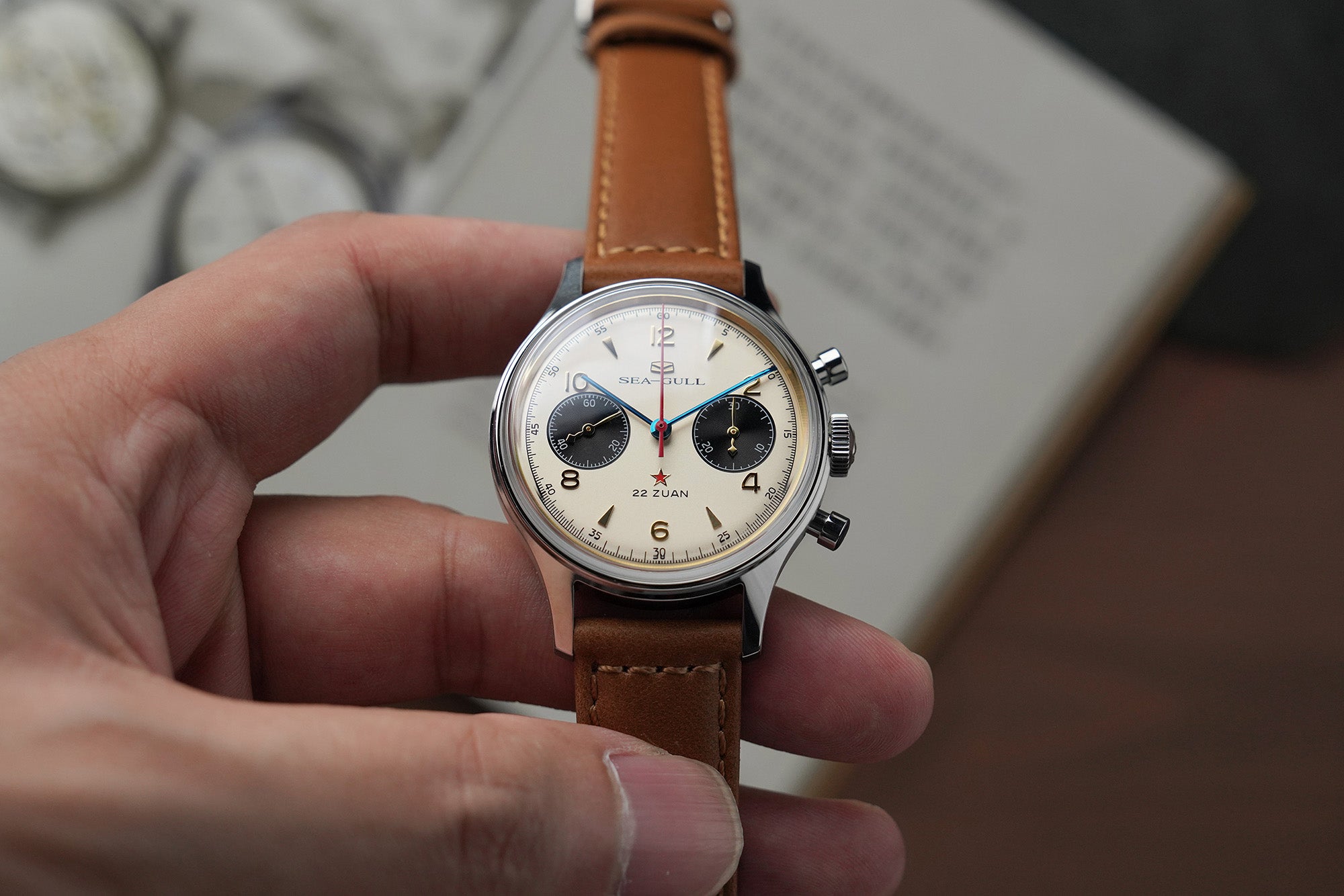
A stainless steel watch bracelet is built for daily wear, but it still collects sweat, skin oils, dust, sunscreen, and residue around the clasp and links. Regular cleaning keeps it more comfortable and presentable. Sea-Gull's Ocean series dive watches with their substantial 316L steel bracelets (180-217g) are designed for heavy-duty wear, but even professional-grade stainless steel requires consistent care.
The key safety point is simple: a stainless steel bracelet may tolerate cleaning, but the complete watch can only be rinsed or exposed to water when its manufacturer confirms that level of water resistance.
If the rating is unknown, do not soak or rinse the watch. Use the low-moisture method instead, keep the crown and pushers dry, and never operate them when wet.

Stainless Steel Watch Safety Starts With Water Resistance
Before cleaning a stainless steel watch with water, check the guidance for the entire watch, not only the bracelet. The case, crown, pushers, seals, and movement create separate water-exposure risks.
A stainless steel bracelet does not prove that a watch is suitable for rinsing, swimming, or submersion. Water resistance depends on the model's rating, crown design, the condition of seals, damage history, and servicing. ISO 22810 sets testing requirements for water-resistant watches, but it does not mean a watch stays permanently protected from water in every situation.
Sea-Gull Water Resistance and Cleaning Guidelines
Different Sea-Gull steel bracelet models have different water resistance ratings that determine safe cleaning methods:
| Water Resistance | Sea-Gull Models | Safe Cleaning Method |
|---|---|---|
| 5 bar (50m) | Polaris 6180, Master series, Panda Eye GMT 6177 | Surface wipe only - no submersion |
| 10 bar (100m) | Rolling Panda 1066 | Brief water contact acceptable |
| 20 bar (200m) | Ocean 1523, Rolling Panda 6203 | Safe for rinsing after swimming |
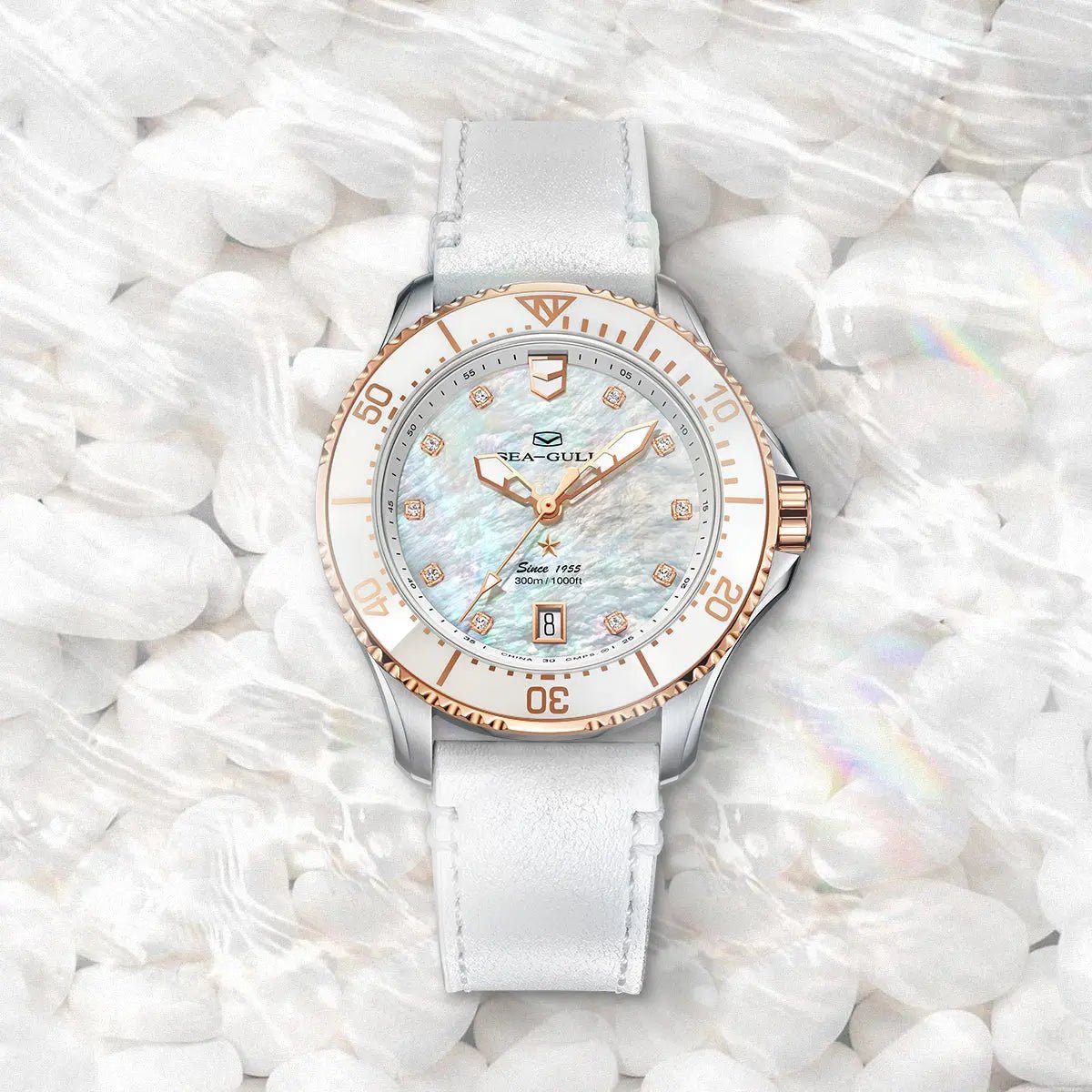
| 30 bar (300m) | Ocean PRO 1213, Moon Rises 1215, Dragon Kings 1216 | Professional dive rated - full submersion safe |
Use this quick decision process:
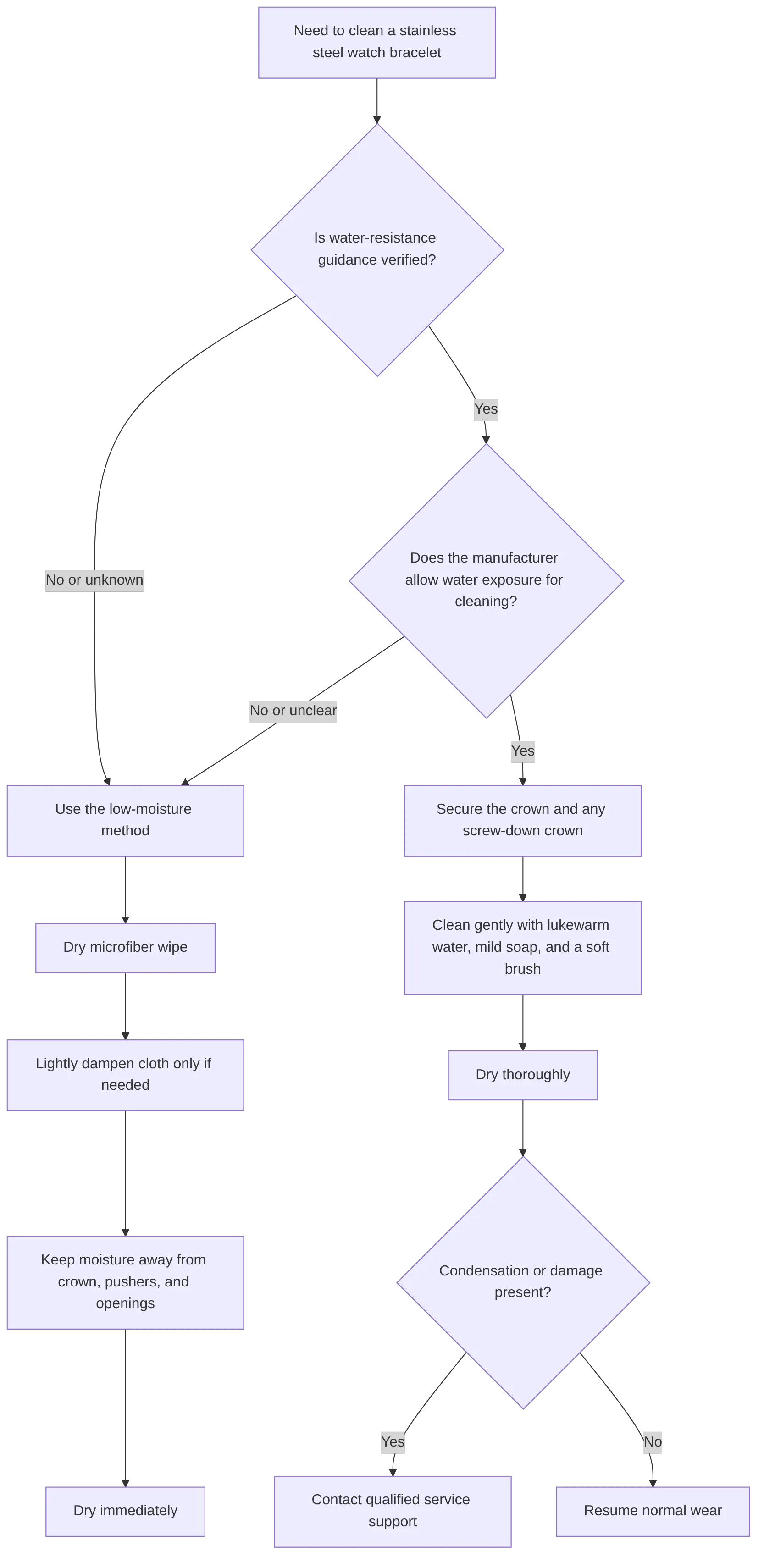
For confirmed water-resistant watches, make sure the crown is fully pushed in. If your model uses a screw-down crown, secure it according to its instructions. Never pull, turn, or press the crown or pushers while the watch is wet. Official guidance from Citizen, Seiko, and Grand Seiko supports these precautions.
Stainless Steel Watch Bracelet Cleaning Methods
There are two safe approaches to stainless steel watch bracelet cleaning. Choose the method based on verified water resistance, not on the bracelet material alone.
Method 1: For a confirmed water-resistant stainless steel watch
Use this method only when the manufacturer permits water exposure for the specific model.
For Sea-Gull dive watches (200-300m rating):
- Wipe away loose dust with a dry microfiber cloth.
- Confirm that the crown is fully secured and that no pushers are being operated.
- Prepare lukewarm water with a very small amount of mild soap.
- For heavy models like Moon Rises 1215 (217g), use a bowl to support the weight during cleaning.
- Use a soft cloth or soft-bristled brush to clean bracelet links and the clasp gently.
- Pay attention to safety buckle mechanisms and micro-adjuster holes on Ocean series models.
- For sapphire bezels (Ocean PRO 1213, Moon Rises 1215): can use slightly more pressure.
- For aluminum bezels (Ocean 1523): gentler approach to avoid finish damage.
- Rinse with fresh water only if the manufacturer's instructions allow it.
- Pat the watch dry with a lint-free cloth.
- Let moisture around the clasp and link gaps evaporate fully before storage.
For lower water-resistance models (5 bar/50m - Polaris, Master, GMT 6177): Use Method 2 (low-moisture) only.
Tissot recommends gentle cleaning with lukewarm water, mild soap, and soft brushing for suitable watches, while also advising owners to avoid abrasive cleaners and ultrasonic baths. See its official watch care FAQ for general manufacturer guidance.
Method 2: For stainless steel watches with unknown or low water resistance
If you cannot verify water resistance, or if your model has 5 bar (50m) rating, treat the watch as unsuitable for rinsing or soaking.
- Keep the crown fully pushed in and do not touch the pushers.
- Wipe the bracelet, clasp, and case exterior with a dry microfiber cloth.
- For stubborn sunscreen or skin-oil residue, lightly dampen one corner of a cloth. The cloth should be barely moist, not wet.
- Wipe the bracelet exterior carefully while avoiding the crown, pushers, caseback seam, crystal edge, and case openings.
- Use a dry, soft brush only for dry debris caught between bracelet links.
- Immediately dry the bracelet with a second microfiber cloth.
Do not try to rinse "only the bracelet" while it is attached to the watch. Water can still reach the case through the crown, pushers, seals, or caseback.
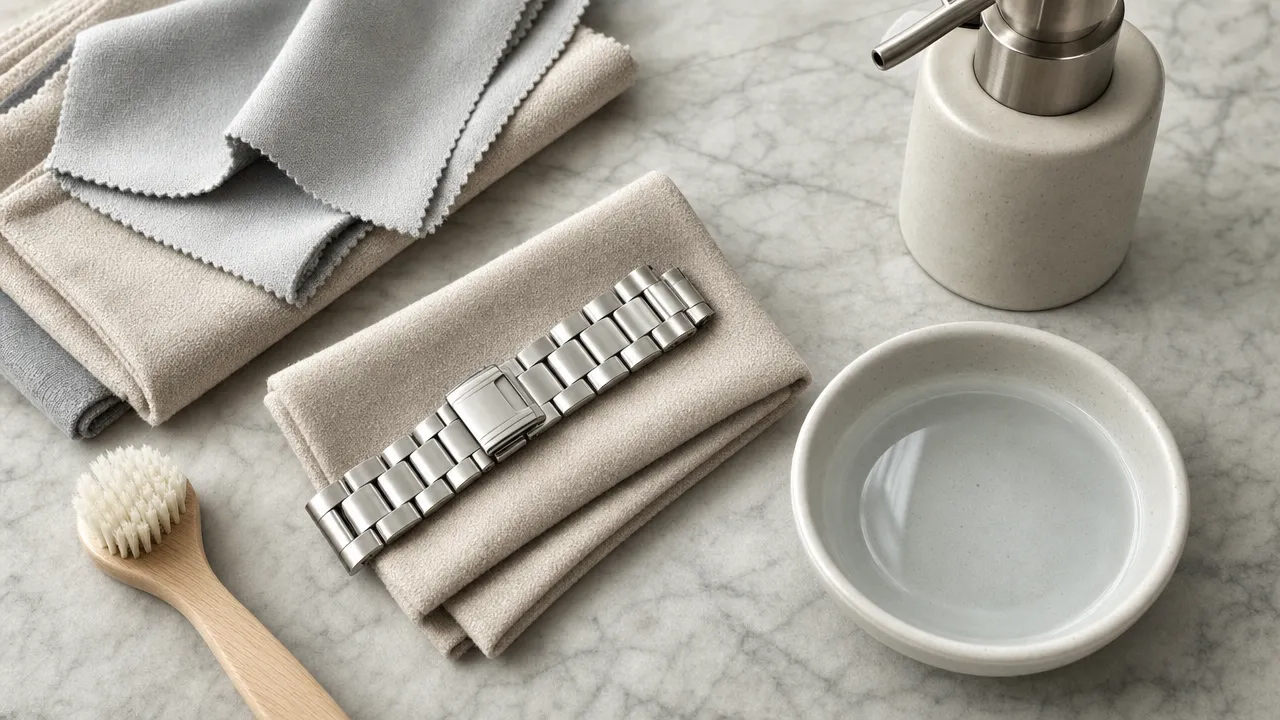
What to avoid
Avoid these products and practices during watch bracelet cleaning:
- Bleach and chloride-containing household cleaners
- Abrasive powders, scouring pads, steel wool, or rough paper towels
- Toothpaste, baking soda, vinegar, acetone, or unverified jewelry cleaners
- Aggressive polishing compounds
- At-home ultrasonic cleaners
- Direct high-pressure faucet rinsing
- Hair dryers, radiators, or other high-heat drying methods
- Opening the caseback or attempting to dry the movement yourself
The British Stainless Steel Association cautions that chloride-containing products, including hypochlorite bleach, can cause staining and pitting on stainless steel.
Clasp Types and Bezel Cleaning
Sea-Gull Clasp Mechanisms
Safety Buckle (Ocean PRO 1213, Ocean 1523, Moon Rises 1215, Rolling Panda models):
- Double-locking mechanism requires cleaning around both lock points
- Micro-adjuster holes: use soft brush or wooden toothpick (never metal)
- More robust design for dive watches
Push-Button Hidden Clasp (Polaris 6180, Master series, Panda Eye GMT 6177):
- Spring mechanism requires thorough drying
- More delicate than safety buckles
- Should not be operated while wet
Rotating Bezel Care
Sea-Gull dive watches feature different bezel materials:
- Sapphire bezels (Ocean PRO 1213, Moon Rises 1215): scratch-resistant, can handle firmer brushing
- Aluminum bezels (Ocean 1523, Dragon Kings 1216): require gentler cleaning to preserve finish
Rotate bezel while brushing to clean underneath the edge. Check rotation smoothness after cleaning.
Stainless Steel Watch Care for Regular Wear and Summer Use
A stainless steel watch worn every day benefits from a simple, consistent routine. The more sweat, sunscreen, dust, and water exposure it receives, the more promptly it should be wiped down.
| Wearing situation | Recommended care | Important condition |
|---|---|---|
| Normal indoor wear | Dry microfiber wipe after wearing | Clean more closely when residue visible |
| Warm-weather daily wear | Wipe bracelet and clasp after wear | Pay attention to sunscreen and perspiration |
| Exercise or heavy sweating | Wipe promptly with dry cloth | Use low-moisture cleaning for 5 bar models |
| Pool or ocean exposure (200-300m models only) | Fresh-water rinse and dry thoroughly | Only when watch is approved for that exposure |
| Unknown water resistance | Dry wipe and low-moisture cleaning only | Do not rinse, soak, or submerge |
For Ocean series dive watches in summer: Heavy bracelets (180-220g) accumulate more buildup due to larger link gaps. Daily wipe-down recommended, weekly deep clean if worn daily.
For lighter dress bracelets (Polaris, Master): Lower water resistance limits cleaning options. Consider switching to leather strap in extreme heat.
After a hot day, wipe the bracelet and clasp with a soft dry cloth. After exercise, do the same as soon as practical. If sunscreen remains, use the low-moisture method unless the complete watch is confirmed as suitable for water cleaning.
After pool or ocean use, manufacturers commonly advise a fresh-water rinse followed by thorough drying, but only for watches approved for that exposure. Do not assume a stainless steel watch is automatically safe for swimming, showering, or saltwater simply because the bracelet is metal.
Before storing a summer watch, ensure the exterior is completely dry. Do not place a damp watch in a closed watch roll, pouch, or box.
Stainless Steel Watch Finish and Automatic Watch Precautions
Routine cleaning should preserve the original finish of a stainless steel watch, not attempt to refinish it.
Brushed and Polished Surfaces
Brushed or satin-finished bracelet surfaces should be wiped gently in the direction of the visible grain. This helps maintain the intended linear appearance.
Polished surfaces need even lighter pressure because they show micro-scratches and swirl marks more readily. Avoid stiff brushes, abrasive cloths, and frequent polishing treatments.
For a bracelet with both brushed and polished sections, use a soft cloth rather than one aggressive cleaning method across every surface. Strong polishing can blur the contrast between finishes and soften the edges that define the design.
Sea-Gull CNC-machined cases (Ocean PRO 1213, Dragon Kings 1216) show fingerprints more readily and require professional refinishing if scratched significantly.
Cleaning will not remove meaningful scratches or restore a factory finish. If a bracelet needs refinishing, resizing, pin replacement, or clasp repair, use a qualified watch professional.
Automatic Watch Cleaning
An automatic watch does not need a special bracelet cleaner. The cleaning method is still determined by water resistance, bracelet finish, and the manufacturer's instructions.
The difference is protecting the mechanical movement. Before any manufacturer-approved water exposure:
- Confirm the crown is fully pushed in or screwed down as required
- Do not operate the crown or pushers while wet
- Do not assume an automatic watch is swim-ready
- Do not open the caseback if you suspect moisture inside
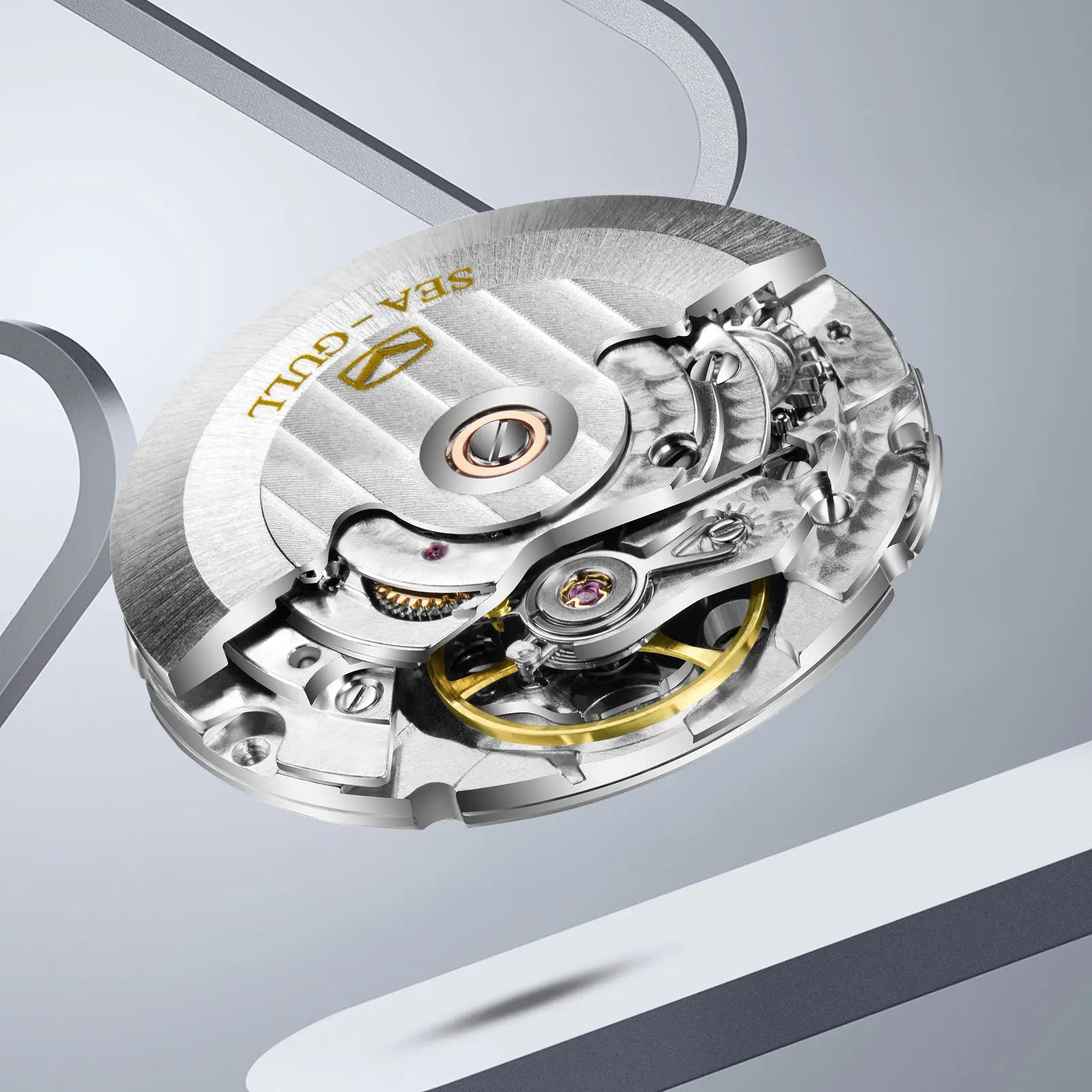
Sea-Gull automatic movements in steel bracelet watches include ST2130 (most Ocean series), ST17 (Polaris 6180), and others. All require the same water-resistance precautions.
If condensation appears under the crystal, stop wearing the watch and seek assistance promptly. Condensation can indicate water ingress and may require professional inspection.
For wider ownership guidance, visit the Sea-Gull care and maintenance tutorials. For questions about service options, warranty processes, or a possible repair, review Sea-Gull after-sales support and repair guidance.
Stainless Steel Watch Cleaning FAQ
How often should I clean a stainless steel watch bracelet?
Use a dry microfiber cloth after regular wear, especially when the bracelet has been exposed to sweat, sunscreen, or visible grime. A weekly clasp-and-links inspection is a practical routine. For dive watches after swimming, rinse within 2 hours.
Can I use soap and water on my stainless steel watch?
Only if your model has confirmed water resistance of 200m or 300m (Sea-Gull Ocean series). Models with 5 bar/50m rating (Polaris, Master, GMT 6177) require surface cleaning only. Always secure the crown, use mild soap sparingly, and dry thoroughly.
Can I wear my stainless steel watch in the shower?
Check your specific model first. Ocean series with 200-300m rating can handle brief shower exposure but it's not recommended daily. Models with 5 bar (Polaris, Master, GMT 6177) should not be worn in the shower.
How do I remove sunscreen from a bracelet?
Wipe with soft microfiber cloth after wear. For 200-300m dive watches, brief rinsing is acceptable. For 5 bar models, use lightly dampened cloth and keep moisture away from case. Dry immediately.
Can I use a toothbrush on my bracelet?
A soft brush is useful for 200-300m dive watches during approved water cleaning. Use around links, clasp, and rotating bezel. Do not use stiff bristles or force the brush near crown, pushers, or case openings. For 5 bar models, use dry brush only.
What about saltwater exposure?
All Sea-Gull steel bracelets use 316L marine-grade stainless steel, but saltwater residue should still be rinsed off. For 200-300m dive watches, rinse with fresh water within 2 hours. For 5 bar models, avoid saltwater exposure entirely.
Should I remove the bracelet for cleaning?
For quarterly deep cleaning, removal allows thorough cleaning of both bracelet and lug area. Use proper spring bar tool and check lug width: 20mm (most models), 22mm (large dive watches Ocean 1523, Moon Rises 1215, Dragon Kings 1216, GMT 6177), 18mm (compact models).
When should I seek professional help?
Seek professional help if you notice:
- Condensation under the crystal
- A loose, bent, damaged, or sharply worn link
- A clasp that will not close securely
- Crown or pusher damage
- Suspected water ingress
- Deep buildup that cannot be removed safely
- A need for refinishing, seal testing, or bracelet resizing
For model-specific questions, you can contact Sea-Gull support. You can also learn more about the official store through the Sea-Gull Watch Official Store information page.
Care recommendations depend on the specific watch's water-resistance rating, crown design, seal condition, materials, and manufacturer instructions. If the rating is unknown, use the low-moisture method and avoid rinsing or submerging the watch.
Recommended Sea-Gull steel bracelet models:
- Best for easy cleaning: Ocean PRO 1213 (300m, professional grade, 183g)
- Best lightweight: Polaris 6180 (126g, hidden clasp, $229)
- Best heavy-duty: Moon Rises 1215 (217g, sapphire bezel, 300m + moon phase)

コメントを書く
このサイトはhCaptchaによって保護されており、hCaptchaプライバシーポリシーおよび利用規約が適用されます。