

Gloves, Cuffs, and Quick Time Checks on a Cold-Weather Hike
Wearing a mechanical watch beneath a sleeve and glove system for a cold-weather hike demands careful consideration of case geometry, clasp thickness, and cuff adjustments. This prevents wrist compression and minimizes heat loss.
Wrist Layering Conditions and Fit Rules
The thickness of a watch case dictates how smoothly a jacket cuff moves over the wrist. A case thinner than 13mm slides easily under mid-layer fleece cuffs. However, cases measuring 13.5mm or more create a vertical step that tends to catch on the stiffer closures of an outer shell.
The lug-to-lug span indicates how much of the upper wrist surface the watch covers. Long lugs that extend beyond a smaller wrist can create exposed edges that snag on knit cuffs or elastic wrist gaiters.
All case measurements are provided as ergonomic guides and do not guarantee fit across individual wrist bone structures.

Operating Steps for a Watch Under Gloves Winter Hiking Setup
To configure wrist layers and check the time without exposing skin to wind chill, follow these steps:
- Position the watch above the wrist bone: Fasten the strap slightly above the ulnar styloid so the 3 o'clock crown and crown guards do not dig into the back of a gloved hand when flexing the wrist on trekking poles.
- Release base-layer thumb loops on the watch arm: Do not trap a thumb-looped sleeve between the caseback and the skin, as fabric tension restricts dial access and creates pressure ridges.
-
Select the appropriate glove cuff style:
- Under-cuff gloves: Tuck the short neoprene or elastic wrist band inside the hard-shell sleeve. Loosen the outer shell Velcro tab slightly so you can pull the sleeve back two centimeters for a single-glance time check without removing the glove.
- Gauntlet gloves or modular overmitts: Extend the gauntlet collar over the jacket sleeve. Do not cinch the gauntlet drawcord or wrist strap directly over a tall watch case, as this compresses the caseback into the wrist bone and bridges the weather seal.
- Choose a flat strap closure for tight cuffs: Use a two-piece nylon-leather or synthetic strap with a flat pin buckle when cinching outer cuffs tightly, as a thick 316L stainless-steel folding clasp can create a hard pressure ridge on the underside of the wrist.
Case Profiles and Cuff Compatibility
The architecture of each watch interacts uniquely with mid-layer fleece and hard-shell closures:
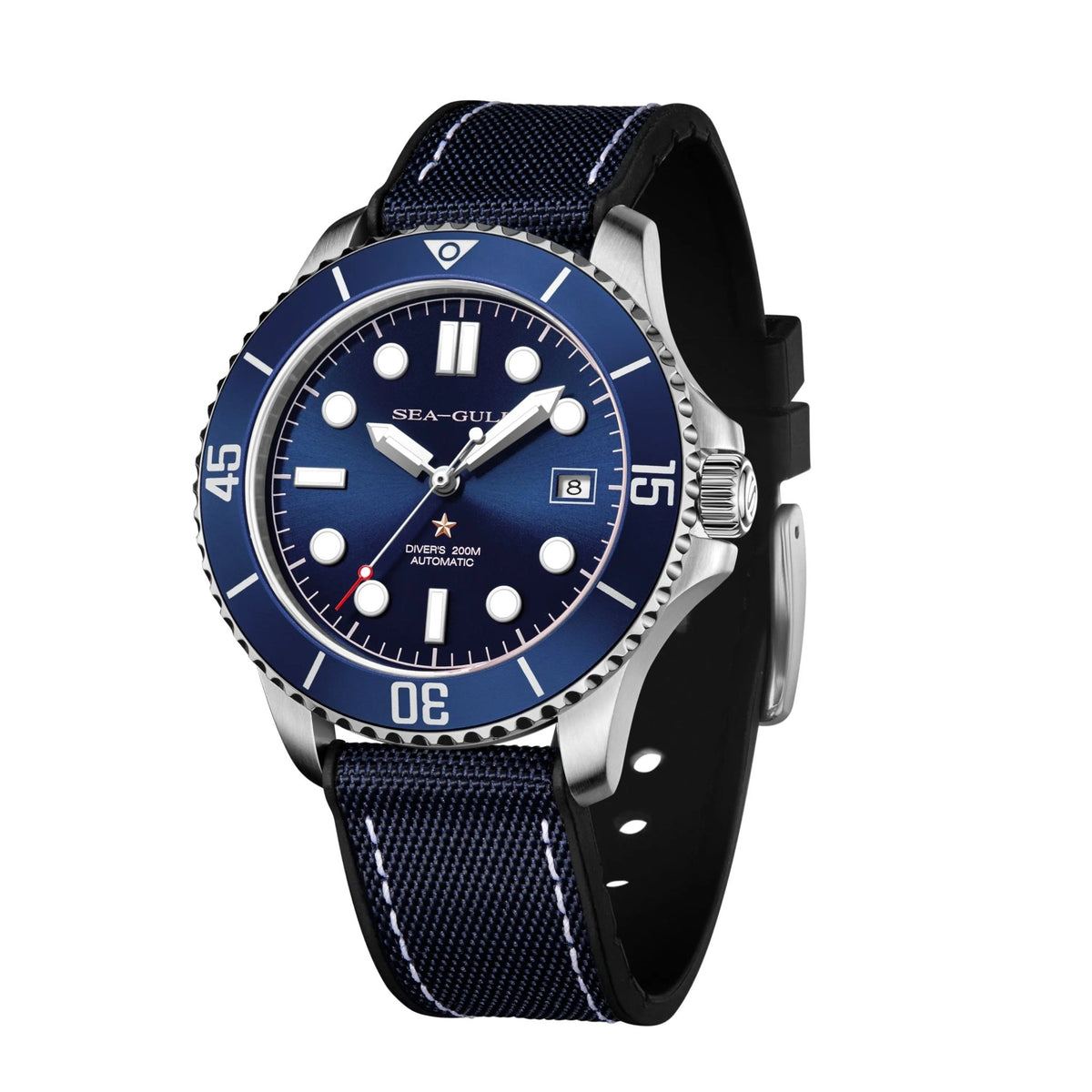
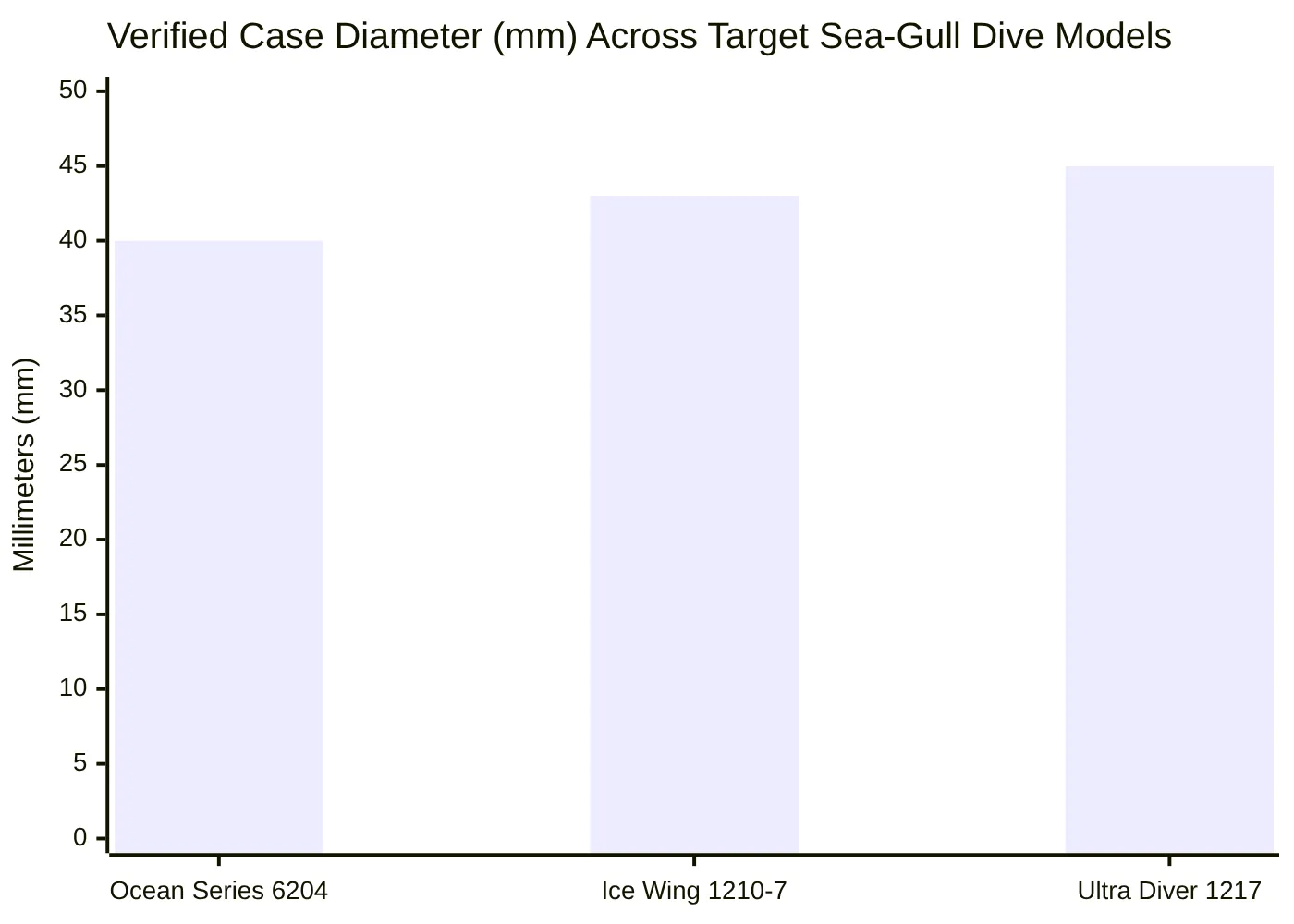
- Compact Profile for Tight Cuffs: The Sea-Gull Ocean Series Entry-Level Dive Watch 6204 (Ref. 814.37.6204) uses a 316L stainless-steel case measuring approximately 40mm in diameter, 12.7mm in thickness, and 47.4mm lug-to-lug. This compact footprint slides most easily beneath fleece sleeves and under-cuff gloves. The model features automatic winding, a synthetic sapphire crystal, a calendar display, luminous hands and markers, a 20 Bar (200m) rated water resistance, and 316L stainless-steel hardware options with a pin buckle or safety buckle weighing 92g or 167g.
- Mid-Large Titanium Profile with Strap Flexibility: The Sea-Gull Ocean Series Pro Ice Wing Titanium 1210-7 (Ref. 414.12.1210) measures approximately 43mm in diameter, 13.5mm in thickness, and 51mm lug-to-lug, housing the ST2130 automatic movement with a calendar display, luminous details, a synthetic sapphire crystal, and a 30 Bar (300m) rating. Its 43mm by 51mm footprint requires a slightly looser shell cuff adjustment than a 40mm case. The titanium alloy case conducts less heat away from bare skin than steel, and choosing the nylon-leather strap with a pin buckle (110g) over the 316L stainless-steel bracelet with a push-button hidden clasp (210g) reduces clasp bulk beneath tight Velcro tabs.
- Large-Diameter Profile for Roomy Outer Shells: The Sea-Gull Deep Ocean Ultra 1000M Titanium Diver 1217 features a 45mm titanium case rated to 1000M (100 Bar), equipped with a helium valve, an integrated rotating bezel, and a bonus strap. Because a 45mm deep-dive case creates a wide wrist footprint that catches on narrow elastic cuffs, pair this model with wide-cut outer shell sleeves when prioritizing broad dial visibility and bezel grip over low-profile cuff clearance.
| Model | Case Diameter | Case Thickness | Lug-to-Lug | Case Material | Strap / Clasp & Weight | Rated Water Resistance |
|---|---|---|---|---|---|---|
| Ocean Series 6204 | Approx. 40mm | Approx. 12.7mm | Approx. 47.4mm | 316L Stainless Steel | 316L Stainless Steel; Pin Buckle / Safety Buckle (92g / 167g) | 20 Bar (200m) |
| Ocean Series Pro Ice Wing 1210-7 | Approx. 43mm | Approx. 13.5mm | Approx. 51mm | Titanium Alloy | 316L Steel & Nylon-Leather; Push-Button Hidden Clasp / Pin Buckle (110g / 210g) | 30 Bar (300m) |
| Deep Ocean Ultra Diver 1217 | 45mm | Not specified on titanium listing | Not specified on titanium listing | Titanium | Includes Bonus Strap (weight not specified on titanium listing) | 100 Bar (1000M) |
Movement Operation and Seal Precautions
Position the watch beneath base and insulating layers, close to the skin, rather than securing it over a jacket sleeve. Body heat from the skin helps maintain a moderate microclimate around the watch case, mitigating the severe lubricant thickening and metallic contraction that can affect mechanical movements. For quartz watches, this placement helps prevent temporary battery voltage drops, stepper-motor drag, and sluggish LCD responses when exposed to sub-freezing wind.
Consider the operational characteristics of each movement type before leaving the trailhead:
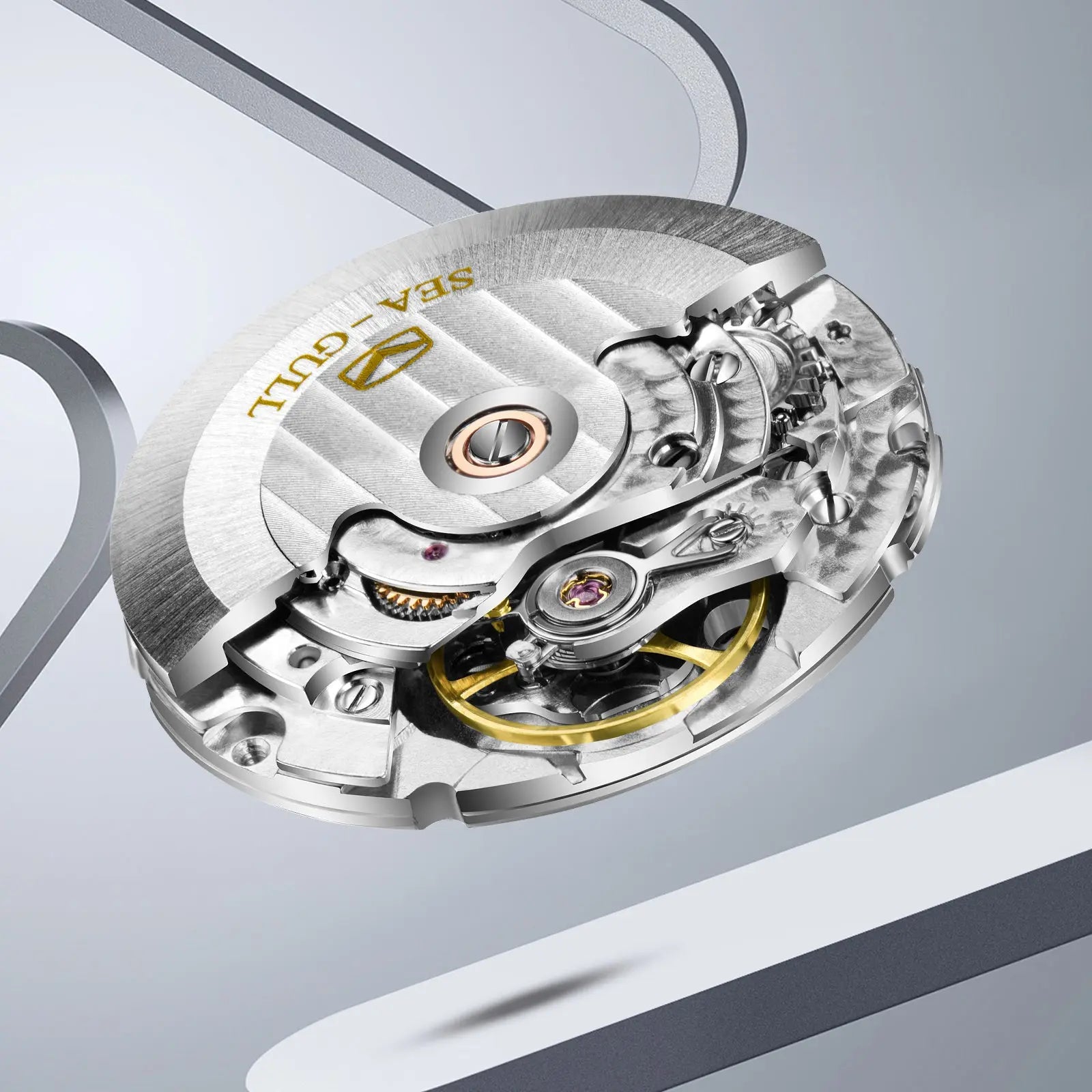
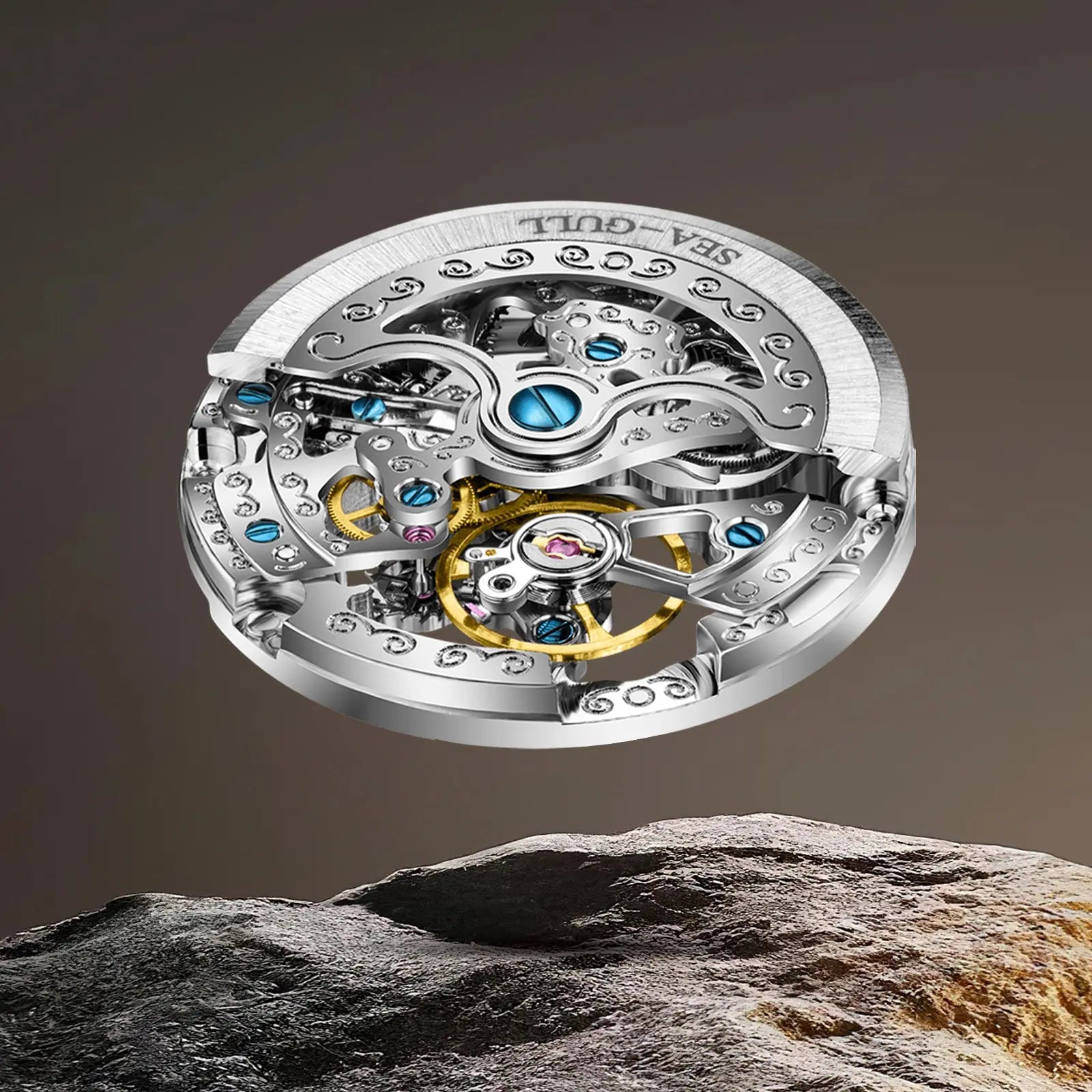
- Automatic mechanical movements: Rely on a pivoting rotor driven by wrist motion, which remains active during steady trekking-pole swing.
- Manual-wind mechanical movements: Wind the watch fully indoors before departure so you never have to remove gloves in the cold to turn a small crown on the trail.
- Quartz movements: Provide stable baseline timekeeping without winding, though solar-charged quartz cells cannot harvest light while covered by dark winter sleeves.
Water resistance ratings (20 Bar, 30 Bar, or 100 Bar) reflect static laboratory conditions, not permanent guarantees. Cold temperatures contract rubber gaskets, and rapid shifts from freezing air to a heated shelter can trigger internal condensation if seals are aged. Screw the crown down completely before your hike, and never unscrew or operate it while the watch is wet with snowmelt or slush.
Legibility and Safety Exclusions
On bright snowfields, glare across sapphire crystals can make a dial hard to read. High-contrast hands and markers allow for quick time checks when a cuff is pulled back.
For optimal legibility in low light, luminous hands and markers require prior light absorption. Since a watch worn beneath opaque fleece and shell sleeves receives no direct sunlight during the day, expose the dial to ambient daylight or briefly charge the luminous elements with a headlamp beam before descending at dusk.
Observe these safety exclusions during winter outdoor activities:
- Case dimensions, titanium construction, water-resistance ratings, dive bezels, and model names such as "Ice Wing" do not indicate winter certification, cold-temperature survival ratings, shock resistance, or mountaineering qualification.
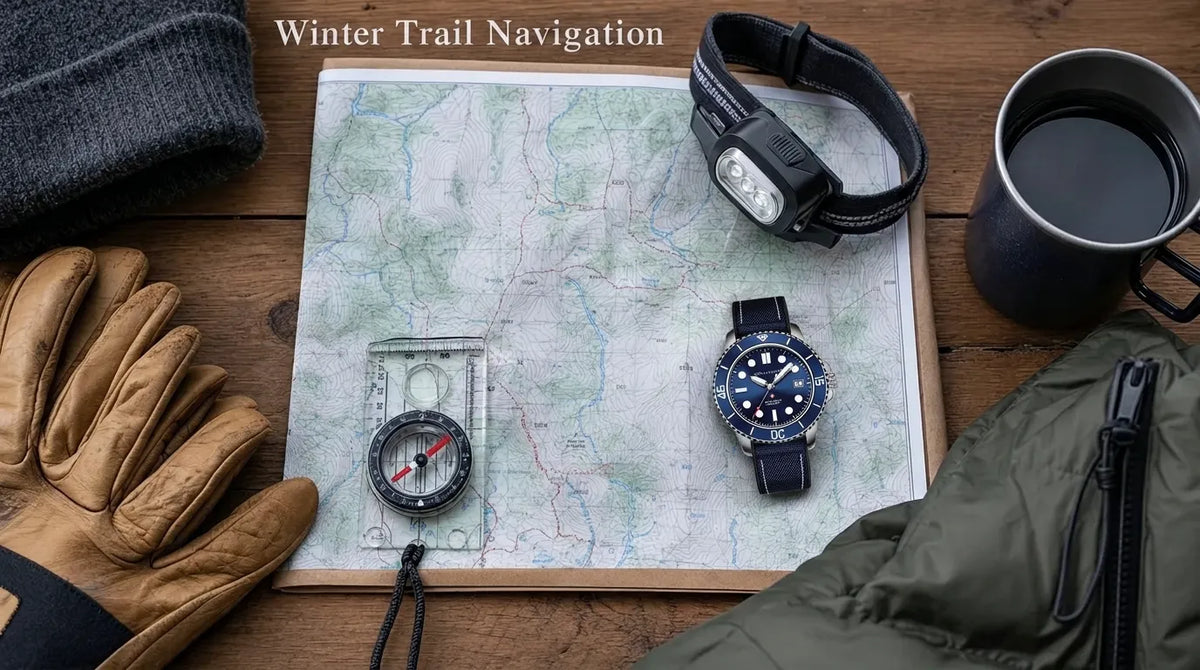
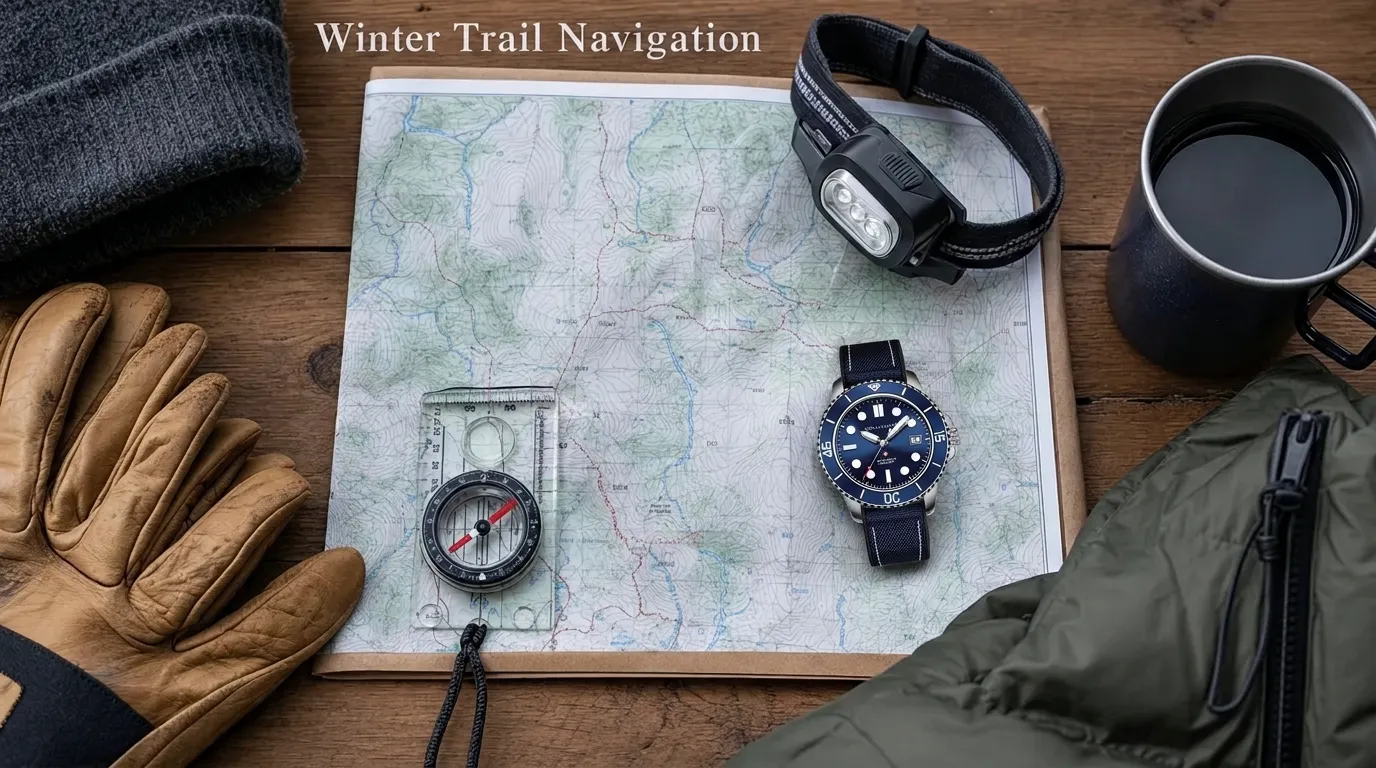
- A wristwatch is strictly a personal timekeeping aid and is never a substitute for a headlamp, physical topographic map, compass, satellite navigation unit, or emergency cold-weather shelter.

コメントを書く
このサイトはhCaptchaによって保護されており、hCaptchaプライバシーポリシーおよび利用規約が適用されます。