

Why an Open-Heart Watch Makes a Memorable First Mechanical Gift
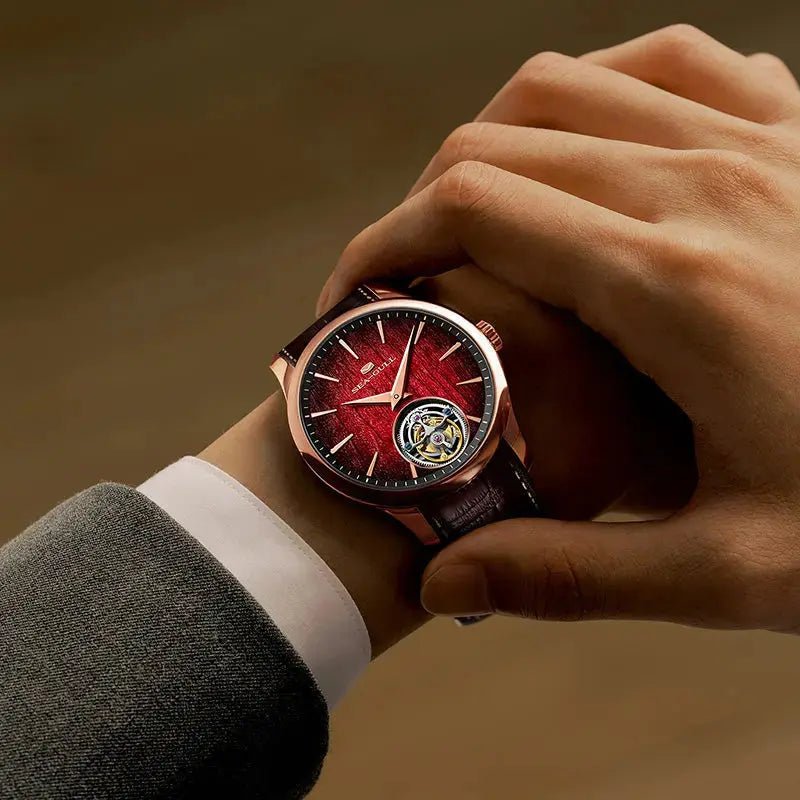
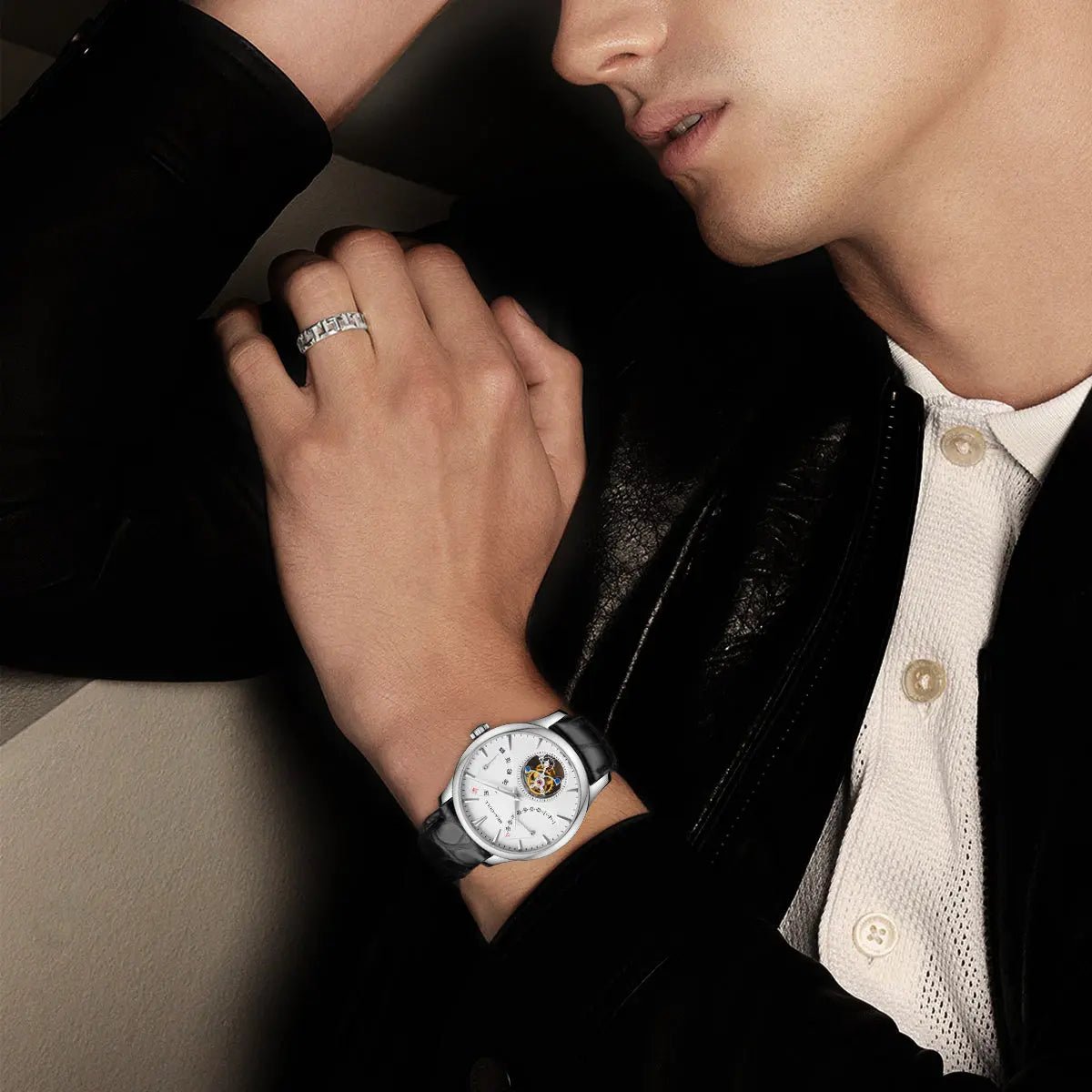
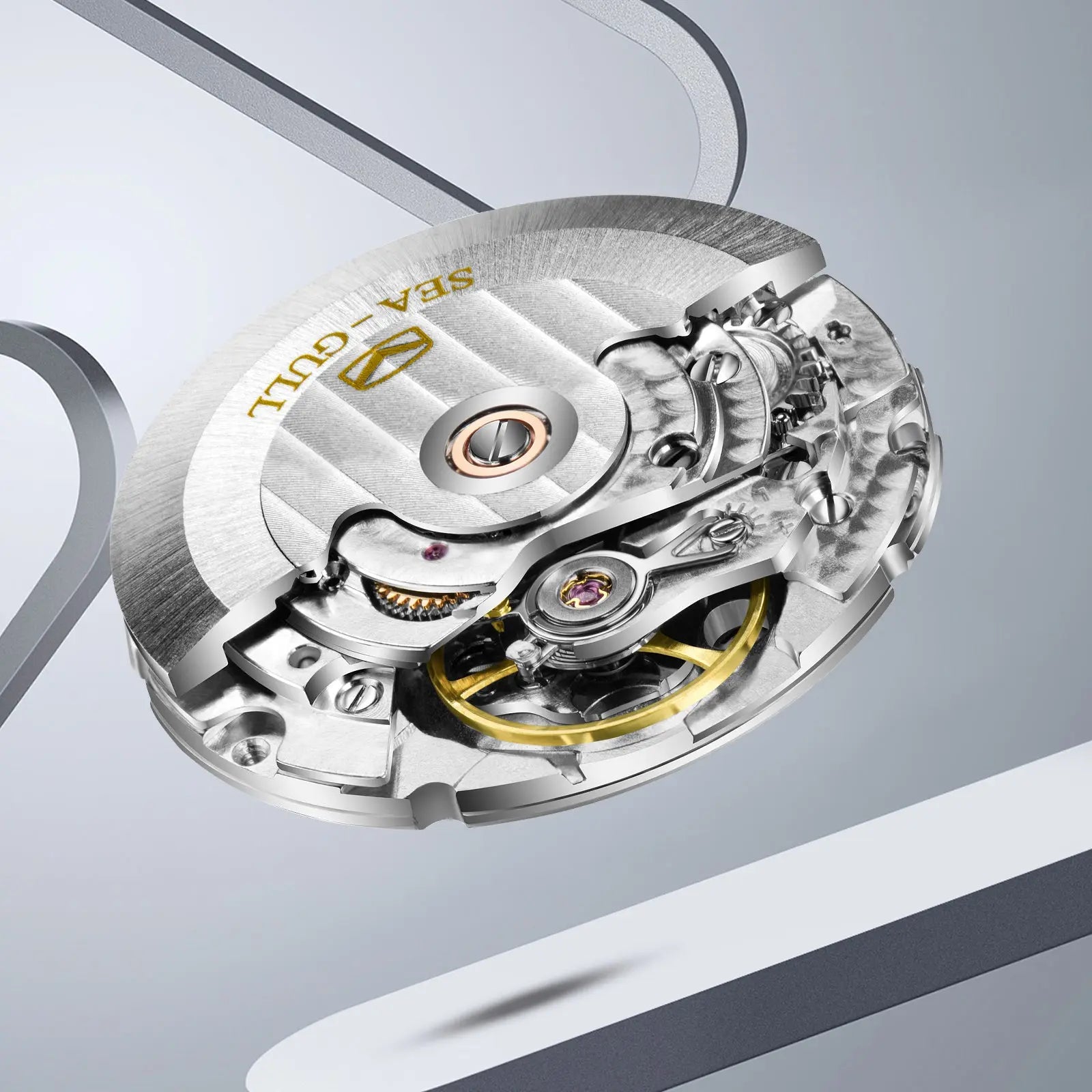
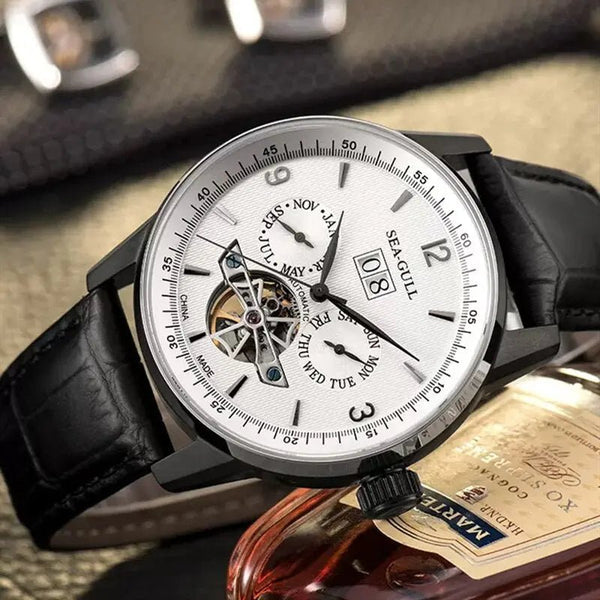
A first mechanical watch can ask for a certain leap of faith. Much of what makes it special is usually hidden behind the dial. An open-heart watch shortens that distance. Through a carefully placed aperture, the recipient sees motion where a conventional watch offers only a surface. The mechanism is no longer an abstract promise; it is present every time the hour is read.
That glimpse is modest, but it changes the relationship with the object. It invites attention without requiring expertise, and it gives the giver a clear reason for choosing mechanical in the first place.
The movement becomes understandable at a glance
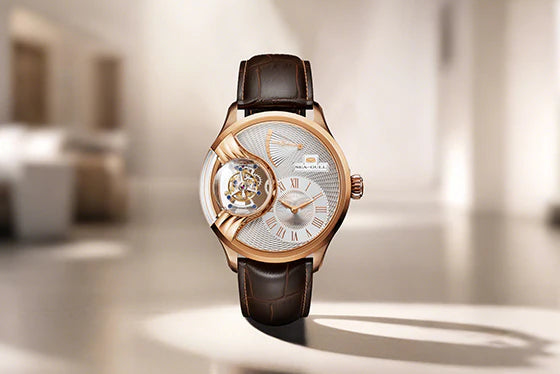
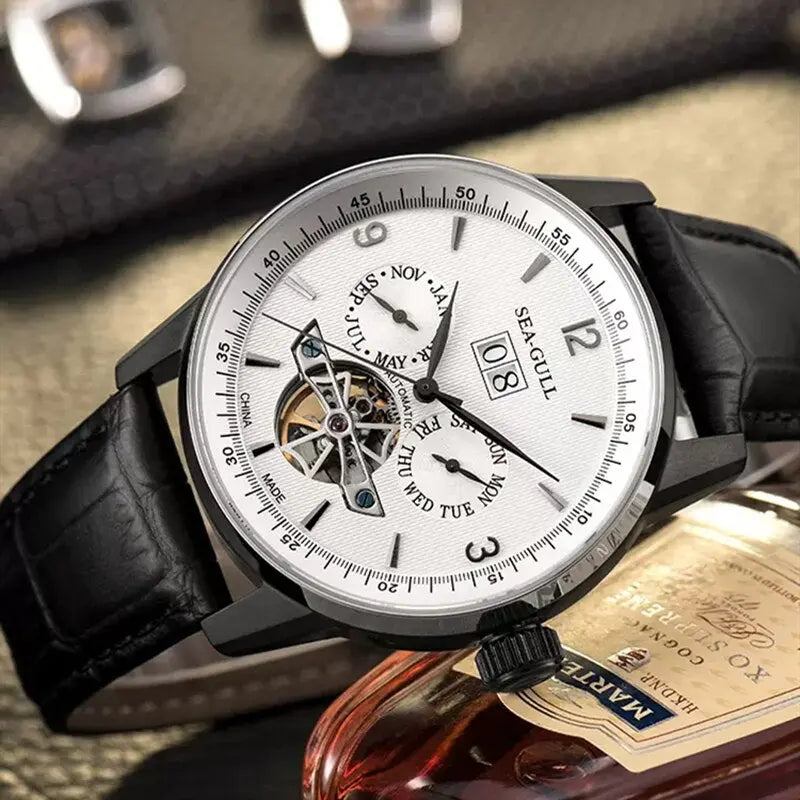
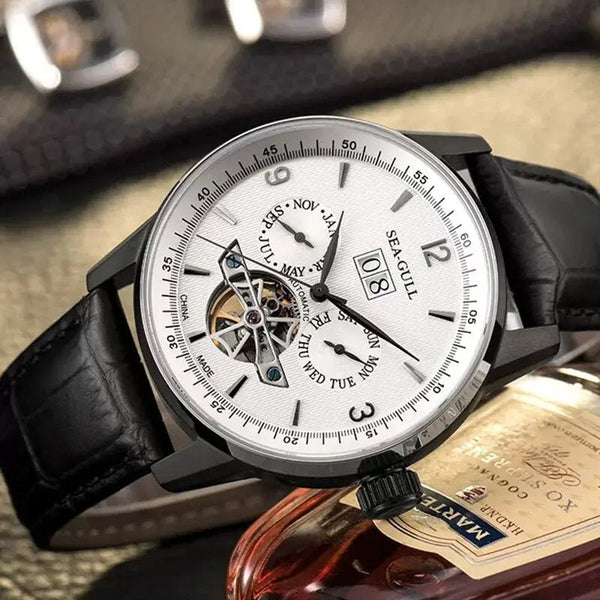
An open-heart aperture typically frames the rhythmic motion around the balance. The viewer does not need to identify every component to recognize that the watch is alive with mechanical activity. That immediate legibility makes the format particularly effective as a first gift: curiosity begins with sight, then deepens through winding, setting, and wearing.
The display is not proof that the movement is better than one hidden behind a closed dial. It is a design decision. Some people find the pulse absorbing; others prefer an uninterrupted field of color and markers. Look for evidence in the recipient's taste. Someone drawn to cameras, engines, musical instruments, or objects that reveal their construction may respond naturally to visible mechanics.
Open heart and skeleton are different degrees of exposure
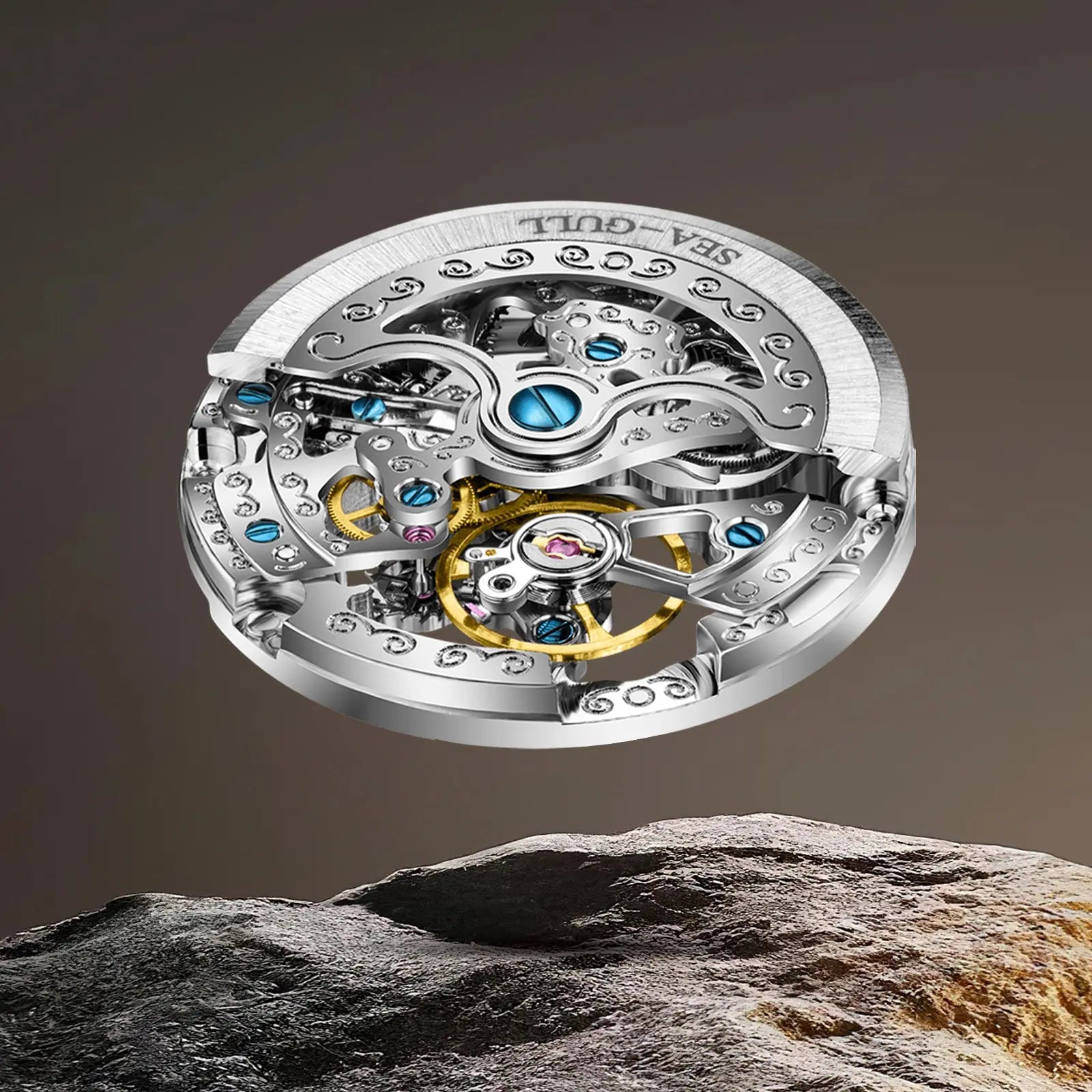
An open-heart watch preserves most of the dial and opens a focused window. A skeleton watch removes far more of that surface, allowing bridges, wheels, and negative space to shape the entire face. Many designs borrow from both approaches, so the useful distinction is not the label alone but how much visual information reaches the eye.
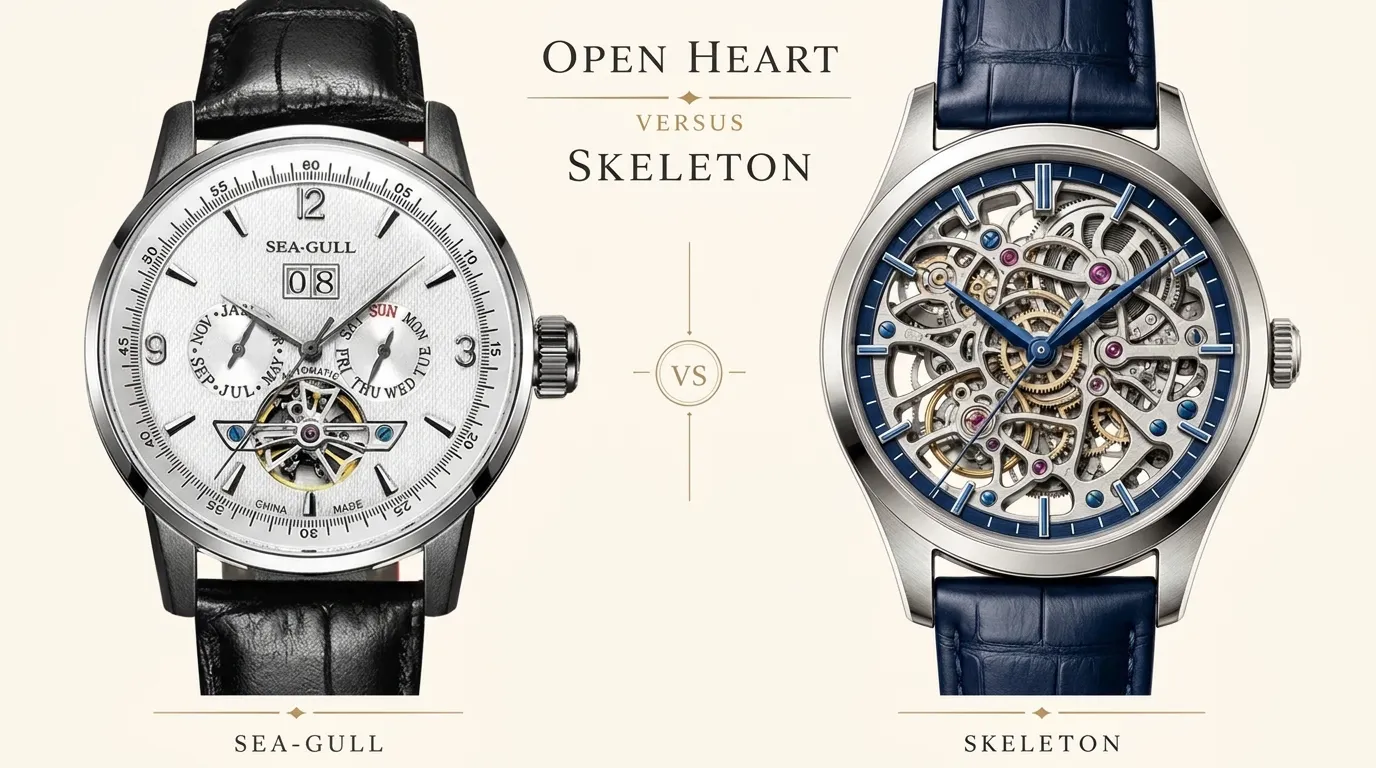
A first-time owner who favors restraint may appreciate one aperture within a conventional arrangement. Someone who enjoys intricate, layered objects may prefer the movement to dominate. In either case, check whether the hands remain distinct against the background. A compelling view of the mechanism loses charm if telling the time becomes an effort.
From quiet aperture to expressive mechanics
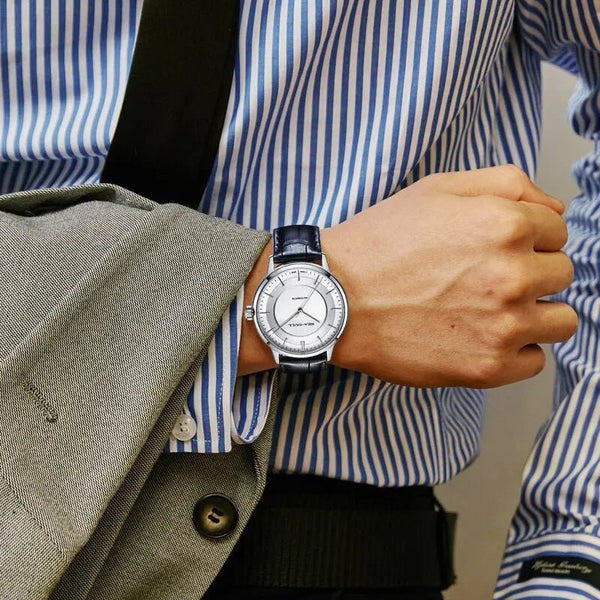
The 39 mm Open Heart with guilloche dial is the composed end of the spectrum. Roman numerals and a patterned dial frame the aperture, while a steel bracelet gives the watch a continuous, substantial feel. It uses the automatic ST2502 movement in a case about 13 mm thick. This is the choice for someone who wants visible motion held within a recognizably traditional dial.
The 42 mm Open Heart Calendar increases the presence. Its ST2502 automatic movement sits in a case approximately 14 mm thick and 50 mm from lug to lug, paired with a leather strap. The calendar adds everyday function, but the Roman numerals and aperture remain the stronger visual cues. Compare those dimensions carefully with a watch the recipient already wears.
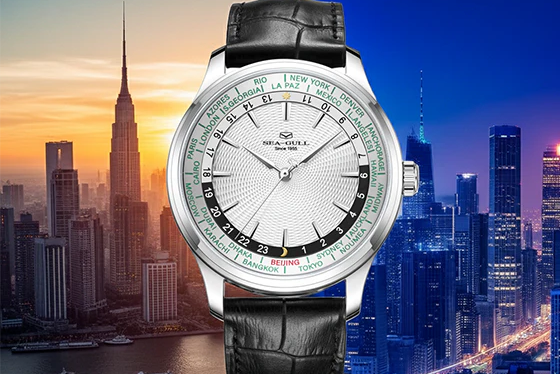
For a recipient who will enjoy more information, the 40 mm GMT Skeleton Open Heart combines a second-time-zone display with a more open dial. The automatic ST2510 movement is housed in a case about 14.5 mm thick and 47.6 mm from lug to lug. Its visual density is part of the appeal, making it better suited to someone who likes complications and layered design than to a strict minimalist.
The most assertive option here is the 43 mm Skeleton Open Heart Complete Calendar. It uses the ST2625 automatic movement in a case about 13 mm thick and 50.6 mm from lug to lug. Its open dial and calendar display make it the most visually emphatic of the group, so legibility and scale deserve equal attention.
Fit and contrast matter more than spectacle
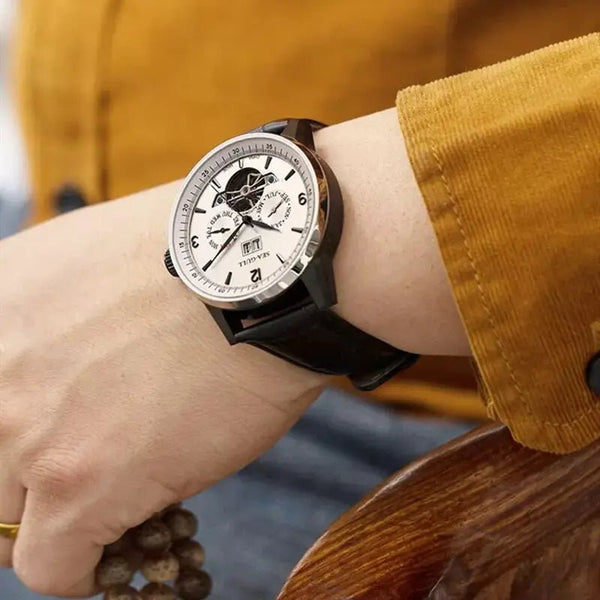
Case diameter is only the beginning. Lug-to-lug length governs how far the watch reaches across the wrist, while thickness affects how it sits beside a cuff. A bright hand against a busy movement may read more easily than a low-contrast hand against a simpler one. Product photographs should be studied at normal viewing size, not only enlarged on a screen.
The strap or bracelet changes the mood as well. Leather can soften an elaborate dial and keep the case visually separate. Steel carries the design around the wrist and may feel closer to jewelry. Neither is universally more formal. The recipient's existing wardrobe remains the sounder guide.
The gift should invite a small ritual
An automatic watch may need to be restarted and reset after resting unworn. Explain this lightly, and include a note about why the visible movement led you to the design. That personal sentence will do more than a long account of technical vocabulary. It tells the recipient that the aperture was chosen for their curiosity, not simply for effect.
Black Friday offers 20% off, but fit and taste should settle the choice first. Verify the chosen variant and current specifications before ordering.
A memorable first mechanical watch does not have to reveal everything. It needs to reveal enough. The open heart offers a glimpse, and the wearer supplies the attention that turns it into fascination.

Leave a comment
This site is protected by hCaptcha and the hCaptcha Privacy Policy and Terms of Service apply.