


The Case for a Smaller Watch Beneath Winter Layers
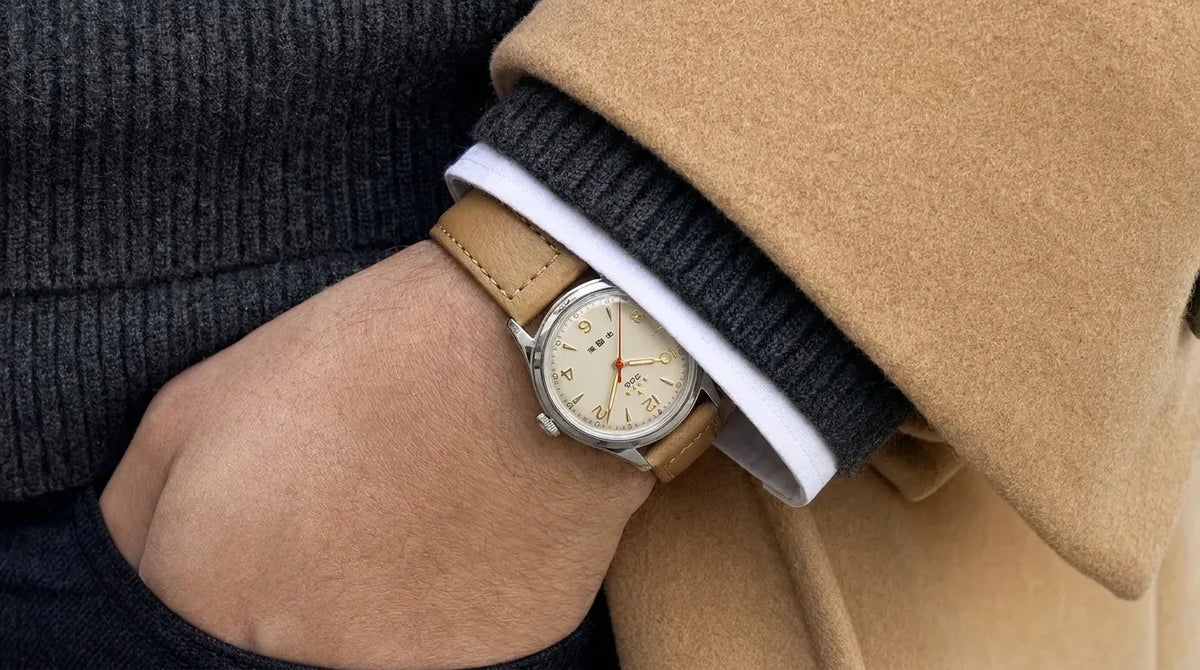
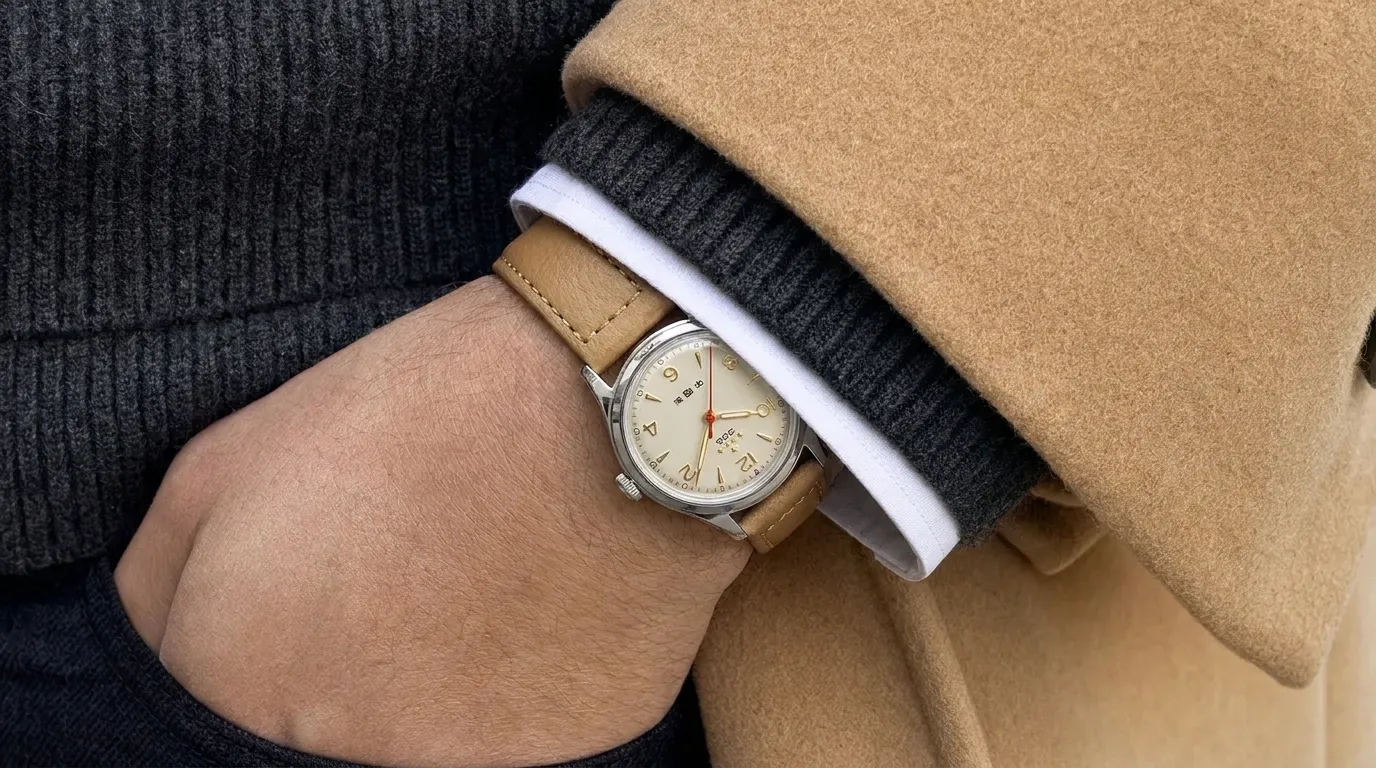
In warm weather, a wristwatch sits openly on bare skin, unencumbered by fabric. Once temperatures drop, the relationship between watch and wardrobe changes completely. A timepiece must negotiate a buttoned cotton shirt cuff, the ribbed hem of a merino or cashmere sweater, and the lined sleeve of a tailored overcoat. Each layer narrows the space around the wrist while adding downward pressure. Choosing a small watch for layered winter outfits is neither an exercise in nostalgia nor a concession to convention; it is a practical, visually composed response to how heavy garments drape and move.
Lug-to-Lug Span and Bezel Geometry
Wearability beneath tight sleeves is governed primarily by lug-to-lug distance and edge profile. When lugs extend straight across the wrist and overhang its natural borders, they create a gap where ribbed knitwear easily hooks. A compact lug-to-lug footprint keeps the watch head centered on the flat upper surface of the wrist, allowing sleeves to pass smoothly over the strap-to-case junction.
Edge architecture is equally consequential. A tall, vertical caseband paired with a flat bezel acts as a ninety-degree wall against an approaching shirt cuff, trapping fabric behind the case. Conversely, a stepped, domed, or sloped bezel works as a gentle ramp, deflecting crisp poplin or heavy wool upward and over the crystal without snagging or fraying cuff edges over time.
Visual Composure Against Heavy Textures
Cold-weather clothing carries inherent visual weight. Flannel trousers, cable-knit jumpers, and tweed or heavy wool outerwear already bring dense texture and volume to an outfit. Introducing a wide, thick watch at the end of a heavy sleeve creates visual clutter right where the silhouette should taper cleanly toward the hand.
Under winter layers, a watch is rarely seen in full. Instead, only a crescent of the case and dial appears when reaching for a coat pocket or checking the time. A smaller dial concentrates its hands, indices, and surface finish into that narrow window, framed by visible leather and negative space rather than strained fabric.
Proportion Over Convention: Rethinking Compact Case Sizes
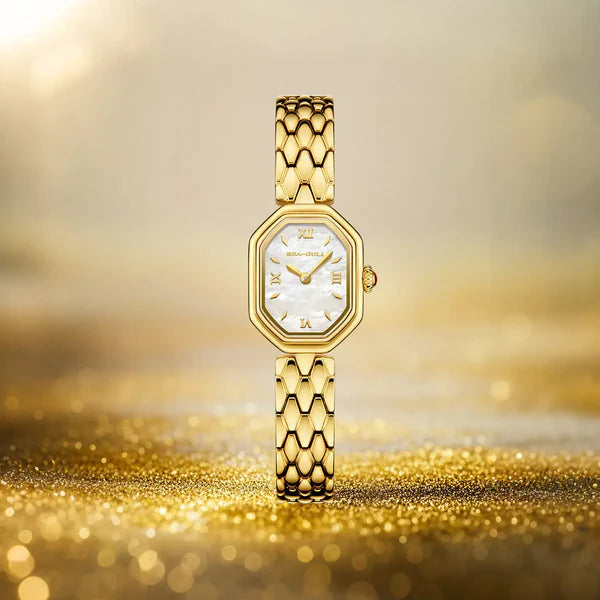
For much of the twentieth century, cases measuring between 27 mm and 35 mm were the standard of fine watchmaking across all styles. Contemporary collectors and wardrobe editors have increasingly returned to these classic footprints, recognizing that compact dimensions are a matter of proportion, comfort, and personal taste rather than gender stereotypes. On any wrist, a restrained case sits with quiet self-assurance.
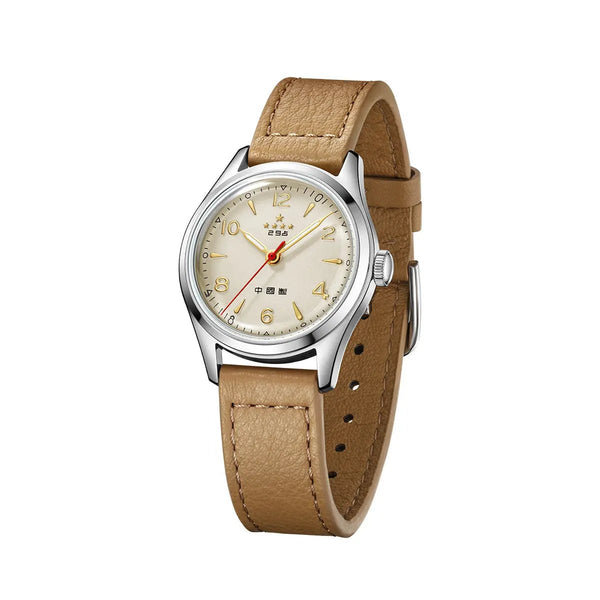
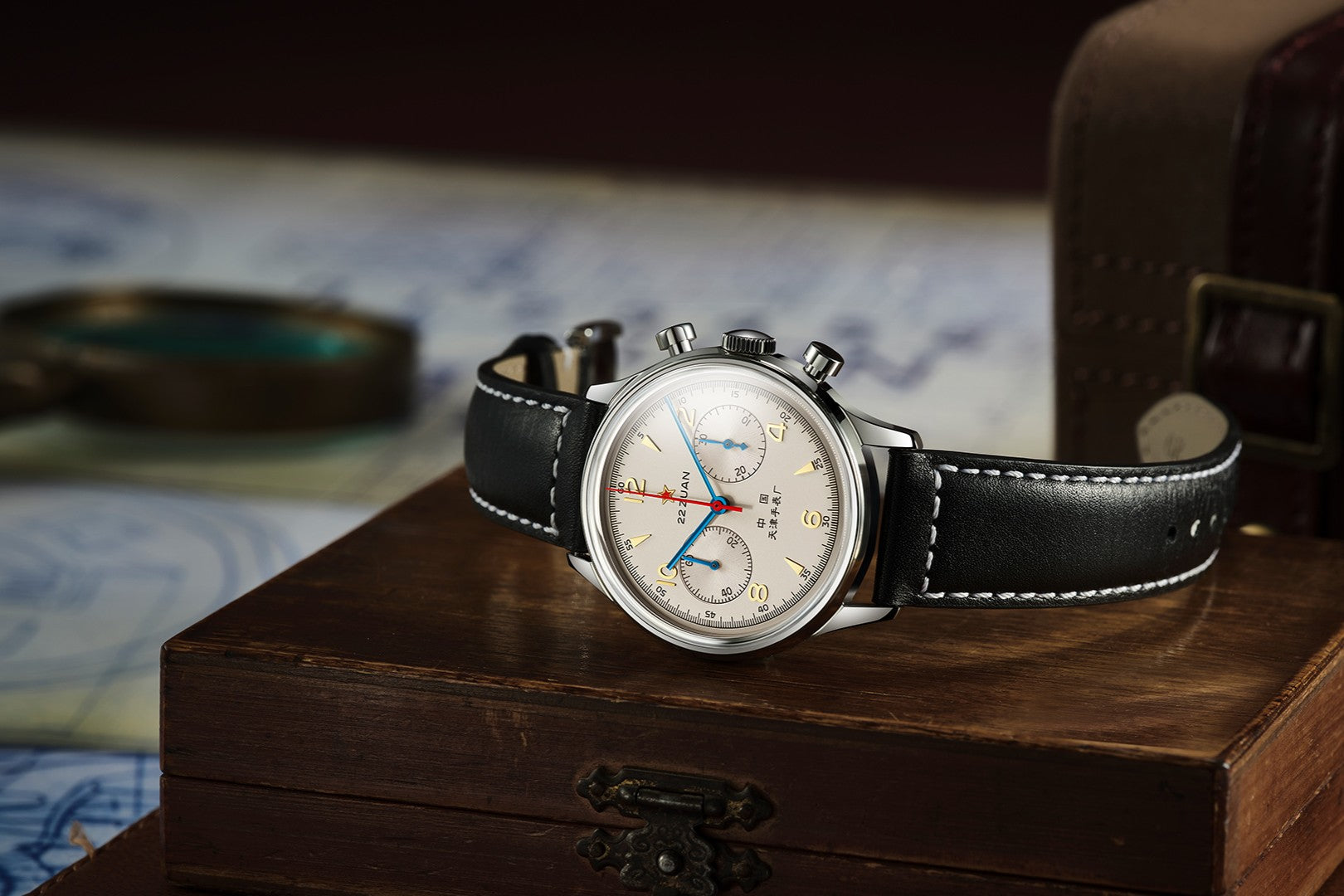
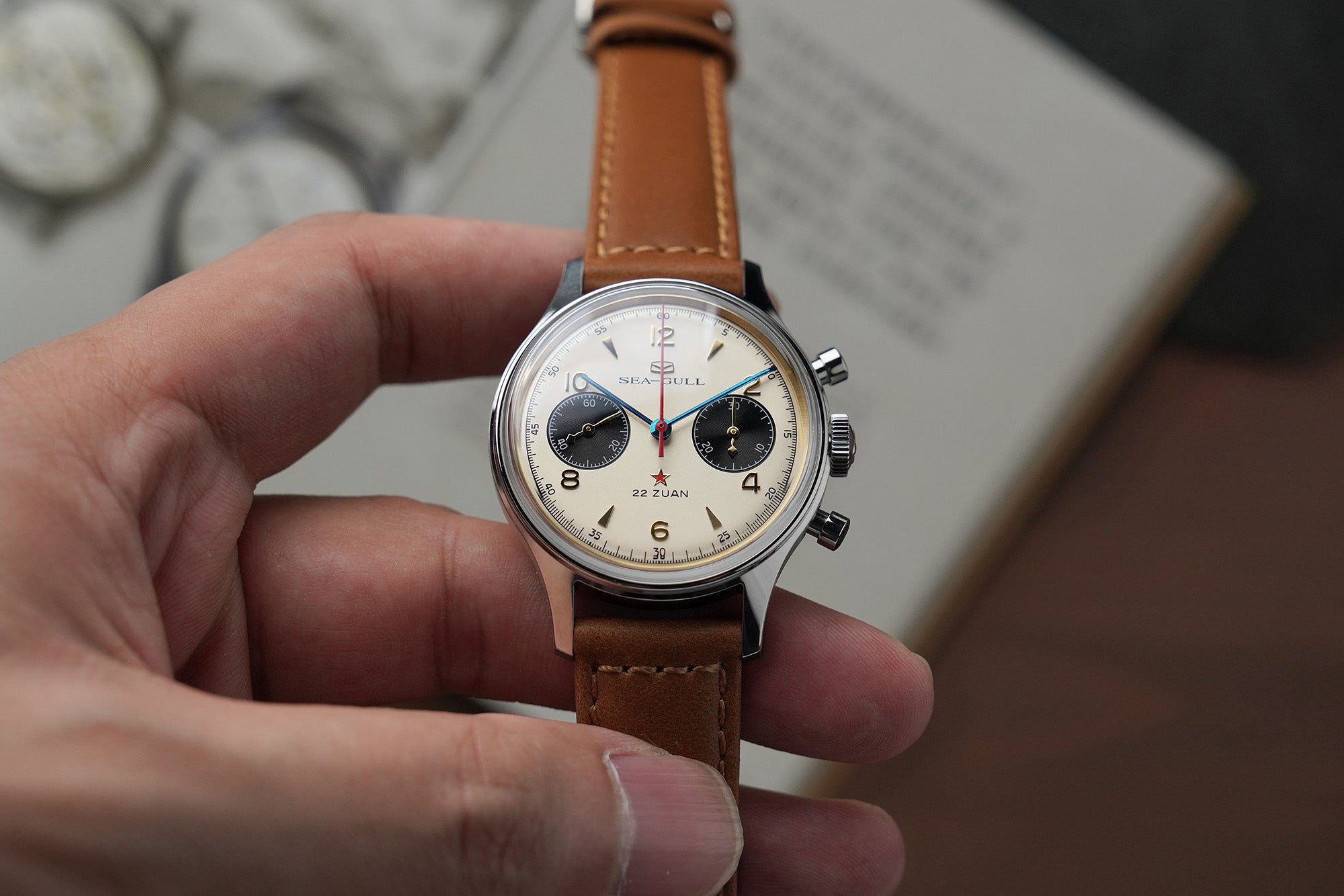
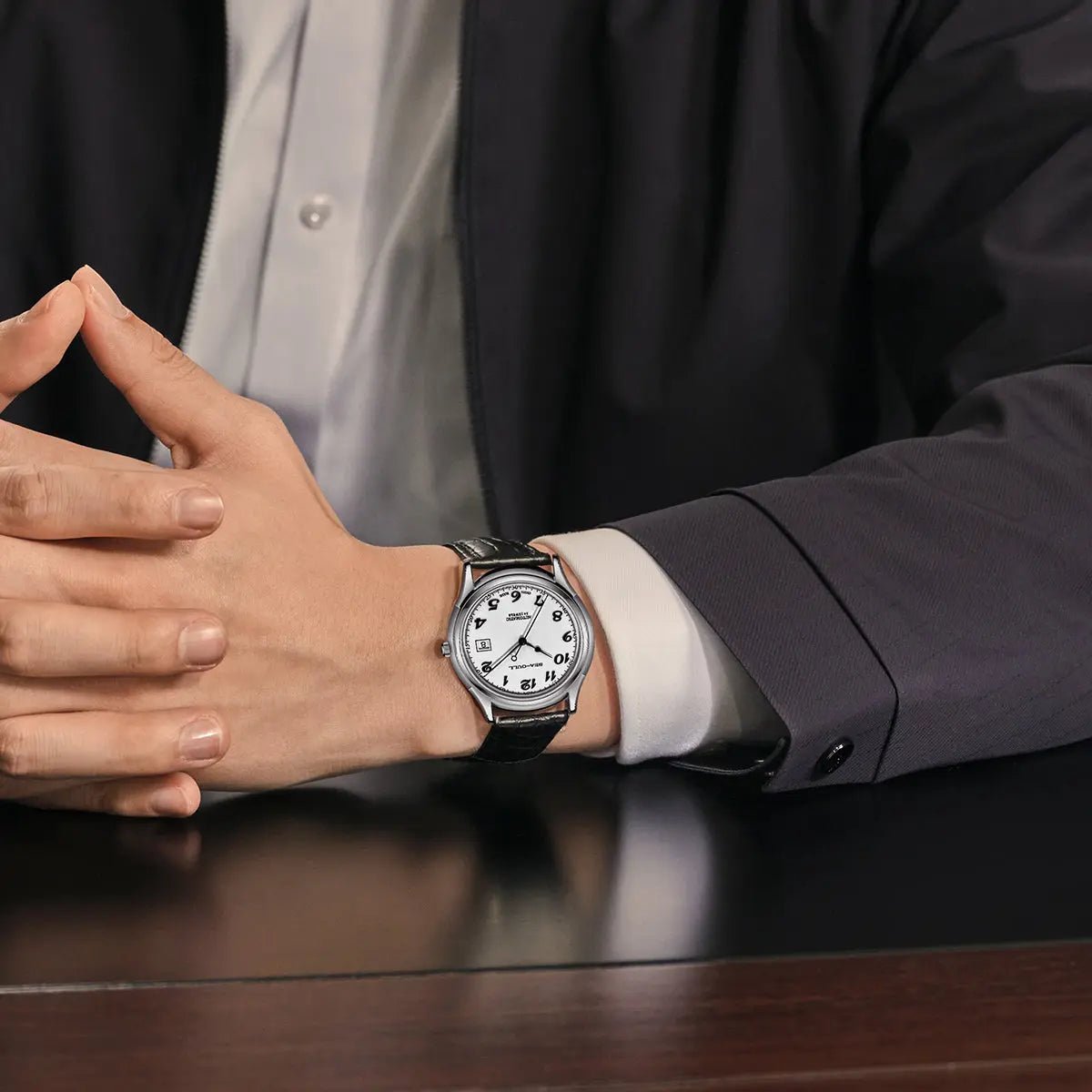
A clear study in historical proportion is the 70th Anniversary Reissue Wuxing 1955L. Crafted from 316L stainless steel with a synthetic sapphire crystal, its round case measures approximately 31.2 mm in diameter with a remarkably compact 38.2 mm lug-to-lug span. Weighing just 47 g on its 16 mm leather strap with a pin buckle, the watch stays centered on the wrist without dragging against a cuff. Inside beats the ST4200 automatic movement with 29 jewels at 28,800 vph, offering 5 bar of water resistance and luminous detailing within a 12.2 mm profile that remains comfortable because of its tight footprint.
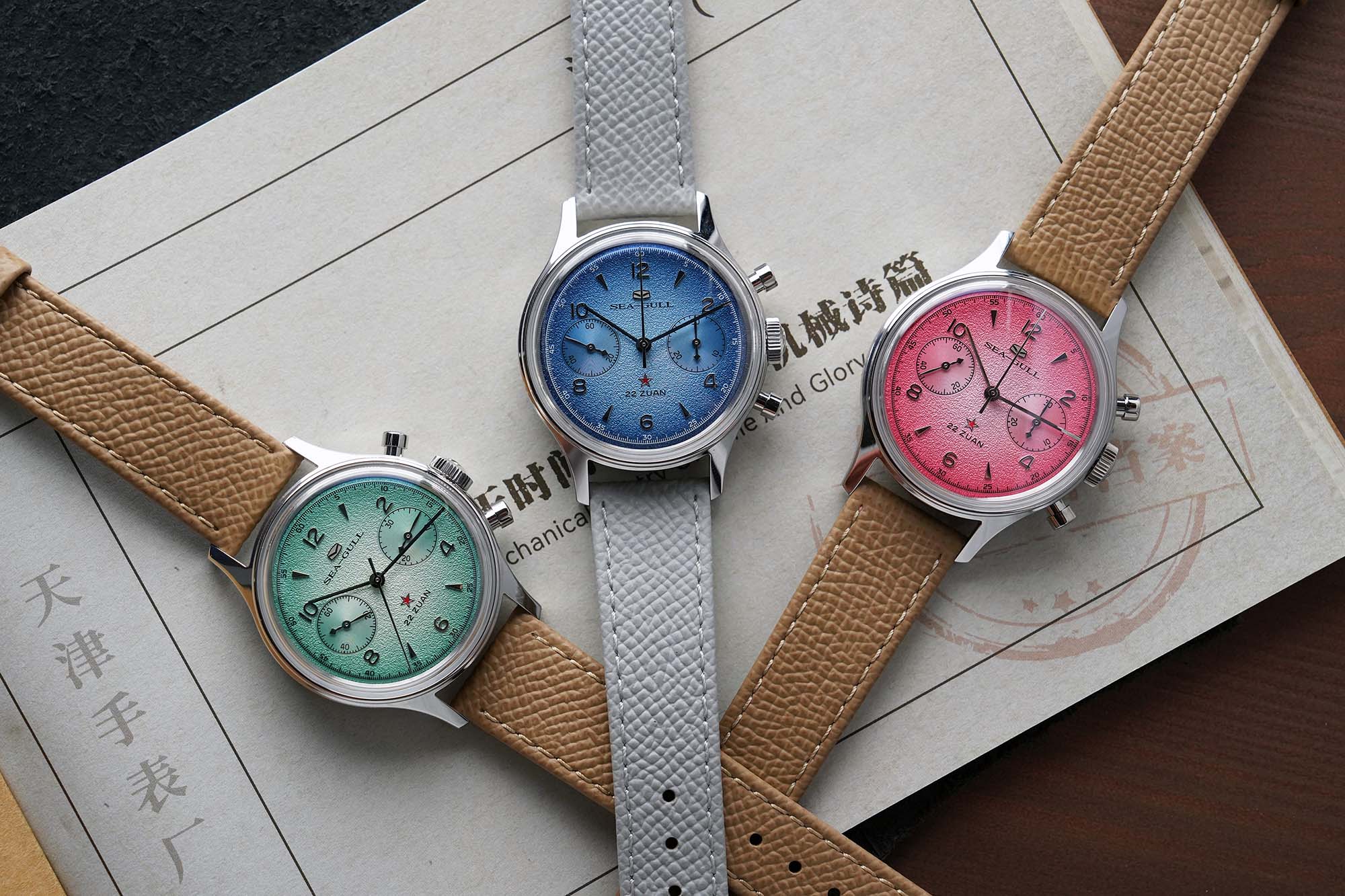
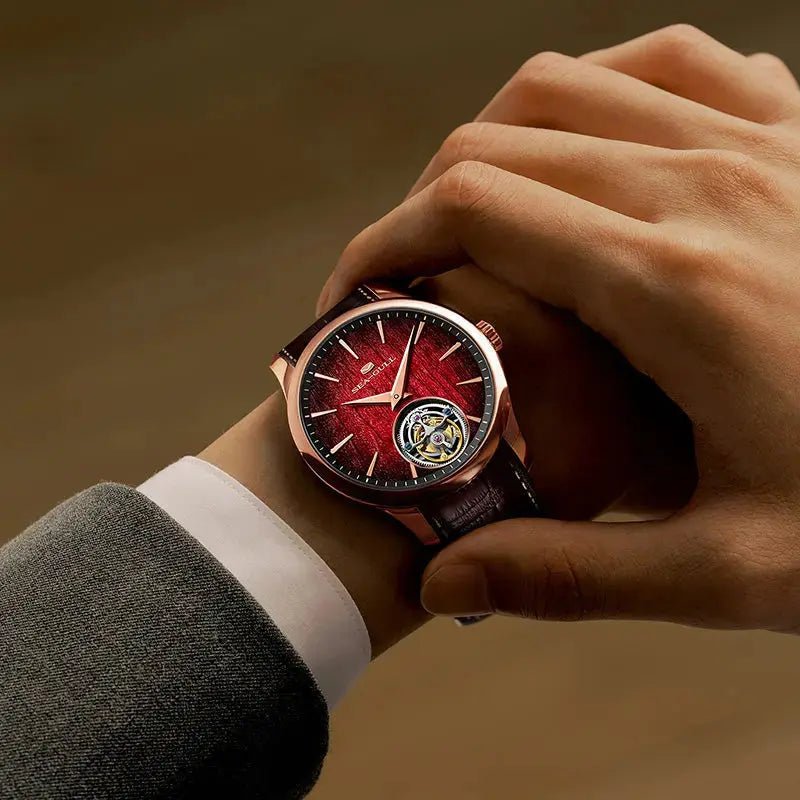
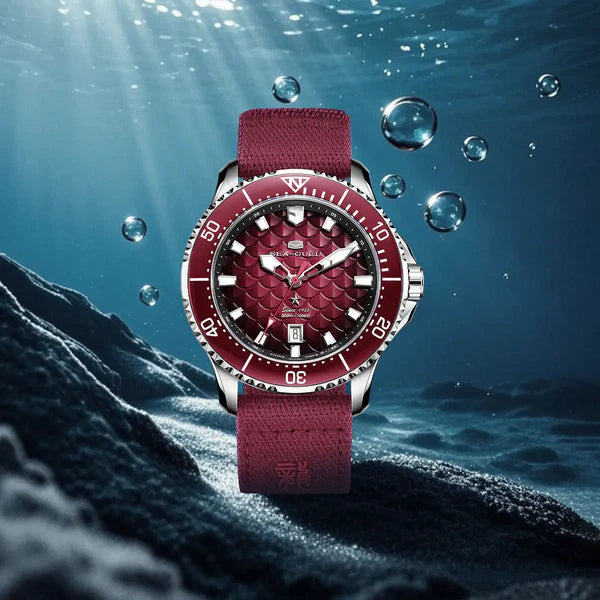
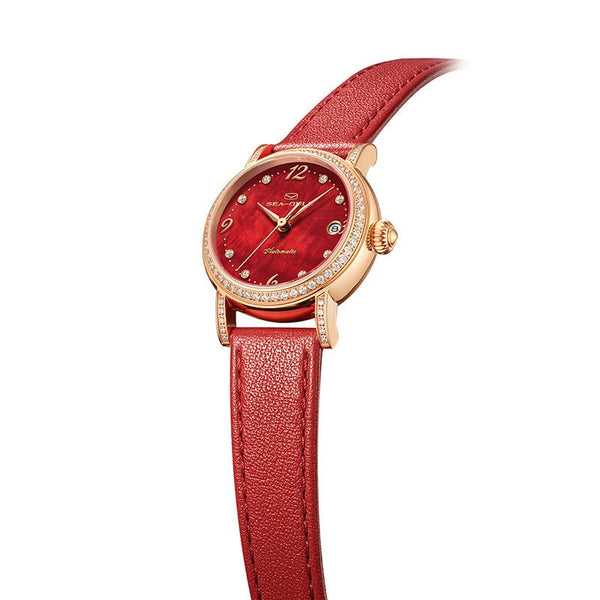
Looking past traditional catalog categories also opens up compelling options in color and tone. Winter wardrobes often lean heavily on somber neutrals like charcoal, navy, camel, and black. Pairing those muted textures with the red-dial automatic dress watch 1046AL introduces a warm, deliberate focal point at the edge of a cuff, proving that a compact automatic dress watch relies on chromatic depth and proportion rather than sheer size to establish presence.
Under the Dial: How Movement Architecture Shapes the Profile
Selecting a watch for cold-weather layering also involves weighing how different movement architectures affect case height and daily routine. No single caliber type is universally superior; each offers distinct advantages depending on how you dress and rotate your collection.
| Movement Architecture | Typical Complete Watch Thickness | Structural Impact on Case Profile | Cold-Weather Wearability & Practical Trade-Offs |
|---|---|---|---|
| Quartz | 4.0 mm to 8.5 mm | Battery, circuit, and stepping motor sit on a single flat plane with minimal vertical stacking. | Maximum cuff clearance and continuous running accuracy in a watch box, though without mechanical sweep or traditional gear train artistry. |
| Manual-Wind Mechanical | 6.0 mm to 10.5 mm | Bridges sit flat across the mainplate; omitting a winding rotor reduces overall height. | Delivers traditional mechanical craftsmanship in a noticeably slimmer profile, trading autonomous convenience for a daily hand-winding ritual. |
| Automatic Mechanical | 8.5 mm to 13.0 mm | Adds a self-winding bridge and central oscillating weight over the base caliber. | Winds continuously through natural wrist motion; requires compact diameter and curved lugs to balance the added height of the rotor. |
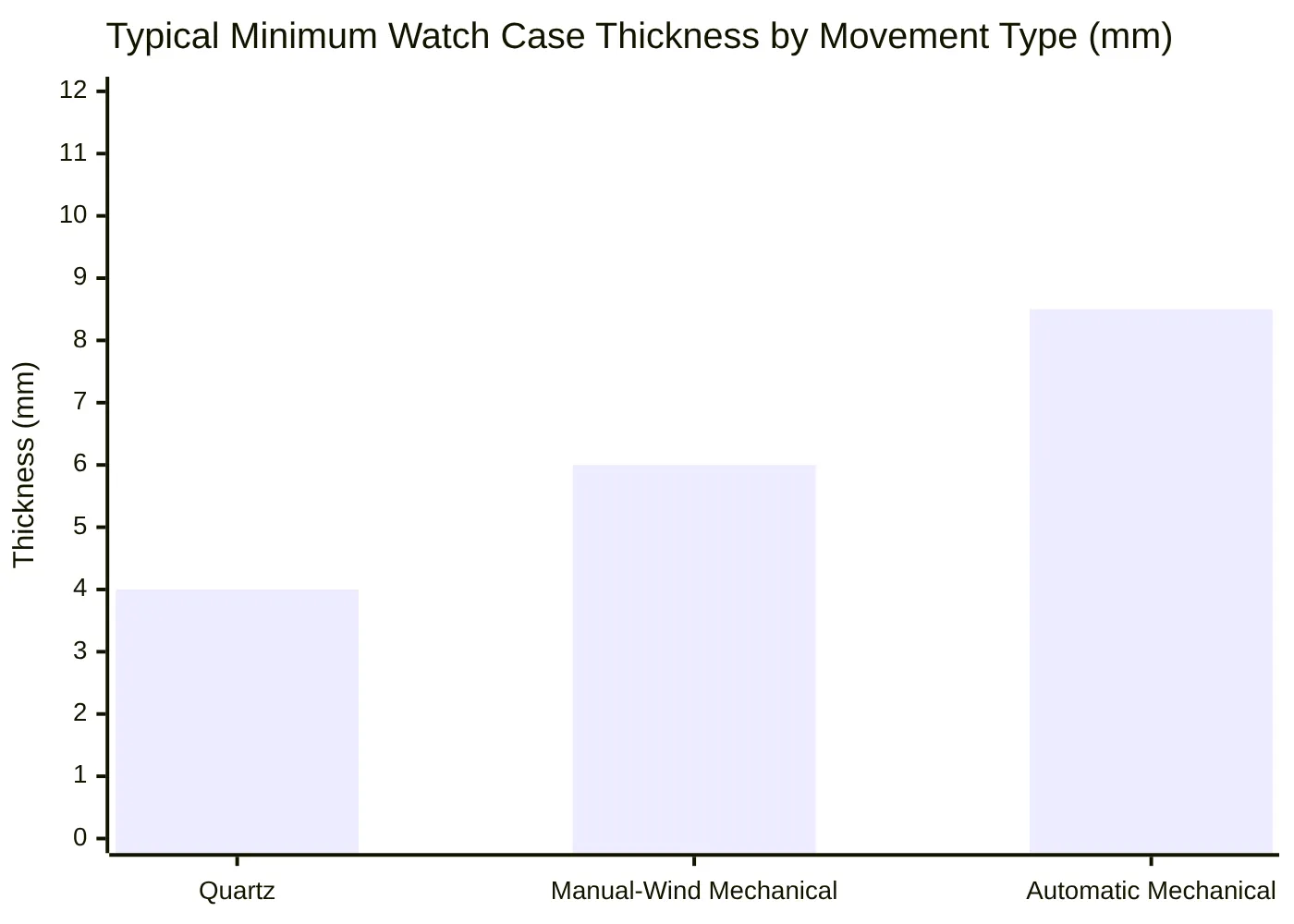
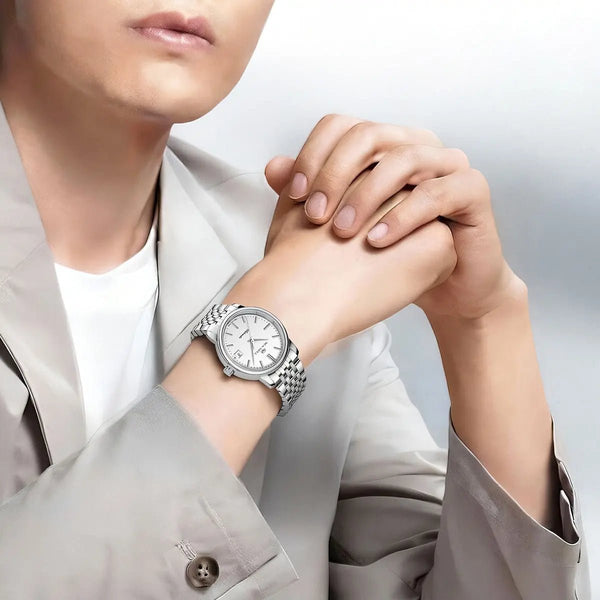
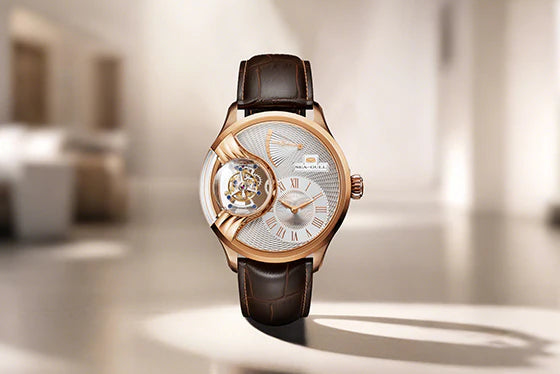
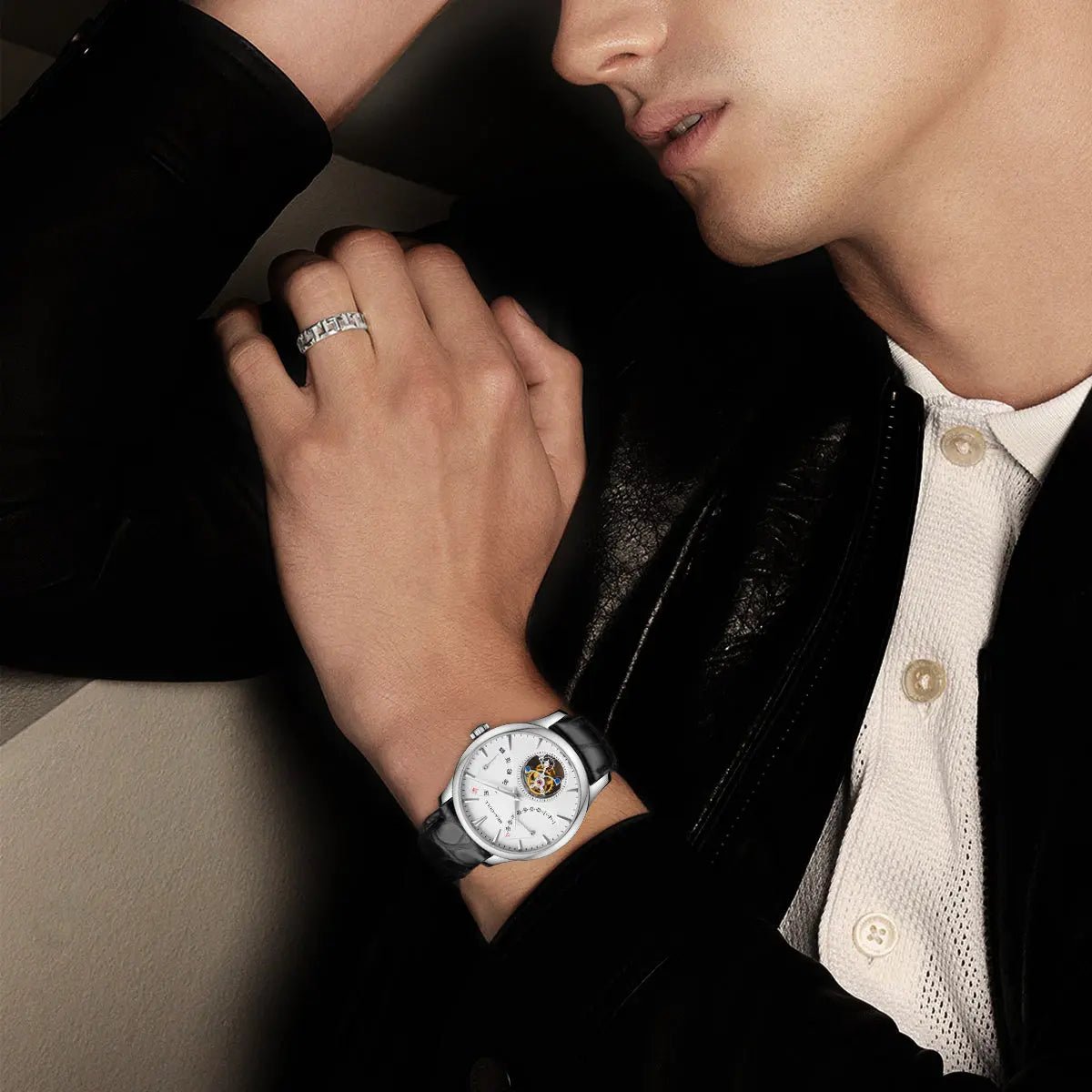
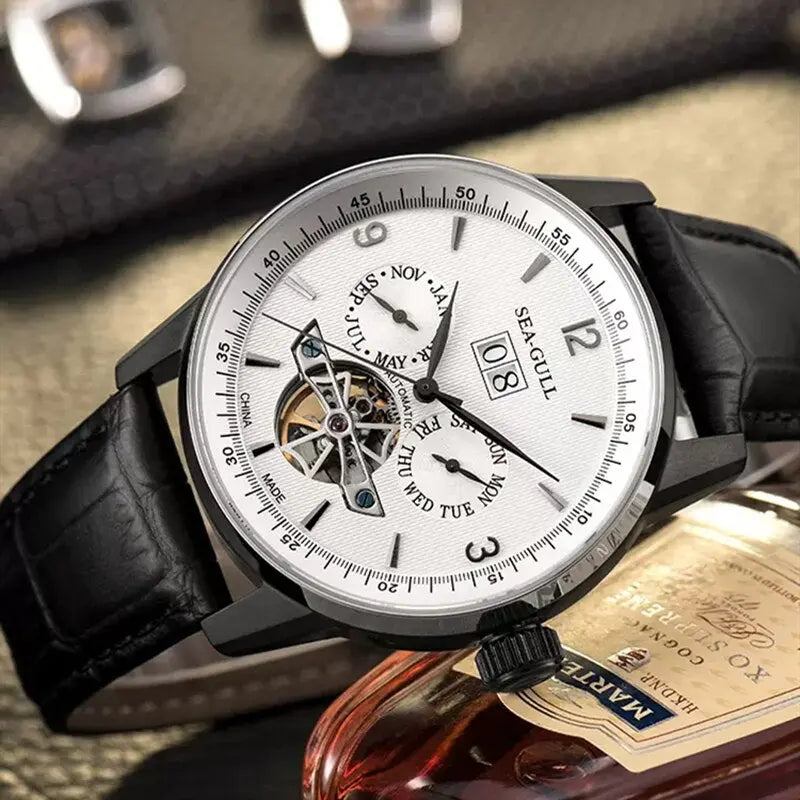
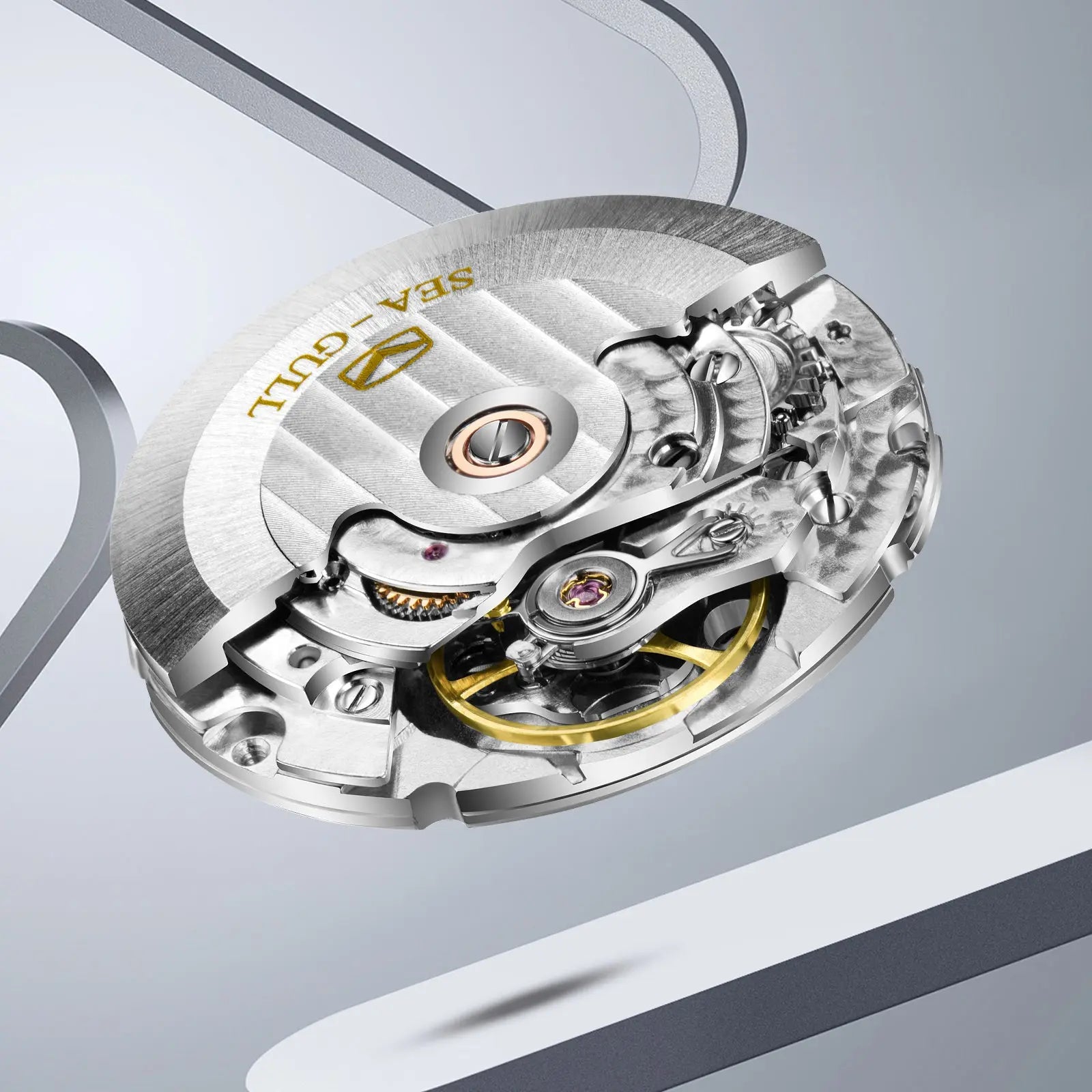
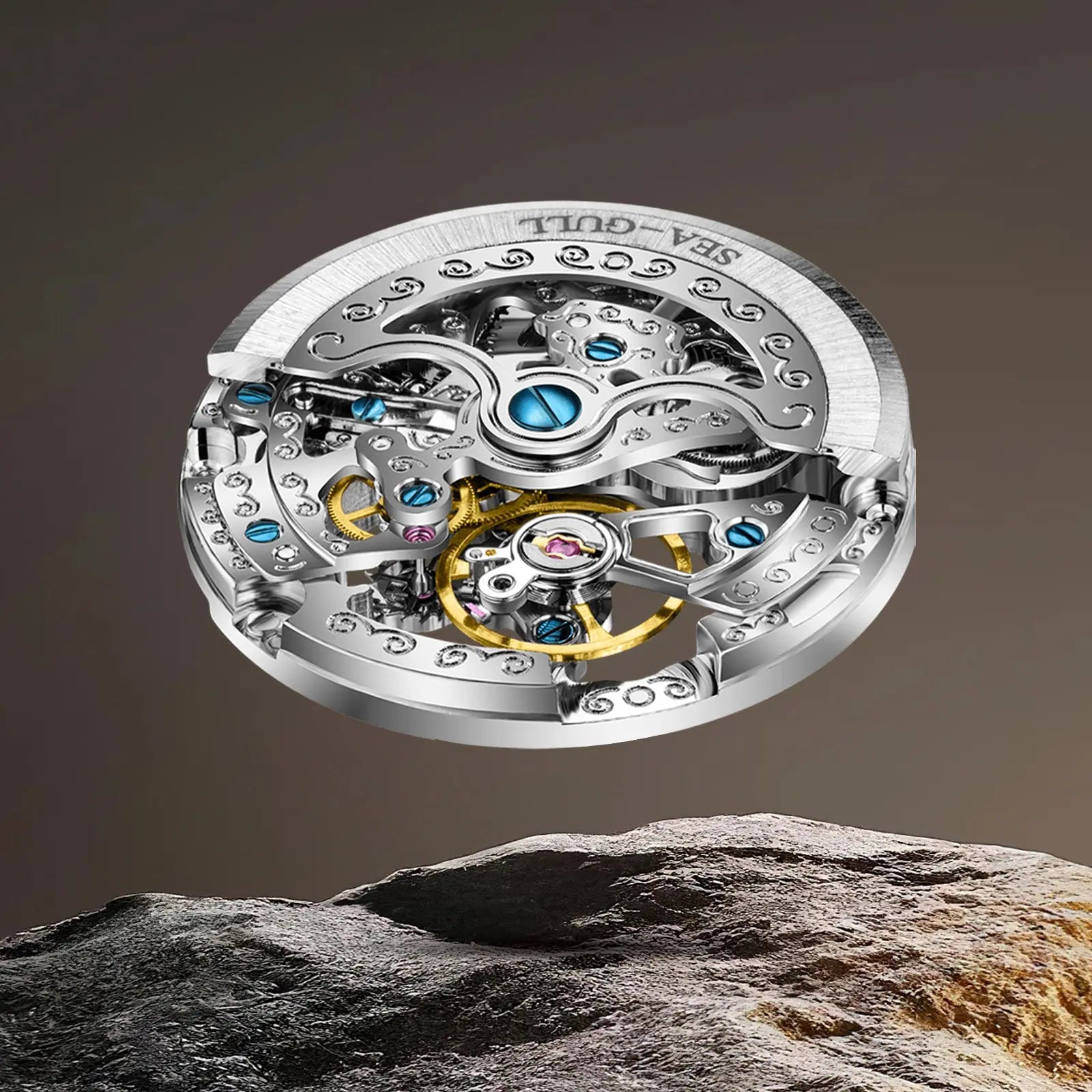
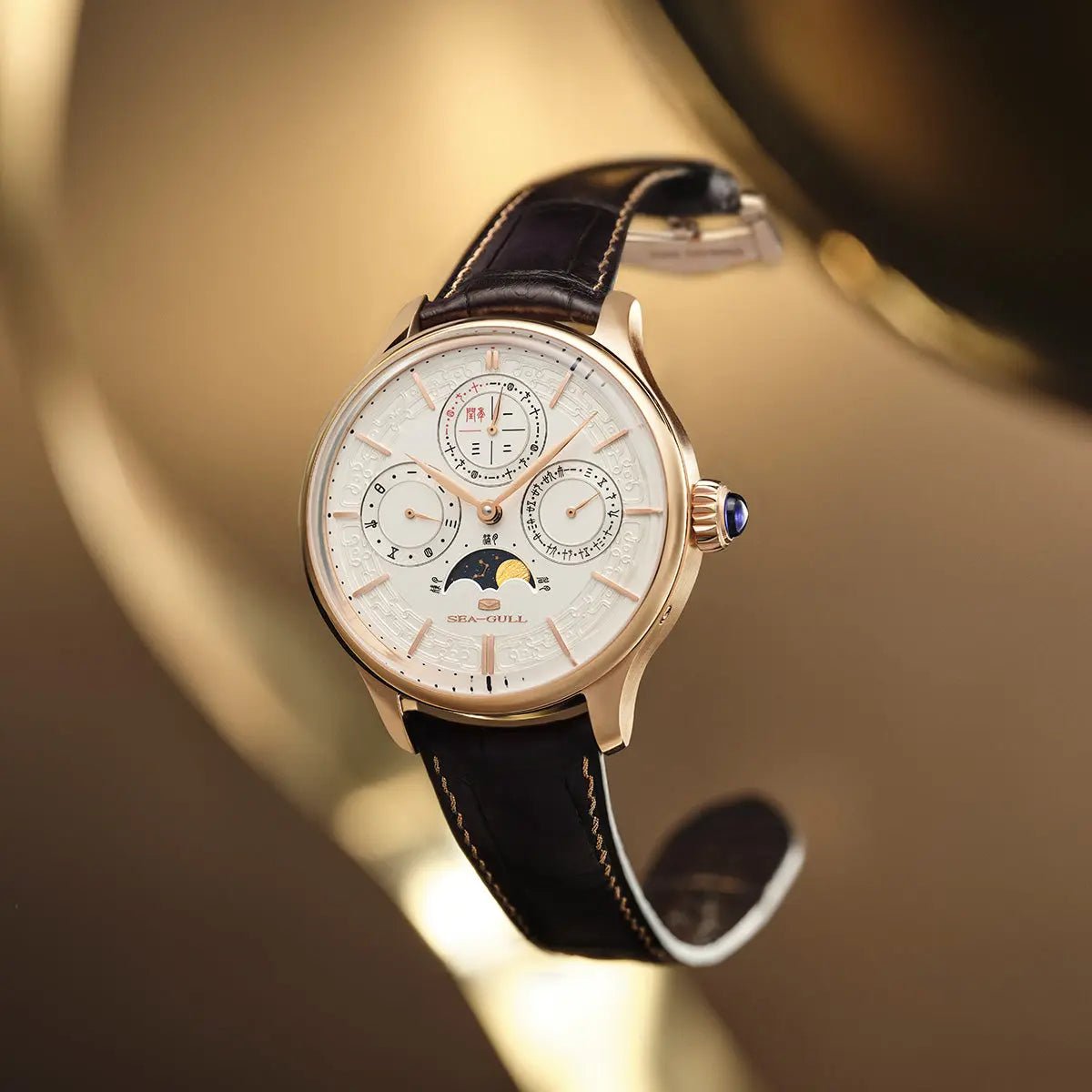
Where quartz prioritizes ultra-thin grab-and-go convenience and manual-wind calibers pare away rotor height for purist slimness, a well-proportioned automatic balances everyday self-winding ease with mechanical character. In tailored settings where a clean dial and uncluttered silhouette must cooperate with a buttoned dress shirt and suit jacket, a restrained piece like the Business Classic 1091 exemplifies how classic dress watch architecture keeps the transition from sleeve to wrist effortless.
Dressing with Intention When Temperatures Drop
A winter timepiece performs best when it cooperates with your wardrobe rather than competing against it. By paying attention to short lug-to-lug spans, sloped bezels, and compact diameters, you allow heavy coats and fine knitwear to drape exactly as their tailors intended while enjoying the quiet comfort of a balanced case. For those looking to add a compact piece to their cold-weather rotation, new newsletter subscribers can receive 10% off their first order.

Leave a comment
This site is protected by hCaptcha and the hCaptcha Privacy Policy and Terms of Service apply.