









Journal de précision de montre mécanique : méthode simple sur sept jours
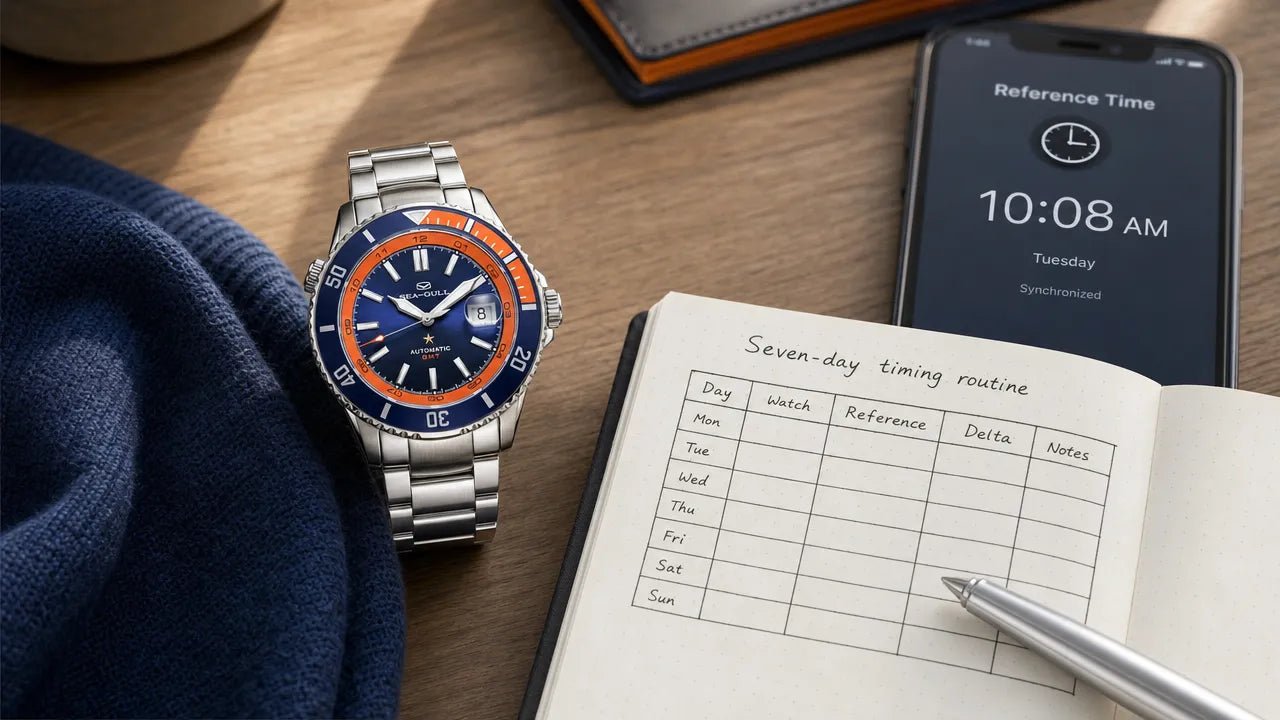
Un journal sur sept jours transforme les observations quotidiennes de précision de la montre en une base personnelle utile, sans considérer les variations mécaniques normales comme un défaut. Il fonctionne mieux lorsque vous comparez votre montre à une seule référence horaire fiable, que vous la vérifiez à la même heure chaque jour et que vous notez les conditions entourant chaque relevé.
Les montres mécaniques réagissent aux habitudes réelles de leur propriétaire, notamment l’état de remontage, la durée portée, la position pendant la nuit, la température, les chocs et l’exposition magnétique. Cette approche de l’entretien d’une montre mécanique vous aide à repérer une tendance répétable plutôt qu’à courir après un chiffre quotidien parfait.
L’entretien d’une montre mécanique commence par une base répétable pour la précision de la montre
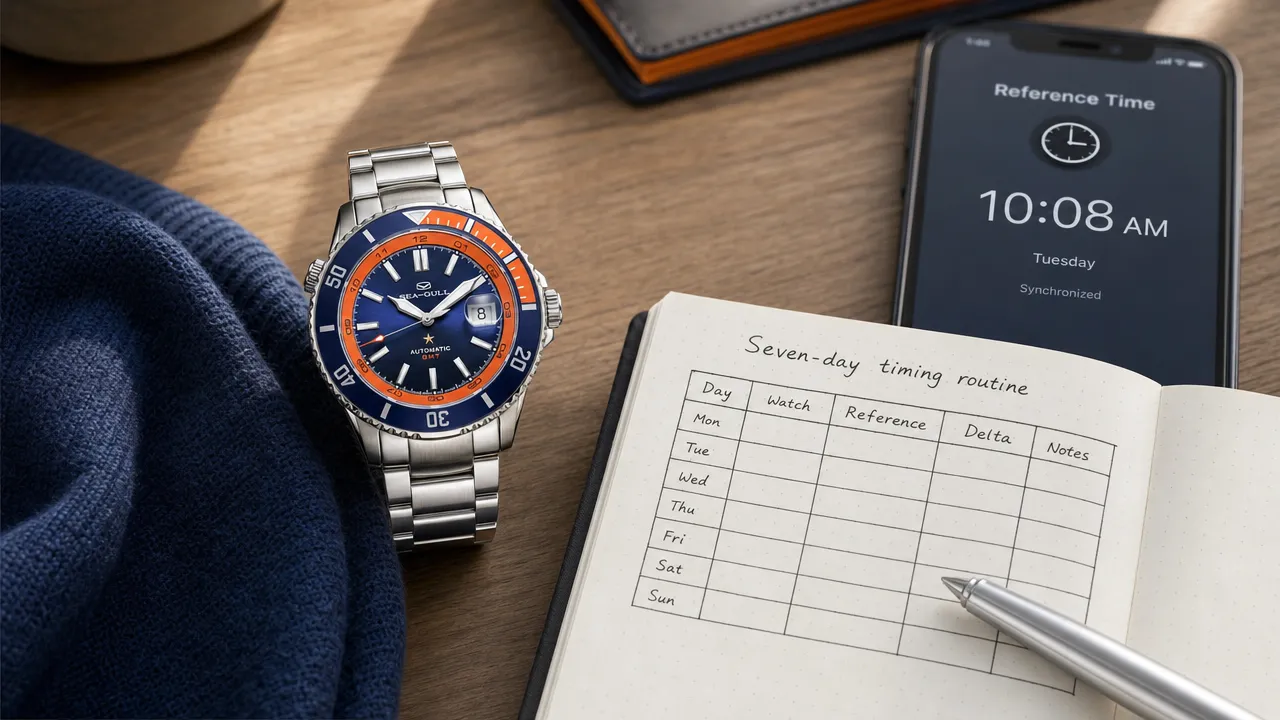
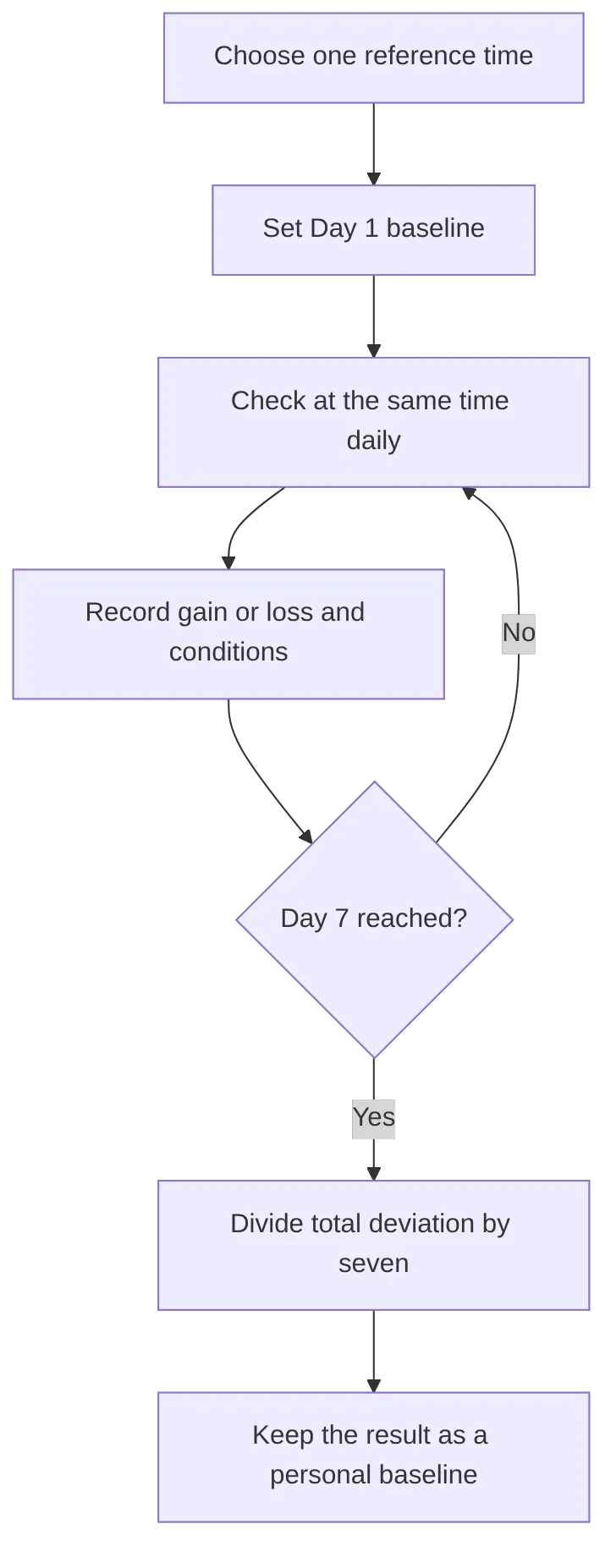
Utilisez une seule référence synchronisée au réseau pendant toute la semaine, comme NIST Time.gov. Réglez soigneusement la montre le Jour 1 lorsque ses instructions le permettent, puis évitez de la remettre à l’heure pendant la période d’observation.
À la même heure chaque jour, comparez l’heure affichée à la référence et notez si la montre avance ou retarde. Utilisez un signe plus pour l’avance et un signe moins pour le retard. Le résultat est votre écart total par rapport à la base du Jour 1.
Un journal utile ne diagnostique pas un mouvement et ne détermine pas s’il nécessite une réparation. Il enregistre la façon dont la montre se comporte dans votre routine normale. C’est une réponse pratique à la question de savoir comment entretenir une montre mécanique : gardez une méthode d’observation constante avant de tirer des conclusions.
Choisissez une seule position de repos nocturne pour la première semaine, par exemple cadran vers le haut, et notez-la chaque jour. Une montre peut présenter des variations selon sa position, donc changer de position chaque nuit rend la première base plus difficile à lire.
Entretien d’une montre mécanique : notez les mêmes détails du Jour 1 au Jour 7
Commencez avec une routine d’énergie normale. Pour une montre à remontage manuel, remontez-la à peu près à la même heure chaque jour et ne forcez pas la couronne au-delà de sa résistance naturelle. Pour une montre automatique, portez-la normalement et notez une durée approximative au poignet. Une journée peu active mérite d’être signalée, pas corrigée par des suppositions.
Utilisez ce tableau prêt à copier pour l’enregistrement complet sur sept jours.
| Jour | Heure de vérification | Gain/perte total(e) par rapport à la base | Variation depuis le relevé précédent | Note sur le port et le remontage | Position pendant la nuit | Événements ou conditions |
|---|---|---|---|---|---|---|
| Jour 1 | ___ | 0 sec | - | ___ | ___ | Base définie |
| Jour 2 | ___ | ___ sec | ___ sec | ___ | ___ | ___ |
| Jour 3 | ___ | ___ sec | ___ sec | ___ | ___ | ___ |
| Jour 4 | ___ | ___ sec | ___ sec | ___ | ___ | ___ |
| Jour 5 | ___ | ___ sec | ___ sec | ___ | ___ | ___ |
| Jour 6 | ___ | ___ sec | ___ sec | ___ | ___ | ___ |
| Jour 7 | ___ | ___ sec | ___ sec | ___ | ___ | Relevé final |
Gardez des notes brèves et factuelles. Les entrées utiles incluent :
- Durée de port, par exemple « portée environ 9 hours. »
- Note sur le remontage, par exemple « remontage manuel à l’heure habituelle » ou « journée peu active. »
- Position pendant la nuit, par exemple « cadran vers le haut. »
- Un choc notable, une vibration répétée ou un changement inhabituel de température.
- Une exposition magnétique possible près d’un fermoir magnétique, d’un haut-parleur ou d’un accessoire de charge.
Les habitudes pratiques de cette référence d'entretien peuvent aider à maintenir les variables quotidiennes à un niveau gérable. Un guide d'entretien de montre Sea-Gull doit favoriser une observation attentive, et non promettre un résultat de chronométrage universel.
Entretien d’une montre mécanique : calculez la cadence quotidienne après le Jour 7
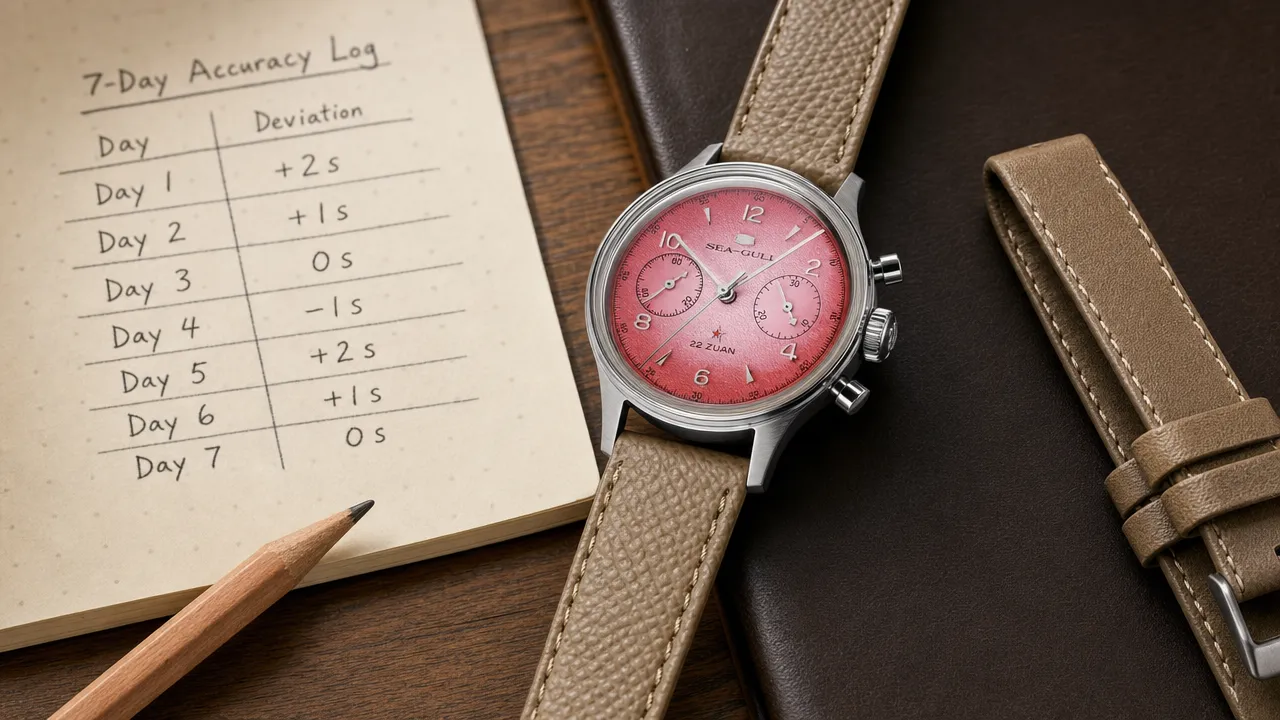
La précision d’une montre se comprend plus facilement comme une cadence quotidienne moyenne. Divisez l’écart total au Jour 7 par le nombre de jours écoulés.
Cadence quotidienne moyenne = écart total en secondes divisé par les jours écoulés
Par exemple, une montre qui affiche +21 seconds après sept jours a une cadence moyenne de :
+21 divisé par 7 = +3 secondes par jour
Le calcul est simple, mais sa signification dépend des notes qui l’accompagnent. Un gain régulier avec des habitudes de port, de remontage et de rangement similaires crée une base plus utile que la même moyenne obtenue avec des routines incohérentes.
Ne comparez pas un résultat relevé à domicile avec une cible universelle en secondes par jour. Les performances d’une montre mécanique peuvent varier selon les conditions, et un relevé sur sept jours est plus utile comme point de comparaison futur pour votre propre montre.
Entretien d’une montre mécanique : lisez les tendances sans surréagir
Un gain ou une perte globalement réguliers sur sept jours constituent des données d’usage utiles. Cela ne prouve pas que la montre est réglée selon une norme précise, mais cela vous donne une tendance documentée à revoir plus tard.
Des relevés variables appellent d’abord une vérification du contexte. Vérifiez si la montre a été portée beaucoup moins que d’habitude, rangée différemment pendant la nuit, exposée à un environnement inhabituel ou soumise à un choc. Un relevé inattendu peut simplement refléter une heure de vérification différente ou une routine quotidienne modifiée.
Le magnétisme mérite une attention particulière. Une montre mécanique peut prendre de l’avance ou du retard après un contact avec une source magnétique puissante. Notez l’exposition plutôt que d’essayer un diagnostic à domicile. Un changement persistant et inexpliqué après une exposition possible est une raison valable de contacter un centre de service agréé.

Entretien d’une montre mécanique : utilisez judicieusement les habitudes de soin et les indices de service
L’entretien d’une montre mécanique facilite un suivi plus clair lorsqu’il réduit les variables évitables. Rangez la montre dans un endroit propre, sec et stable, tenez-la à l’écart des aimants puissants et évitez les chocs inutiles. Gardez les bracelets en cuir à l’écart de l’humidité excessive. Manipulez les couronnes et les poussoirs avec douceur, et arrêtez-vous plutôt que de forcer une commande qui semble anormalement dure ou résistante.
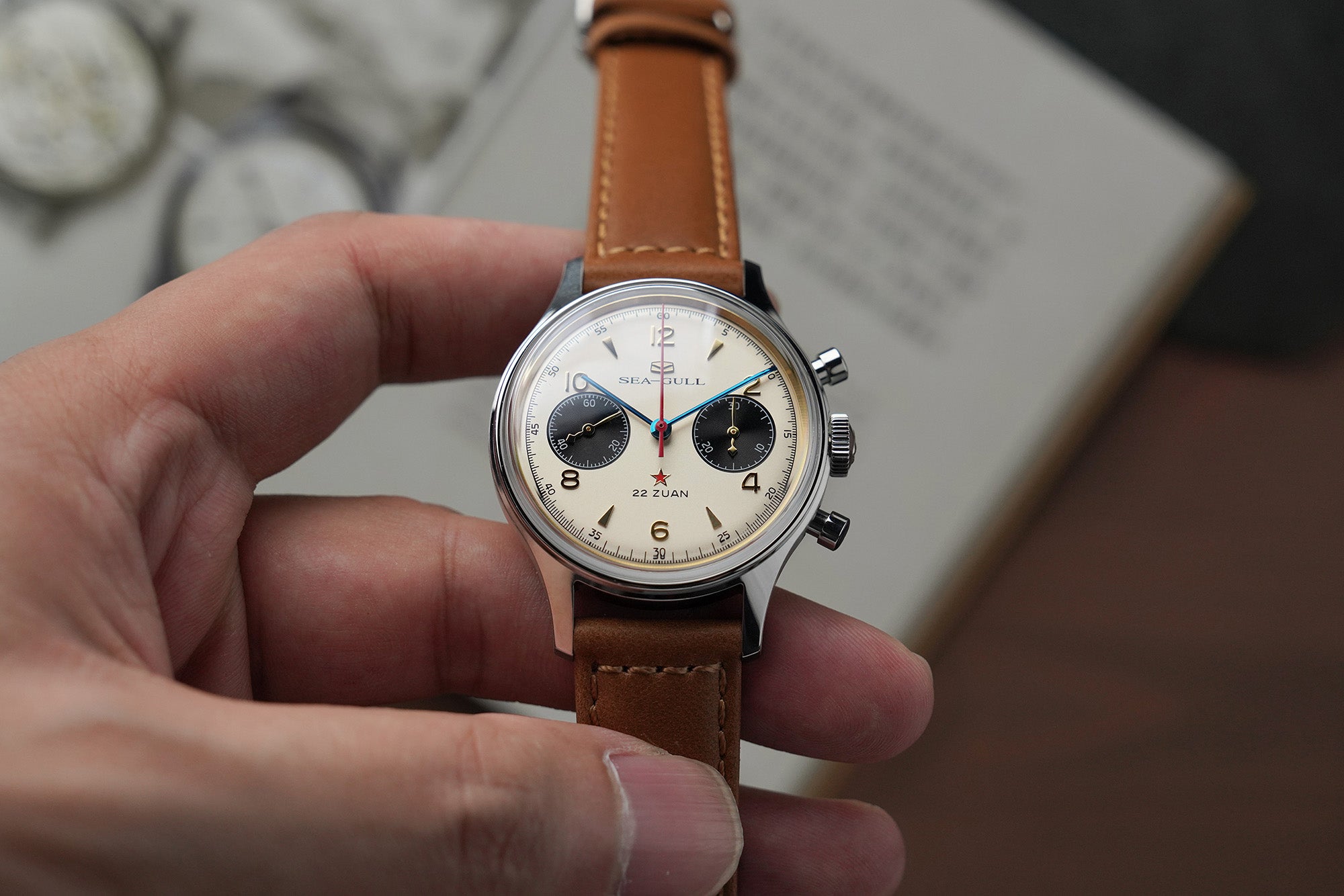
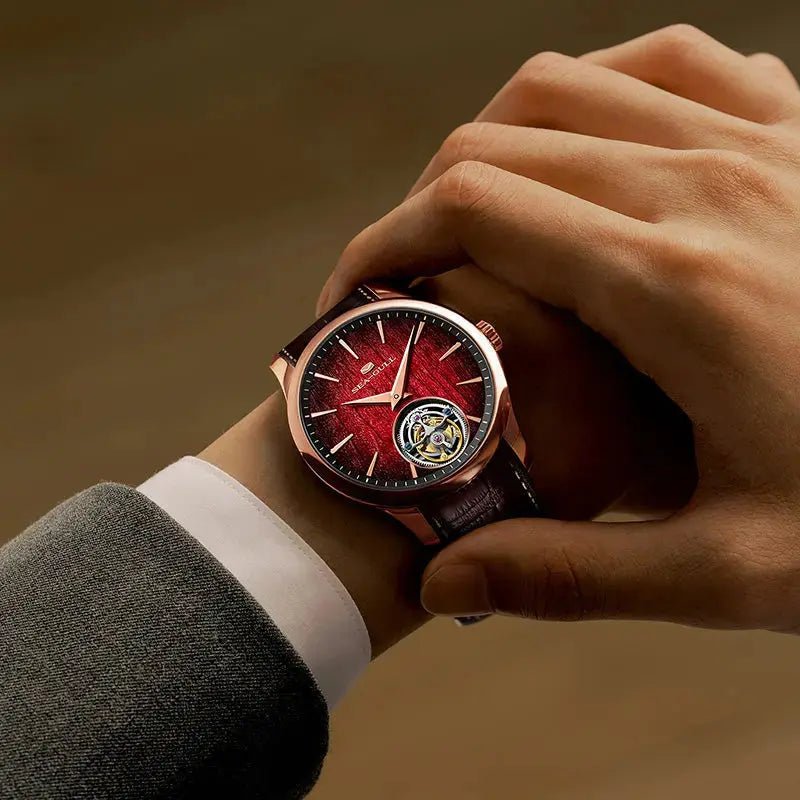
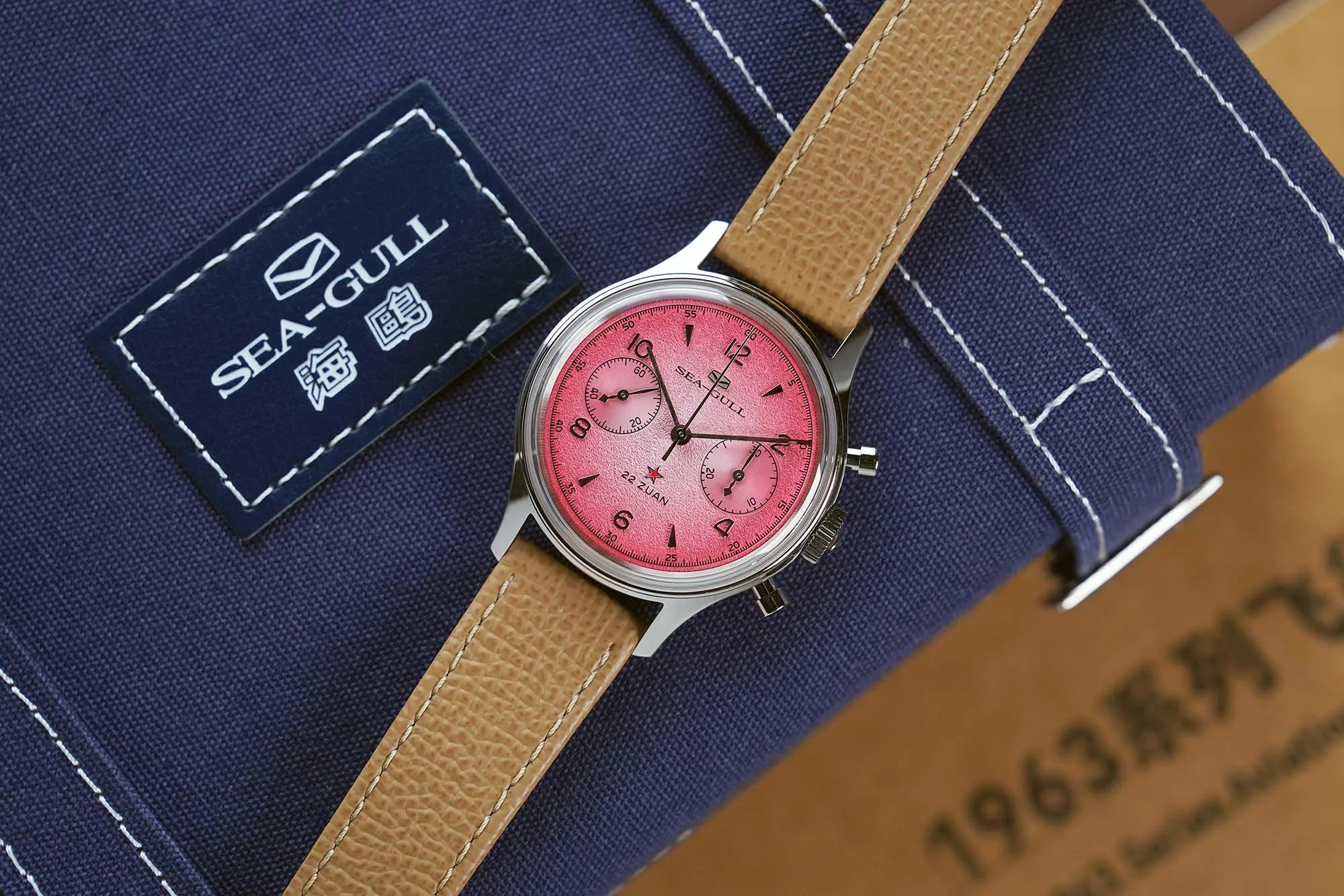
La méthode s'applique que vous portiez une montre mécanique Sea-Gull, un chronographe manuel, une Sea-Gull GMT automatique, une montre de plongée Sea-Gull, des montres mécaniques heritage ou une montre tourbillon Sea-Gull. Pour un chronographe manuel, un remontage régulier et une manipulation correcte des poussoirs doivent figurer dans les notes. Les lecteurs intéressés par cette catégorie peuvent consulter le collection Seagull 1963.
Contactez un centre de service agréé lorsqu’un changement d’heure important persiste par rapport à la base établie de la montre, en particulier après un choc ou une exposition magnétique possible. Un arrêt intermittent, de la condensation sous le verre ou un fonctionnement anormal de la couronne, des poussoirs ou du chronographe mérite aussi une attention professionnelle. Gardez la preuve d’achat et votre journal à disposition, puis examinez le support après-vente et les réparations le cas échéant.
Pour un aperçu plus large de l’usage, parcourez les tutoriels d’entretien et de maintenance. Un revendeur officiel agréé Sea-Gull ou un distributeur agréé peut également aider à orienter les propriétaires vers les canaux d'assistance appropriés.
Pour les achats éligibles via le site du distributeur, la livraison hors taxes, la livraison gratuite et la TVA incluse dans le prix peuvent simplifier la planification de l’achat, sans frais supplémentaires facturés.


Laisser un commentaire
Ce site est protégé par hCaptcha, et la Politique de confidentialité et les Conditions de service de hCaptcha s’appliquent.