



Article: A Mechanical Watch on a Late-Autumn Hike: What It Can and Cannot Do
A Mechanical Watch on a Late-Autumn Hike: What It Can and Cannot Do
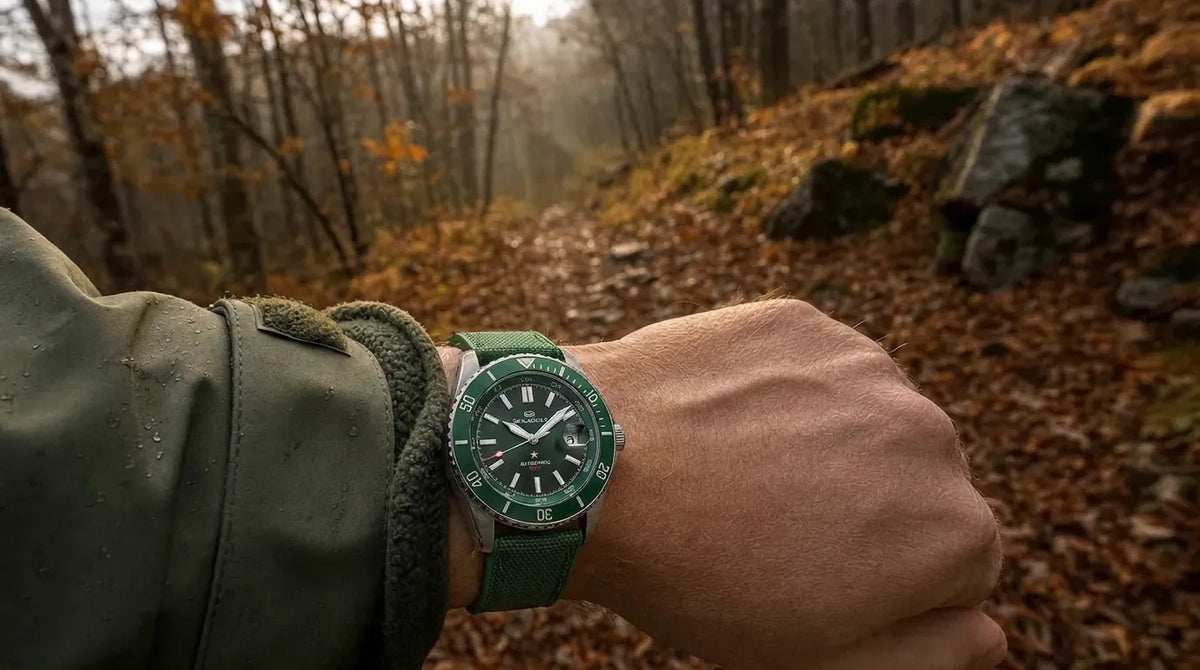
Walking a woodland trail in late autumn offers a distinct kind of quiet. The air turns crisp, fallen leaves mute the footpath, and afternoon light fades far earlier than it did in summer. For enthusiasts who enjoy bringing a traditional timepiece outdoors, wearing a mechanical watch for hiking is an exercise in analog simplicity rather than tactical survival. A finely made mechanical watch brings tactile engagement and screen-free calm to a casual afternoon walk, provided the wearer remains clear-eyed about what a spring-driven movement can actually do on the trail—and what remains the responsibility of dedicated outdoor gear.
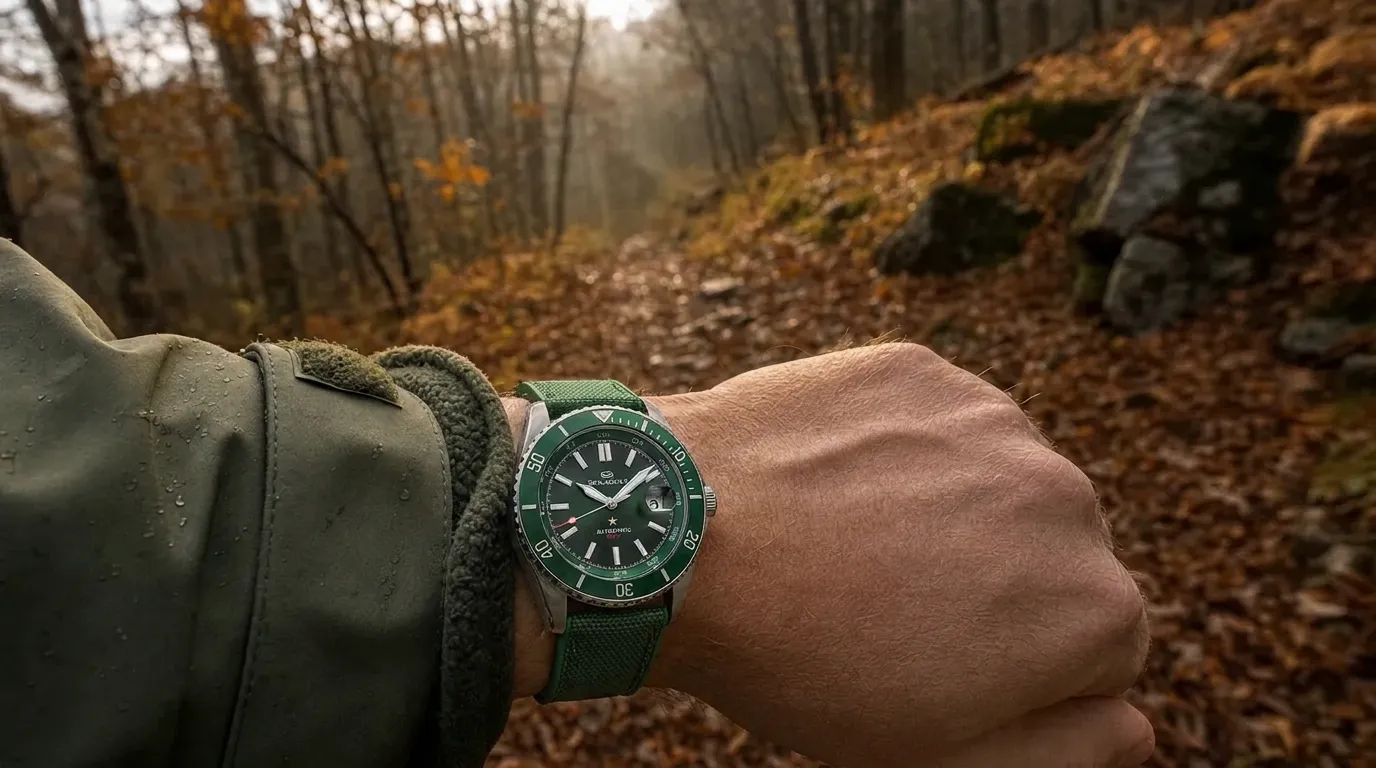
How Trail Conditions Affect a Mechanical Watch for Hiking
Late-autumn conditions introduce three practical variables for any wristwatch: shrinking daylight, damp weather, and layered clothing. Across mid-northern latitudes, daylight contracts rapidly through October and November, and usable light beneath a forest canopy or inside a valley corridor fades well before official sunset. On a casual day hike, a watch serves primarily as an elapsed-time reference—helping you monitor walking intervals, time rest breaks, and respect a conservative turnaround hour so you return to the trailhead before dusk.
Moisture is the second factor. Horological water-resistance ratings reflect static laboratory pressure tests rather than dynamic immersion. While a 5 Bar (50-meter) rating handles everyday sweat and light rain, stepping up to a 20 Bar (200-meter) or 30 Bar (300-meter) case provides a wider sealing margin against heavy autumn downpours, wet foliage, and stream splashes. Even so, rapid temperature shifts between chilly trail air and a heated vehicle can stress aging gaskets, and crowns should never be operated while wet.
Finally, autumn layering changes how a watch sits on the wrist. Fleece sleeves, hardshell cuffs, and gloves create friction against taller or wider cases. Compact 40mm to 41mm profiles slip beneath jacket cuffs with minimal snagging, whereas a 44mm case carries a broader presence that sits more noticeably against tight outerwear. Case and strap materials alter comfort as well: titanium alloy feels lighter and less cold against the skin than stainless steel, while a nylon fabric strap dries faster than leather and adjusts easily over or under a base layer.
Quartz Versus a Mechanical Watch for Hiking and Movement Choices
Choosing a mechanical caliber over an electronic one is a decision rooted in horological appreciation rather than technical superiority. Standard quartz watches have very few moving parts, making them naturally less sensitive to sharp impacts or trekking-pole vibrations and accurate to within seconds per month. A mechanical movement, by contrast, is chosen for its self-contained craftsmanship and battery-free autonomy. While extreme sub-zero cold can thicken mechanical lubricants if a watch is worn exposed outside a jacket sleeve, normal late-autumn day-hiking temperatures rarely trouble a watch worn against the warmth of the wrist.
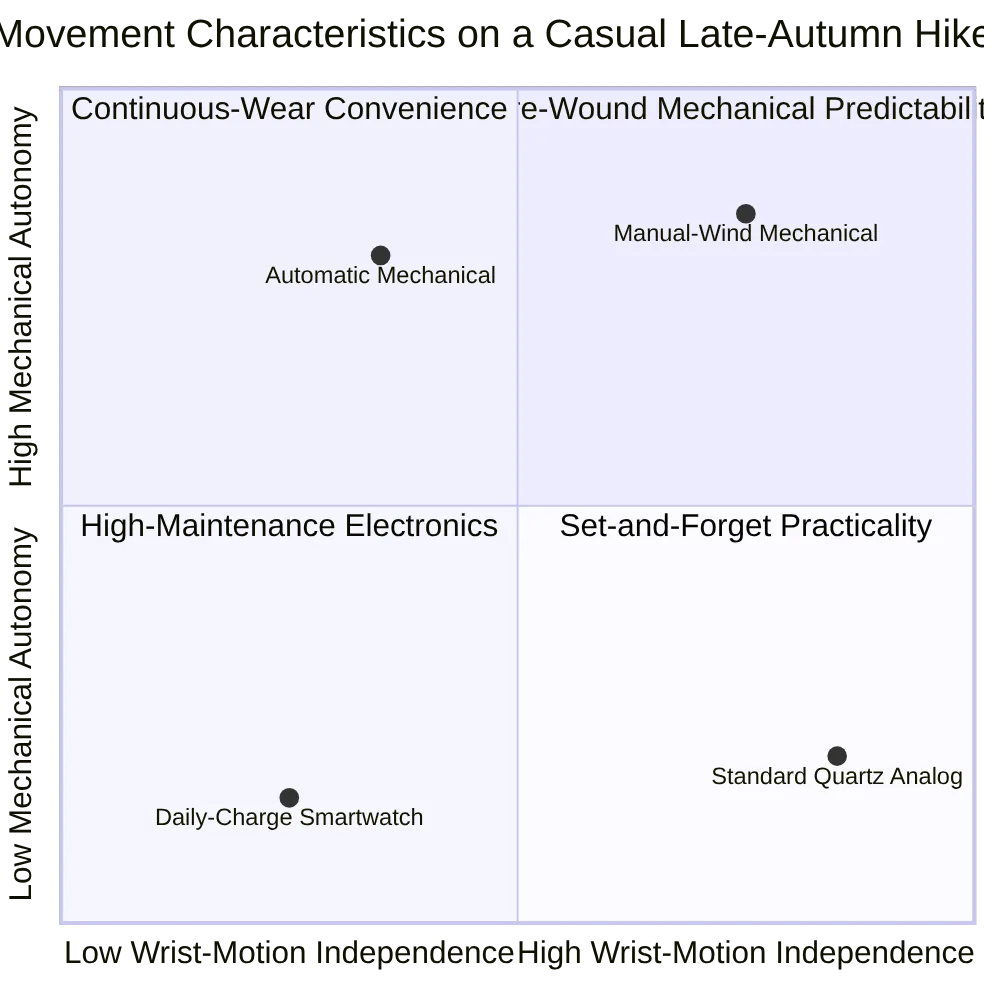
Within mechanical watchmaking, automatic and manual-wind architectures offer distinct trade-offs on the trail:
- Automatic winding: A weighted rotor winds the mainspring through natural arm swing as you walk. However, if you begin a hike with a low power reserve and keep your hands tucked inside warm pockets for hours, winding efficiency drops.
- Manual-wind: Winding the crown before leaving home guarantees a known power reserve regardless of wrist motion and often allows a slimmer case profile under cuffs, though you should avoid winding the crown in damp or muddy conditions.
What a Mechanical Watch for Hiking Can and Cannot Do
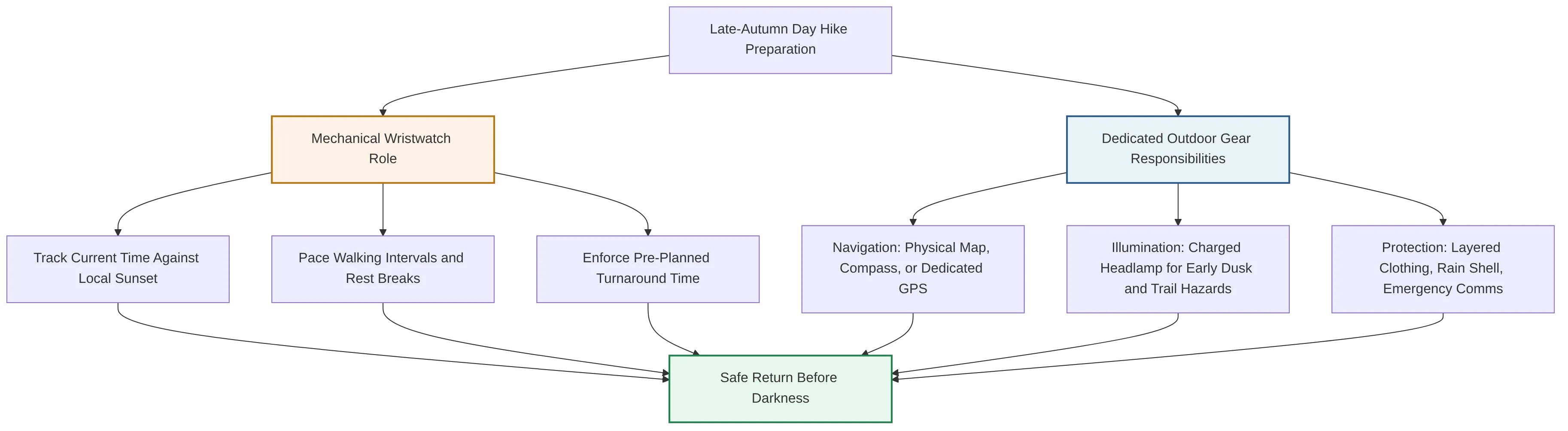
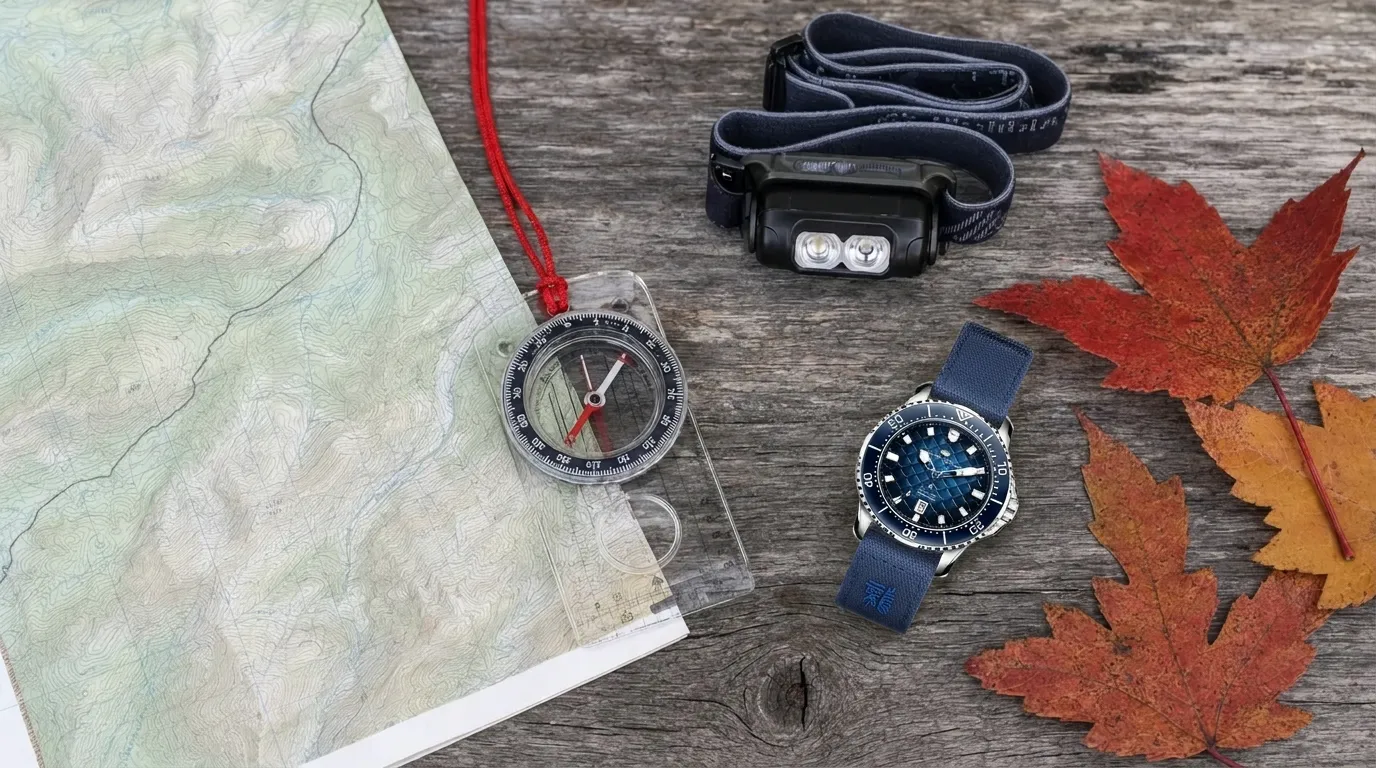
An honest appraisal of trail readiness requires separating timekeeping from outdoor safety. A mechanical wristwatch is not a GPS unit, a topographic map, a magnetic compass, a headlamp, an activity tracker, an emergency communicator, or personal safety equipment. Nor should a wearer infer shock resistance, vibration tolerance, altitude calibration, cold-weather certification, or navigation capability from a "Dive" or "Ocean" model name, titanium construction, a rotating bezel, or a 200-meter to 300-meter water-resistance rating.
| Trail Requirement | What a Mechanical Watch Can Do | What Requires Dedicated Outdoor Gear |
|---|---|---|
| Time & Pacing | Track time of day, measure walking intervals, and mark a pre-planned turnaround hour. | Biometric monitoring, step counting, or GPS pace tracking. |
| Navigation | Cross-reference elapsed walking time between known landmarks alongside a paper map. | Route finding, elevation tracking, compass bearings, or topographic mapping. |
| Low-Light Visibility | Allow brief dial readings in dim twilight when equipped with luminous hands or markers. | Illuminating the footpath, spotting roots or ice, and hands-free night walking via a headlamp. |
| Weather & Safety | Resist rain and splashes within its stated static water-resistance rating without battery drain. | Weather protection, thermal insulation, rock-impact immunity, or satellite SOS communication. |
Similarly, when a specification sheet lists "Luminous" or "Luminous green hour hands," that confirms only the presence of luminous material to help read the dial in low light. It does not establish initial brightness, chemical formula, charge time, or glow duration—and watch lume never illuminates the ground ahead. Route planning, carrying a charged headlamp, packing weather protection, and bringing proper navigation tools remain entirely separate responsibilities.
Selecting a Sea-Gull Mechanical Watch for Hiking by Verified Specifications
For walkers who appreciate mechanical horology and want strong moisture sealing for damp autumn afternoons, three models from the Sea-Gull Ocean Series illustrate how case material, diameter, weight, and strap configuration shape the on-wrist experience.
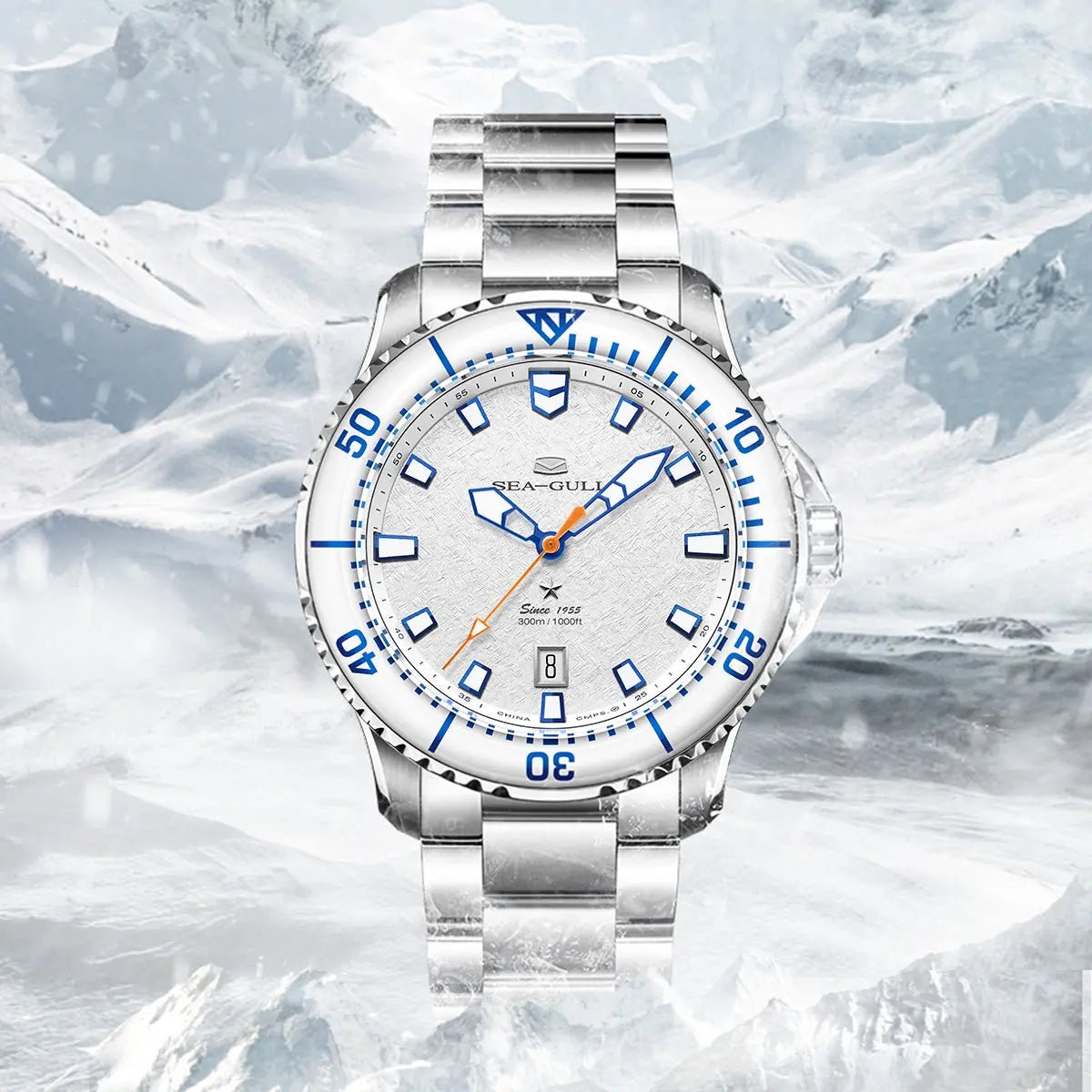
For a lighter, mid-sized feel in cool air, the Ocean Series Colorful Titanium Alloy 1300-1304 pairs a 41mm titanium alloy case with 200M water resistance and an included extra strap. Because titanium alloy has lower thermal conductivity and less mass than steel, the 41mm profile sits comfortably against the wrist when stepping into crisp morning air and slips under mid-weight sleeves without excess bulk.
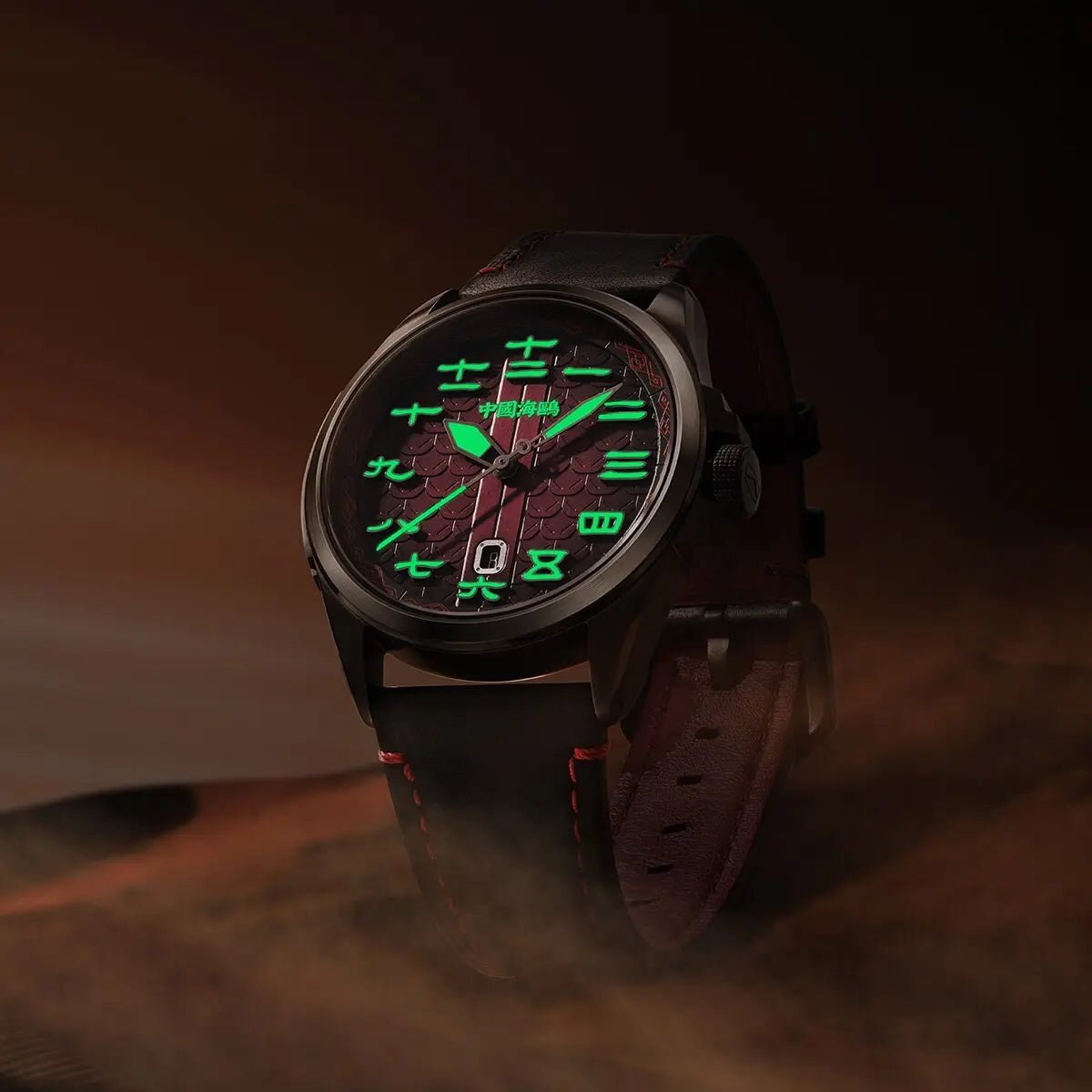
If you prefer a broader dial and adaptable strap ergonomics, the Ocean Series Dragon Kings of the Four Seas 1216 features an approximately 44mm 316L stainless steel case with a synthetic sapphire crystal, a listed net weight of 105g, and 30 Bar (300M) water resistance. Powered by the automatic winding ST2130 caliber, it includes a dual-strap configuration combining a 316L stainless steel bracelet with a nylon NATO fabric strap—allowing you to switch to the lightweight fabric strap over or under autumn cuffs. Its product page notes luminous green hour hands for low-light dial legibility.
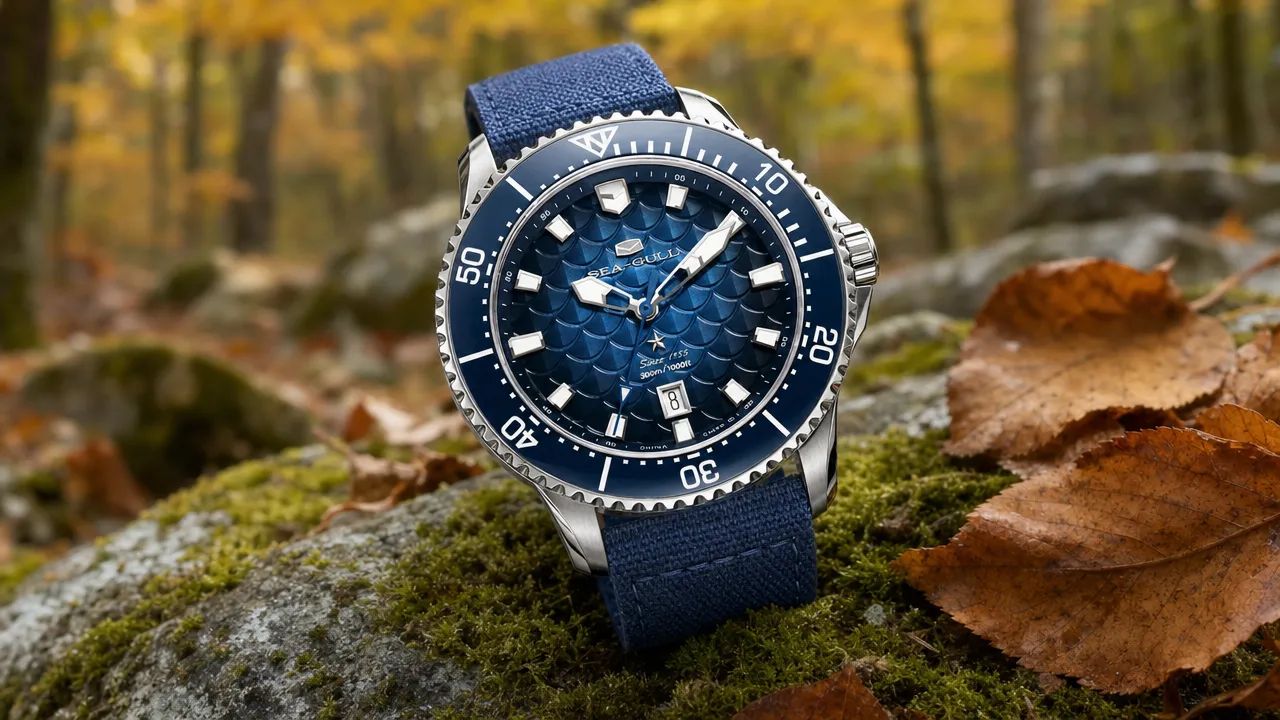
For hikers who prioritize a compact footprint beneath tight fleece or hardshell cuffs, the Ocean Series Entry-Level Dive Watch 6204 measures 40mm in diameter and approximately 12.7mm in thickness. Built with a 316L stainless steel case and bracelet, its listed net weight is 92g / 167g depending on configuration. It pairs an automatic mechanical movement with 20 Bar (200m) water resistance, a calendar display, and listed luminous functionality for checking your turnaround time as afternoon shadows lengthen.
| Model | Verified Case Size & Material | Verified Weight | Strap Configuration | Stated Water Resistance & Features |
|---|---|---|---|---|
| Ocean Series 1300–1304 | 41mm Titanium Alloy | Not stated | Extra Strap included | 200M WR |
| Ocean Series 1216 | Approx. 44mm 316L Stainless Steel | 105g | Dual Strap (316L Steel bracelet + Nylon NATO strap) | 30 Bar / 300M WR, Luminous green hour hands |
| Ocean Series 6204 | 40mm (Approx. 12.7mm thick) 316L Stainless Steel | 92g / 167g | 316L Stainless Steel | 20 Bar / 200m WR, Calendar, Luminous |
When you pack a map, a charged headlamp, and proper layers for the season, a mechanical watch is free to be exactly what it was designed to be: a quiet, dependable companion for marking the hours on a crisp autumn afternoon. For readers considering adding one of these pieces to their collection, new subscribers to the newsletter can receive 10% off their first order.

Laisser un commentaire
Ce site est protégé par hCaptcha, et la Politique de confidentialité et les Conditions de service de hCaptcha s’appliquent.