


Artículo: Nylon, Silicone, or Steel for a Damp Autumn Trail?
Nylon, Silicone, or Steel for a Damp Autumn Trail?
Autumn trail conditions present a quiet, persistent test for a mechanical wristwatch. Between cool morning mist, wet foliage, and the warmth trapped inside a rain-shell sleeve, the contact point between case and skin matters just as much as the movement ticking inside. Choosing the right watch strap for damp hiking is rarely about finding an indestructible material; rather, it is about understanding how woven nylon, silicone, and stainless steel respond to moisture, mud, fluctuating wrist size, and crisp mountain air.

How Damp Cold Changes the Way a Watch Wears
A walk through damp autumn woods subjects a watch to shifting microclimates. Stepping onto the trail at 45°F, ambient air cools the watch head and strap rapidly. Twenty minutes into a steep ascent, cardiovascular exertion increases peripheral blood flow, warming the skin and causing the wrist to expand slightly inside a waterproof jacket cuff. When pausing at an exposed ridge, vasoconstriction narrows the wrist again while rain or condensation lingers on the case.
Under these variable conditions, a material that sheds surface rain effectively may nonetheless trap perspiration against the skin. Conversely, a breathable fabric that feels weightless during an ascent can retain cool moisture once the trail flattens. Even the winding mechanism affects how a watch wears: an automatic mechanical movement relies on natural arm motion to stay wound, whereas manual-wind calibers and quartz watches have their own distinct operational characteristics on the trail. Regardless of the movement, wrist comfort depends on how the strap manages water, weight, and thermal transfer.
Three Materials Under Trail Conditions
Assessing woven nylon, silicone elastomer, and 316L stainless steel against six field criteria shows which configuration performs best on a wet autumn walk.
| Material Configuration | Moisture Handling | Cleaning Routine | Flexibility & Fit Adjustment | Temperature Feel | Weight & Case Balance | Damp-Walk Comfort |
|---|---|---|---|---|---|---|
| Woven Nylon | Open weave drains sweat, but capillary action retains water between fibers under a closed cuff. | Traps fine clay and grit in the weave; requires hand-washing with mild soap and air-drying. | Highly compliant; does not stretch when wet, adjusting via pre-punched buckle holes. | Low thermal conductivity prevents cold shock, though soaked fabric cools the wrist in wind. | Lightest option; minimal counterweight for larger 44 mm mechanical watch heads. | Breathable when dry, but wet, grit-laden fabric can chafe over the wrist bone. |
| Silicone Elastomer | Zero bulk water absorption; sheds rain immediately, though non-porous underside traps sweat. | Simplest cleanup; mud and salt stay on the surface and rinse off under lukewarm water. | Smooth curvature with slight elastic give as the wrist expands on uphill climbs. | Thermally neutral insulator; stays comfortable in cool drizzle once wiped dry. | Light yet substantial near the lugs; surface friction helps anchor the watch head in place. | Supple and friction-free, though trapped moisture requires slightly looser buckling. |
| 316L Stainless Steel | Metal absorbs zero moisture and drains between links, holding only minor droplets in pin crevices. | Wipes clean easily on the surface, but requires a soft brush to flush grit from link joints. | Zero material stretch; relies on link articulation and clasp design to handle wrist swelling. | High thermal conductivity (~14.6 to 16.2 W/m·K) quickly adopts ambient autumn chill. | Roughly seven times denser than polymers; acts as a stable counterbalance beneath the wrist. | Avoids the clammy feel of wet fabric, though cool metal can slide on damp skin. |
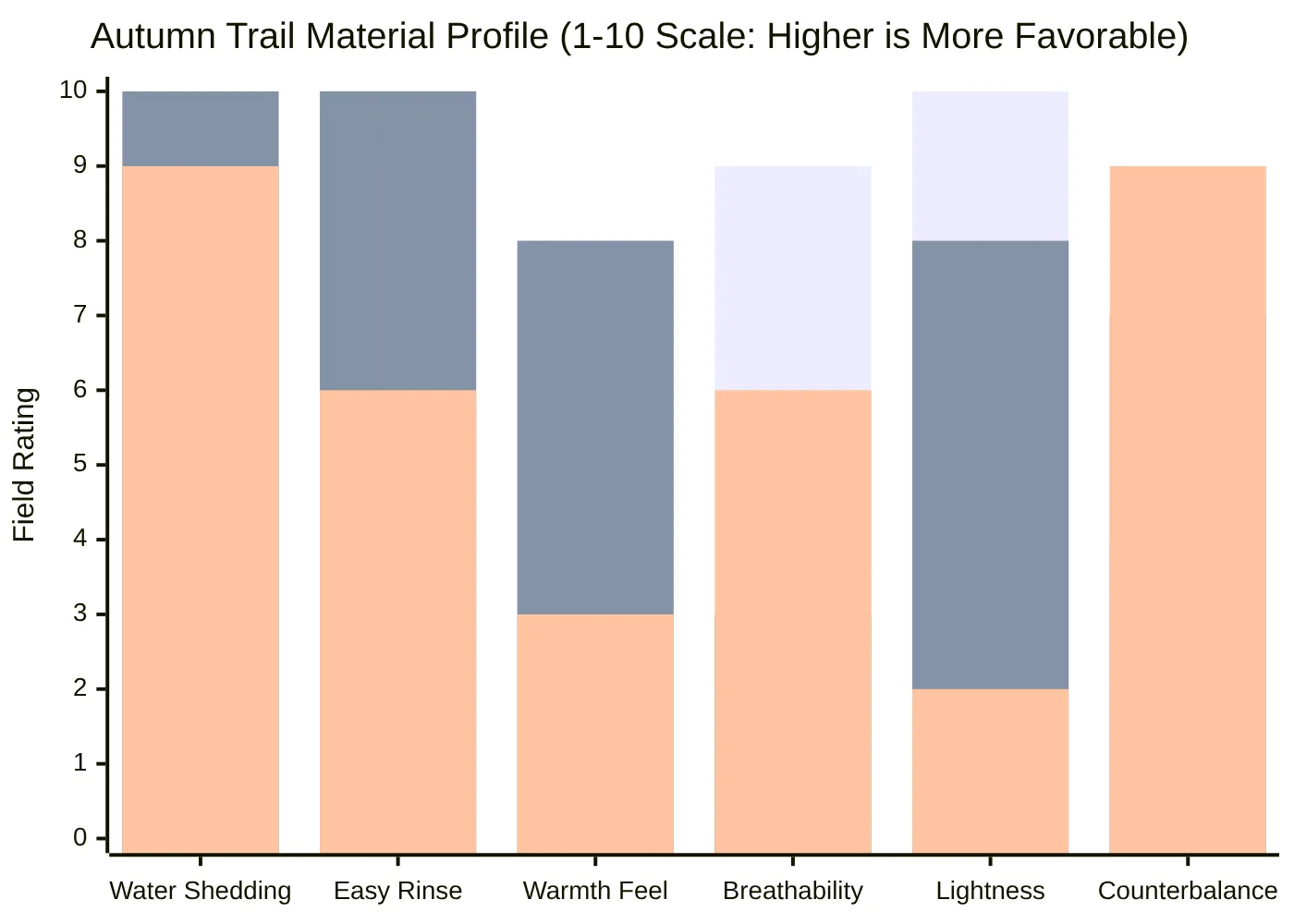
Note: In each category above, the three bars represent Woven Nylon (left), Silicone Elastomer (middle), and 316L Stainless Steel (right).
Woven Nylon: Breathable and Light, Yet Slow to Dry Under a Cuff
Woven nylon is valued on the trail for its minimal weight and pliable fit. Since its synthetic fibers have low thermal conductivity, nylon feels comfortable even when fastened in a cold car park. Its open weave breathes well during dry activity. However, when rain or wet brush saturates the forearm, capillary action pulls moisture into the filaments. If covered by a waterproof jacket cuff, where airflow is limited, damp nylon can remain wet against the skin for hours. Should trail mud work into the fabric, trapped grit can rub against the ulnar bone with each movement.
Silicone: Impervious to Rain, Prone to Trapping Warmth
Silicone manages external moisture with effortless practicality. As the elastomer is completely non-porous, rainwater and stream splashes bead on the surface and wipe away in seconds. Mud cannot penetrate the band, making post-hike rinsing trivial. Its slight elastic compliance also accommodates the natural swelling of a warm wrist during a climb. The trade-off appears on the underside: a solid silicone band blocks water vapor from escaping the skin. During sustained uphill effort, perspiration collects beneath the strap, requiring it to be worn one notch looser to prevent clamminess.
Stainless Steel: Counterbalanced Durability and Thermal Chill
A 316L stainless steel bracelet offers a sense of permanence and balance. With a density of roughly 8.03 g/cm³, steel effectively counterweights a substantial automatic case, preventing the watch head from rolling toward the outside of the wrist. It absorbs no water, and its articulated links allow rain to drain away without creating a wet sensation under your sleeve. However, metal conducts heat rapidly; exposed to cold wind and drizzle, a steel bracelet quickly chills the wrist. Lacking elastic give, it can also feel snug as your forearm warms up mid-trail.
Matching Sea-Gull Ocean Series Models to the Terrain
Considering how these materials perform on specific models clarifies which configuration suits your local trails. Within the Ocean Series collection, case geometry and strap pairings address distinct outdoor priorities.
Dual-Strap Adaptability vs. Dedicated Elastomer and Steel Configurations
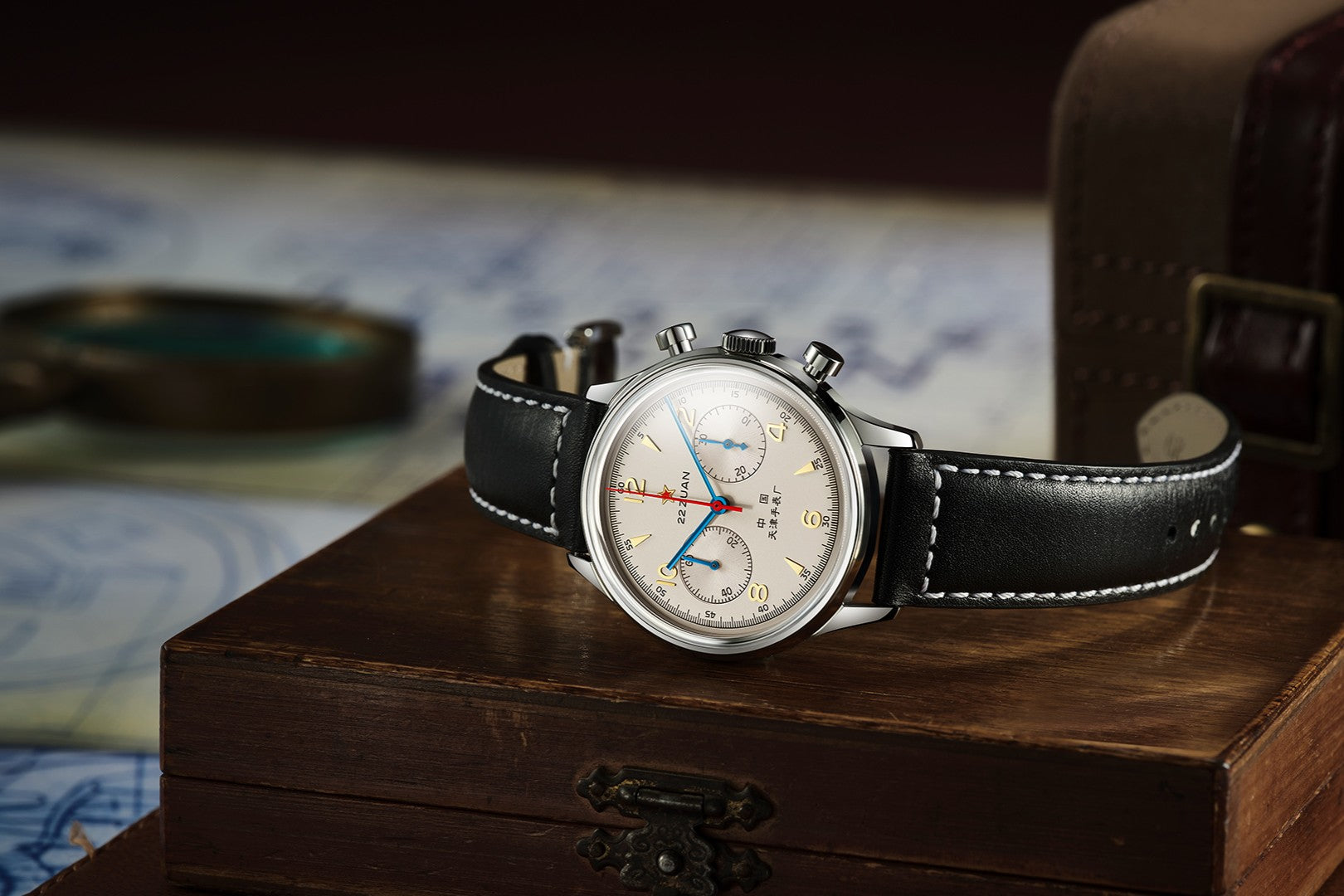
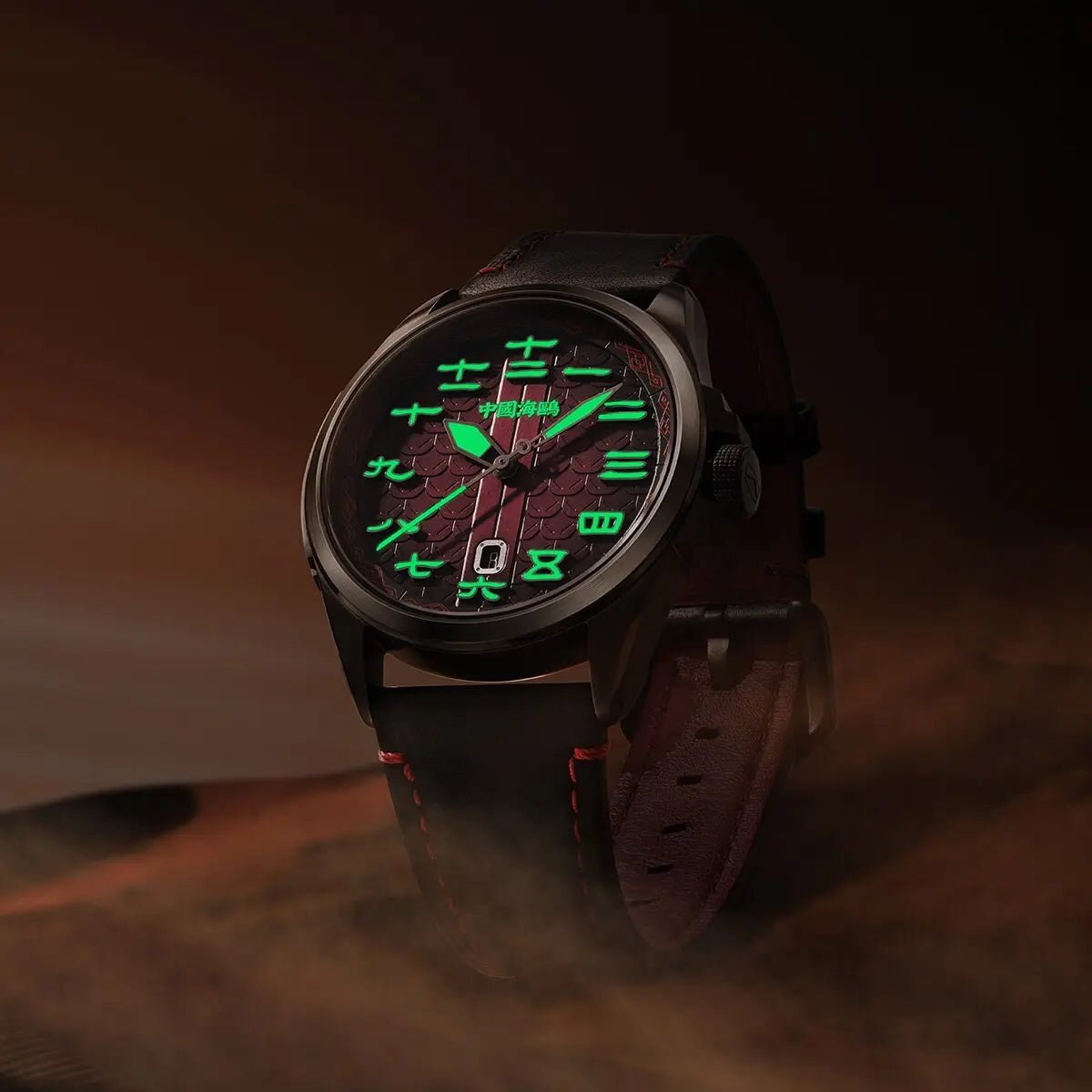
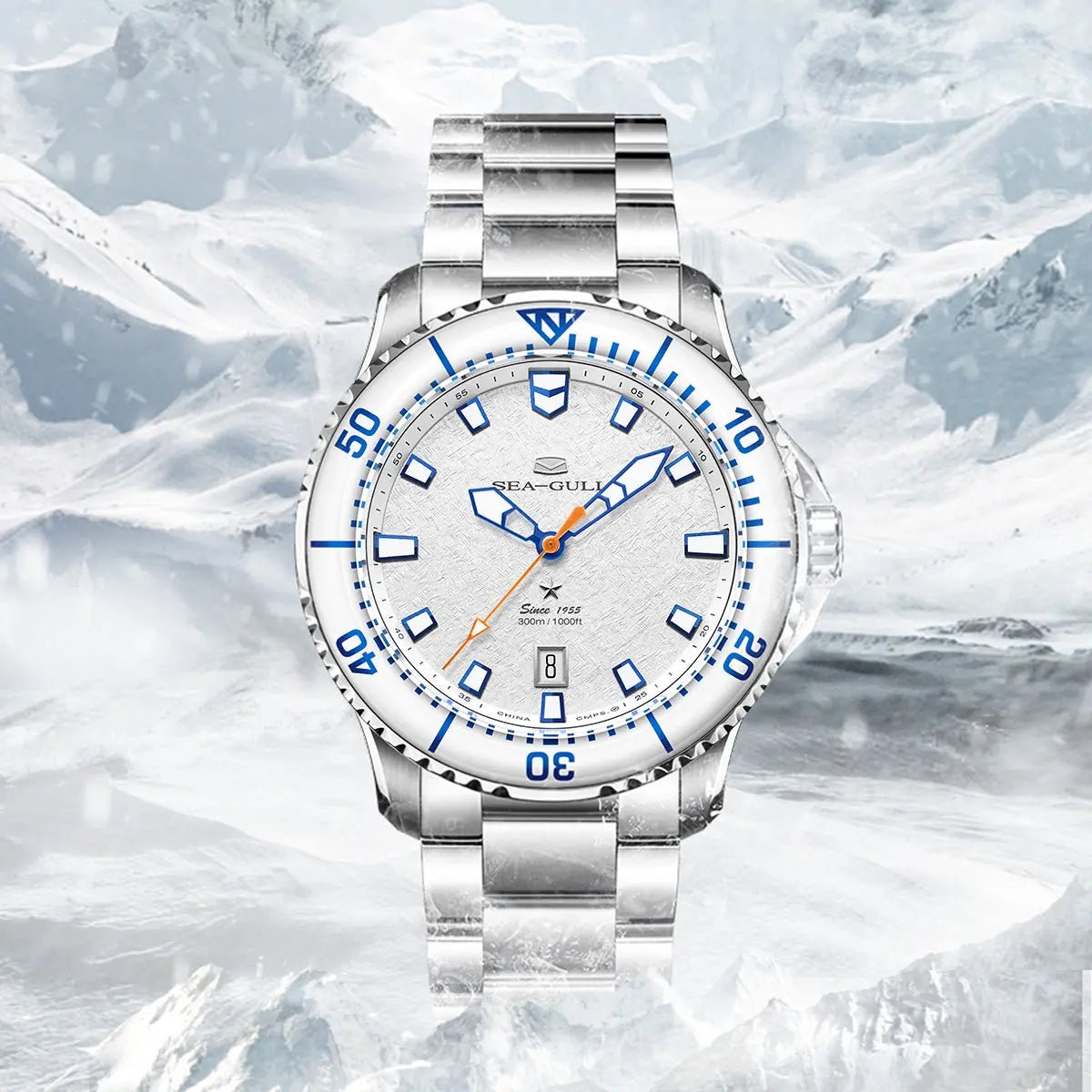
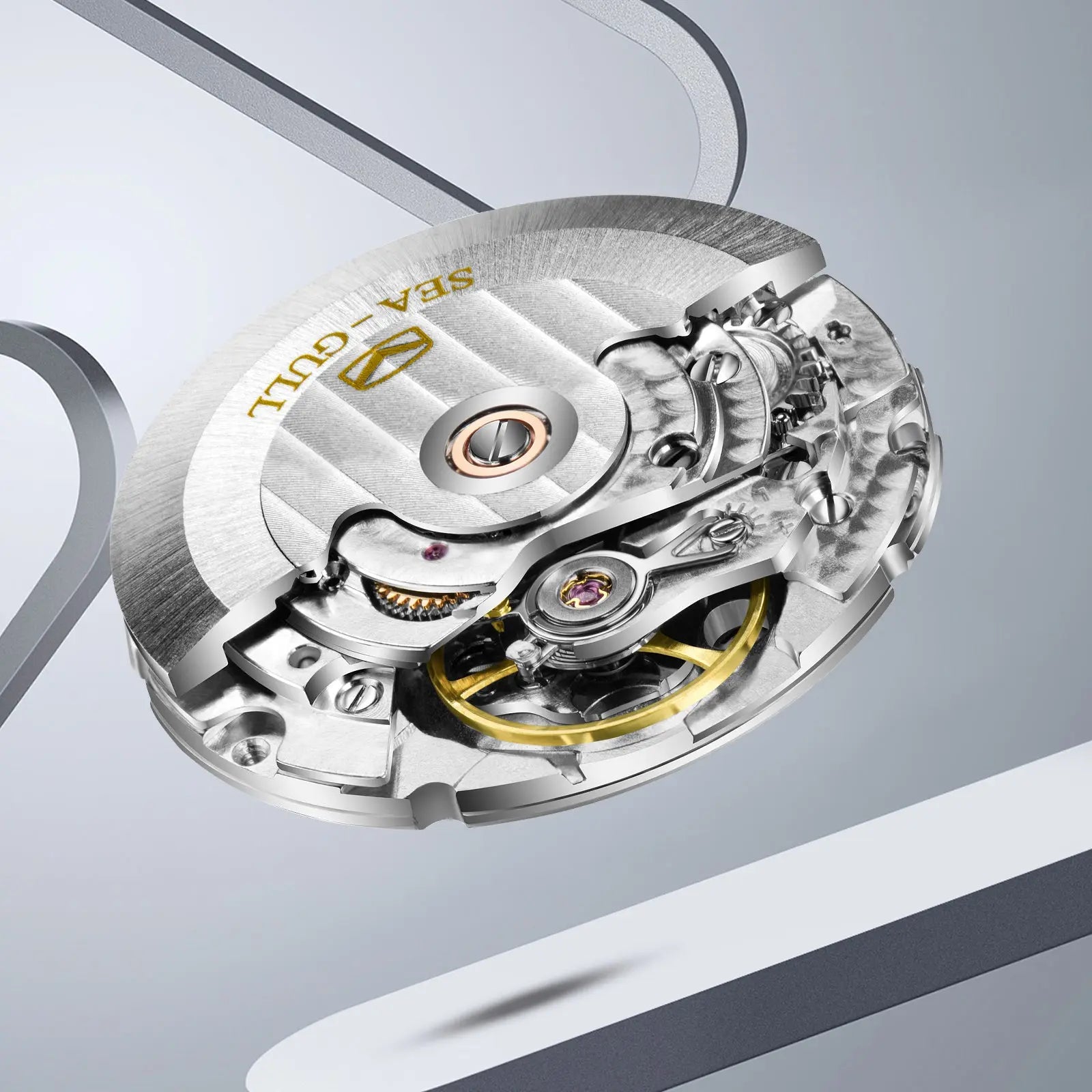
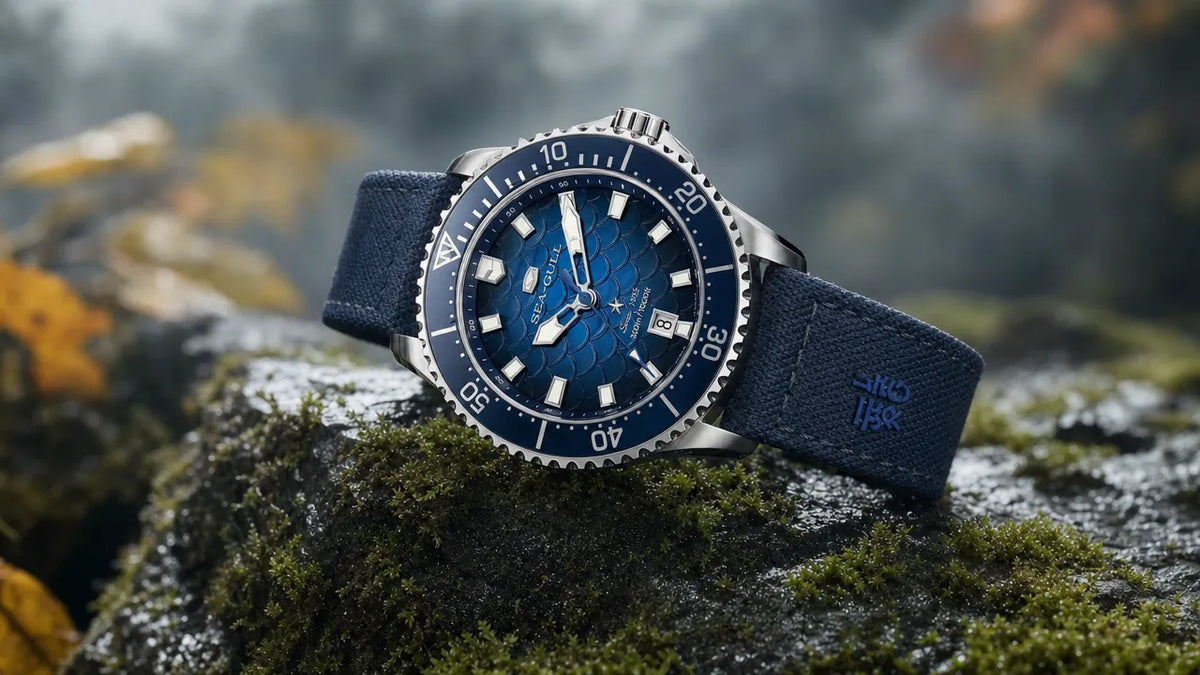
For hikers desiring both textile lightness and metallic balance, the Seagull Ocean Series Dragon Kings of the Four Seas Men's Automatic Mechanical Watch 1216 offers a 44 mm 316L stainless steel case (approximately 13.6 mm thick, 50.4 mm lug-to-lug, and 105 g net weight) with both a woven nylon strap and a 316L stainless steel bracelet. Powered by the automatic Caliber ST2130, and fitted with a synthetic sapphire crystal and a 30 Bar water-resistant case, it allows for wearing the nylon strap for lightweight ascents or switching to the steel bracelet when counterbalance and quick surface drying are preferred.
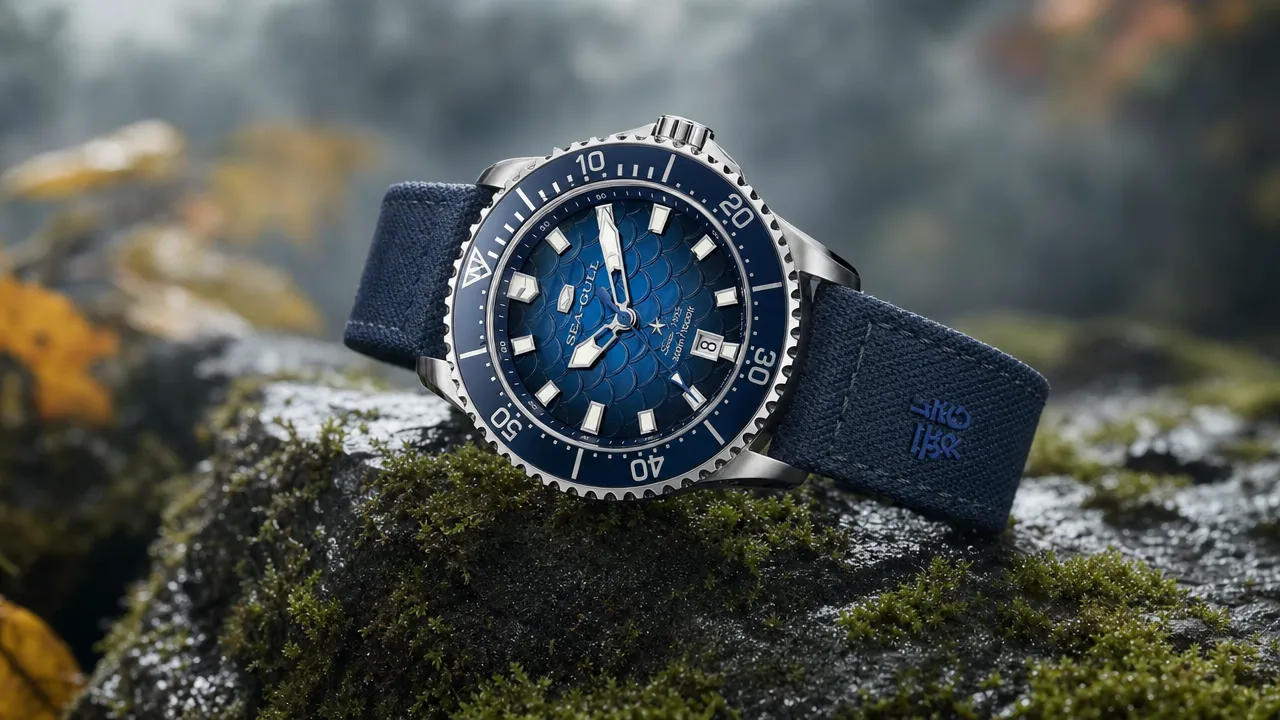
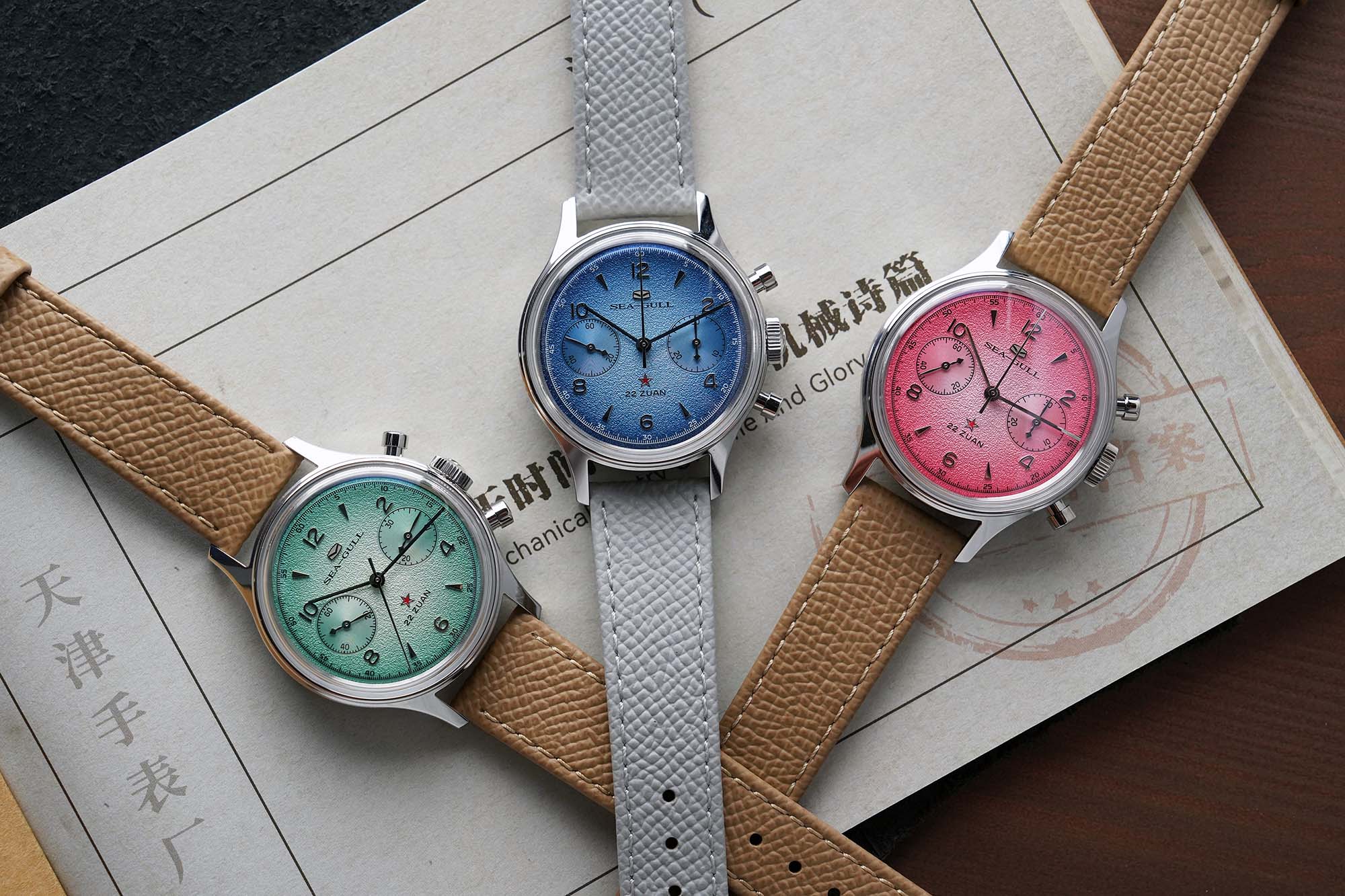
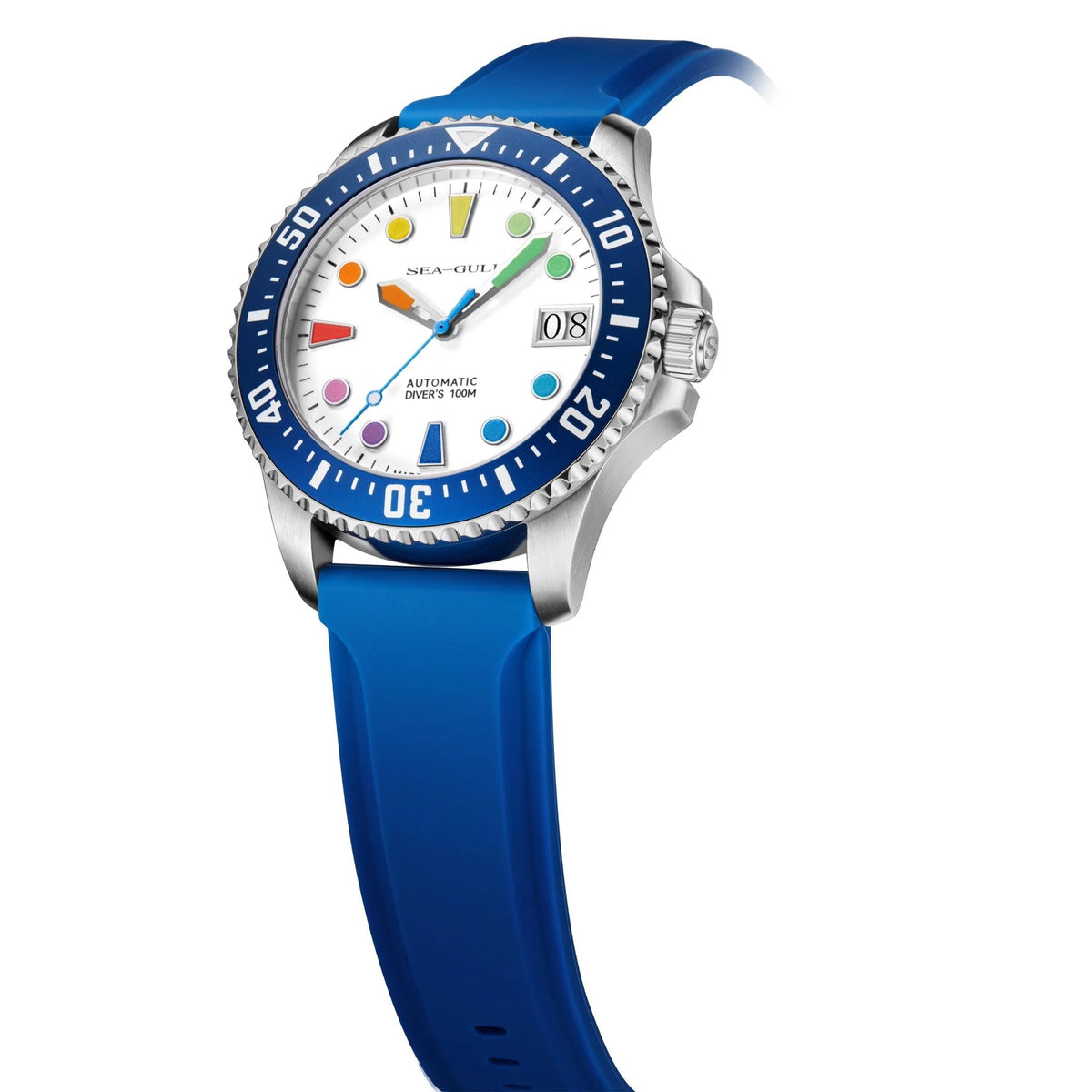
For autumn trails that feature heavy mud, wet scrambles, and frequent rinsing, the Seagull Ocean Series 100m Waterproof Colorful Markers Men's Mechanical Watch 6205 is fitted with a silicone strap. This model shares a 44 mm 316L stainless steel case (approximately 13.5 mm thick, 52 mm lug-to-lug, and 118 g net weight) with a synthetic sapphire crystal, an automatic mechanical movement, and a 10 Bar water-resistance rating. The 6205 offers a modest total wrist weight and an impervious elastomer band that shrugs off wet clay.
For wrists that prioritize a trim profile or demand ample cuff clearance beneath a rain shell, case diameter influences wearability as much as strap material. Downsizing from the 44 mm references, the 39 mm Ocean Series Gradient Dial Dive Watch Calendar 1219 offers a more compact diving watch with a calendar display and gradient dial. This scaled-down footprint slips neatly beneath elasticated jacket cuffs without snagging.
Why Lug Width Alone Does Not Guarantee a Clean Swap
While both the Model 1216 and Model 6205 share an approximate 22 mm strap width, matching this measurement alone does not ensure universal strap or bracelet compatibility across different watch references. The placement of spring-bar holes relative to the mid-case wall determines how thick a pass-through nylon strap or molded silicone lug end can be without binding. Additionally, curved solid end-links on stainless steel bracelets are machined to precisely match a specific case diameter, lug curvature, and hole height; a bracelet fitted to one model should not be assumed to fit cleanly on another.
Laboratory Ratings vs. Mist, Mud, and Jacket Cuffs
A watch's stated water resistance—whether 10 Bar (100m) for a model like the 6205 or 30 Bar (300m) for the 1216—reflects a static laboratory test under standards such as ISO 22810. This is a controlled measure, not an unconditional guarantee of performance in all conditions.
On a damp trail, moisture protection relies on compressible elastomeric gaskets at the crystal, caseback, and crown. Over time, skin oils, perspiration, and mechanical compression cause these seals to age and lose elasticity. Rapid temperature drops—such as pulling a warm watch from under a thermal sleeve into 45°F rain—also create slight internal pressure shifts and cool the seals. Before stepping onto a wet trail, always verify that the crown is pushed or screwed down to its fully seated position, and never pull the crown out to adjust the time or wind the movement while the case is wet or muddy.
A Sensible Post-Walk Care and Inspection Routine
A quiet ten-minute routine after returning indoors preserves both your case seals and your strap across seasons.
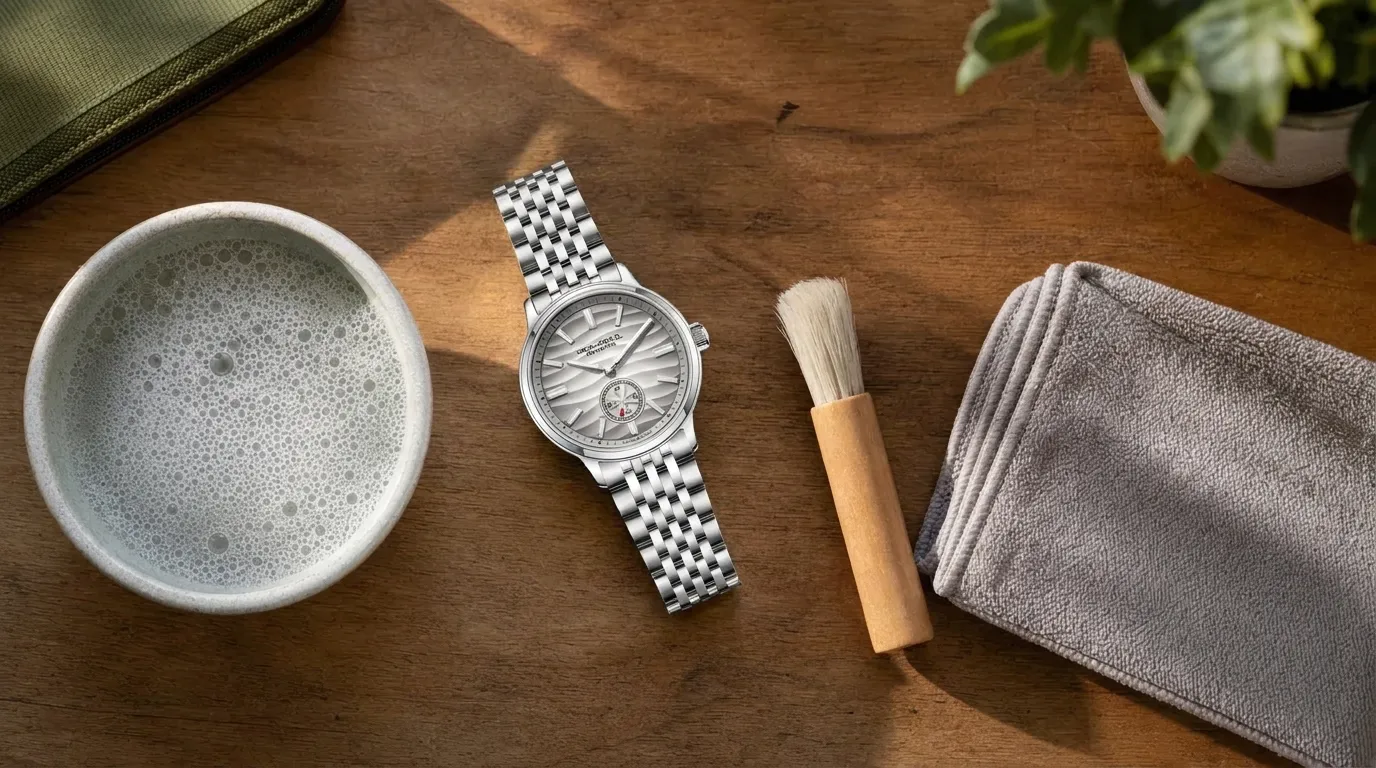
- Inspect Before Rinsing: Check that the synthetic sapphire crystal is intact, no condensation appears beneath the glass, and the crown is completely seated. If internal fogging is visible, skip water rinsing entirely and take the watch promptly to a watchmaker.
- Float Away Surface Grit: Hold the sealed watch under a gentle trickle of lukewarm fresh water to float mud and sand grains off the case and bezel. Never wipe dry mud with a dry cloth, which drags abrasive particles across the steel.
-
Clean by Material:
- Nylon: Hand-wash the strap in lukewarm water with a drop of mild soap, working a soft brush gently over the weave to expel trapped clay and salt. Rinse thoroughly, blot with a towel, and lay flat to air-dry completely before storing.
- Silicone: Wash both sides of the band, including the buckle holes and keeper loops, with mild soapy water and pat dry with a soft cloth.
- Stainless Steel: Use mild soapy water and a soft-bristled brush to flush fine grit out of the link joints, end-link crevices, and folding clasp hinges, then pat dry and leave the clasp open to air out.
- Dry at Room Temperature: Always let your watch and strap dry naturally in a ventilated room, avoiding hair dryers or radiators that can degrade case gaskets.

Dejar un comentario
Este sitio está protegido por hCaptcha y se aplican la Política de privacidad de hCaptcha y los Términos del servicio.