



What Is a GMT Watch? A Guide to Two Time Zones
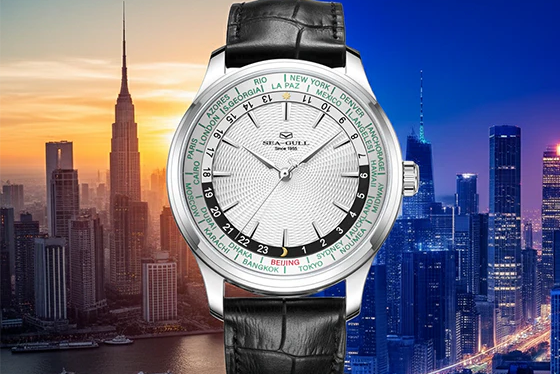
If you need to know the time where you are and the time somewhere else, a GMT watch places both references on one dial. What is a GMT watch? It is a dual-time watch: the ordinary hour and minute hands show local time, while an additional hand points to a second time zone on a 24-hour scale.

What Is a GMT Watch and What Does GMT Mean?
The GMT watch meaning begins with Greenwich Mean Time, a historical time standard associated with the Greenwich meridian. Today, UTC is the modern international civil-time standard, as explained by the National Institute of Standards and Technology.
On a watch, however, GMT usually describes the display rather than a requirement to track Greenwich specifically. The extra 24-hour hand may be set to home time, a colleague's location, UTC, or any other reference time that suits your routine.
A conventional analog GMT display has three key elements:
| Element | Purpose |
|---|---|
| Standard hour and minute hands | Show local time in the familiar 12-hour format |
| GMT hand | Completes one rotation every 24 hours |
| 24-hour scale | Shows the second-zone hour and identifies AM or PM |
The 24-hour scale is what makes the complication especially practical. If the GMT hand points to 08, the second location is at 8 AM. If it points to 20, it is 8 PM. There is no need to guess whether it is a suitable moment to call home or schedule a meeting.
How Does a GMT Watch Work?
The regular hands remain your primary local-time display. The GMT hand moves at half the speed of a normal hour hand, completing one full circuit of the dial each day. Read it against the dedicated 24-hour numerals, which may appear on the dial edge, an inner ring, or the bezel.
A reading of 14 means 2 PM, while 22 means 10 PM. This clear day-and-night reference is the defining advantage of the GMT format.

GMT watches generally use one of two layouts:
| Display type | How it works | Best for |
|---|---|---|
| Fixed 24-hour scale | The scale stays in place while the GMT hand tracks one additional zone | Straightforward two-zone reference |
| Rotating 24-hour bezel | The bezel can be shifted beneath the GMT hand | Adding a calculated third-zone reference |
A rotating GMT bezel is different from a dive bezel. Its numerals are intended for 24-hour time-zone reference, not elapsed-time measurement.
How to Read GMT Watch Displays
Learning how to read GMT watch displays takes only a few seconds once the hands are identified.
- Read the ordinary hour and minute hands for your local time.
- Find the GMT hand. It often has an arrow tip, contrasting color, or distinctive shape.
- Locate the 24-hour scale on the dial or bezel.
- Read the GMT hand against that scale.
- Use the number to identify the second-zone hour and whether it is day or night.
| GMT hand position | Second-zone time |
|---|---|
| 03 | 3 AM |
| 06 | 6 AM |
| 12 | Noon |
| 18 | 6 PM |
| 00 or 24 | Midnight |
A GMT watch explained in practical terms is simple: local time stays on the main hands, while the extra hand maintains a second reference. If your local time is New York and the GMT hand is set to London, both times remain visible without reaching for a phone.
Setting procedures vary by movement. Check the supplied instructions before adjusting the crown, date, or GMT hand. Mechanical GMT watches do not automatically recognize your location or account for daylight-saving changes, so the relevant hand or bezel may need manual adjustment when the time difference changes.
Can a GMT Watch Track Three Time Zones?
A GMT watch can reference three time zones when it has a rotating 24-hour bezel. The standard hands show local time. The GMT hand shows home time or another fixed reference on the primary 24-hour scale. After shifting the bezel by the correct offset, that same GMT hand can be read against the bezel for a third location.

This method is simplest when the locations are separated by whole hours. Some regions use half-hour or quarter-hour offsets, which can be harder to represent precisely on a conventional bezel. Seasonal daylight-saving changes also require attention because cities do not always change their clocks on the same dates.
For recurring work across borders, a GMT display can be a quiet but useful desk companion. Explore further practical examples in this guide to managing time differences with GMT watches.
What Is a GMT Watch for Travelers, Callers, and Flyers?
A GMT complication works well for travelers, international teams, remote workers, and anyone who regularly follows another location's schedule. It also gives mechanical-watch enthusiasts a complication with a visible, daily-use purpose.
The terms caller GMT and flyer GMT describe how a watch is adjusted, not a hierarchy of quality.
| GMT layout | Independently adjustable hand | Natural routine |
|---|---|---|
| Caller GMT | Usually the 24-hour GMT hand | Monitoring a remote location from one home base |
| Flyer GMT | Usually the local 12-hour hand | Updating local time after crossing time zones |
A caller GMT can suit someone who wants a permanent reference for a client, family member, or office abroad. A flyer GMT can be especially convenient for frequent travelers because the local hour hand is typically adjusted in one-hour steps while the GMT hand remains set to home time.
The important detail is the movement's actual adjustment behavior. Confirm the setting instructions for the individual watch rather than relying on a label alone.
Choosing a GMT Watch for Everyday Wear
A useful GMT watch should be easy to read at a glance. Look for a clearly differentiated GMT hand, an uncluttered 24-hour scale, and a case size that works comfortably with your everyday wardrobe.
Consider whether you need a fixed scale or a rotating bezel. A fixed scale keeps two time zones easy to follow. A rotating bezel adds flexibility if you frequently compare a third location.
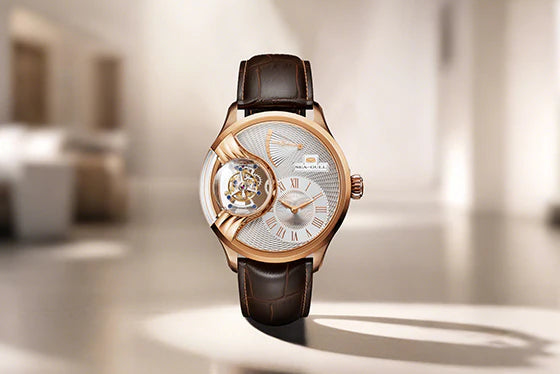
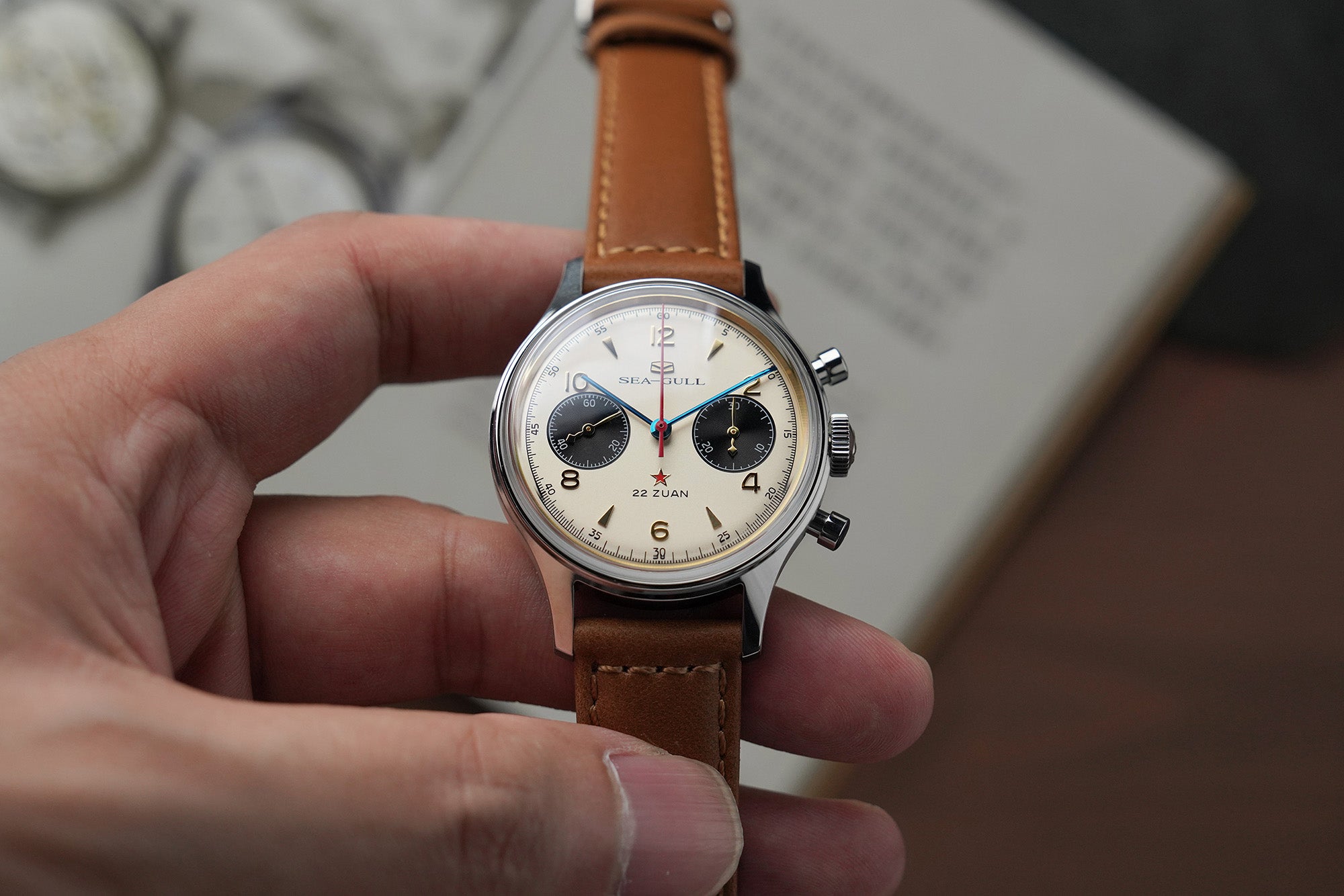
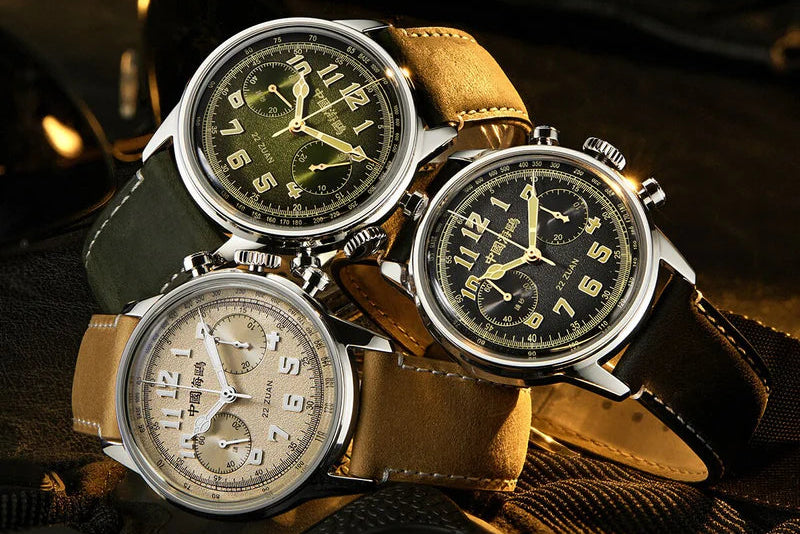
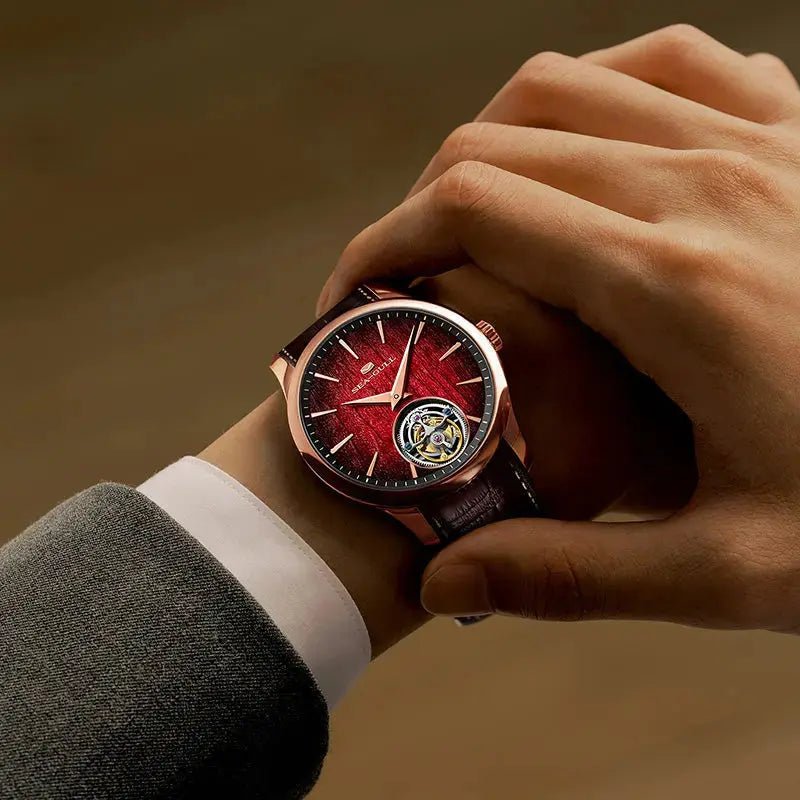
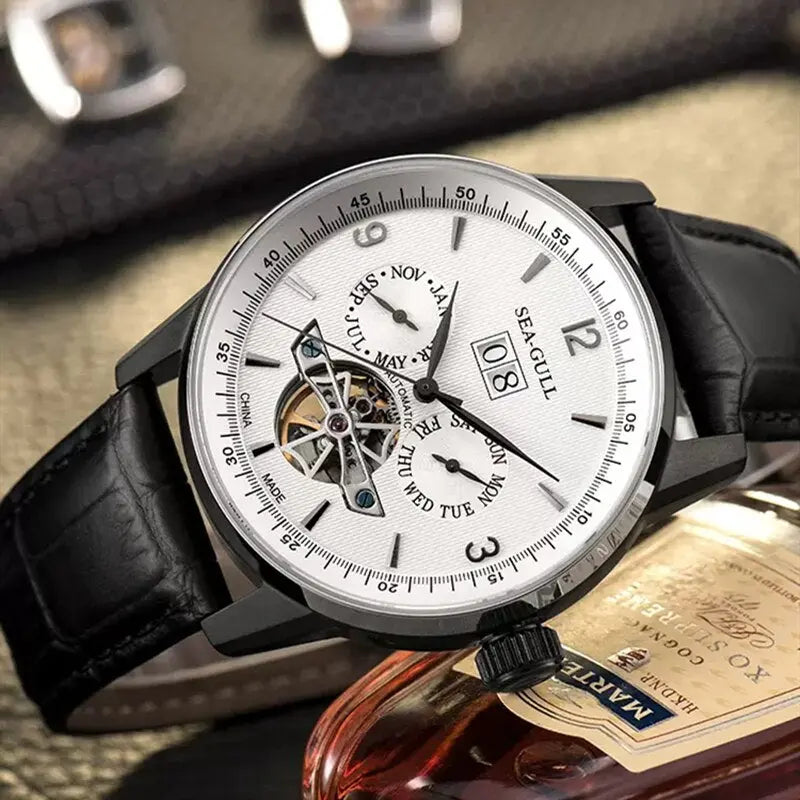
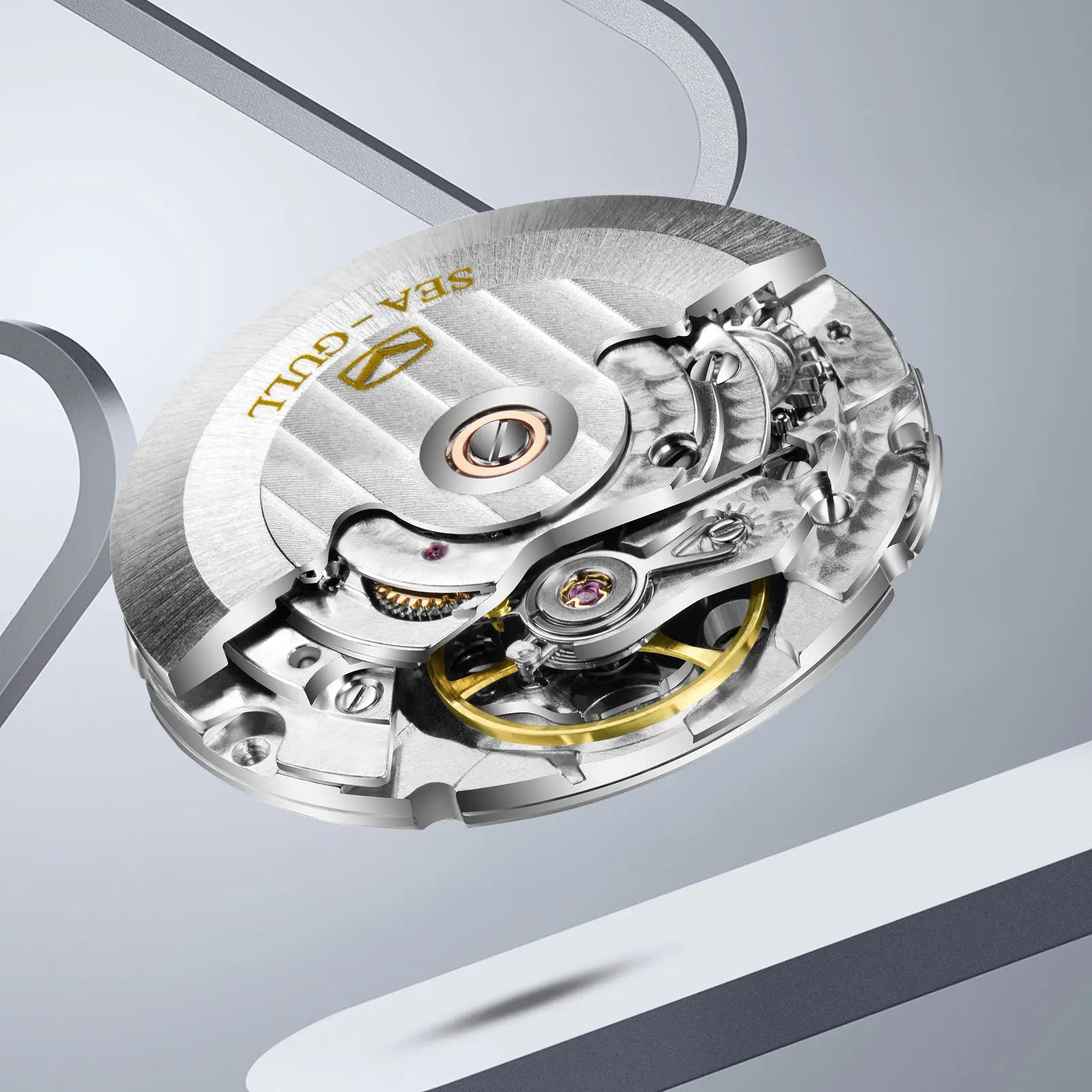
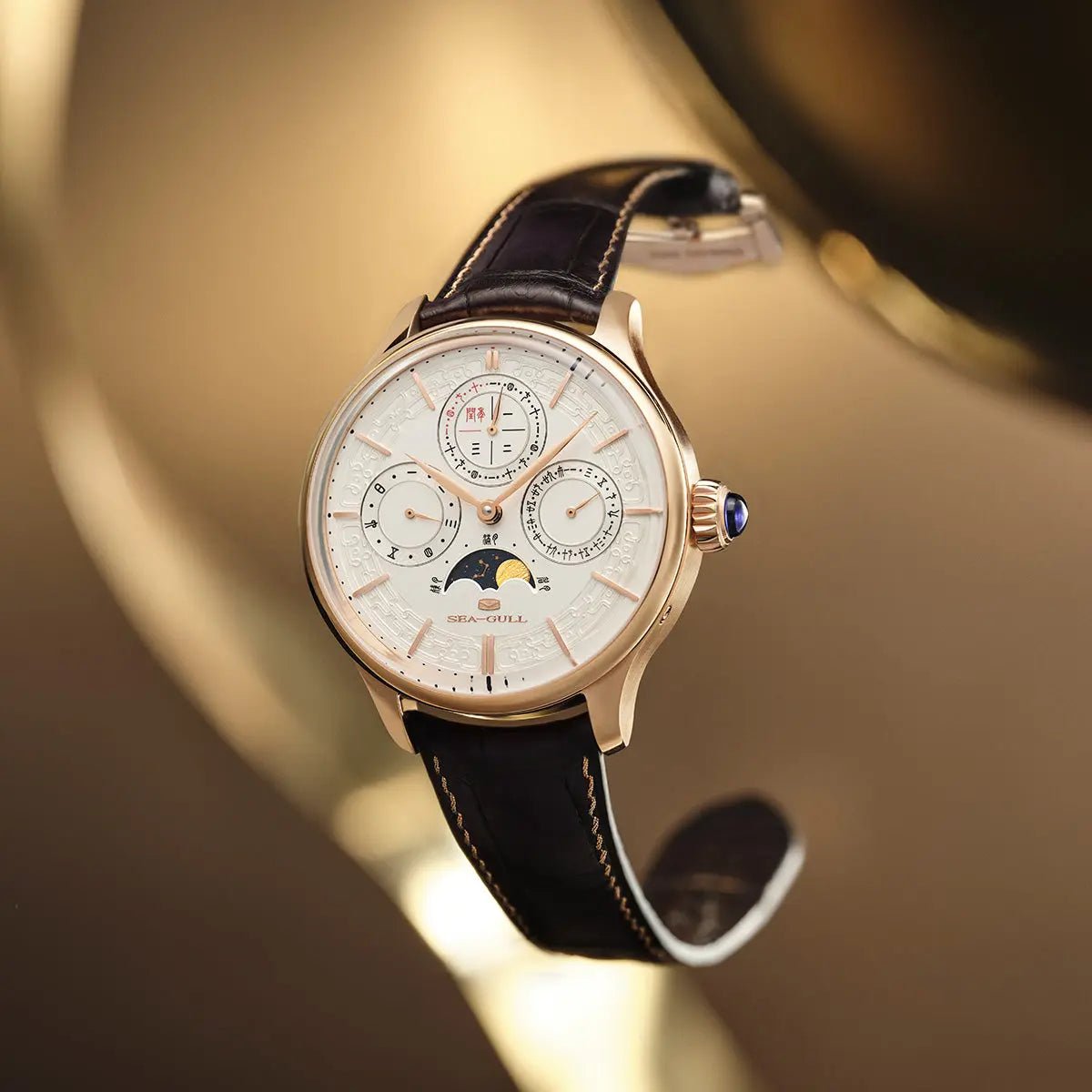
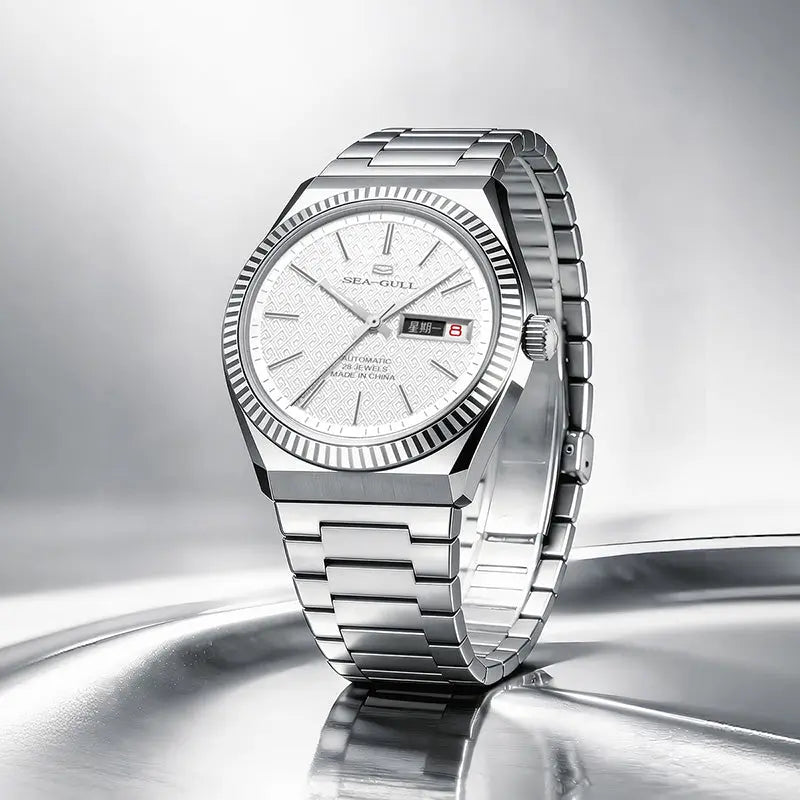
Mechanical dual-time displays come in several visual styles. Readers comparing designs can view the Sea-Gull GMT and dual-time watches, the GMT dual-time mechanical watch, and the dual time zone hollow flywheel mechanical watch. Check each current product page for dimensions, water-resistance guidance, movement layout, and model-specific operating instructions.
Tianjin Seagull Watch Co., Ltd. was founded in 1955, and GMT is one example of the practical complications found within a broader tradition of Chinese mechanical watchmaking. The right GMT layout is the one that matches how you actually manage time: one local clock, one important distant clock, and a clear view of both.


Leave a comment
This site is protected by hCaptcha and the hCaptcha Privacy Policy and Terms of Service apply.