

Mechanical Chronograph Care: A Start-Stop-Reset Routine for Daily Wear
A Seagull chronograph watch stays enjoyable in daily wear when its timing function is used in one deliberate order: start, stop, read, then reset. This simple ritual protects the logic of a conventional mechanical chronograph while making its elapsed-time display genuinely useful for coffee brewing, walks, meetings, and other ordinary intervals.
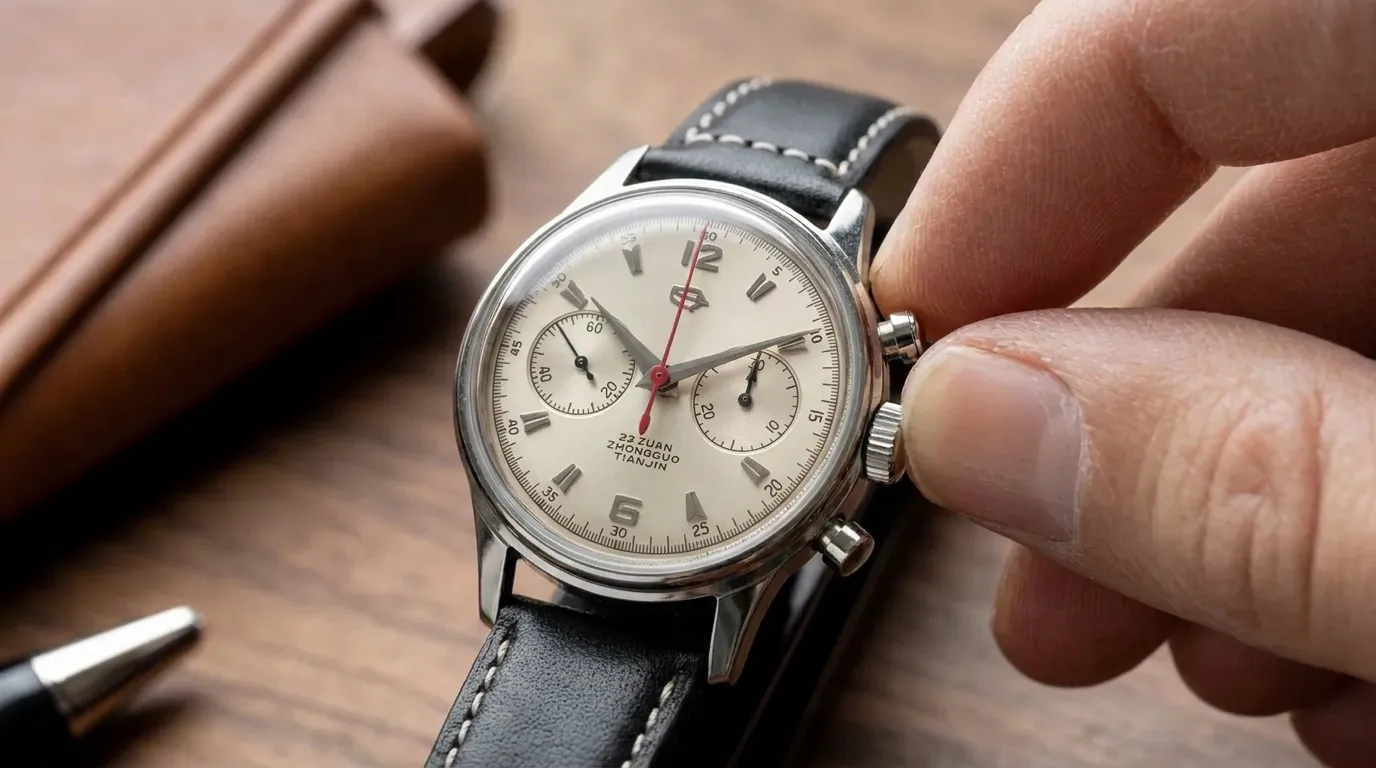
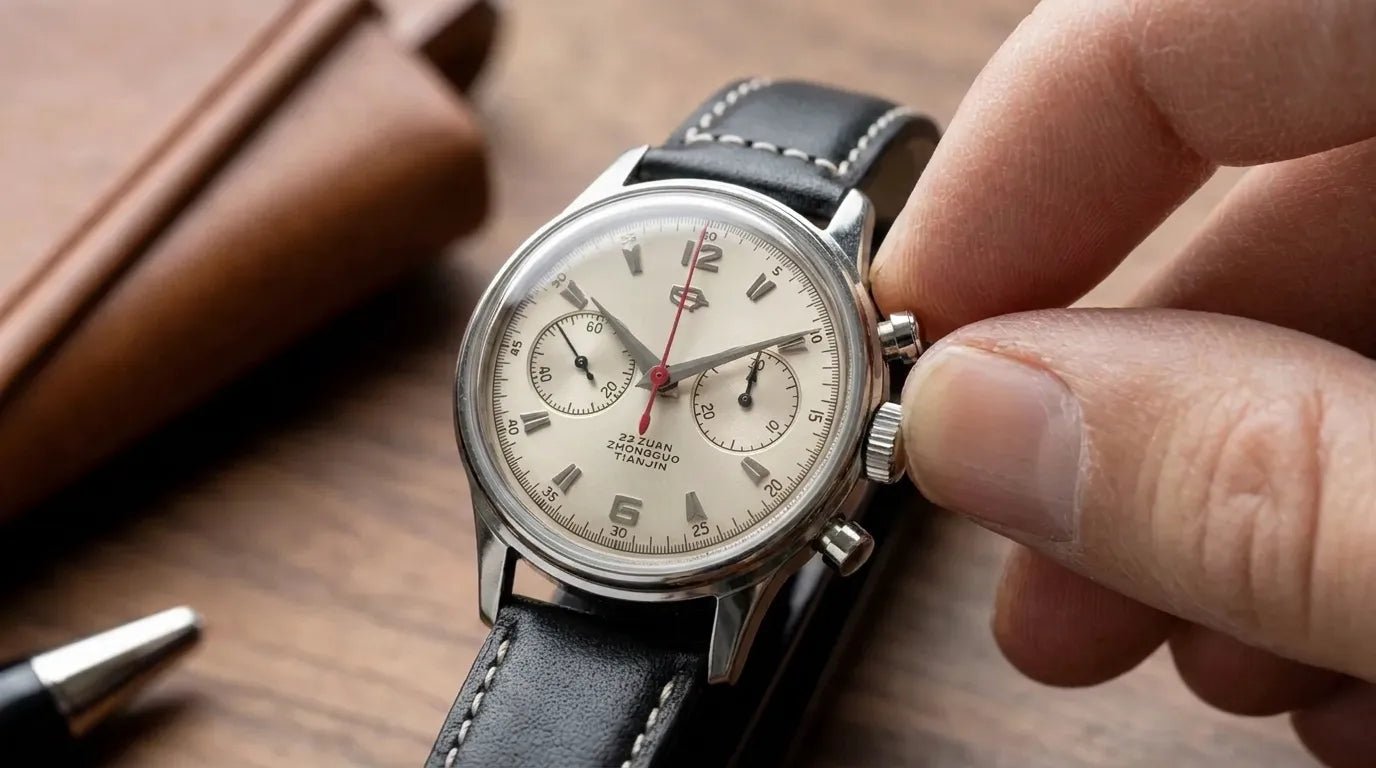
Chronograph meaning is straightforward: it is a stopwatch function built into a watch. The ordinary hands continue to show the time of day, while the central timing hand and registers measure a separate interval. Unlike a time-only watch, a mechanical chronograph watch turns a press of the pushers into a visible mechanical timing function.
How a Seagull chronograph watch measures elapsed time
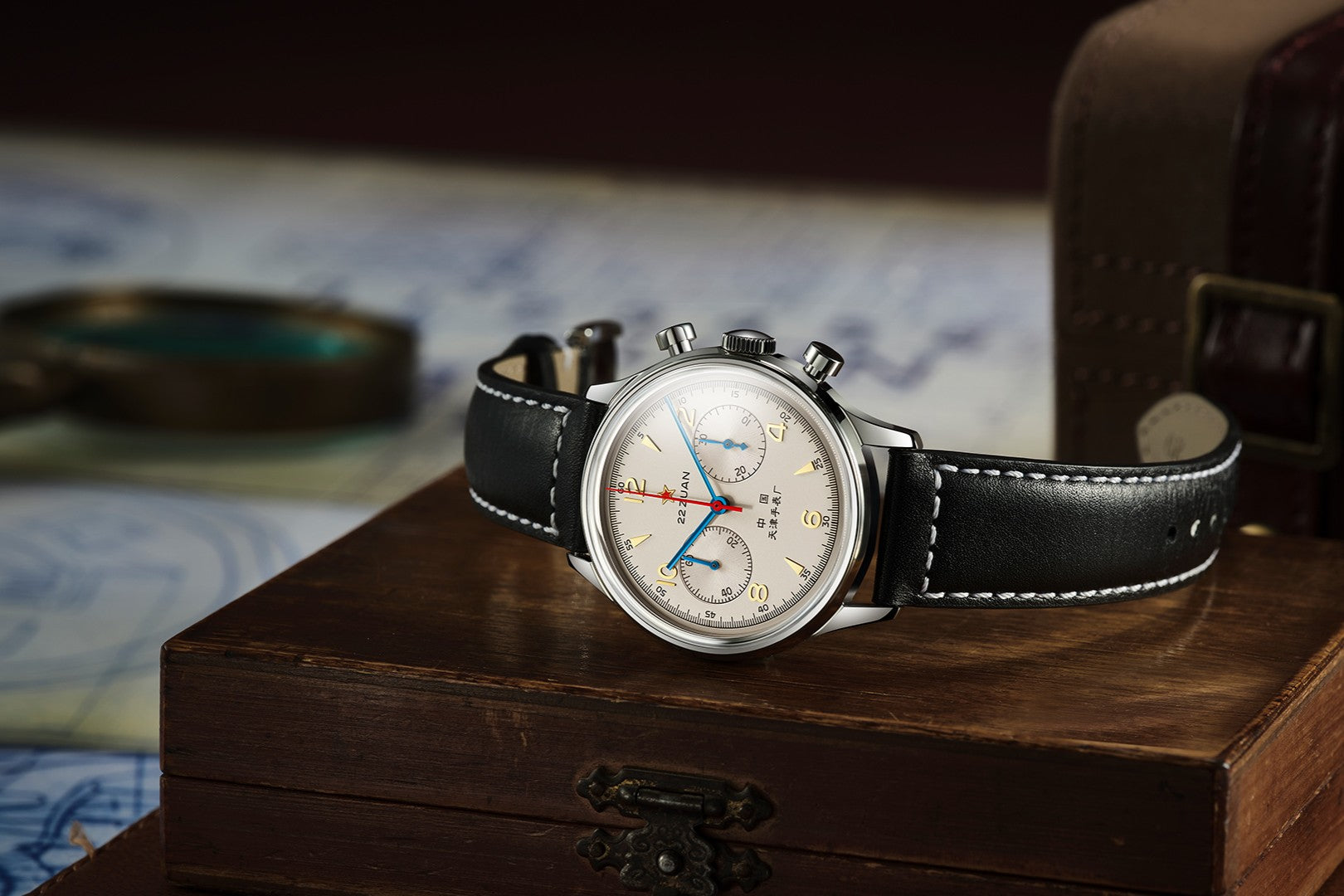
A typical two-pusher chronograph watch uses the upper pusher to start and stop timing. The lower pusher returns the elapsed-time hands to zero after the timing run has ended.
Inside a chronograph watch mechanism, a controlled system of levers and wheels engages the chronograph movement with the watch's power source. Pressing start sets the central chronograph seconds hand in motion. Pressing stop holds that hand in place so the result can be read. Reset returns the elapsed display to its starting point.
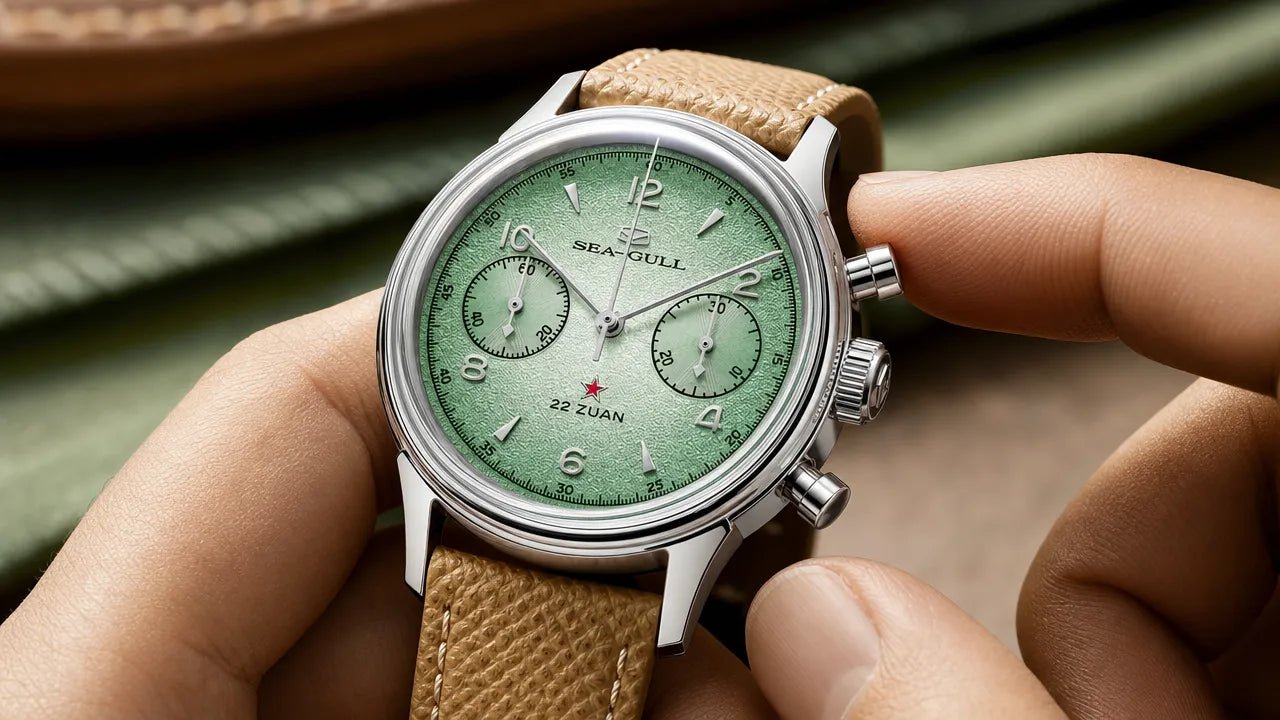
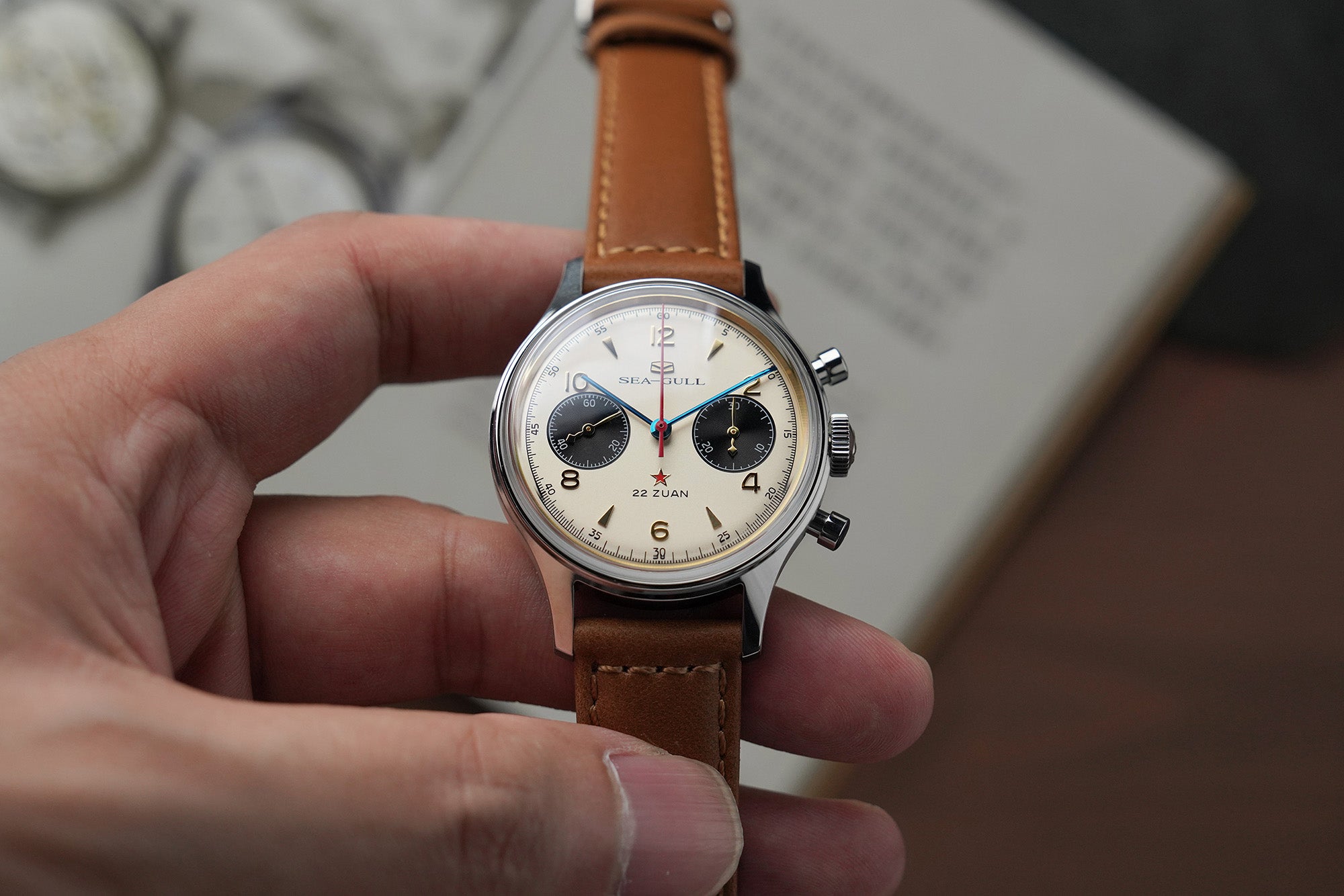
On a two-register layout, the central hand usually records elapsed seconds. A subdial may record elapsed minutes, while another may show continuously running seconds. Read the central hand first, then the elapsed-minute counter where fitted.
| Control or display | Daily role |
|---|---|
| Upper pusher | Starts and stops elapsed-time measurement |
| Lower pusher | Resets elapsed-time hands after stopping |
| Central timing hand | Tracks elapsed seconds |
| Elapsed-minute register | Tracks longer intervals on applicable models |
| Running-seconds subdial | Shows the watch is running, not the active chronograph count |
For a deeper look at the parts behind this interaction, read the collector's technical guide.
The Seagull chronograph watch start-stop-reset routine
Check that the crown is fully secured, the case and pushers are dry, and the elapsed-time hands sit at zero. For a manual-wind model, wind it off the wrist with smooth turns and stop when the crown reaches natural resistance. Never force the crown.
Then follow the three-step sequence.
- Press the upper pusher once with direct, even pressure to start.
- Press the same pusher again when the interval ends to stop.
- Read the central hand and any elapsed-minute register.
- Press the lower pusher only after the chronograph has stopped to reset.
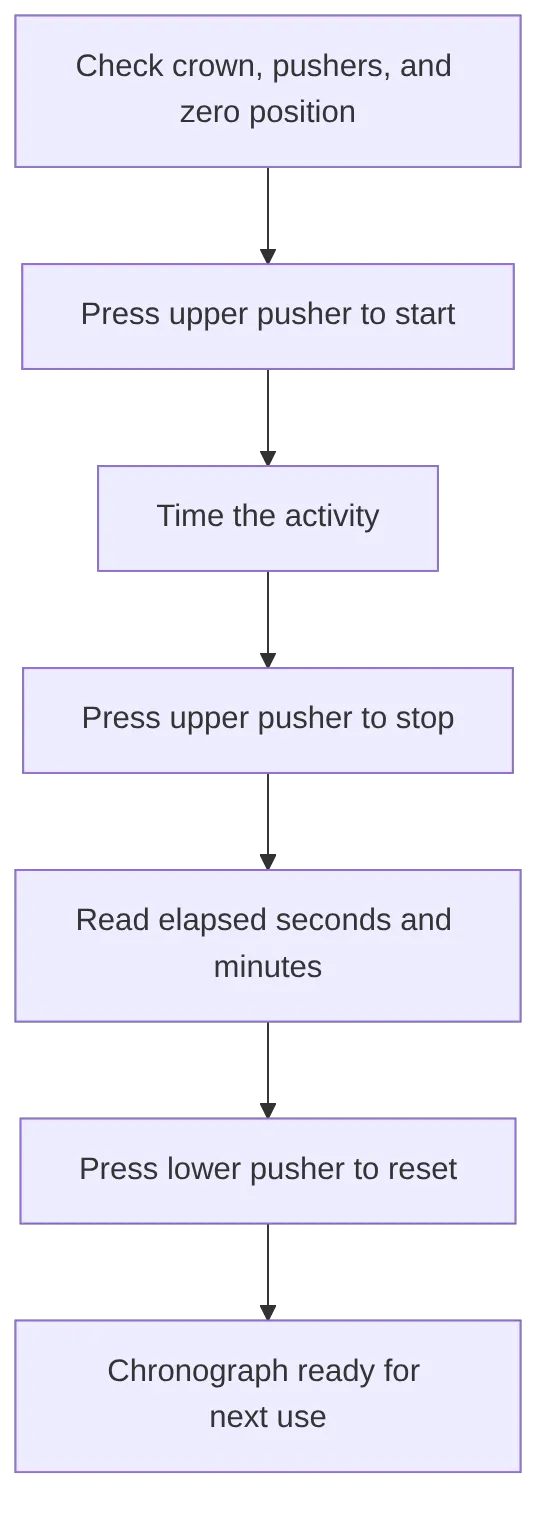
One rule to remember: stop before reset. A conventional non-flyback chrono watch should not be reset while it is running. A flyback chronograph uses different operating logic, so follow the instructions supplied with that specific model.
Seagull chronograph watch daily care habits
Care begins with clean, dry handling. Press the pushers straight in rather than from the side, and avoid operating the crown or pushers when hands, case, or controls are wet. Dry the watch with a soft cloth after rain, perspiration, or surface moisture before using the controls.
Keep a mechanical chronograph away from prolonged exposure to strong magnetic sources. Avoid hard impacts, repeated jolts, steam rooms, hot water, and unnecessary temperature extremes. These habits help preserve the movement, seals, and materials without making daily ownership feel restrictive.
A leather strap benefits from equally simple care: keep it dry, wipe it with a soft dry cloth after wear, and allow it to air between uses. Store the watch in a clean, dry, stable location such as a watch box or protected compartment.
Arrange professional attention if the elapsed-time hands no longer return correctly to zero, pusher action changes noticeably, the crown feels damaged, or moisture appears beneath the crystal. Keep proof of purchase with service records for after-sales support.
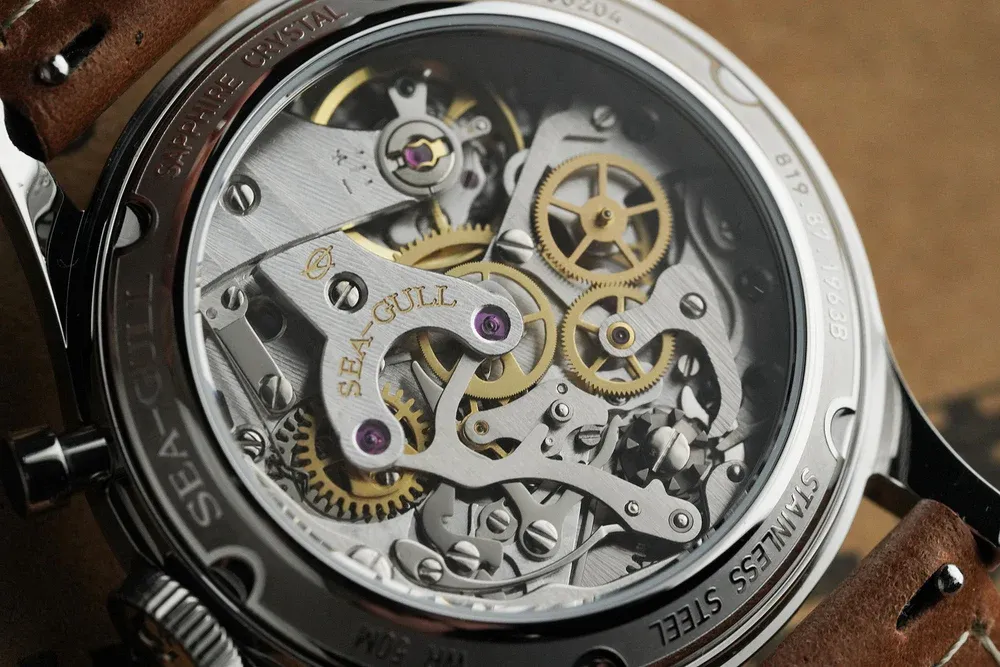
Sea-Gull ST1901 Chronograph Movements
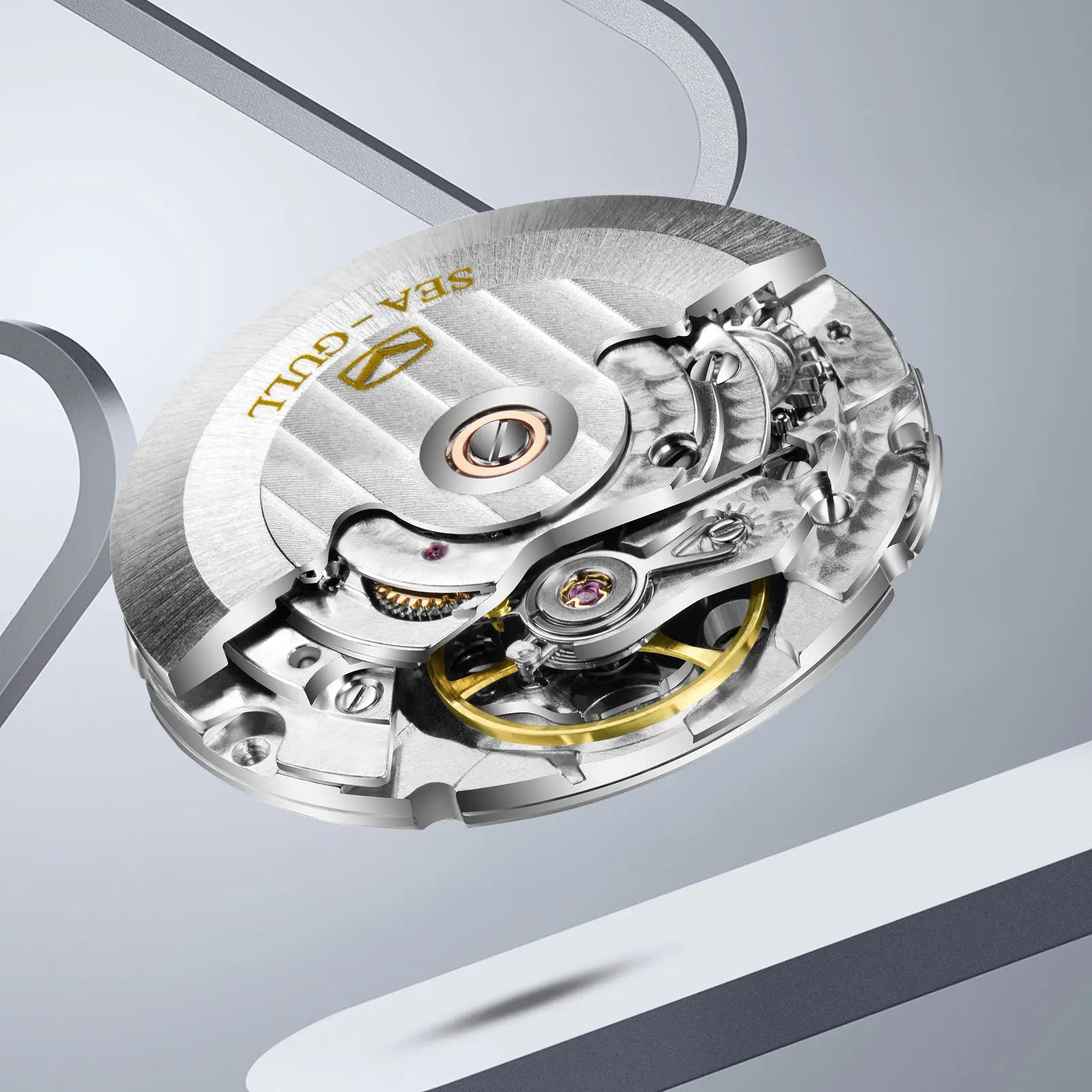
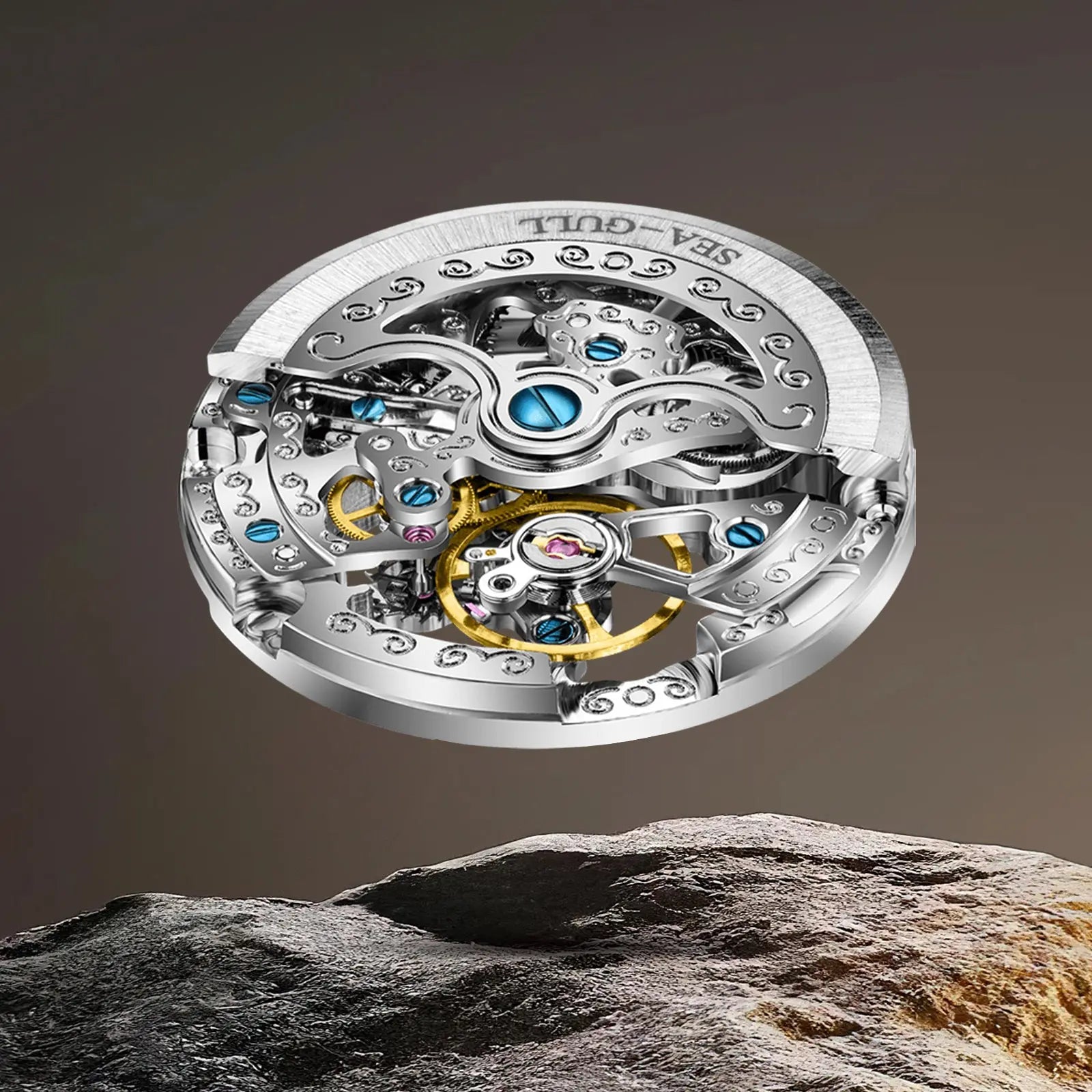
The Sea-Gull ST19 movement family offers a compelling view of classic mechanical chronograph architecture. Relevant manual-wind examples use a column wheel chronograph system, in which a shaped control wheel coordinates the start, stop, and reset sequence through the movement's levers.
A column wheel is not merely a technical talking point. It is part of the visible choreography that makes chronograph mechanical watches so engaging: winding the mainspring, pressing a pusher, and watching the timing display respond.
The ST1901 movement is associated with a manual-wind, bi-compax arrangement in applicable models. Its two-register format can pair a 30-minute elapsed counter with running seconds, giving the dial a focused, classic mechanical chronograph character.
A Seagull 1963 watch puts this interaction at the center of ownership. Its heritage-led pilot chronograph style invites the owner to wind, time, stop, and reset rather than treating the watch as a passive accessory. Explore the 1963 collection and Sea-Gull movement offerings to compare mechanical layouts.
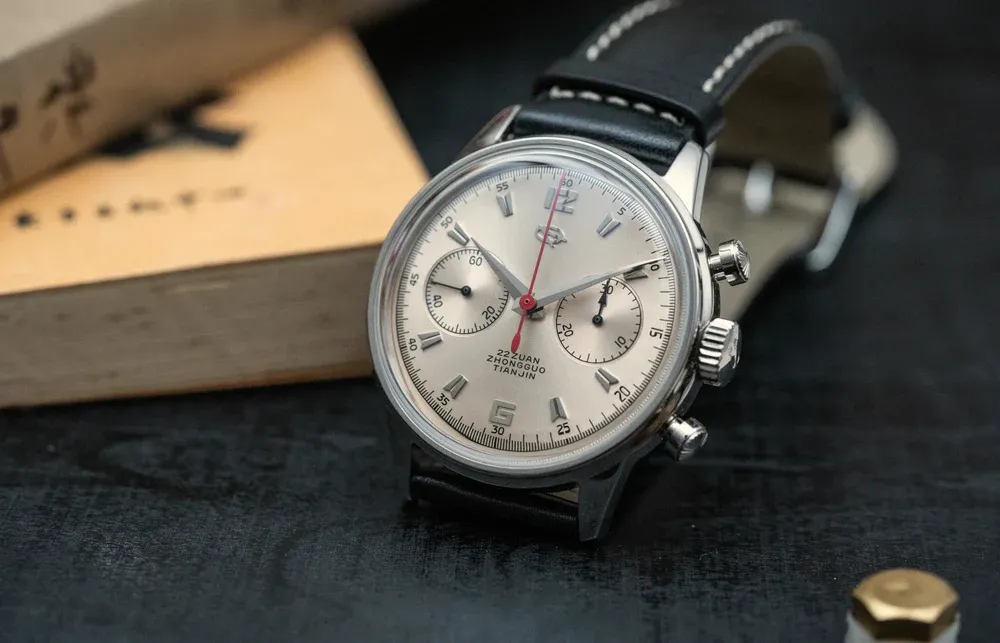
Choosing a Seagull chronograph watch for daily wear
The best mechanical chronograph watches are the ones whose layout and winding ritual suit how you actually wear them. Before choosing, look beyond dial color and confirm the movement type, timing-register arrangement, winding method, strap material, and documented care guidance for the exact model.
Classic chronograph watches with two registers offer a clean, focused display. A panda watch chronograph is a style descriptor for a light dial with contrasting dark registers, not a different type of movement. A Chinese chronograph watch with manual winding can be especially satisfying for collectors who value visible engineering and regular interaction.
Use this concise chronograph watch buying guide when comparing options:
- Choose manual winding if you enjoy a daily mechanical ritual.
- Identify which register tracks elapsed minutes before timing longer events.
- Confirm that the design suits your usual setting, from casual wear to a more aviation-inspired pilot chronograph look.
- Purchase through an authorized dealer or distributor and retain proof of purchase.
- Select a design you will want to use, not simply admire.
A Seagull chronograph watch rewards calm, intentional use. Wind it with care, start with purpose, stop to read the moment, and reset only when the timing run is complete.