

Lightweight Stainless Steel Watch Guide for Long Workdays
A lightweight-feeling stainless steel watch earns its place on long workdays by sitting securely, clearing a cuff, and staying comfortable through commuting, typing, meetings, and warm weather. Stainless steel offers durability and corrosion resistance, but the most comfortable choice depends on dimensions, balance, bracelet adjustment, and the way you actually wear it.
A watch can feel cumbersome even when its stated weight looks reasonable. Conversely, a compact model with a well-shaped caseback, flexible bracelet, and balanced clasp can disappear on the wrist for most of the day. Before choosing a stainless steel watch for work, assess the complete specification list rather than relying on diameter or material alone.
How a stainless steel watch feels lightweight through better proportions
A lightweight stainless steel watch is not defined by grams alone. Steel generally carries more mass than titanium, so "lightweight" should describe the overall wearing experience only when a model's actual weight and dimensions support that conclusion.
The key is how the watch distributes its mass across the wrist. A tall, top-heavy case may rotate or press against a desk, while a slimmer case with curved lugs can feel stable even when it is not exceptionally light on a scale.
Read the measurements together
Use these specifications as a group:
| Specification | Why it matters during a workday | What to look for |
|---|---|---|
| Case diameter | Influences wrist coverage and visual presence | Compare it with a watch you already find comfortable |
| Case thickness | Affects cuff clearance and desk contact | A lower profile is often easier with fitted shirt cuffs |
| Lug-to-lug length | Helps predict whether the case will overhang the wrist | Ideally, keep the lugs within the flatter upper surface of your wrist |
| Total weight | Gives a useful starting point | Judge it alongside balance, thickness, and bracelet fit |
| Bracelet articulation | Determines how naturally links wrap around the wrist | Look for flexible links that do not pinch |
| Clasp size | Can create pressure while typing | Check the clasp's width, length, and placement |
| Adjustment system | Accommodates wrist expansion in heat | Prefer practical adjustment options where available |
Lug-to-lug is especially important. A watch can have a modest diameter but still feel too large if long, flat lugs extend beyond the wrist. Likewise, a larger diameter can remain wearable when the lugs curve sharply downward and the case stays relatively thin.
Sea-Gull lightweight options for long workdays
Sea-Gull's mechanical range spans from 55g dress watches to 217g dive watches. For extended workday comfort, these models balance weight, thickness, and proportions:
Ultra-light category (under 70g):
-
Wuxing Sparkle 1955 39mm: 55g, 39mm × 11.4mm, 45mm lug-to-lug. The lightest Sea-Gull mechanical watch, using upgraded 1.4435 stainless steel with a 20mm leather strap. Its 11.4mm profile clears most dress cuffs comfortably.
-
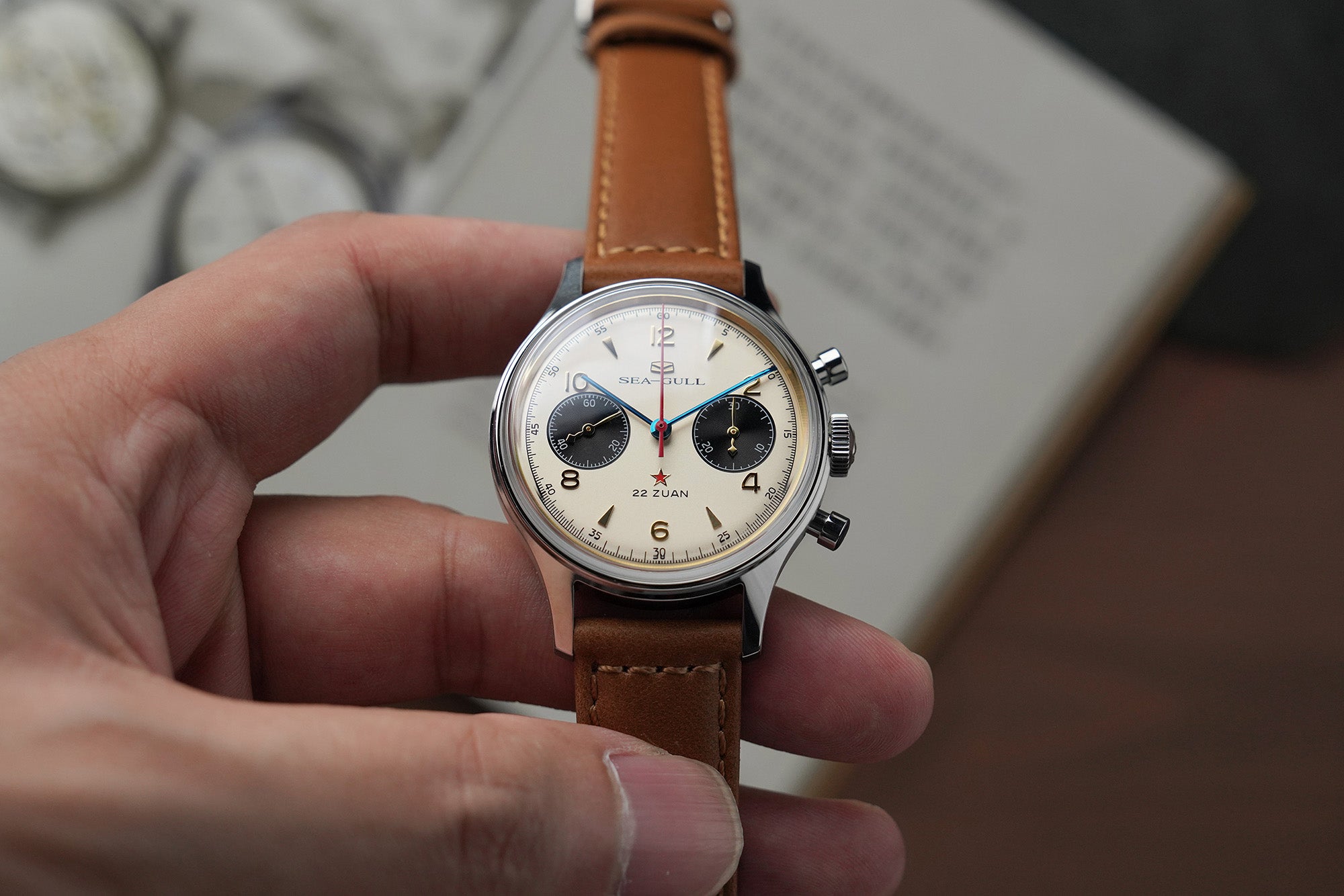
Five Stars 1955A 38mm: 57g, 38mm × 12.5mm, 45mm lug-to-lug. Compact heritage design with ST2130 automatic movement (28 jewels, 28,800 vph). The short lug-to-lug suits smaller wrists particularly well.
-
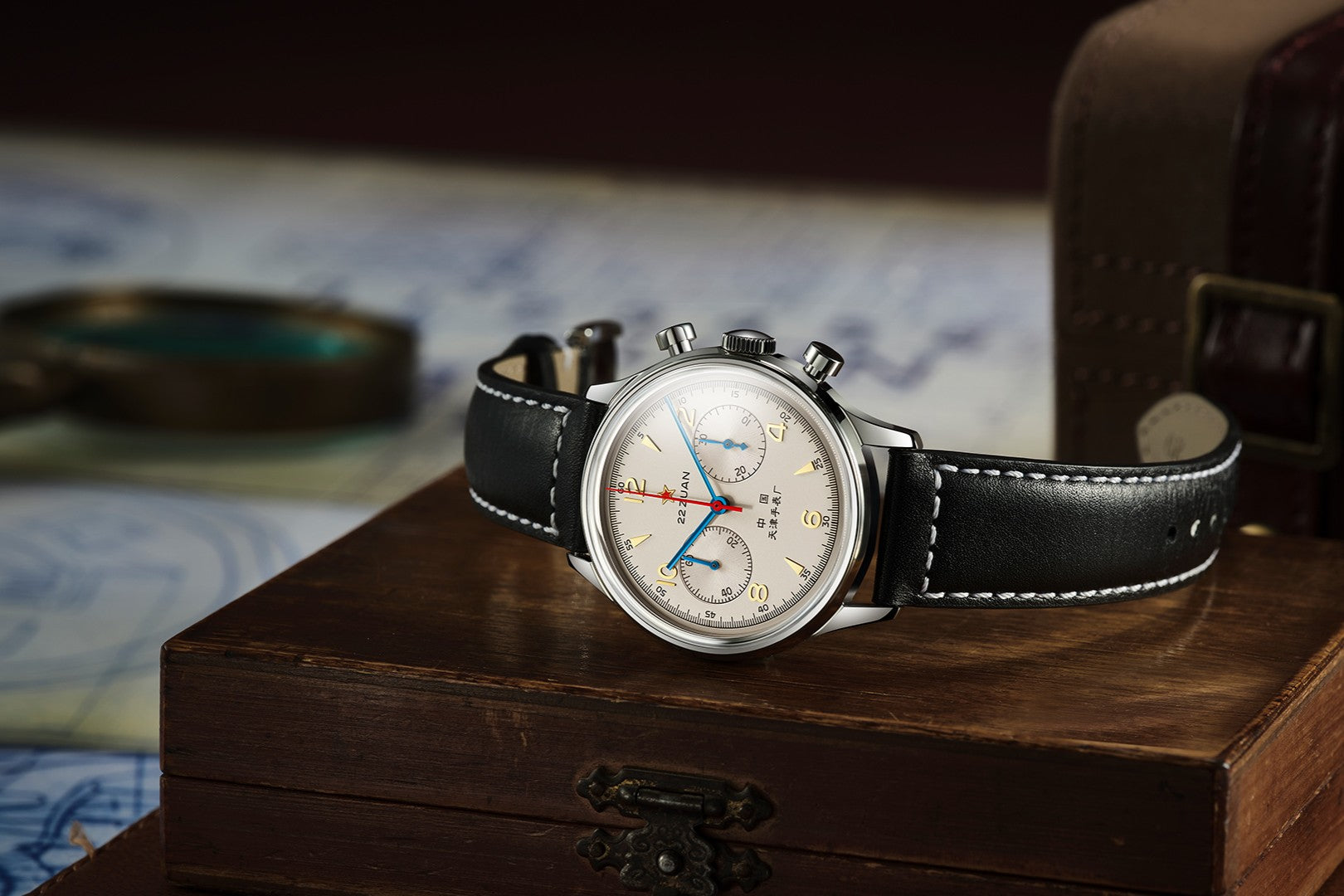
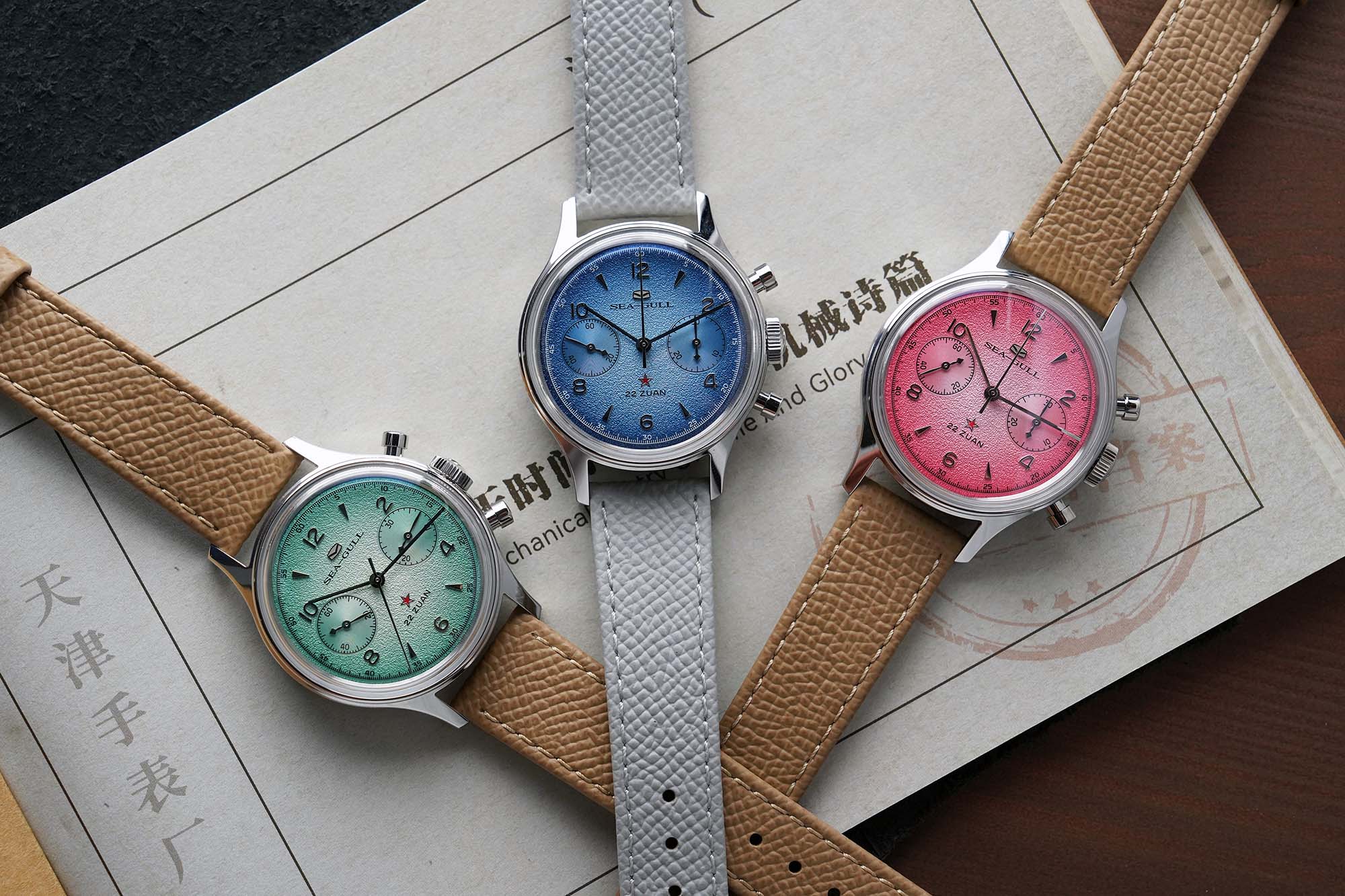
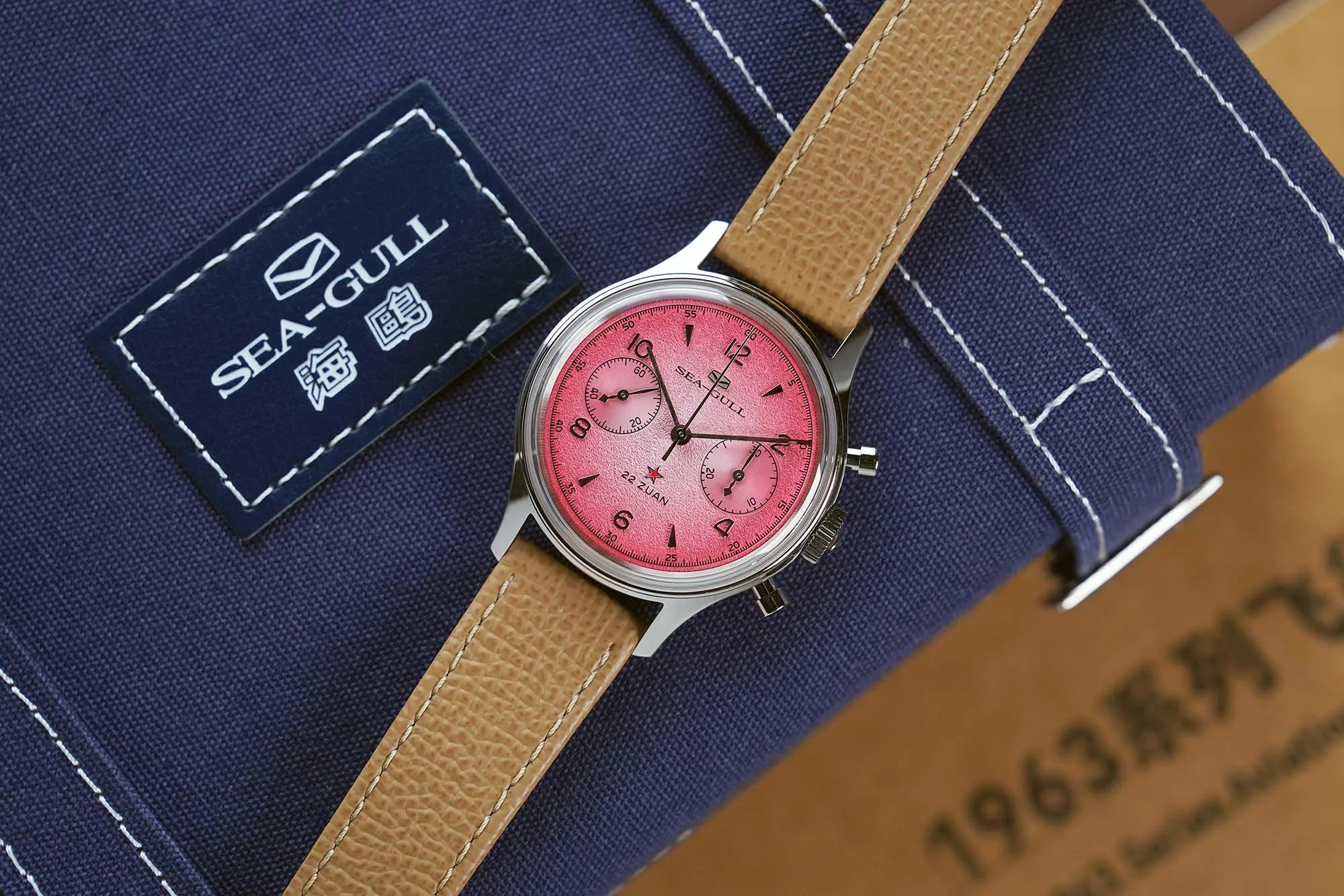
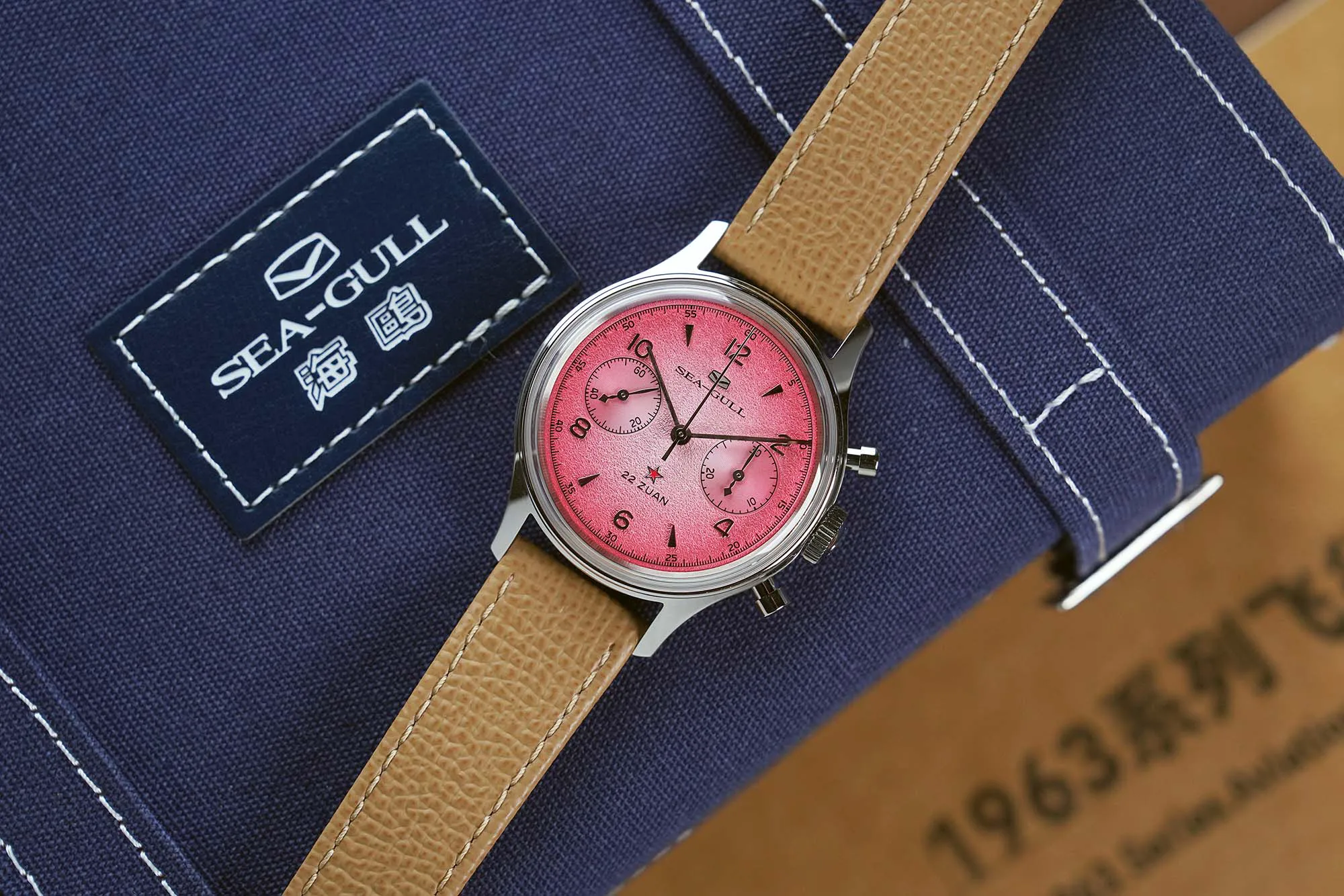
1963B Meteorite 37.3mm: 61g, 37.3mm × 15mm, 47mm lug-to-lug. Note the 15mm thickness despite light weight — the hand-wound ST1901 chronograph and tall crystal need cuff clearance.
Light with excellent proportions (70-90g):
-
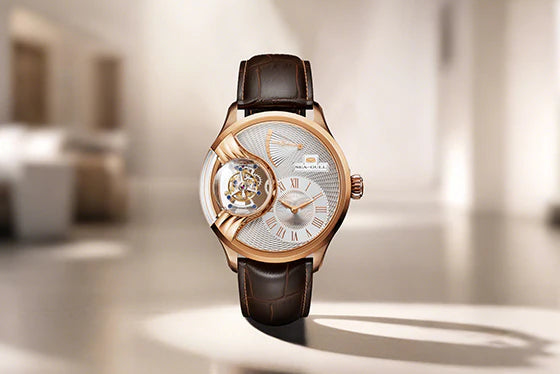
Extraordinary Snowflake 1133A 40mm: 74g, 40mm × 9mm, 48mm lug-to-lug. The thinnest Sea-Gull dress watch, using the slim ST18 automatic (approximately 3.9mm movement). At 9mm total thickness, this clears virtually any shirt cuff.
-
Sea-Gull 1963 Reissue 40mm: 74g, 40mm × 14.5mm, 46.8mm lug-to-lug. The manual-wound ST1901 chronograph sits taller, but the short lug-to-lug keeps it compact on the wrist.
Steel bracelet options:
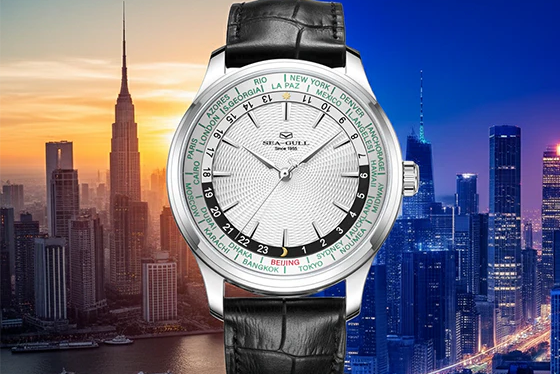
- Natural Series Polaris 6180 40mm: 126g on bracelet, 40mm × 10mm, 46.3mm lug-to-lug. Switching to the included leather strap reduces total weight to roughly 80g. The push-button hidden clasp sits flatter than dive-watch safety buckles, which matters when your wrist rests on a desk.
For all-day desk work, thickness often matters more than diameter. The Snowflake 1133A (40mm × 9mm) and Polaris 6180 (40mm × 10mm) share similar diameters with the 1963 Reissue (40mm × 14.5mm), but the thinner cases sit differently under a cuff and against a desk edge.
Why a stainless steel watch suits work and summer wear
A stainless steel watch is a practical choice for office wear because it combines a polished appearance with everyday durability. It can move naturally from a client meeting to a commute without demanding the caution associated with more delicate-looking materials.
Many watch cases and bracelets use 316L stainless steel. This material is widely used in watchmaking for its corrosion resistance, though the grade alone does not determine long-term condition or comfort. As Fratello's comparison of 316L and 904L steel explains, alloy composition can affect corrosion resistance, but it does not make a watch scratch-proof or automatically more comfortable.
For warm-weather wear, a steel bracelet has practical advantages:
- It is easy to wipe down after perspiration.
- It usually suits business-casual and formal environments.
- It does not absorb moisture in the same way as leather.
- It can provide a stable, balanced fit when properly sized.
Tag Heuer's strap-material guidance describes stainless steel as robust and corrosion resistant. That is a material characteristic, not a promise that every steel bracelet will feel comfortable. Link construction, taper, clasp shape, and fit make the difference.
After a hot commute or a humid day, wipe the case and bracelet with a soft cloth. For watches rated and approved for water exposure, follow the manufacturer's cleaning guidance after contact with saltwater or chlorinated water. Do not assume a steel exterior makes every part of the watch suitable for immersion.
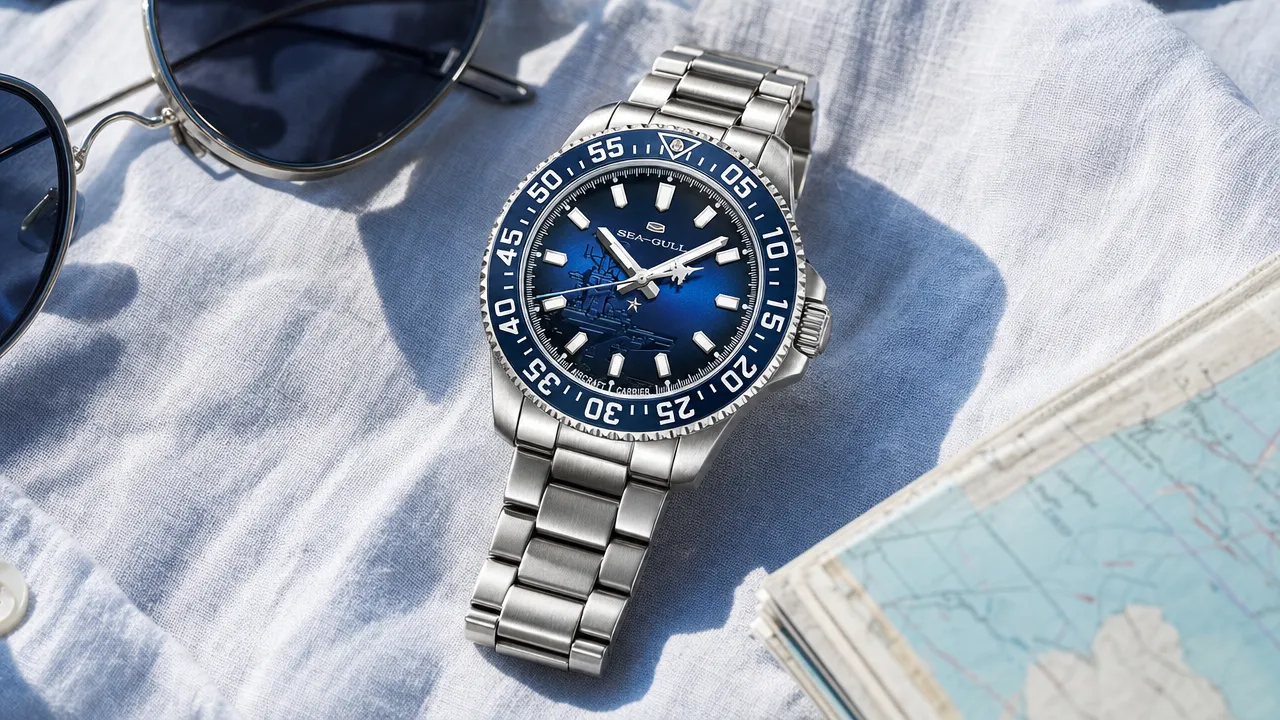
How to choose a stainless steel watch for office comfort
A stainless steel watch for work should remain stable when your wrist moves, not slide toward the hand, twist around the wrist, or press sharply into the underside of your arm. The smallest fit details often have the greatest effect after eight or more hours of wear.
Start with a secure but relaxed fit. A bracelet that is too tight can trap heat and leave pressure marks. One that is too loose can rotate, catch on a desk edge, and make the case feel heavier than it is.
Check the bracelet before focusing on the dial
A good steel bracelet for office use should have enough flexibility to follow wrist movement. Consider:
- Link articulation: Smaller, smoothly connected links often conform more naturally.
- Taper: A bracelet that narrows toward the clasp can reduce visual and physical bulk.
- Clasp profile: A large clasp can become noticeable when typing or resting your wrist.
- Adjustment: Small fit changes are helpful when heat causes normal wrist expansion.
- Balance: The case and bracelet should work together so the watch stays centered.
A leather strap can look especially refined with tailored clothing, but it is less convenient when sweat, rain, or repeated water exposure are likely. A rubber strap is easier to clean and often makes sense for a commute-to-leisure routine, although it may feel less formal in conservative workplaces. Fabric straps are often light and flexible, but they can retain moisture and take longer to dry.
| Strap option | Workday strengths | Summer considerations | Best suited to |
|---|---|---|---|
| Stainless steel bracelet | Durable, professional, easy to wipe clean | Fit adjustment matters when wrists expand in heat | Office, commuting, travel |
| Leather strap | Classic, visually understated, often slim | Can absorb perspiration and is less suited to repeated water contact | Dry, air-conditioned, formal settings |
| Rubber strap | Water resistant, simple to clean, flexible | Formality varies by design and workplace | Active commutes, casual workplaces, travel |
| Fabric or nylon strap | Usually light and adaptable | Can hold moisture and require more drying time | Casual use and lower-intensity activity |
For a summer watch, there is no single best strap for every situation. Match the material to your climate, dress code, and likely water exposure.
Is an automatic watch practical with a stainless steel watch routine?
An automatic watch can be a rewarding daily companion for professionals who appreciate mechanical engineering and do not mind a little hands-on ownership. It winds through wrist motion, storing energy in a mainspring as you wear it.
That stored energy is limited. When an automatic watch is left unworn long enough, it stops and needs to be reset before use. The exact power reserve varies by model and movement, so always confirm the figure in the specific product documentation.
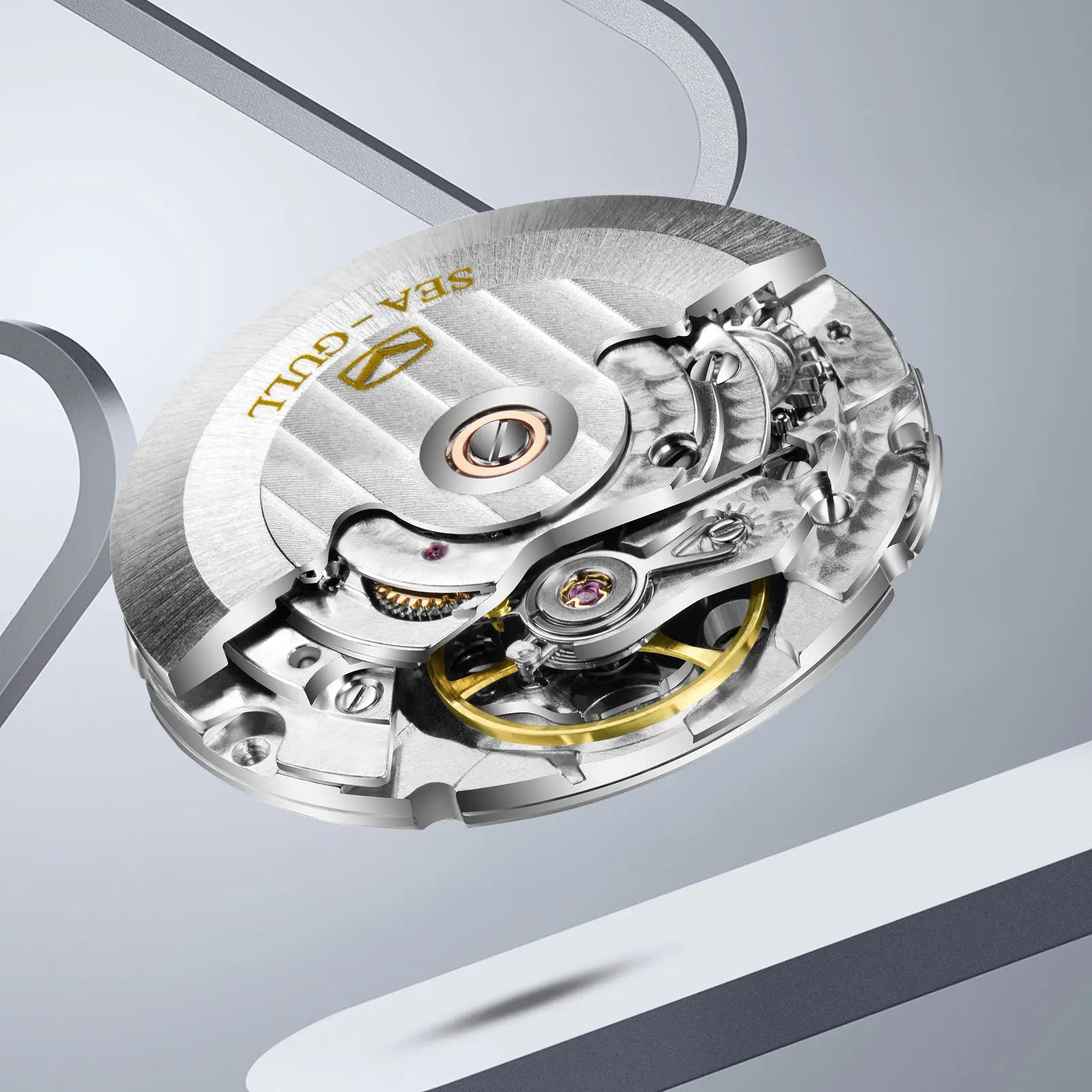
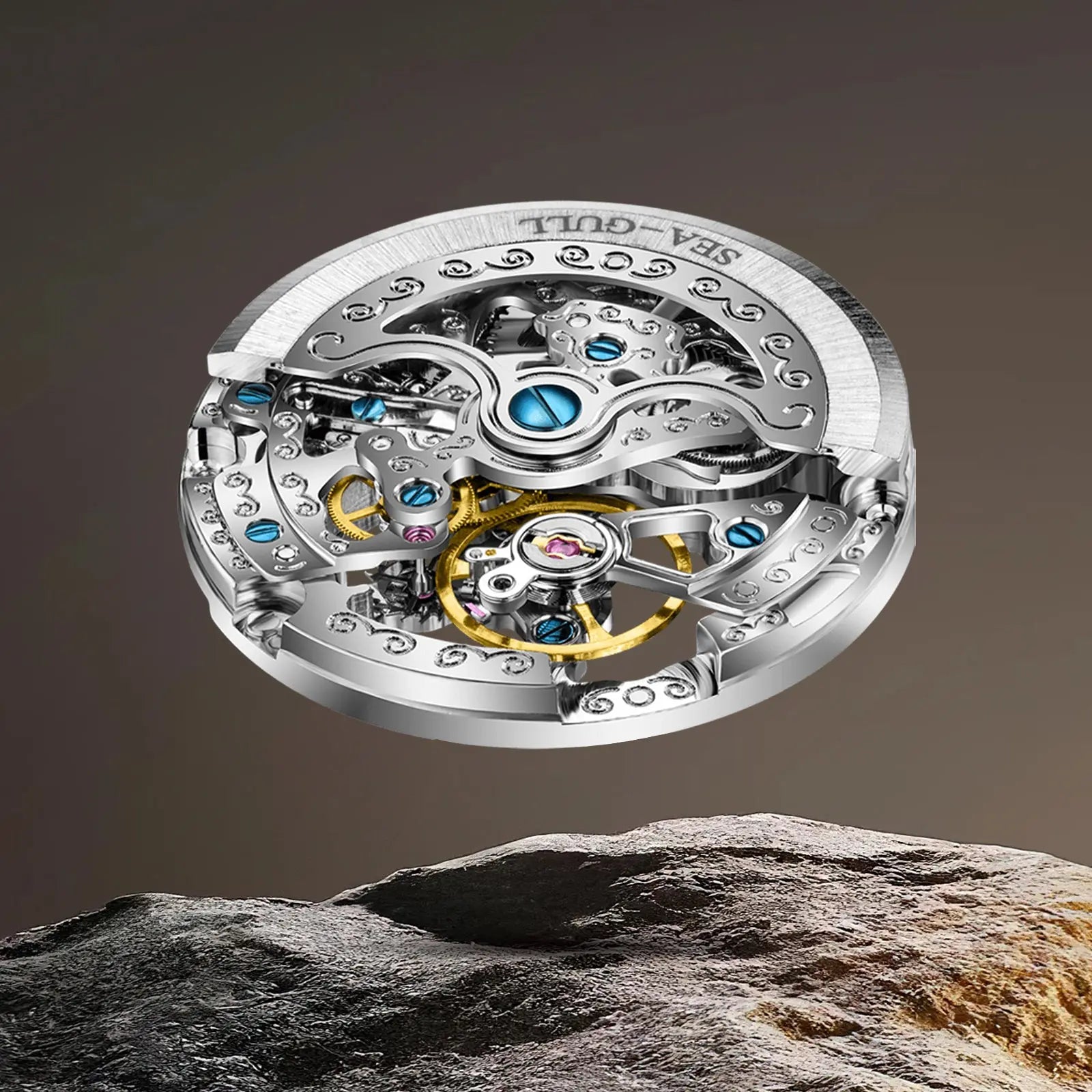
Movement choice also affects daily convenience. Sea-Gull's automatic movements — the ST2130 in the 1955A and Wuxing Sparkle, the slim ST18 in the Snowflake 1133A, and the ST17 in the Polaris 6180 — wind through wrist motion during a normal workday. The hand-wound ST1901 in the 1963 and 1963B chronographs requires deliberate daily winding, which some owners value as part of the routine and others find inconvenient for a work watch.
Quartz or solar alternatives may be more convenient when immediate readiness and infrequent wear are your top priorities. Choosing a different movement type is not a compromise in quality. It is a practical decision based on routine.
Mechanical watches also require appropriate maintenance over time. Water resistance is not permanent because seals can age. Follow the exact care guidance supplied with the watch rather than relying on a generic service schedule.
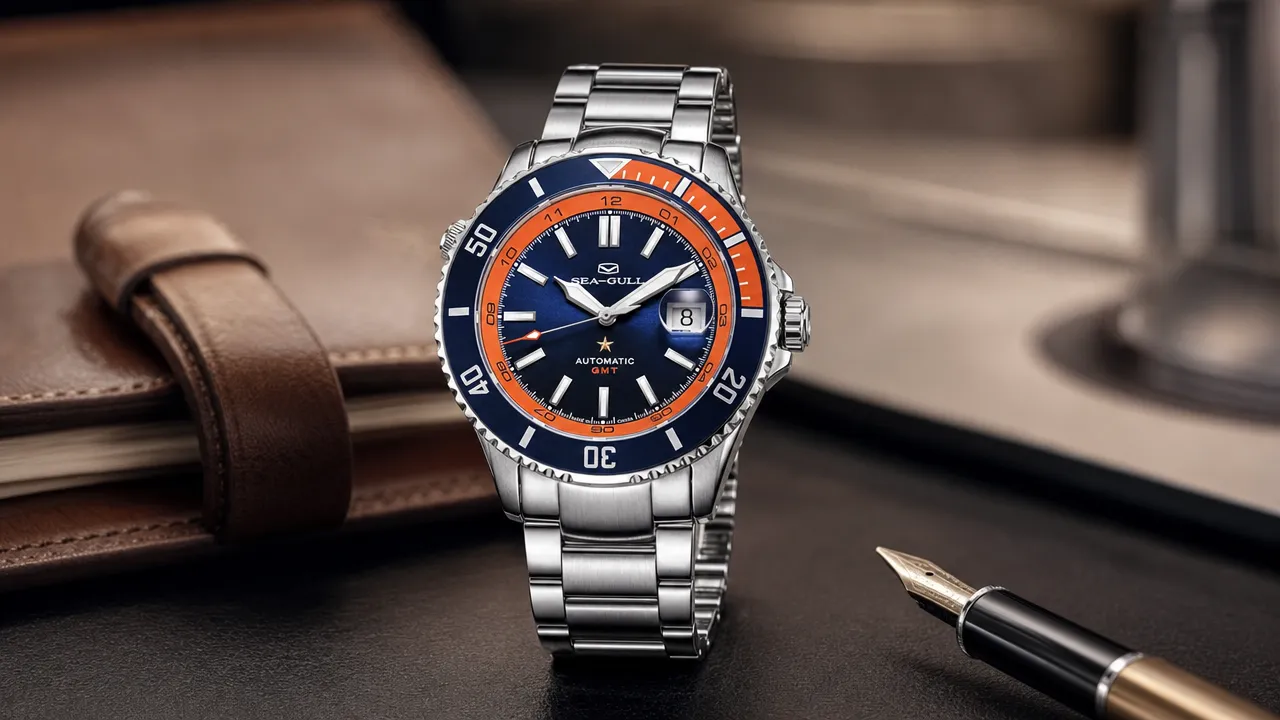
Water resistance for a stainless steel watch and summer watch use
Water resistance should always be interpreted through the individual watch's official rating and instructions. Never treat a stainless steel watch as waterproof, and do not convert a depth or pressure marking into a universal activity guarantee.
ISO 22810 defines requirements and testing methods for water-resistant watches. The Federation of the Swiss Watch Industry's water-resistance guidance also emphasizes that water resistance is a defined performance characteristic, not a permanent condition.
Most Sea-Gull dress and office models carry a 5 bar (50m) rating, including the 1955A, Wuxing Sparkle 1955, Snowflake 1133A, and Polaris 6180. The 1963 Reissue is rated 3 bar. Neither rating approves swimming, so treat both as splash-resistant office watches and check your specific model's documentation.
Use a cautious approach:
| Situation | Practical guidance |
|---|---|
| Rain and accidental splashes | Check the watch's stated rating and keep the crown secured |
| Handwashing | Follow the model's instructions, particularly around crown and pusher use |
| Sweat during a commute | Wipe down the case and bracelet after wear |
| Swimming | Confirm that the manufacturer specifically approves the activity |
| Saltwater or chlorinated water | Follow the manufacturer's instructions for rinsing and drying afterward |
| Wet crown or pushers | Do not operate them unless the manufacturer explicitly permits it |
Keep the crown fully pushed in at all times. If a watch uses a screw-down crown, secure it before any approved water exposure. Seals, gaskets, and crown systems require periodic attention, so a historical water-resistance rating is not a permanent guarantee.
Final stainless steel watch checklist for long workdays
The best stainless steel watch for a long workday is balanced rather than merely light. Before making a decision, confirm these points on the exact model page or with the manufacturer:
- Verify the case and bracelet or strap materials.
- Compare diameter, thickness, lug-to-lug length, and stated weight together.
- Assess whether the case shape and lugs will sit within your wrist's upper surface.
- Check bracelet articulation, clasp size, and available fit adjustment.
- Choose a strap material that fits your office dress code and summer routine.
- Confirm the official water-resistance rating and care instructions.
- Decide whether an automatic watch ownership routine suits how often you wear it.
- Prioritize dial contrast and low glare for meetings, transit, and changing light.
A comfortable stainless steel watch should feel composed from the first commute to the last email of the day. When you compare complete specifications, fit the bracelet carefully, and match the movement and water resistance to real life, you are far more likely to find a watch that works beyond the first impression.

Commenta
Questo sito è protetto da hCaptcha e applica le Norme sulla privacy e i Termini di servizio di hCaptcha.