

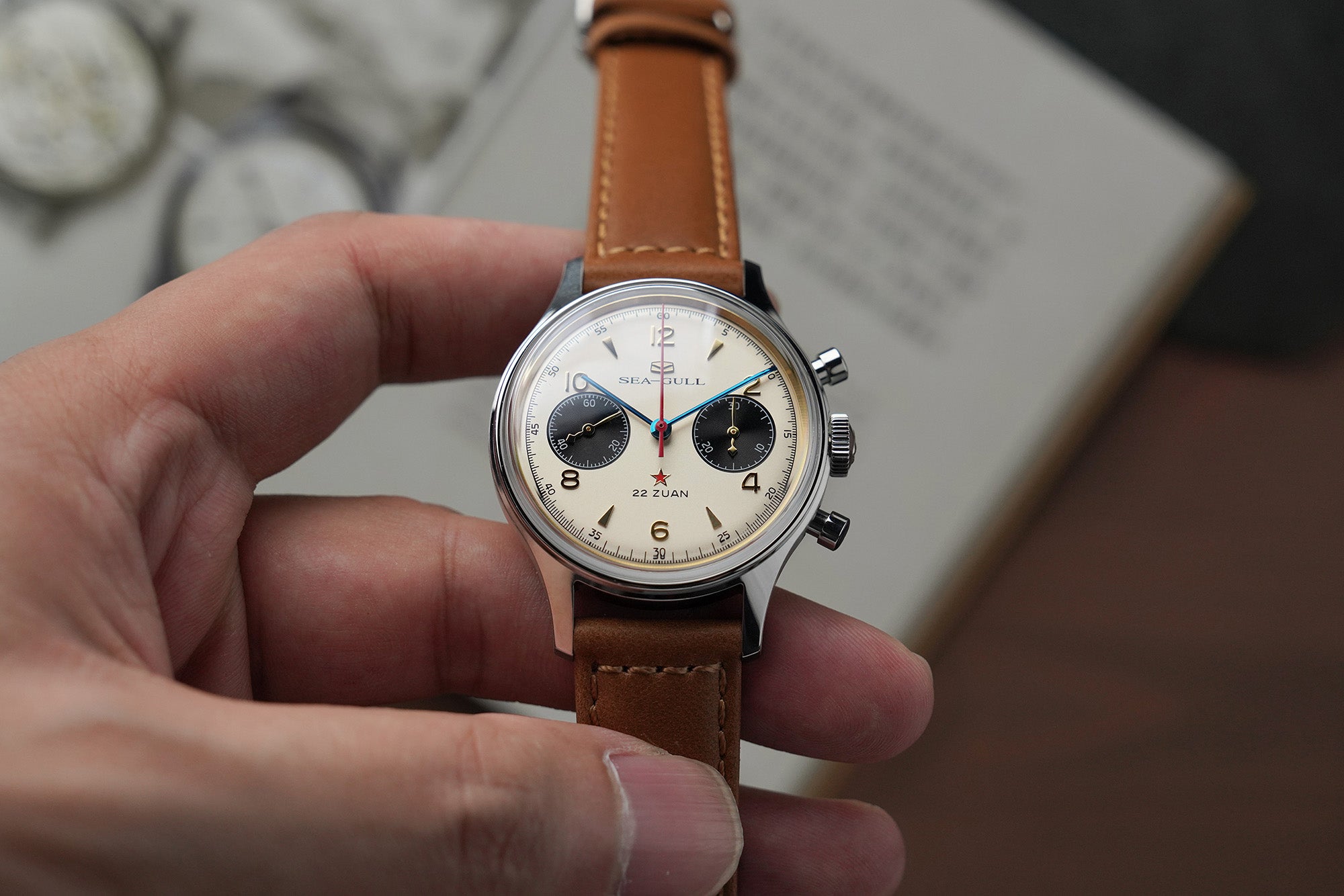
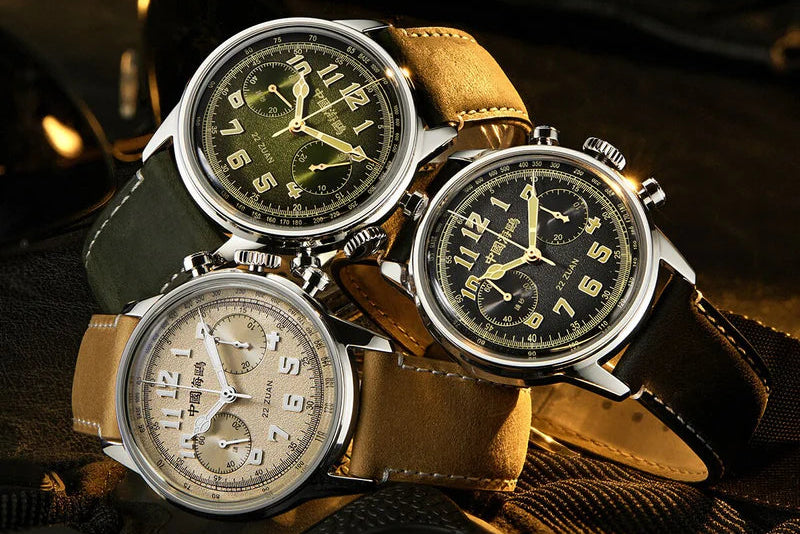
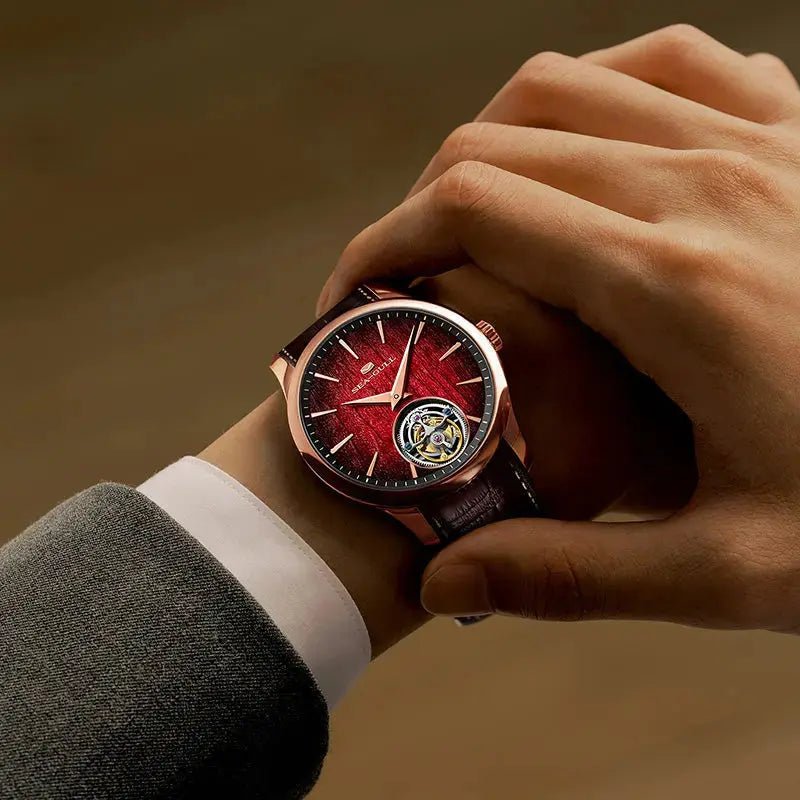
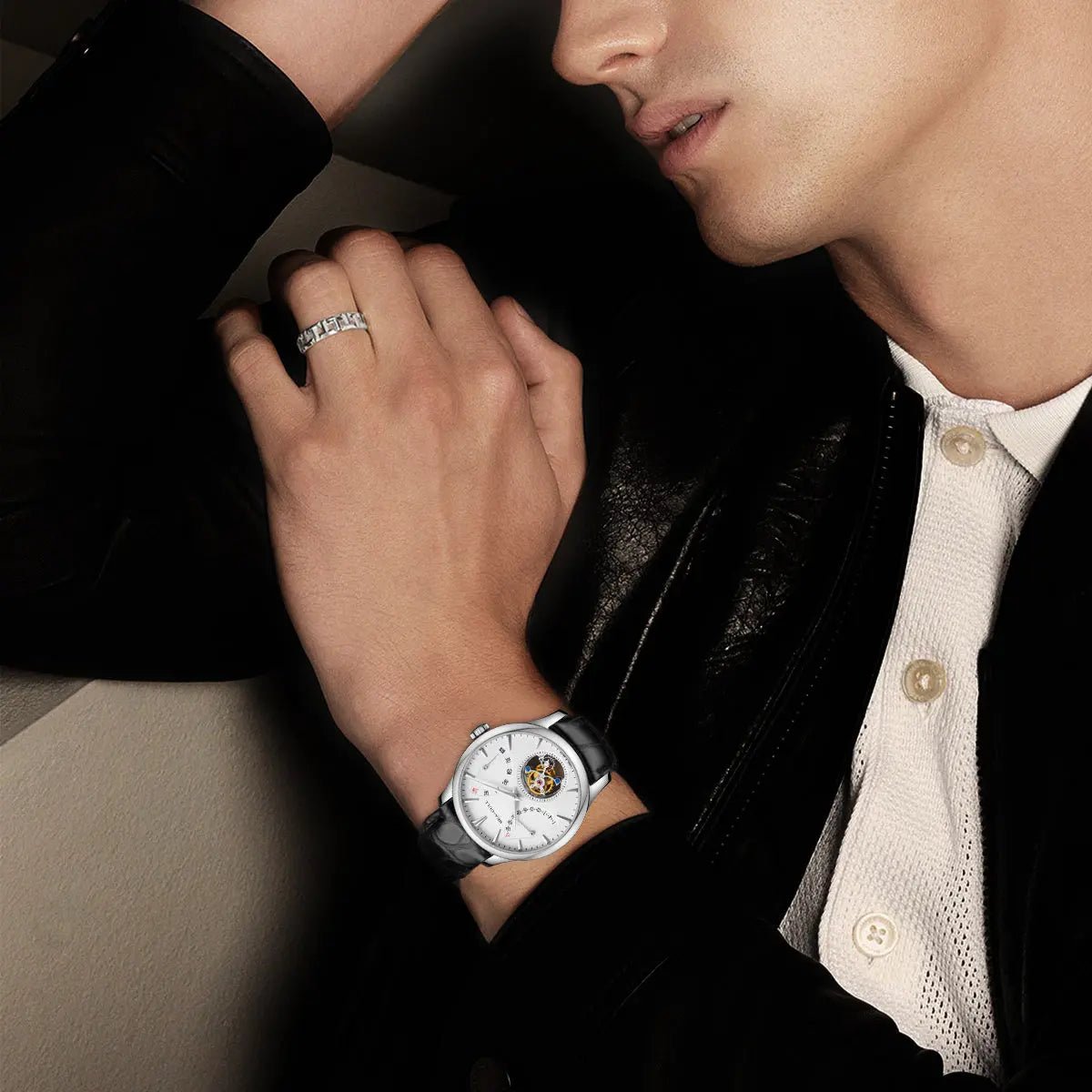
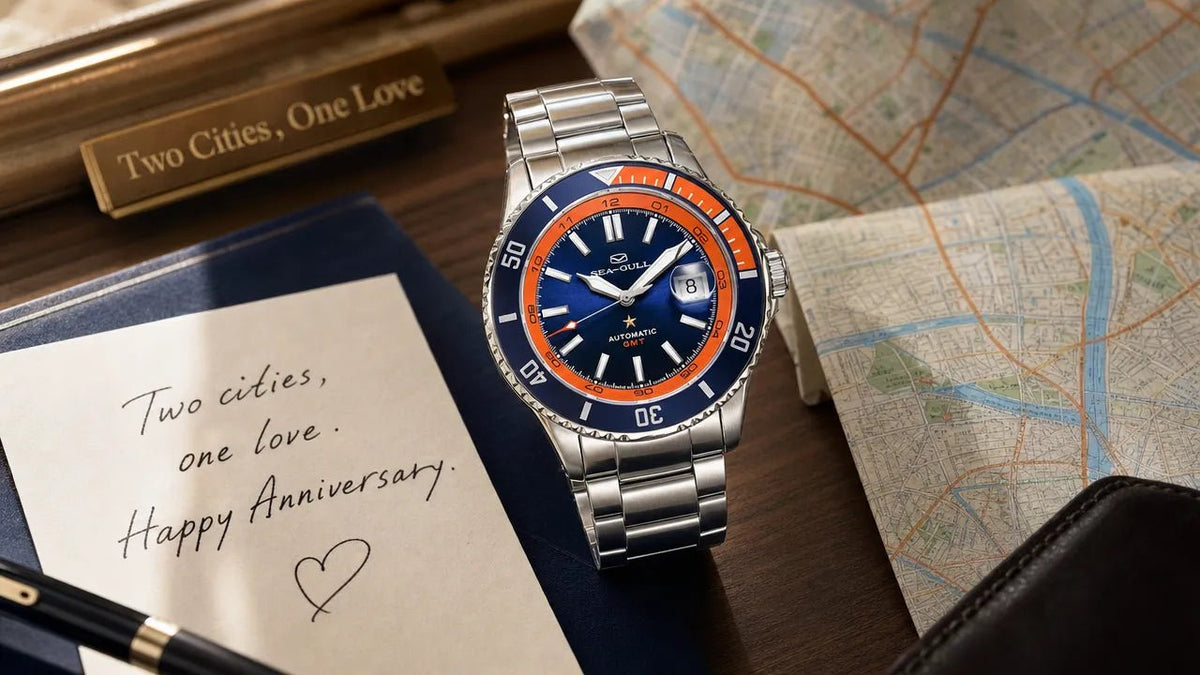
An Anniversary Watch Gift Built Around Two Time Zones
An anniversary gift is most memorable when it carries a private reference. A GMT or dual-time watch can do that with unusual discretion. One display marks the wearer's present. Another can remain set to the city where a partner lives, where family gathers, or where a shared chapter began.
That is what gives an anniversary GMT its emotional clarity. The recipient need not travel constantly; the second display simply gives a meaningful place a permanent, practical position on the dial.
Why Two Time Zones Can Feel Personal
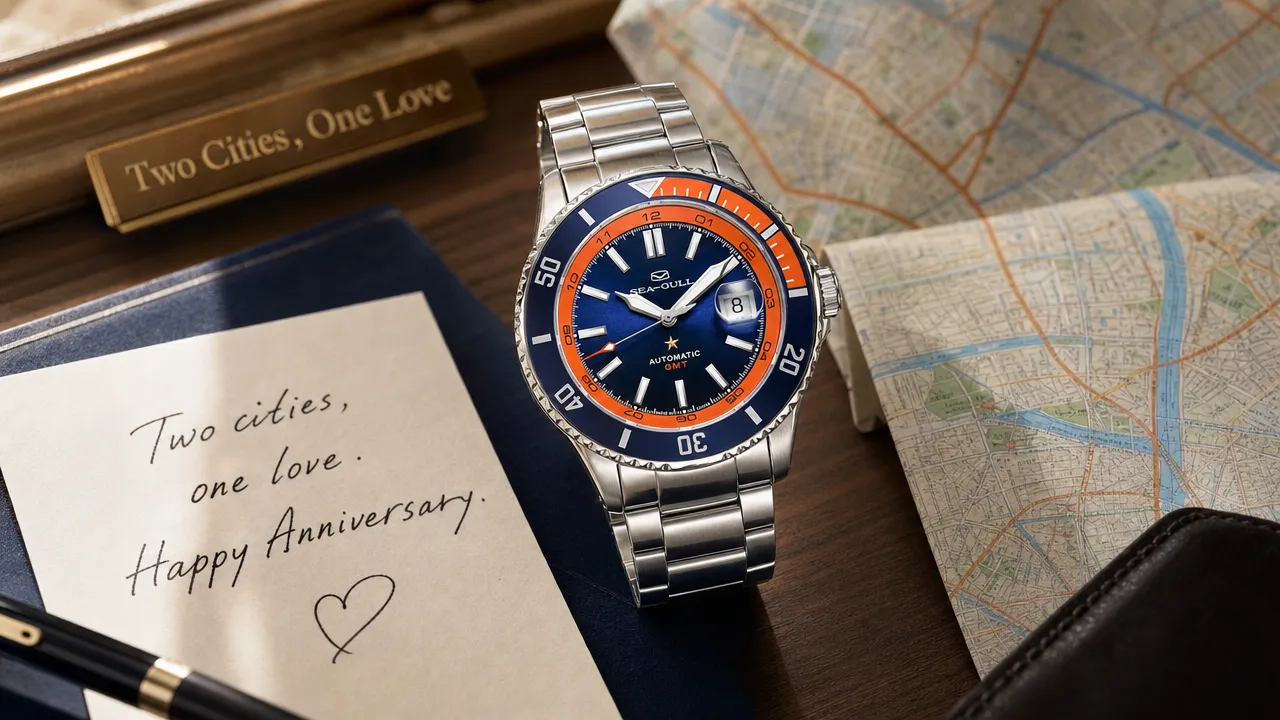
A conventional GMT arrangement uses the regular hour and minute hands for local time, plus an additional hand read against a 24-hour scale for a second time zone. That 24-hour reference is more useful than it may first appear: it tells the wearer whether it is morning or evening in the other location without reaching for a phone.
For an anniversary, that practicality becomes symbolic without becoming sentimental excess. The second zone might represent a spouse's hometown, a grown child's current city, or the place a couple returns to year after year. The choice is strongest when it begins with a real connection rather than a generic idea of travel.
The second display should be set thoughtfully at the time of giving, then adjusted as needed. A GMT indication does not automatically account for seasonal clock changes, so the difference between two cities may occasionally require a reset. Sea-Gull's guide to managing time differences with GMT watches is a useful primer on that everyday reality.
Keep the Second Time Easy to Read
GMT and dual time are closely related, but they are not identical terms. Dual time broadly means a watch displays two times. GMT usually refers to a format that uses an additional hand and a 24-hour scale. Both can suit a gift centered on two places, provided the recipient can read the second reference easily.
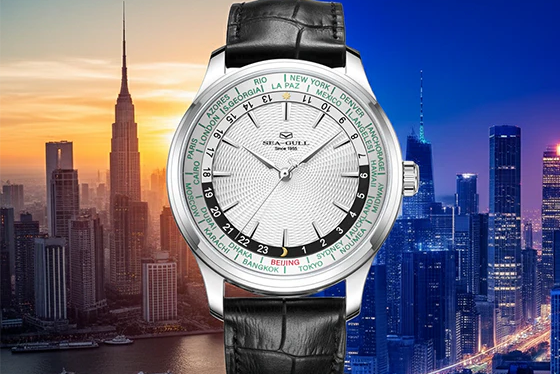
A clear dial matters more than an ambitious feature list. If the recipient mainly follows one distant city, a straightforward two-zone display may feel most natural. If their life involves several recurring international connections, a world-time presentation may offer a more expansive visual language.
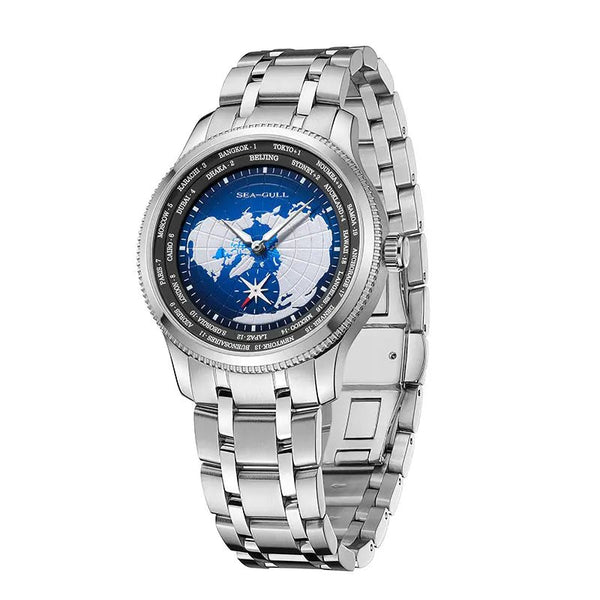
For the latter approach, consider Sea-Gull's 41 mm GMT World Time watch. Its automatic ST2148 movement, leather strap, synthetic sapphire crystal, and stated 5 Bar water-resistance rating make it a considered mechanical option. Its approximately 41 mm case diameter, 10.5 mm thickness, and 48.5 mm lug-to-lug measurement also give a buyer useful starting points for assessing proportion.

Match the Display to Daily Life
The most useful question is simple: what should the second time represent? A gift for someone who keeps in close contact with one person across a time difference may call for a highly legible GMT reference. A recipient who balances family, colleagues, or friends across several regions may appreciate a world-time-oriented dial.
For a second 41mm interpretation, the Sea-Gull GMT World Time Sub-Second Dial combines a world-time presentation with an independent seconds display. Its automatic ST17 movement, synthetic sapphire crystal, stated 5 Bar water resistance, and choice of leather strap or stainless-steel bracelet give the buyer a clearly different visual proposition to compare with the 1084.
| Gift consideration | What to look for |
|---|---|
| One meaningful distant city | A clear second-zone reference and readable 24-hour scale |
| Several international connections | A world-time presentation that feels intuitive to the wearer |
| Everyday date awareness | A confirmed calendar-equipped GMT or dual-time model |
| Preference for a smaller stated diameter | A 40 mm option worth comparing alongside 41 mm models |
| Mechanical ownership | A setting procedure and power-reserve routine the recipient will enjoy learning |
It is also wise not to infer adjustment behavior from a dial alone. Terms such as traveler GMT and caller GMT describe how a movement is adjusted, not a hierarchy of quality. Check the model's current instructions before making that distinction part of a purchase decision. For a broader explanation of display formats, see Sea-Gull's GMT versus dual time guide.
Check Proportion Before You Choose
Fit is personal, and case diameter is only one part of the equation. Thickness, lug-to-lug length, strap material, clasp design, and the recipient's existing preferences all shape how a watch feels in daily wear. A 41 mm case can be appealing to one wearer and less compelling to another. The same is true of leather versus a bracelet, or a compact-looking dial versus a busier world-time presentation.
Buyers who prefer to begin with a confirmed 40 mm format can compare Sea-Gull's 40 mm GMT Dual Time Zone Calendar. The current listing confirms GMT, dual-time-zone, and calendar functions, along with a stated 5 Bar water-resistance rating. Before selecting any model, review the live page for the complete current specifications and setting information.
A mechanical watch also asks for a little participation. The recipient should be comfortable learning the model-specific setting sequence and keeping the watch appropriately wound through wear or winding according to its instructions. That ritual will appeal to some enthusiasts more than others, and neither mechanical nor quartz is universally the better choice.
The confirmed Black Friday promotion of 20% off can be a welcome purchase consideration, but the better reason to choose this kind of watch is the story it can hold. Explore the current range of Sea-Gull GMT watches, compare the confirmed details, and choose the dial that best gives shape to one shared connection between here and there.


Commenta
Questo sito è protetto da hCaptcha e applica le Norme sulla privacy e i Termini di servizio di hCaptcha.